Let's grow a beautiful underwater jungle together, one tiny leaf at a time!
Weekly maintenance is the gentle rhythm that keeps a planted tank looking crisp: clean glass, tidy growth, stable nutrients, and fish and shrimp that act like nothing ever changed. The secret is doing tasks in the right order so you do not redo work or stir up extra mess.
The 45-minute weekly schedule
This is the order that tends to stay fastest and cleanest. If your tank is nano-sized, you may finish sooner. If it is a dense jungle, give yourself a little extra time for trimming.
- 2 minutes: Quick visual check
- 5 minutes: Clean glass and remove surface film
- 15 minutes: Trim and replant, then net out plant debris
- 15 minutes: Water change and gentle substrate cleanup
- 5 minutes: Refill, dechlorinate, reset equipment, and dose fertilizers
- 3 minutes: Final polish and quick observation
If algae is popping up or plants are growing oddly, it helps to keep lighting and CO2 consistent. For a deep dive on dialing in a stable light schedule, see Planted tank lighting: PAR, spectrum, and photoperiod.
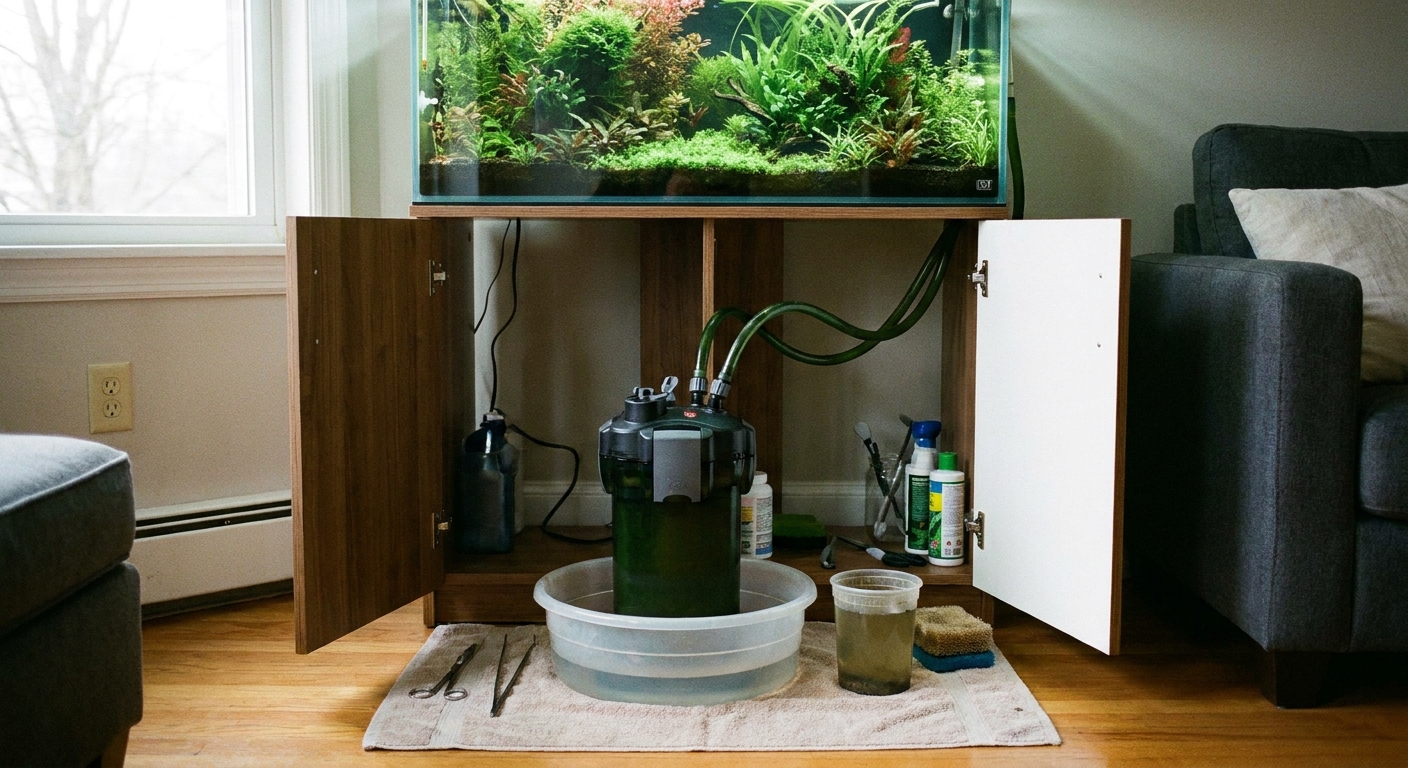
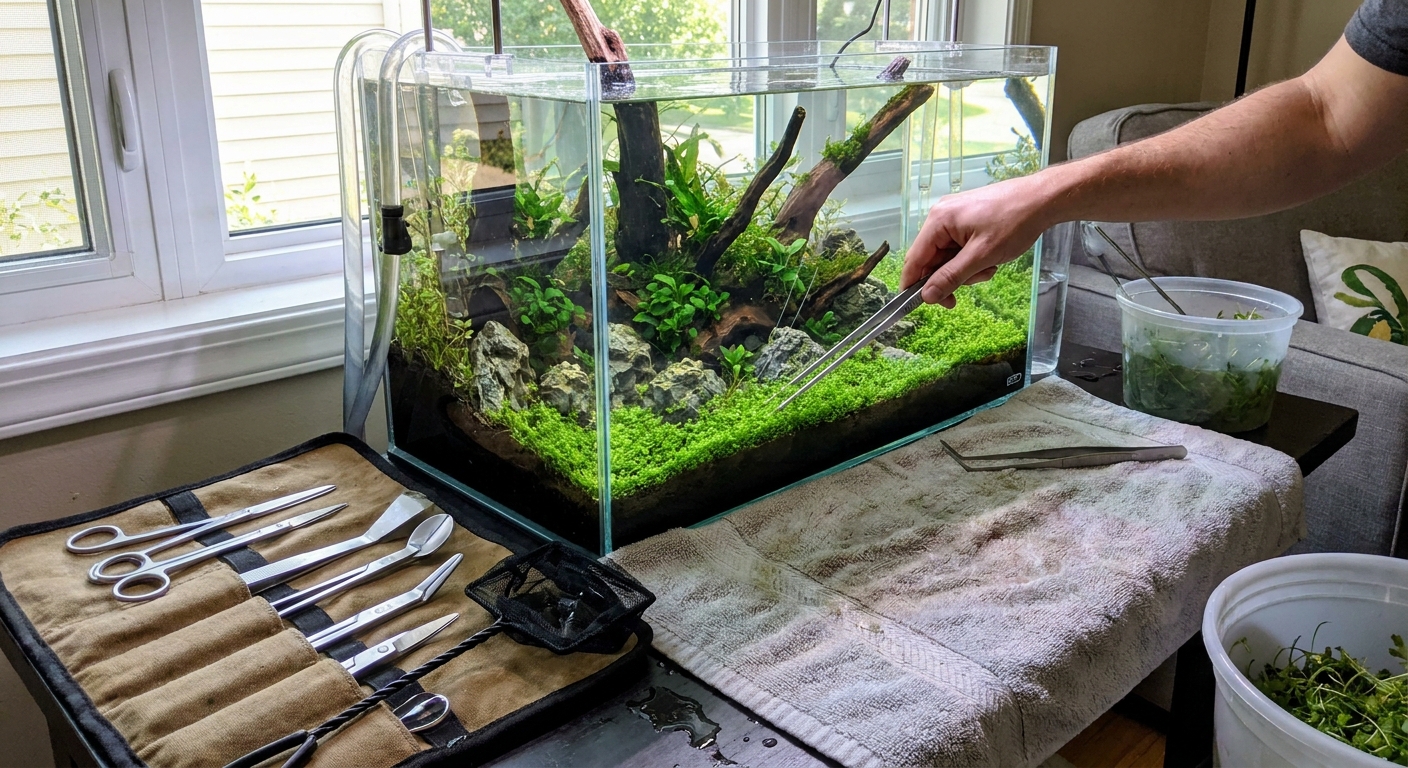
Before you start: a small toolkit
- Bucket dedicated to aquarium use
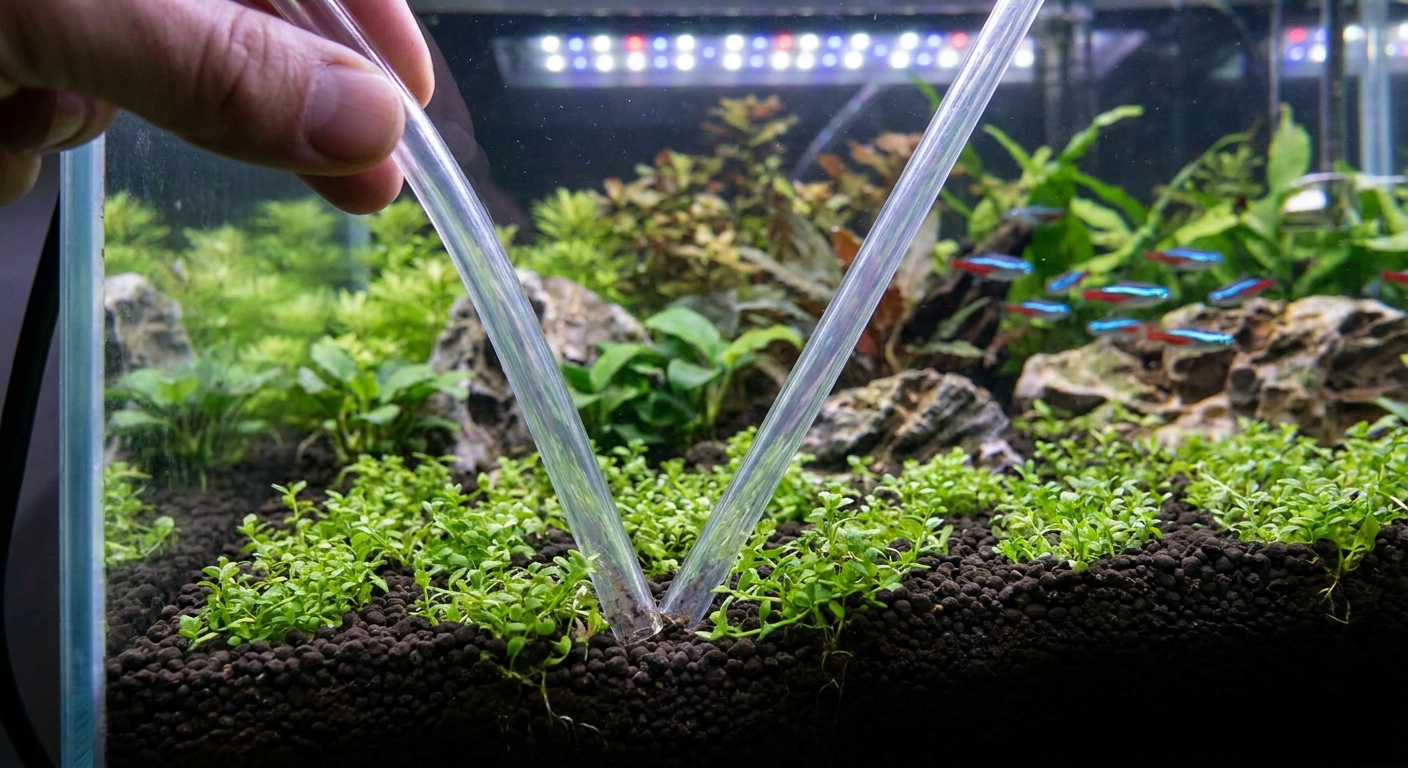
- Gravel vac or siphon hose
- Algae scraper or magnetic cleaner
- Fine aquascaping scissors and tweezers
- Small net for floating trimmings
- Dechlorinator
- Clean towel for drips
Optional but helpful: a turkey baster or small pipette for blasting debris out of moss and hardscape cracks.
Quick safety check: make sure buckets and tools have never touched soap, detergents, pesticides, or household cleaners. A tiny residue can be a big problem, especially for shrimp.
Step 1: the 2-minute health check
Do this first, before you stir anything up. You are looking for clues that change what you do next.
- Fish and shrimp behavior: normal swimming, grazing, and breathing
- Plant signals: pinholes, yellowing, twisted tips, melting leaves
- Algae location: glass, slow leaves, hardscape, or equipment
- Flow: dead spots where mulm collects
If you see yellowing and holes, it is often a nutrient imbalance rather than a cleaning issue. This guide can help you narrow it down: Aquarium plant deficiencies: yellowing and holes.
Step 2: clean glass and surface
Clean the glass first so you do not chase debris twice.
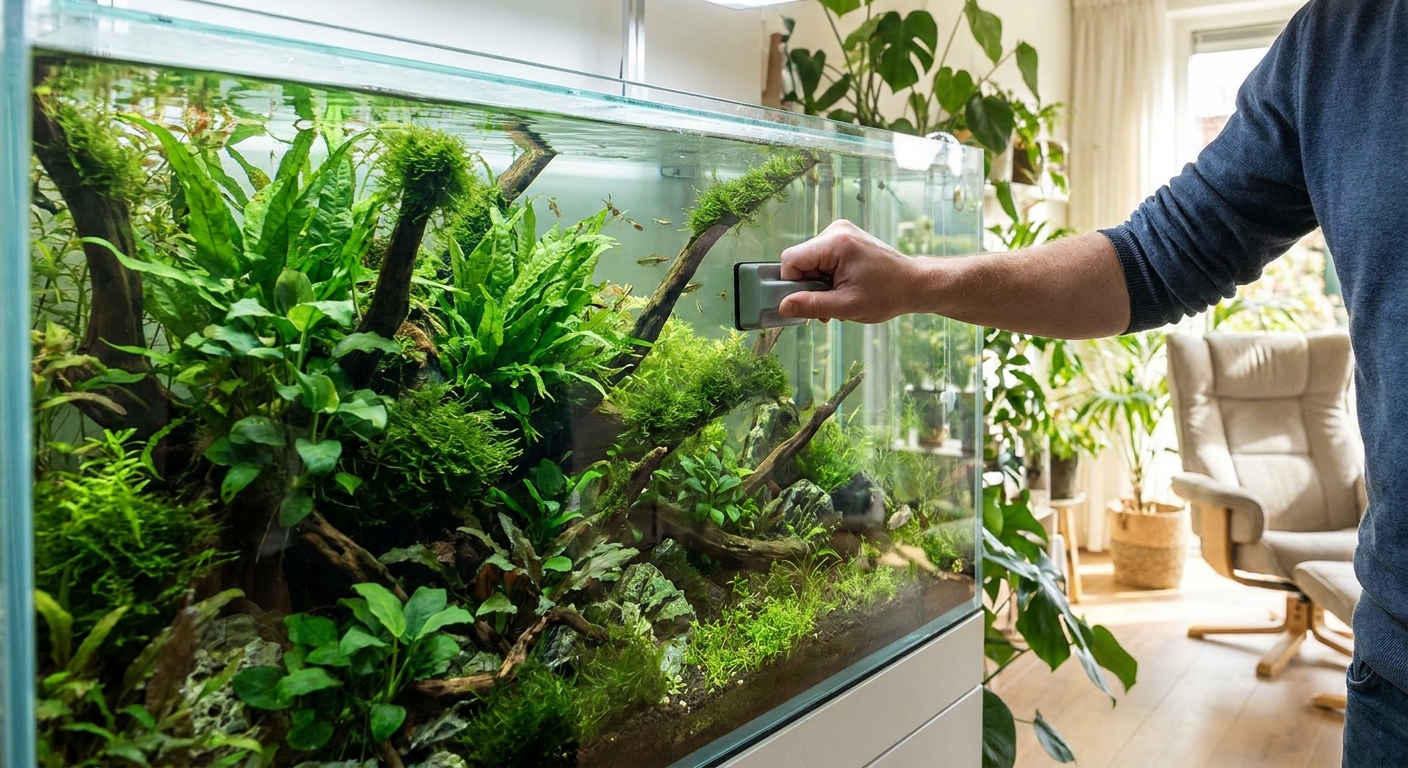
Scrape the glass
- Use smooth, overlapping strokes and work top to bottom.
- Hit corners and the waterline where biofilm loves to build.
- If you use a magnet cleaner, check for trapped grit first to avoid scratches.
Remove surface film
- Skim with a cup, paper towel, or adjust surface agitation so film does not return.
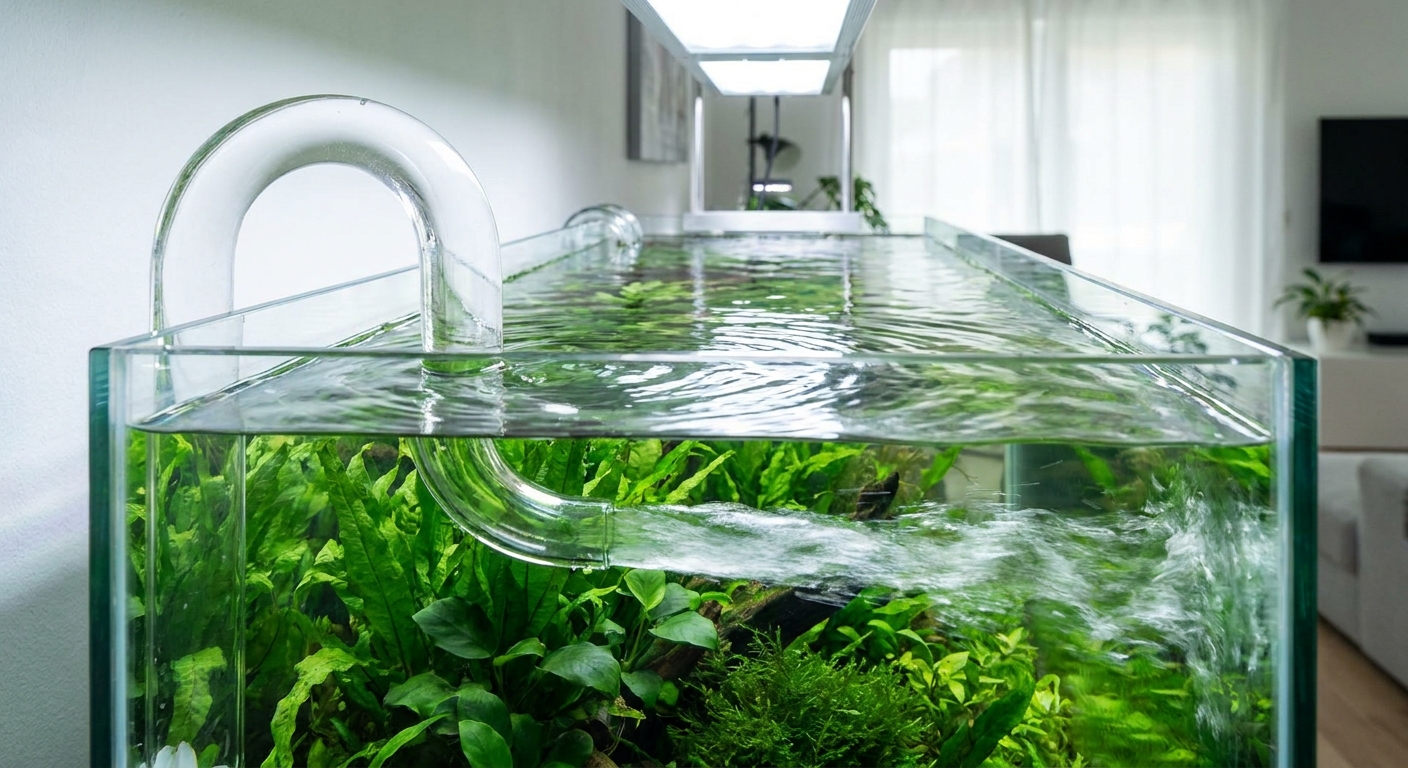
- If you use lily pipes or a surface skimmer, stable surface movement helps a lot.
Want a flow tune-up that reduces debris buildup? Visit Water circulation with lily pipes and surface skimmers.
Step 3: trim, replant, and tidy
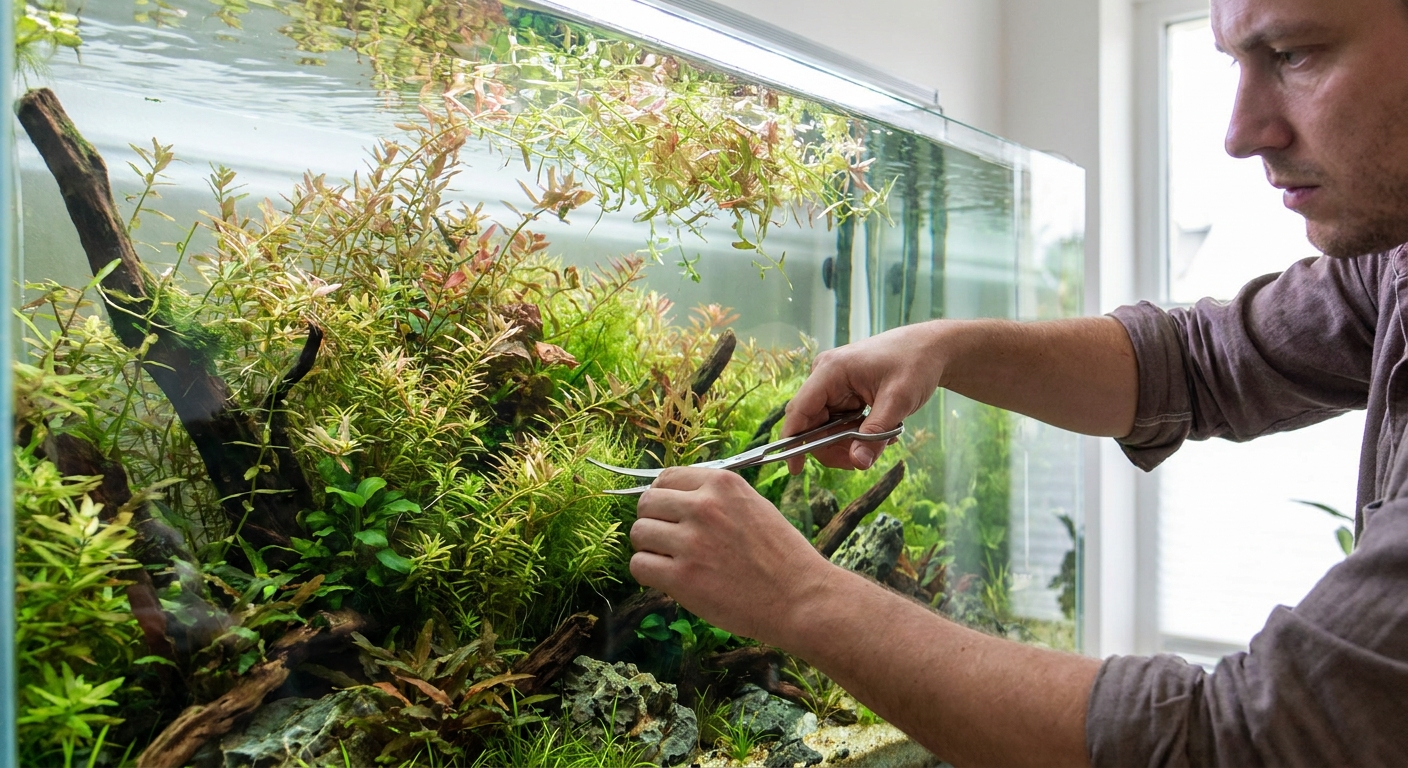
Trimming is not just about looks. It resets growth so light and flow reach lower leaves, which helps prevent algae and melt.
Stem plants: cut, replant, keep the tops
- Trim tall stems down to the height you want the bush to be.
- Replant healthy tops to thicken the group.
- Remove shaded lower portions if they are weak or losing leaves.
If you want a clean, repeatable method for stems, see How to propagate aquarium stem plants.
Rosette plants and crypts: remove old leaves gently
- Snip damaged leaves close to the base instead of tearing.
- Avoid uprooting unless you are intentionally moving the plant.
If your crypts suddenly melt after changes, it is usually a normal response to shifted conditions. This can help: Understanding cryptocoryne melt.
Carpets: thin, do not scalp
- Trim the top layer lightly and remove loose clippings immediately.
- If the carpet is lifting, it may need more frequent, lighter trims and better flow across the substrate.
For a carpet that stays low and dense, visit How to grow a dense aquarium carpet.
Mosses: fluff, trim, keep them breathable
- Trim the outer layer so light and flow can reach inside.
- Shake or baste moss to release trapped mulm.
If your Java moss or Christmas moss is turning into a mulm magnet, this step-by-step helps: Aquarium moss pruning: Java, Christmas, and weeping.
Epiphytes on wood and rock: keep rhizomes safe
- Do not bury rhizomes of Anubias and Bucephalandra.
- Remove older leaves with algae so new growth stays clean.
For Buce that stays compact and clean, see Bucephalandra care: light, flow, and algae control.
Net out debris before siphoning
After trimming, use a net to collect floating bits. The less debris you leave, the easier your water change will be.
Step 4: water change and substrate care
Weekly water changes are about stability, not perfection. In faster-growing CO2 tanks, 30 to 50 percent weekly is a common, comfortable rhythm. In established low-tech tanks, a smaller change (or slightly less frequent schedule) can work just as well, depending on stocking, feeding, and your tap water.
How much water should you change?
- 20 to 30 percent: lightly stocked, stable low-tech tanks
- 30 to 50 percent: many CO2 and high-growth planted tanks
- Up to 50 percent: heavy feeding, visible waste buildup, or weeks when you are actively correcting an algae swing (alongside fixing light, CO2, and flow)
Siphon smart: clean what you see
A gentle siphon is your friend. A deep, aggressive plunge is how you uproot plants and kick trapped detritus into the water column.
- Sand: hover the siphon just above the surface to lift mulm without sucking sand.
- Aquasoil: avoid deep vacuuming. Instead, skim the surface and focus on open areas.
- Hardscape pockets: baste debris out first, then siphon it from the water column.
Shrimp and fry tip: slip a pre-filter sponge over the siphon intake, or keep a fine net nearby. It is a simple little guardrail that can prevent a scary accident.
If you use aquasoil and want to keep it tidy without collapsing your design, see How to clean aquasoil without wrecking your layout.
Refill gently to avoid cloudy water
- Pour onto a plate, a plastic bag, or a hardscape area to diffuse the flow.
- Match temperature as closely as practical for sensitive livestock.
- If you keep shrimp, try to avoid big swings in GH, KH, and pH during refills. Consistency beats chasing numbers.
Dechlorinator timing
The key is simple: make sure the full dose of dechlorinator is present for the volume of new water before livestock is exposed to untreated tap water. Some people dose the bucket first, others dose the tank right as the refill begins. Either is fine as long as you are consistent and careful.
When to dose fertilizers
A simple approach is to dose after the water change so the tank starts the week with predictable levels. Some all-in-one routines do this in one shot, while others split macros and micros across the week. Whichever path you follow, keep it consistent and adjust only one variable at a time.
Step 5: equipment reset and quick clean
Weekly maintenance is not the time for deep filter cleanouts unless flow is dropping. Think light touch.
- Filter intake: wipe off plant fuzz and biofilm so flow stays strong.
- Outflow: make sure it is aimed to move debris toward the intake, not into dead zones.
- CO2: confirm bubbles are steady and the diffuser is not clogging.
If your diffuser or lily pipes are getting hazy, use a safe cleaning method here: How to clean glass lily pipes and CO2 diffusers safely.
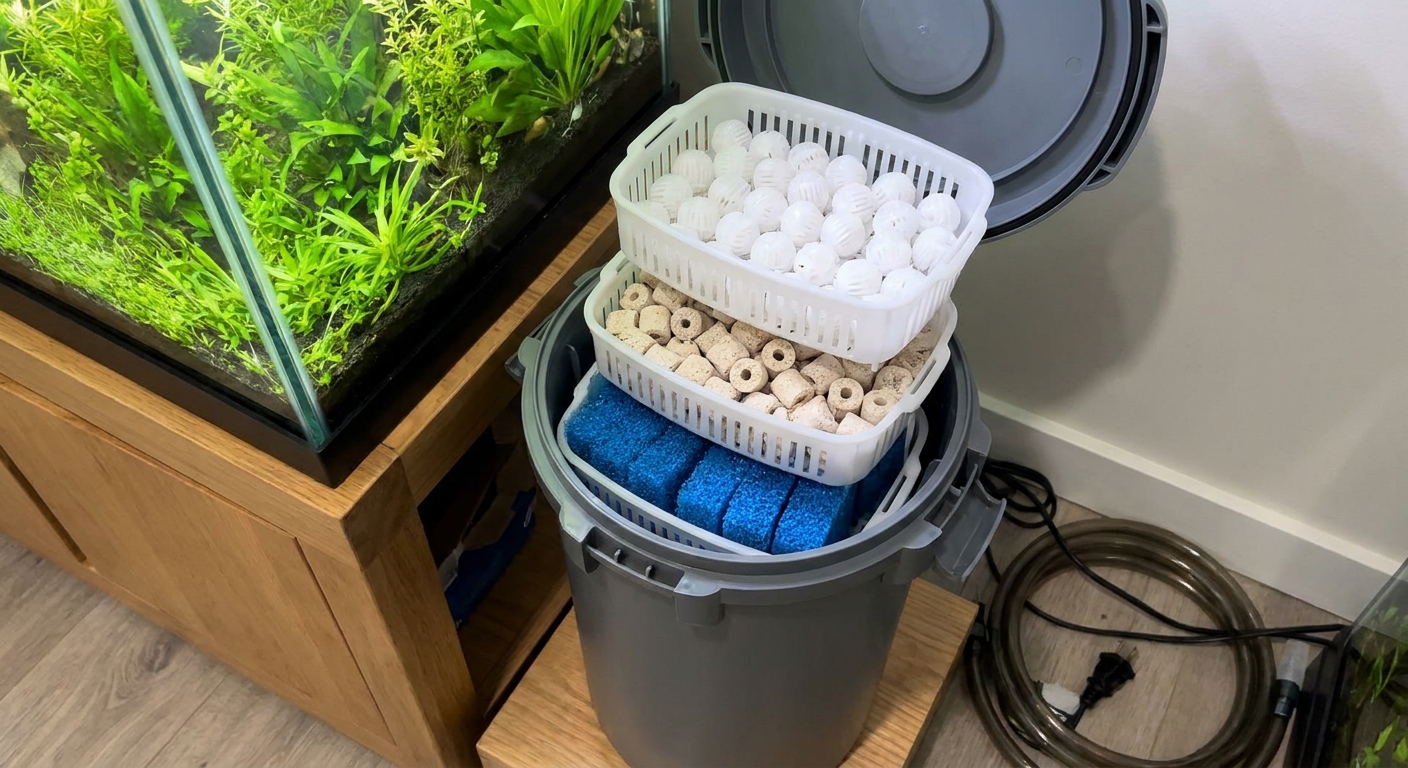
If you run a canister filter and want clearer water without over-cleaning, this helps you keep media in the right order: Canister filter media order for clear aquascapes.
A simple weekly checklist
- Observe livestock and plants
- Scrape glass and skim surface film
- Trim by plant type, then net out clippings
- Baste debris from moss and hardscape
- Water change based on tank style
- Light siphon of open substrate areas
- Refill gently, dechlorinate, restore temperature
- Dose fertilizers as scheduled
- Confirm filter flow, heater operation, and CO2 consistency
Common weekly problems and quick fixes
My water gets cloudy after maintenance
- Trim and net debris before siphoning.
- Refill onto a plate to avoid kicking up substrate.
- Clean mechanical filtration gently if it is clogged, but do not replace all media at once.
I find floating plant bits for days
- Do a final slow lap with a fine net after the refill.
- Reduce flow for 10 minutes during trimming, then restore it so the filter can catch leftovers.
Algae keeps coming back on slow plants
- Trim or remove the most affected leaves instead of scrubbing forever.
- Improve flow around epiphytes and slow growers.
- Check for an overly long photoperiod or unstable CO2.
If the algae is black and tufted, this guide is made for that battle: How to get rid of black beard algae (BBA) in planted tanks.
Pest snails explode after feeding weeks
- Feed a little lighter and remove uneaten food sooner.
- Manually remove clusters during weekly glass cleaning.
More options here: Controlling pest snails in planted tanks.
My fish look stressed right after a water change
- Double-check temperature match and dechlorinator dose.
- Point the outflow to gently circulate, not blast, while things settle.
- Skip feeding for a bit and let the tank calm down first. Most fish settle quickly when the water is stable.
Adjust for different tank styles
Low-tech planted tanks
- Trim less aggressively, growth is slower.
- Water change 20 to 40 percent is often plenty.
- Prioritize consistency over chasing rapid results.
If your goal is an easy, stable layout, see Low-tech planted tank design without CO2.
High-tech CO2 tanks
- Expect faster trims and more frequent glass cleaning.
- Water change 30 to 50 percent weekly helps keep nutrients predictable.
- Keep CO2 stable during and after the refill to avoid algae swings.
If you are refining your system, visit Pressurized CO2 setup for planted aquariums.
Nano tanks
- Use smaller tools and smaller water changes more consistently.
- Be extra gentle with siphoning so you do not uproot tiny plants.
- Watch parameter swings closely. In small volumes, temperature and hardness shifts happen fast.
Need layout ideas that stay manageable? See Nano tank aquascaping ideas for 5 and 10 gallons.
Finish strong: the 3-minute pass
- Wipe outside glass and remove water spots.
- Check the waterline for floating leaves and film.
- Confirm temperature, flow, and that lights and CO2 timers are correct.
- Watch livestock for a minute. Calm, normal behavior is the best sign the routine was gentle.
With this weekly rhythm, your aquascape stays bright, breathable, and ready for those tiny pearling bubbles to rise like happy little secrets from the leaves.