Let’s grow a beautiful underwater jungle together, one tiny leaf at a time! Aquasoil is fantastic for plant growth, but it also loves to trap mulm in all the little spaces between pellets. The goal is not to make the substrate “sterile”. It is to lift out the loose waste sitting on top and in pockets, without turning your aquascape into a snow globe.
What makes aquasoil tricky to clean
Aquasoil pellets are lightweight and break down over time. If the siphon is too strong or you jab too deep, you can:
- Crush pellets into mud, which can cloud the tank and compact the bed.
- Mix layers, especially if you have a sand cap or decorative paths. If you need help preventing that in the first place, see Layer Aquasoil and Sand Without Mixing.
- Uproot carpets like Monte Carlo, dwarf hairgrass, or Glossostigma.
- Release trapped debris all at once, which can temporarily increase dissolved organics and sometimes precede algae issues in an already stressed tank.
The best approach is gentle, targeted, and repeated. Think of it like shrimp grooming, not bulldozing.
Tools that make this easy (and safe)
1) A small siphon, not a big gravel vac
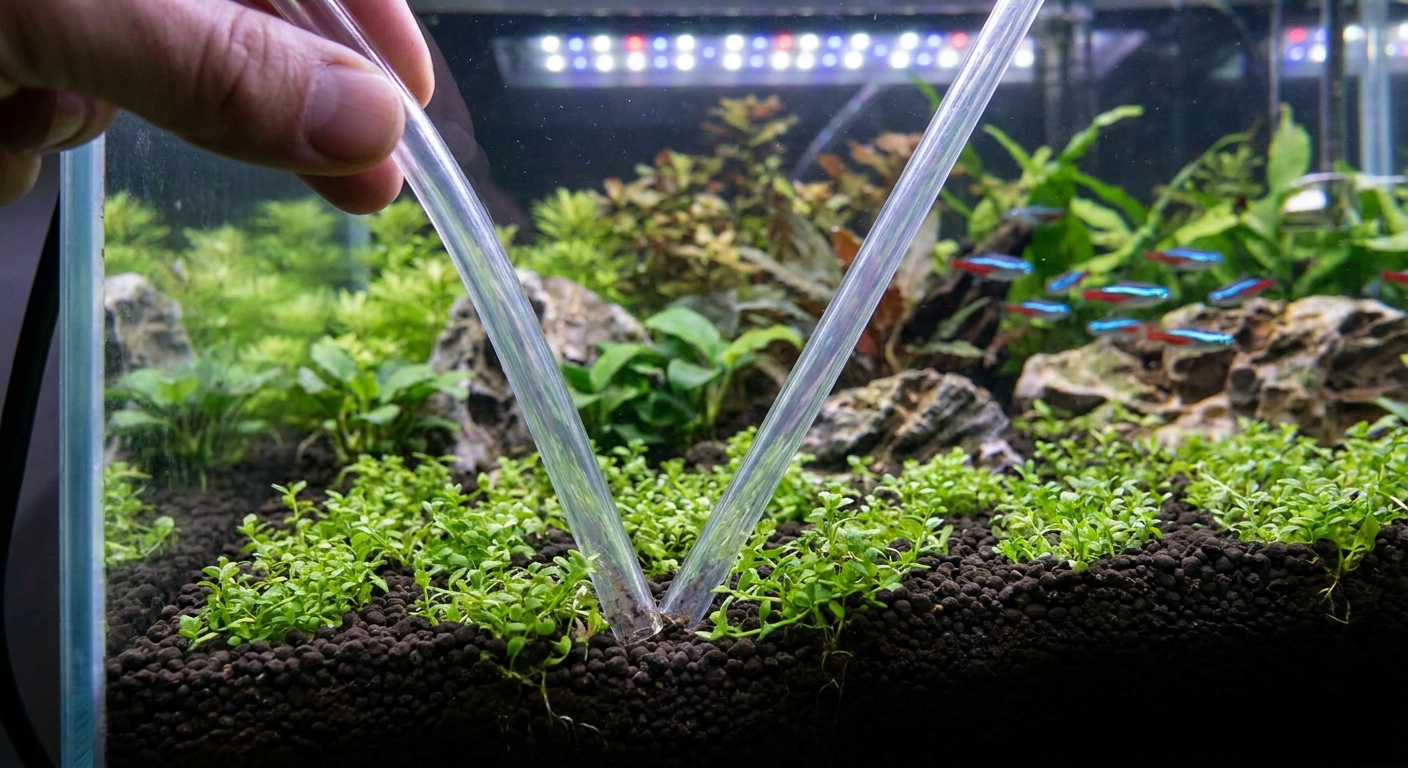
Wide gravel vac bells are great for chunky gravel, but they can grab and tumble aquasoil. For aquasoil, a thin hose gives more control. If you already have a gravel vac, you can often remove the wide tube and use the hose alone.
2) Flow control you can “feather”
- Pinch clamp on the hose, or just pinch it with your fingers.
- Hose height control: keeping the bucket closer to tank level reduces the height difference, which reduces flow rate.
- Pre-filter sponge on the intake can protect baby shrimp and reduce accidental soil pickup, but it can also clog fast when mulm is heavy.
3) A turkey baster or small bulb syringe
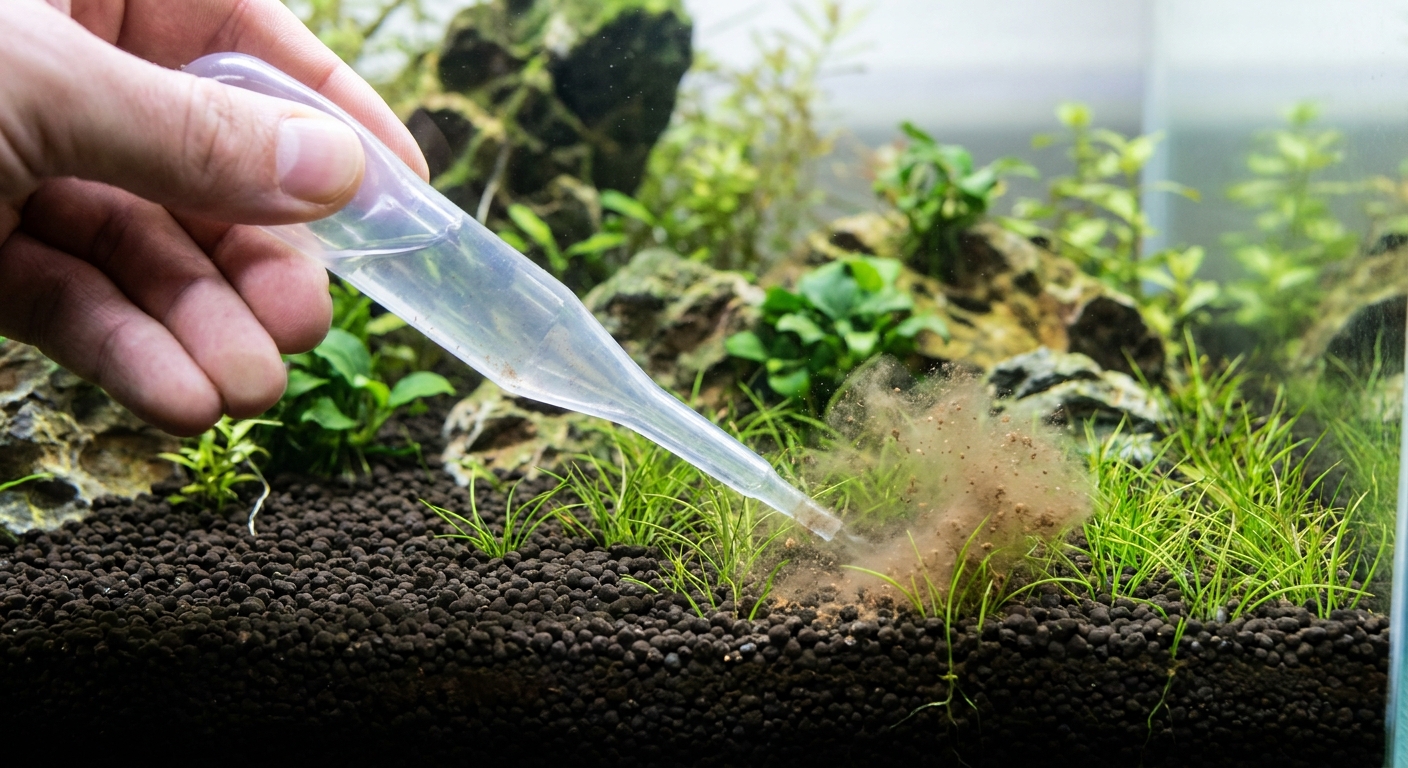
This is the secret weapon for aquasoil. Use it to puff mulm up into the water column in a very local area, then catch it with the siphon before it settles back down.
4) Long tweezers or chopsticks
Not for stirring the soil. Use them to gently hold down a floating stem base, lift a leaf, or keep a carpet edge from peeling while you siphon.
The core technique: hover siphoning
If you only remember one method, make it this: hover 1 to 2 cm above the aquasoil and skim. You are vacuuming the water just over the pellets, not the pellets themselves.
Step-by-step
- Start the siphon with low flow. Aim for slow, controlled water removal.
- Hold the hose at a shallow angle. Point the intake across the surface, not straight down.
- Hover and trace. Move in short passes over visible debris lines, especially around hardscape bases and plant edges.
- Feather flow when a pellet lifts. If you see aquasoil start to rise, pinch the hose briefly to drop it back down.
- Do not chase perfection. A little mulm is normal and often beneficial. Focus on thick deposits and dead zones.
Spot-cleaning mulm pockets
Mulm pockets form behind rocks, under wood overhangs, and in low flow corners. Here is a clean way to remove them without stirring the entire bed.
The “puff and catch” method
- Place the siphon intake nearby, hovering above the aquasoil where you want debris to drift.
- Puff once or twice with a turkey baster behind the rock or under the plant canopy.
- Immediately catch the cloud with the siphon by hovering in the path of the debris.
- Wait 10 to 20 seconds and repeat, instead of doing one big blast.
This keeps your layers intact and prevents the “brown storm” that can overwhelm mechanical filtration and fuel algae.
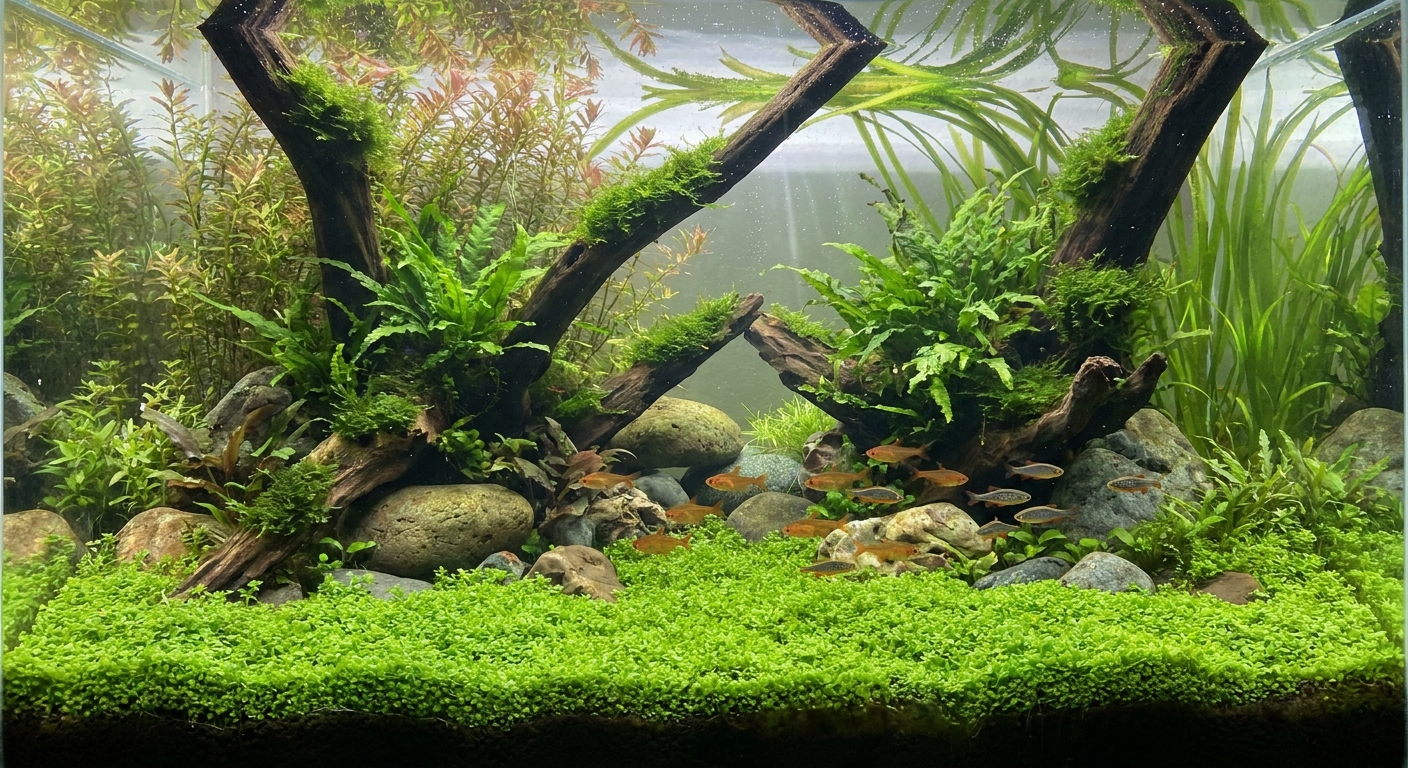
Cleaning around carpet plants
Carpets hate tugging and sudden suction. The strategy is to clean above them and between them, not through them.
Best practices
- Use the thinnest hose you can control and keep flow low.
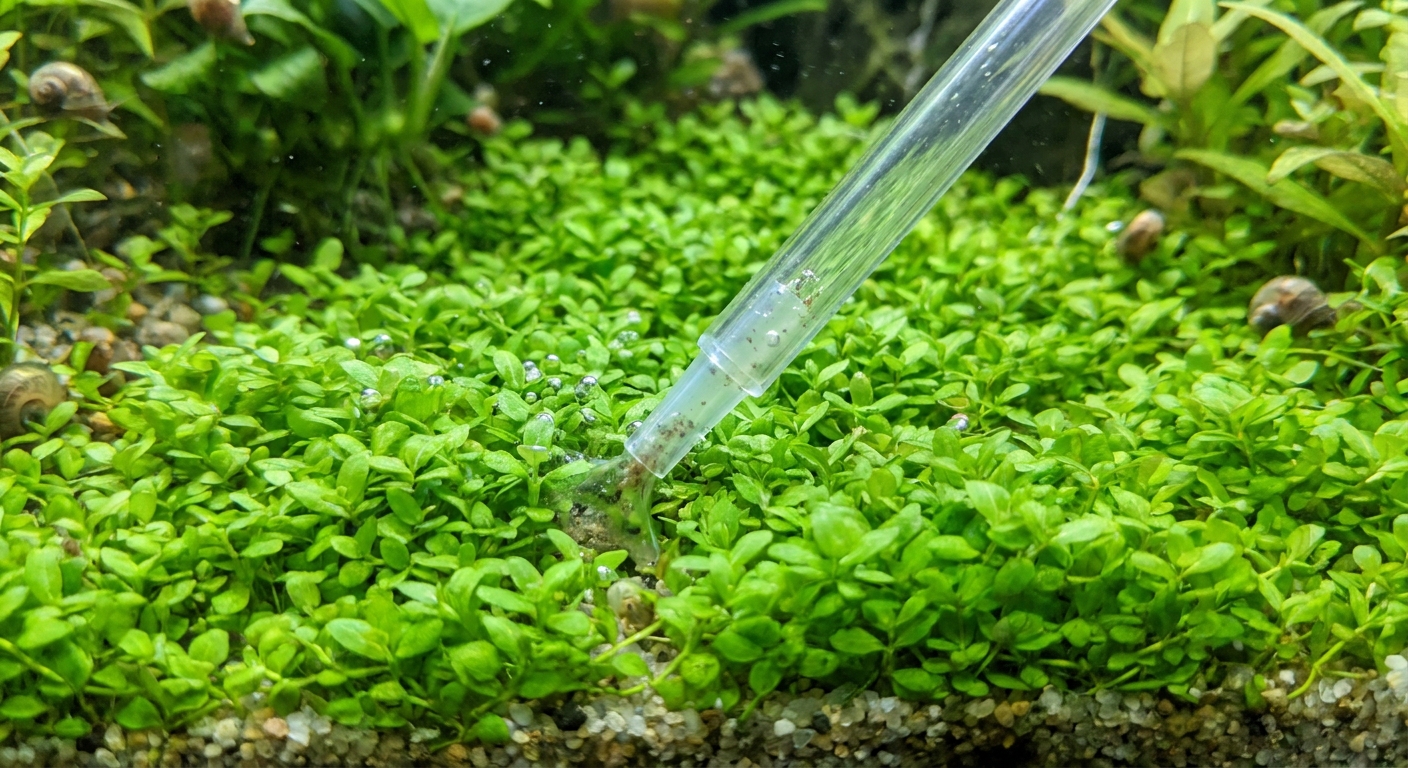
- Skim over the carpet canopy to pick up loose debris sitting on the leaves.
- Work from the open foreground inward, so debris does not get pushed deeper into the carpet.
- Do not plunge the siphon tip into the carpet. That is how carpet mats peel up.
- If the carpet edge is lifting, pause cleaning and replant pins or use tweezers to tuck runners back into the soil.
If your carpet is still establishing, keep maintenance gentle and frequent. For planting and density strategies that make carpets harder to uproot later, see How to Grow a Dense Aquarium Carpet.
If you just planted or rescoped a carpet, give it a short settling period before you hover siphon directly over it. For the first week or two, a light baste and netting of loose debris is usually plenty, while roots grab hold.
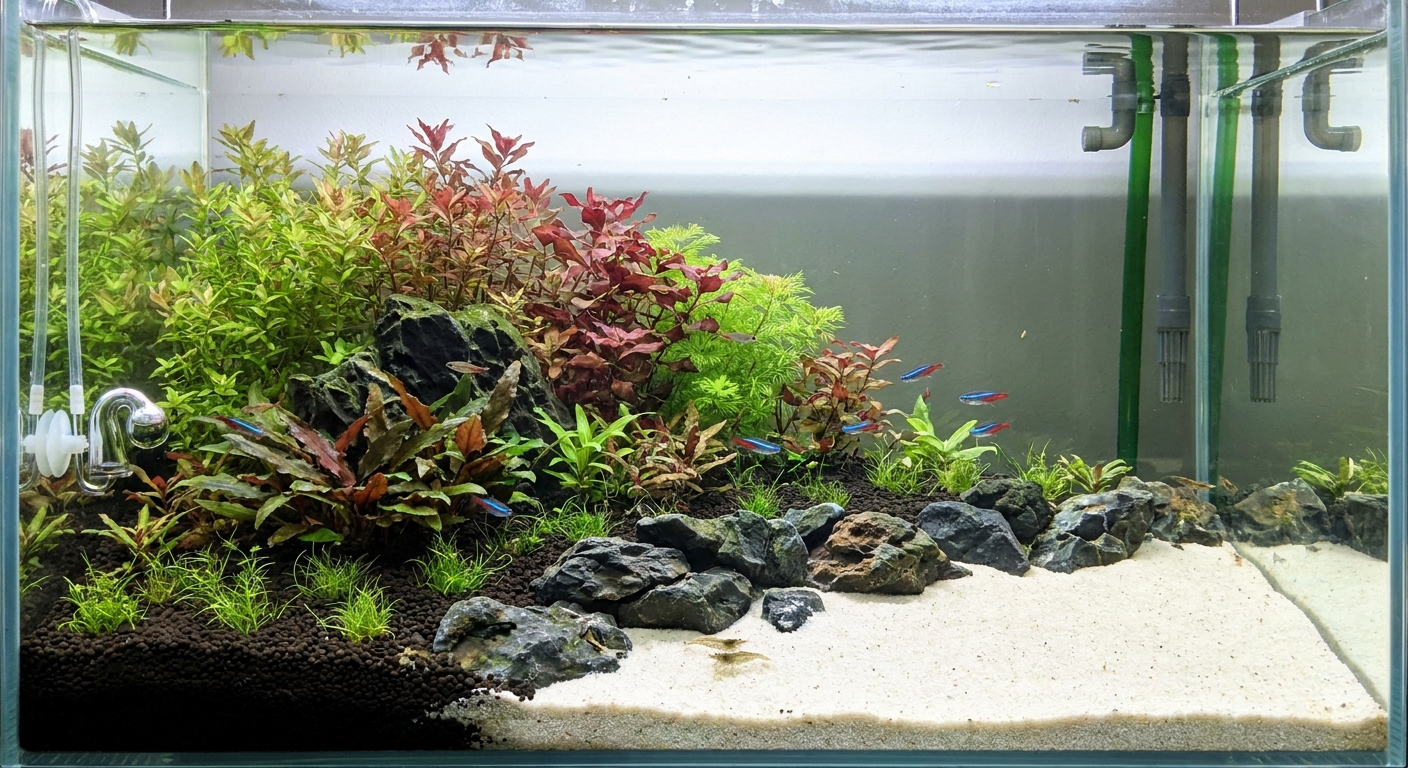
Cleaning with sand paths or sand caps
Sand and aquasoil love to mingle if you stir or vacuum aggressively. The trick is to treat sand like a delicate “surface” and aquasoil like a “no-dig” bed.
For sand paths
- Hover siphon higher than you think, especially at the border where sand meets soil.
- Approach from the sand side and pull debris off the sand surface, not toward the aquasoil.
- Use a baster to lift debris off sand, then siphon it from the water column. This avoids sucking sand grains.
For sand caps over aquasoil
Never vacuum deep enough to expose the soil layer. Keep the siphon strictly surface-level. If caps are a key part of your layout, Layer Aquasoil and Sand Without Mixing has setup tips that make long-term cleaning much calmer.
How often to clean aquasoil
Aquasoil beds are living systems. Over-cleaning can remove biofilm and microfauna that help process waste, and it can stress plant roots if you constantly disturb the area around them.
A simple routine that protects the layout
- Weekly: skim visible debris from open foreground and around hardscape bases during your normal water change.
- Every 2 to 4 weeks: rotate deeper spot-cleaning zones, one section per session.
- After heavy trimming: do a gentle pass to remove cuttings and loosened mulm before it settles.
Most planted tanks do well with modest, steady water changes (often in the 20 to 40 percent range), but always match the pace to your livestock, CO2 stability, and how “touchy” your tank is. The point is consistency, not heroics.
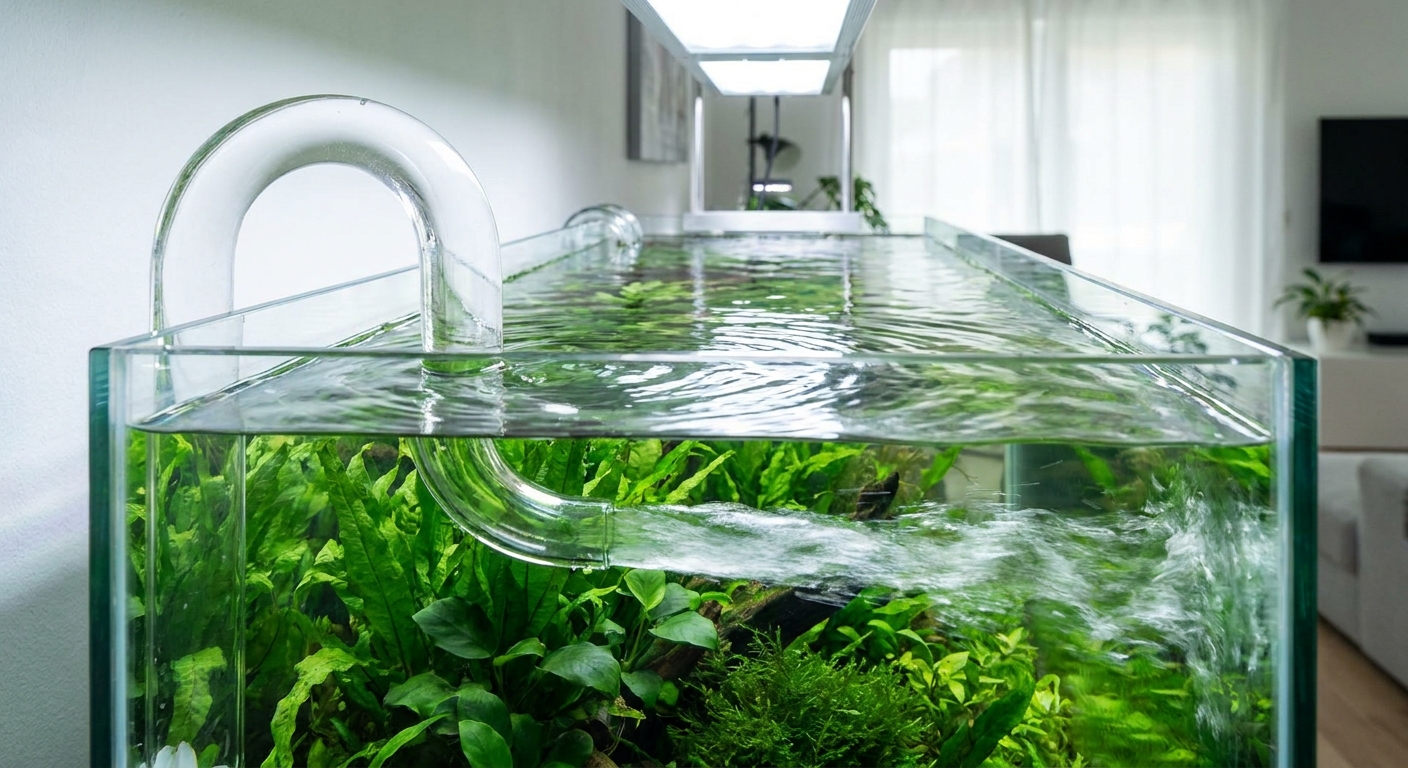
If you are seeing lots of mulm in quiet corners, it is usually a circulation issue, not a cleaning issue. Improving flow patterns often reduces how much you need to siphon. Lily pipes and skimmers can help manage surface film and circulation, and Water Circulation with Lily Pipes and Surface Skimmers walks through layout-friendly options.
If you accidentally suck up aquasoil
It happens. Pellets bounce, hoses grab, shrimp get curious. Here is how to recover without turning it into a bigger mess.
- If soil is in the hose: pinch the line to stop flow, then lower the hose tip back into the tank and gently release to drop pellets out.
- If soil is in the bucket: let it settle, pour off the clearer water, and discard the muddy remainder. Avoid pouring that sludge back into the tank.
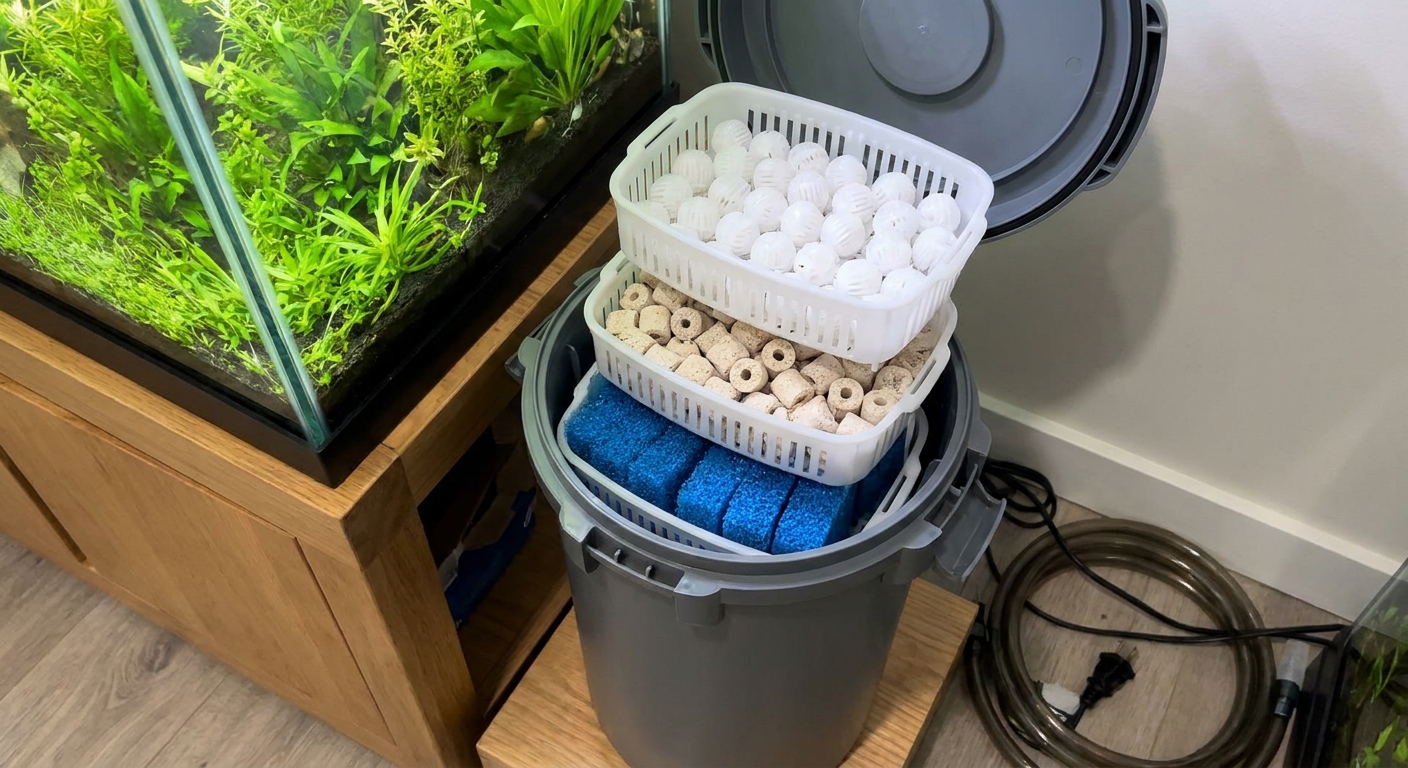
- If the water is cloudy: stop stirring, finish the water change, and let mechanical filtration polish it. If your filter maintenance is due, this is a good time to check media order and fine filtration. See Canister Filter Media Order for Clear Aquascapes.
Mulm vs algae
Mulm is not automatically “bad”. In planted tanks it can be a mild fertilizer source and food for tiny life. The problem is when mulm builds up faster than the tank can process it.
Common causes of chronic buildup
- Low circulation behind hardscape and dense plant walls.
- Overfeeding or too many fine foods that drift into the substrate.
- Heavy shedding plants and lots of decaying leaves.
- New tank instability where bacteria and plant mass are still ramping up.
If algae is tagging along with the mess, tackle the root cause alongside cleaning. For stubborn cases, How to Get Rid of Black Beard Algae (BBA) can help you sort out flow, CO2, and maintenance balance.
Quick troubleshooting
The aquasoil looks dusty after siphoning
- Raise the siphon tip higher and reduce flow.
- Switch to “puff and catch” instead of direct vacuuming.
- Avoid stirring. Let the filter clear the water.
My carpet keeps lifting at the edges
- Skim above the carpet, do not vacuum into it.
- Clean in smaller sections per session.
- Re-tuck runners and trim tall growth that catches debris like a net.
My sand path keeps getting peppered with aquasoil
- Do not vacuum at the border line. Hover from the sand side.
- Reduce flow and avoid any downward siphon motion.
- Consider adding a subtle hard border (small stones or buried divider) during rescapes to keep layers stable.
A gentle finishing pass
Once the substrate looks tidy, do one last calm sweep:
- Net or siphon plant trimmings before they sink.
- Lightly baste hardscape so debris lifts off wood and rocks.
- Skim the water surface with your siphon intake for floating bits.
That’s it. Clean enough for clarity, gentle enough for roots, and steady enough that your layout stays exactly where you planted it. With a happy wave of my little antennae, I’m cheering you on as you keep that aquasoil bed healthy and that aquascape crisp.