Let’s grow a beautiful underwater jungle together, one tiny leaf at a time. And if blue-green slime is trying to take over your scape, don’t worry. Cyanobacteria looks dramatic, but it’s beatable when you hit it from a few angles at once.
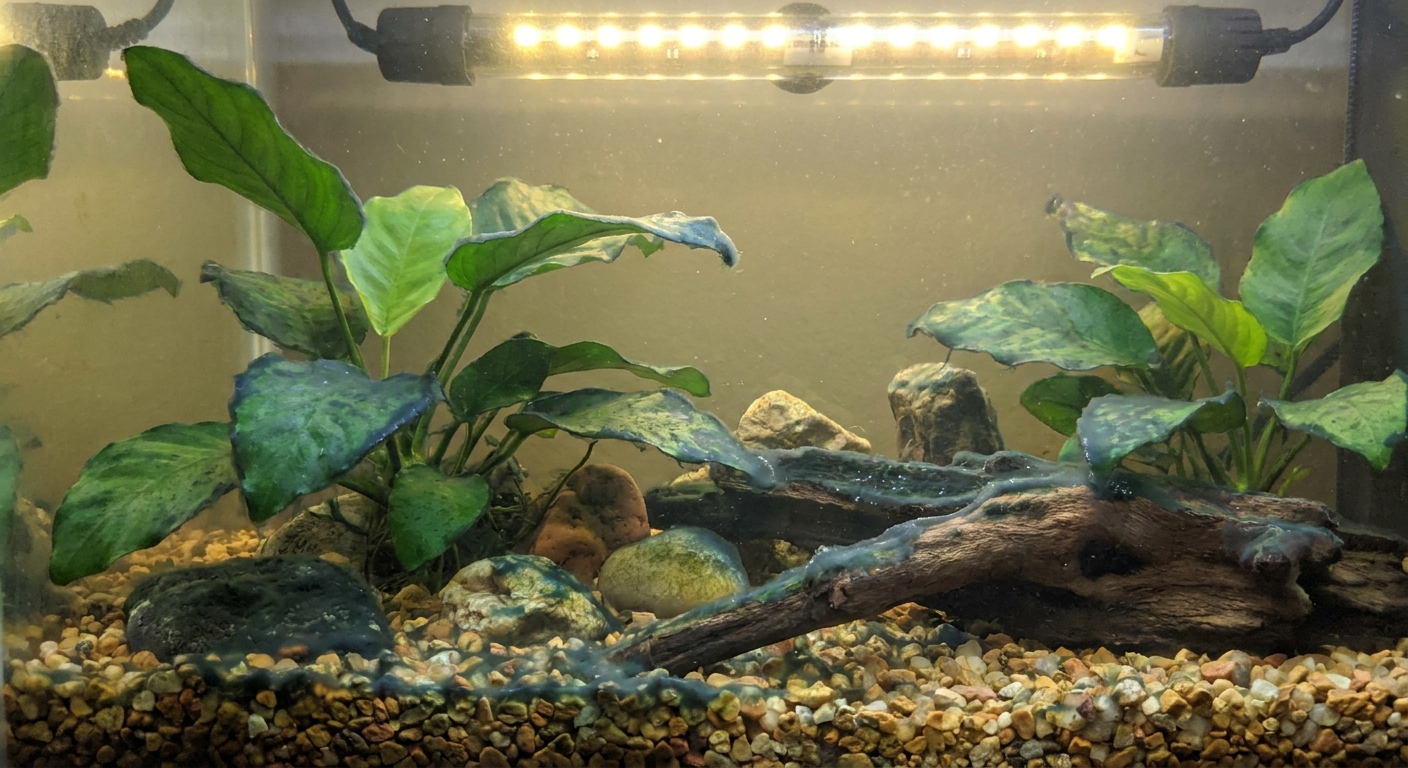
Confirm it’s cyanobacteria
Before you treat, make sure you’re actually dealing with cyano. A lot of people confuse it with dust algae, diatoms, or other film algae.
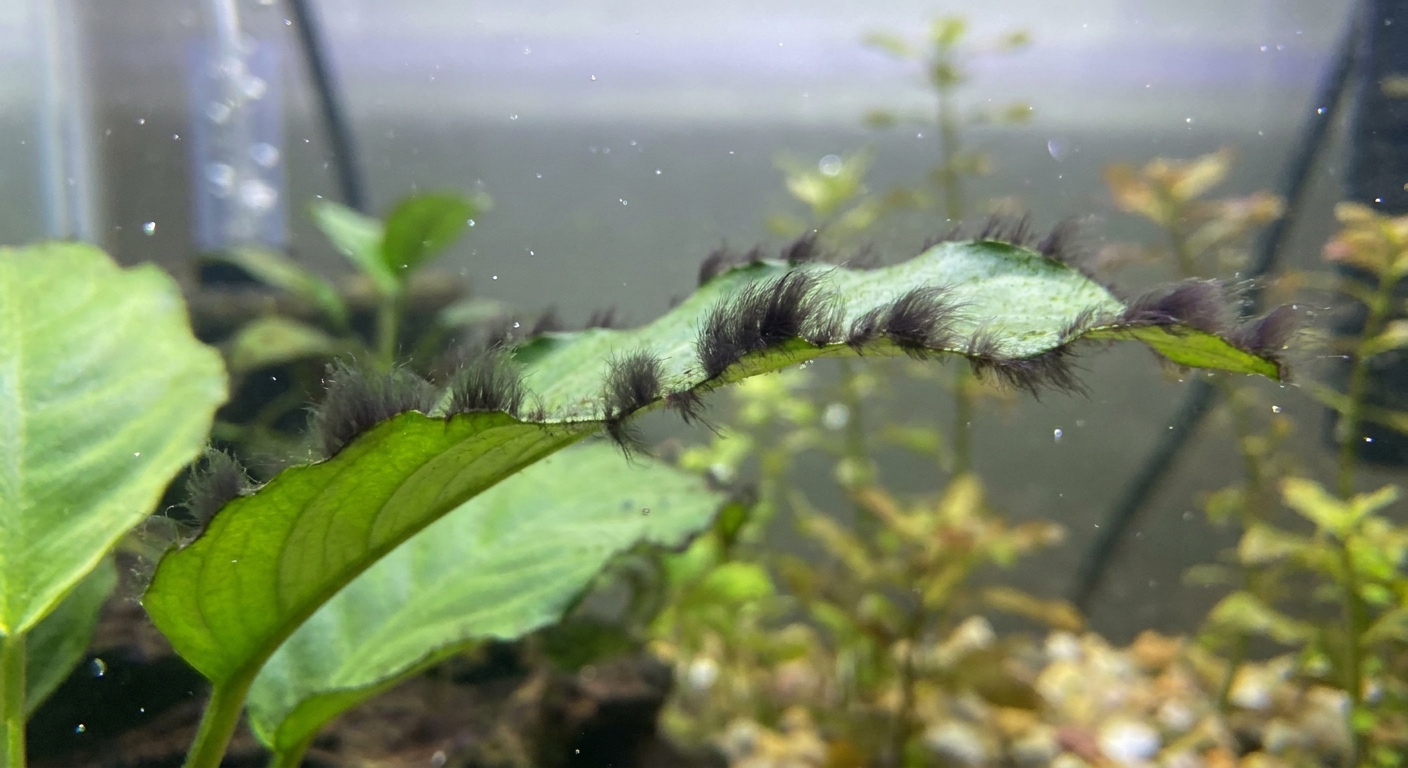
- It peels off like a skin or sheet when you lift an edge
- It traps bubbles under the mat during the photoperiod
- It has a distinct smell when removed (earthy, swampy, or musty)
- It spreads fast over days, not weeks
What it is (and why it shows up)
Cyanobacteria is often called blue-green algae, but it’s actually photosynthetic bacteria. It spreads as a thin sheet or a bubbly, slimy mat across substrate, hardscape, and plant leaves. It can smother plants by blocking light and trapping debris, and it often returns quickly if the underlying conditions stay the same.
Why it thrives in planted tanks
Cyanobacteria loves “stagnant plus imbalance.” Outbreaks commonly happen when there are dead spots with low circulation, unstable CO2, inconsistent maintenance, or nutrient imbalance, especially when light is strong and plants are not growing steadily.
First response: remove it without spreading it
The fastest wins come from physically getting as much of it out as possible before you change conditions. Think of this like pulling weeds before replanting a garden.
Step-by-step cleanup
- Turn off flow (filter and pumps) for a moment so loosened sheets do not blow everywhere.
- Siphon while you lift the mat with tweezers or a toothbrush. Try to remove it in big sheets.
- Vacuum the top layer of substrate where the slime is anchored, especially along the front glass and around hardscape bases.
- Trim heavily affected leaves if the plant can handle it. Cyanobacteria can cling in little patches and restart.
- Do a water change after removal to export fragments and dissolved organics.
If you have delicate mosses, use gentle siphoning and remove affected sections rather than scrubbing them. For moss care and cleanup-friendly trimming habits, see aquarium moss pruning tips.
Fix the causes that keep feeding it
1) Restore consistent circulation and surface movement
Dead spots are cyanobacteria’s favorite hiding places. The goal is even, gentle flow across the entire layout, especially along the substrate and behind hardscape.
- Aim filter outflow so it creates a slow “racetrack” loop around the tank.
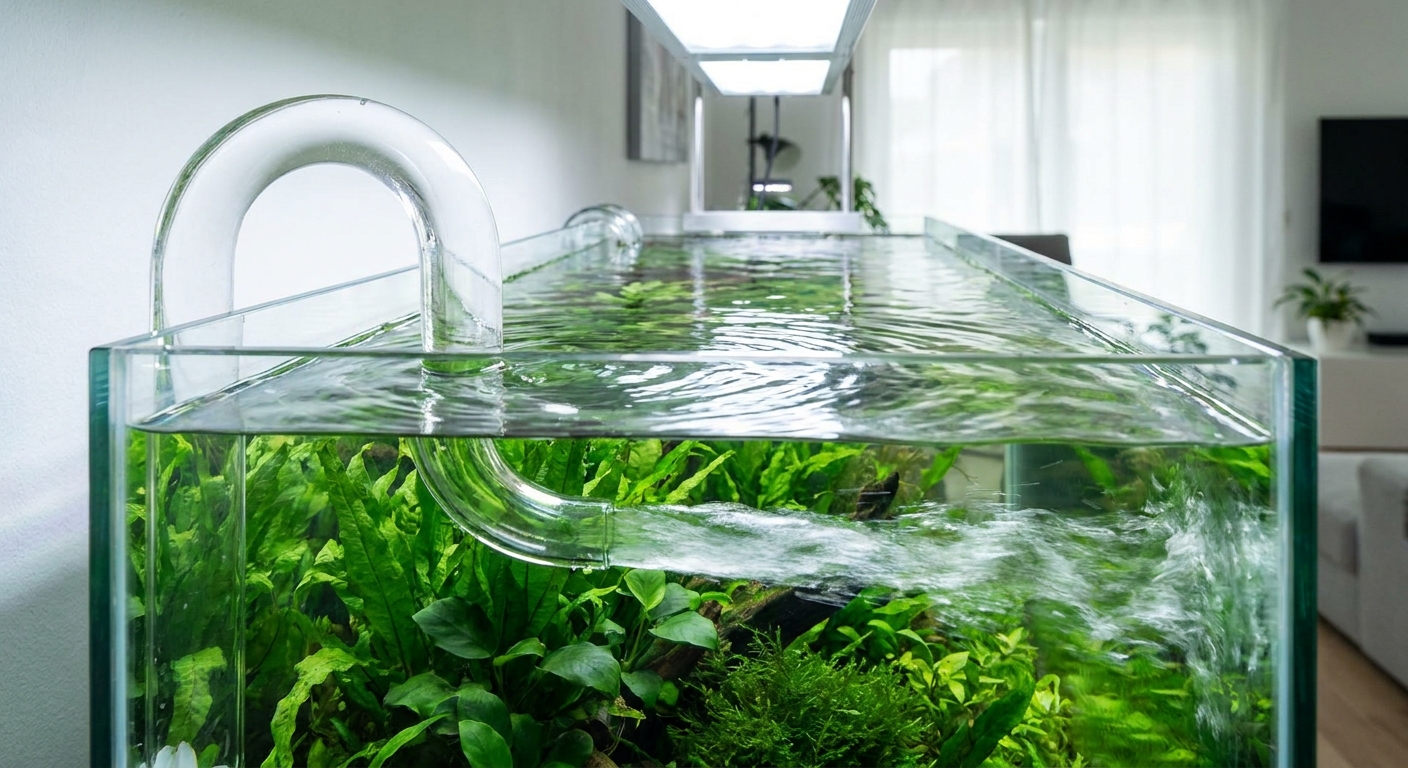
- Reposition lily pipes, spray bars, or powerheads to eliminate stagnant corners.
- Light surface agitation helps oxygen exchange and can reduce surface film and dead spots that often accompany cyano.
More on building clean, plant-friendly flow patterns: water circulation with lily pipes and surface skimmers.
2) Keep nitrate from staying at zero
In many planted tanks, a common cyanobacteria pattern is persistently very low or zero nitrate, especially when light is still strong and CO2 or fertilization is inconsistent. It is not the only path to cyano, though. Cyanobacteria can show up in nutrient-rich tanks too, so think in terms of overall imbalance, not a single magic number.
- For many planted aquariums, a practical target is 5 to 20 ppm nitrate with steady dosing and water changes.
- If nitrate always reads zero, consider increasing feeding slightly, adding fish-safe nitrogen through fertilization, or reducing nutrient-hungry floating plant mass.
- Keep changes gradual. Big swings can stress plants and invite more problems.
Fast growers can also help plants outcompete nuisance growth by consuming excess and stabilizing the system: fast-growing stem plants that beat algae.
3) Reduce organics and detritus traps
Cyanobacteria loves mulm pockets. In dense aquascapes, debris often collects behind wood, under rock overhangs, and inside thick carpets.
- During water changes, gently “dust” hardscape with a turkey baster and siphon what lifts off.
- Thin carpets and low groundcover so water can move through them.
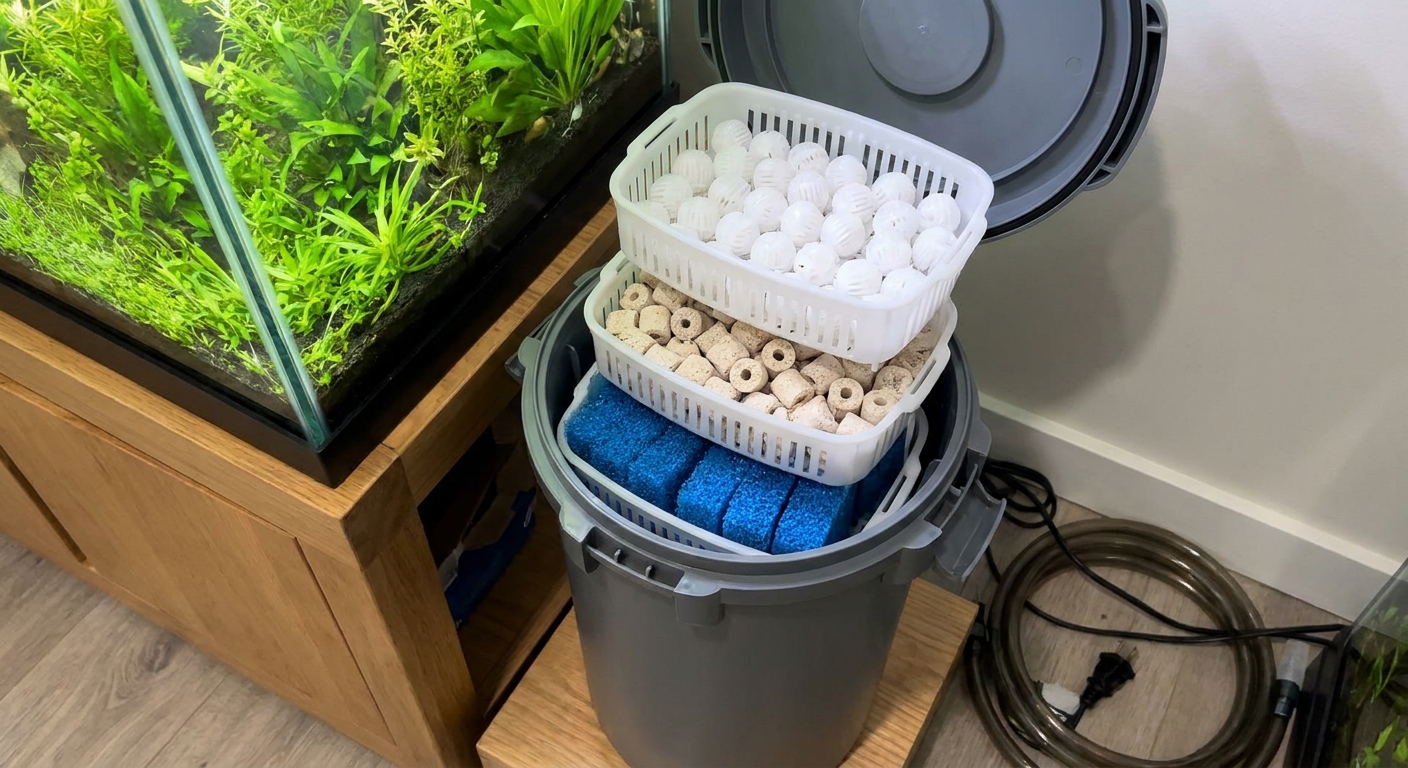
- Clean mechanical filtration often enough that trapped waste does not dissolve back into the tank.
If you run a canister, media setup can affect how well you trap fine debris. A tidy, predictable order helps a lot: canister filter media order.
4) Stabilize light, CO2, and overall dosing
Overpowered light with unstable CO2 is like ringing the dinner bell for problems. If plants cannot use the light because CO2 or nutrients are inconsistent, cyanobacteria can take advantage.
- Shorten photoperiod temporarily to 6 to 7 hours while you regain balance.
- Maintain steady CO2 through the entire photoperiod in high-tech tanks.
- Avoid big week-to-week changes to intensity.
- Keep fertilization consistent, including phosphate. The goal is stability, not chasing a “perfect” reading.
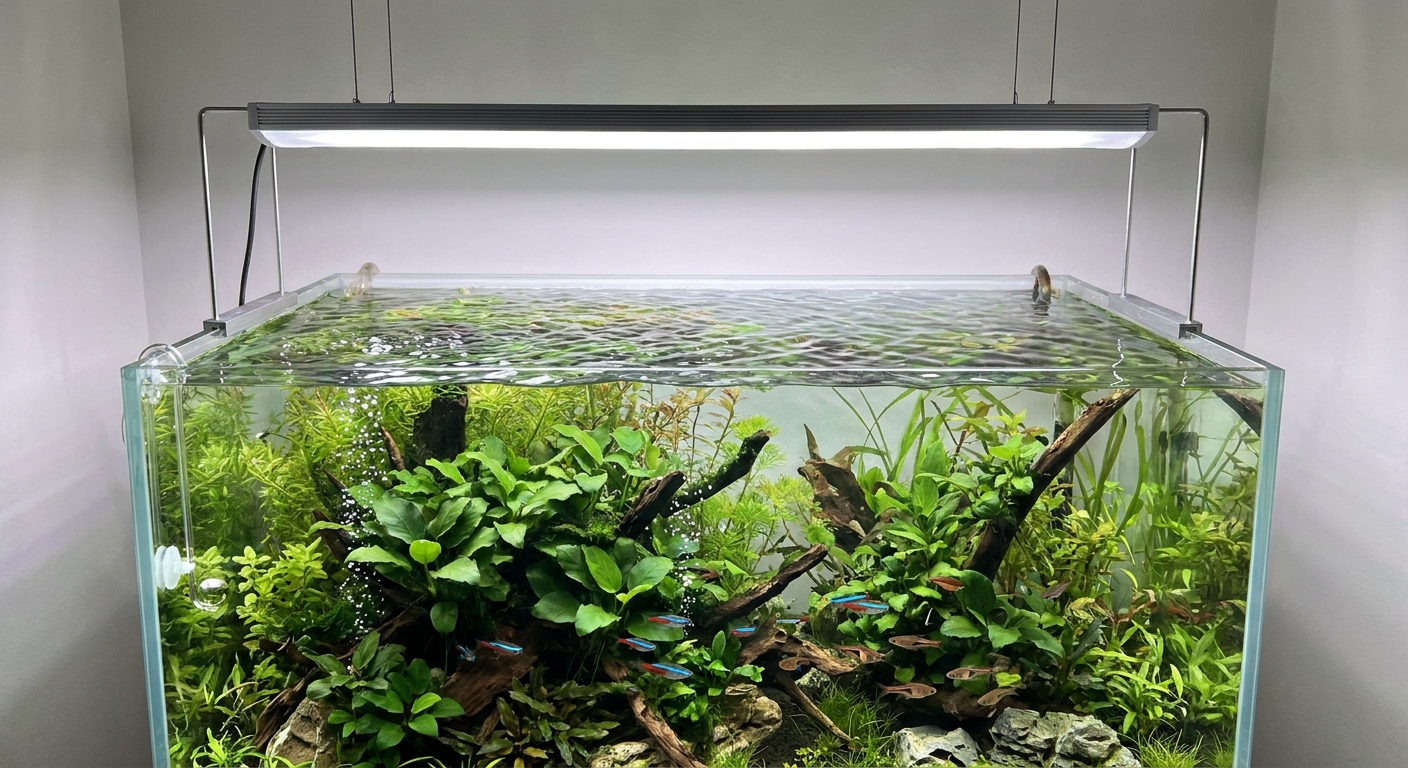
For a plant-first lighting approach, see planted tank lighting basics.
Blackout method
A blackout is a classic cyanobacteria tool because it attacks the photosynthetic advantage. It works best when paired with manual removal and improved flow.
How to do a blackout
- Remove as much cyanobacteria as possible first, then do a water change.
- Turn off the aquarium light for 72 hours (3 full days).
- Cover the tank so room light cannot sneak in.
- Keep filtration and circulation running. Add an airstone if oxygen tends to dip at night.
- Feed lightly (or skip feeding) during the blackout to reduce oxygen demand and waste.
- Do a large water change at the end, then siphon any remaining mats.
- Restart lighting gently (reduced duration for a few days) while maintaining nutrients and flow.
Blackouts are not the same as a “dark start” used for new aquascapes, but the idea of denying light is similar. If you are planning a new layout and want to prevent early algae pressure, the dark start method is worth a look.
Targeted treatments
Sometimes cyanobacteria is so established that you need a targeted treatment to break the cycle. Treatments work best when you have already improved circulation and stabilized your nutrients and CO2.
Option A: hydrogen peroxide spot treatment
Hydrogen peroxide can help loosen or kill patches, especially on hardscape. It can also stress sensitive plants and shrimp if overdosed.
- Turn off flow.
- Use a syringe to apply directly onto the affected area.
- Wait a short period, then restore flow.
- Follow with a water change if you treated multiple areas.
Safety notes: Dose ranges vary by concentration and tank volume. Follow a trusted regimen, start low, watch livestock closely, and avoid blasting delicate mosses and fine-leaved stems.
Option B: erythromycin as a last resort
Erythromycin is widely known for knocking back cyanobacteria, but it can also disrupt beneficial bacteria communities and it does not solve the underlying imbalance. Legal access and use vary by country, and some formulations may be risky for invertebrates. If you choose this route:
- Follow the product label exactly and avoid improvising.
- Remove chemical filtration like activated carbon during dosing.
- Turn off UV sterilizers during treatment if you run one.
- Increase aeration. Watch fish closely for stress. If they are gasping, reduce or pause CO2 and prioritize oxygen.
- Plan for extra monitoring afterward, including possible ammonia and nitrite checks.
Important: Overuse of antibiotics can contribute to resistance and may harm microbial stability. Consider this a reset button, not the main strategy.
Aftercare: keep it from coming back
Cyanobacteria’s favorite trick is returning right where it started. The goal after removal is steady plant growth and steady tank conditions.
A simple prevention checklist
- Weekly maintenance rhythm: water change, gentle substrate vacuum in hotspots, glass wipe, trim dying leaves.
- Consistent nutrients: avoid nitrate sitting at zero for long stretches, keep fertilization predictable.
- Flow check: watch where debris settles and adjust outflow so it does not build up.
- Stable photoperiod: resist the urge to crank light to “fight algae” or to chase faster growth.
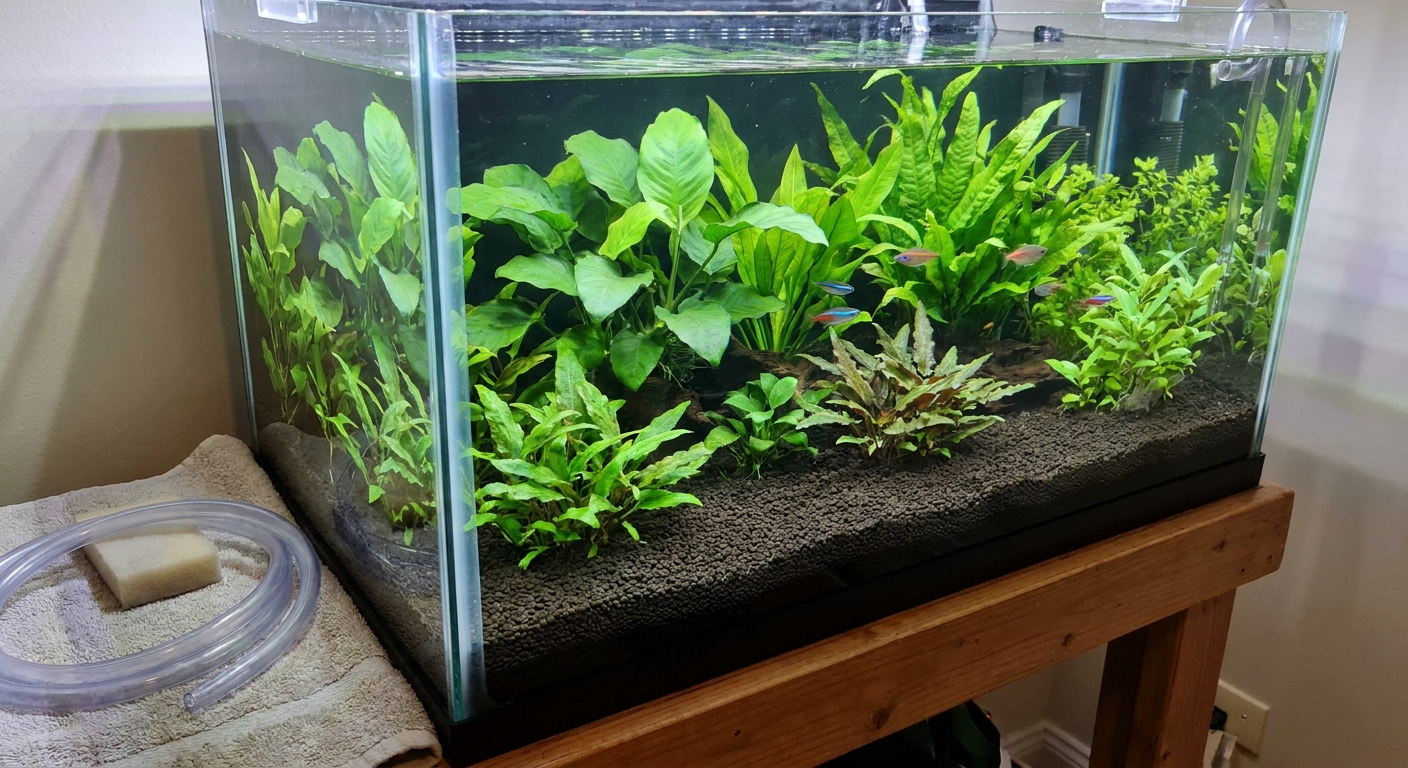
- Plant mass matters: more healthy plant growth means fewer openings for opportunists.
Troubleshooting
It keeps coming back in the same corner
- That corner is a dead spot. Redirect flow or add gentle circulation.
- Remove detritus traps behind hardscape and under dense plants.
Nitrate reads zero and plants look stalled
- Increase nitrogen availability gradually and consistently.
- Reduce light intensity or photoperiod until growth resumes.
It appears after big cleanings or big changes
- Stability wins. Make changes smaller and more frequent.
- Keep CO2 steady and avoid large swings in dosing and light.
It spreads over the carpet
- Thin the carpet so water can move through it.
- Vacuum lightly at the surface and improve low-level flow across the substrate.
Quick FAQ
Is cyanobacteria dangerous to fish or shrimp?
It can be. Some cyanobacteria can produce toxins, and thick mats can also contribute to oxygen problems. In day-to-day aquariums, the most common risk is nighttime oxygen stress from respiration plus reduced surface agitation in a tank that is already “covered up.” During treatment, extra aeration and good circulation are your friends.
Will my clean-up crew eat it?
Most algae eaters and shrimp do not reliably consume cyanobacteria. It tends to be unappetizing and spreads faster than it can be grazed.
Should I scrub everything?
Siphon and lift first. Aggressive scrubbing can shred cyanobacteria into tiny pieces that spread. If you do scrub hardscape, do it while siphoning the loosened material out.
Can I beat it without chemicals?
Yes, many planted tanks beat cyanobacteria with manual removal + better flow + nutrient stability, and a short blackout if needed. Targeted treatments are for stubborn cases or when time is critical.
A calm plan that works
If cyanobacteria is waving at you from the substrate, here’s a reliable order of attack:
- Remove as much as possible by siphoning in sheets.
- Fix flow so the problem area is no longer stagnant.
- Stabilize nutrients, especially if nitrate has been sitting at zero.
- Reduce light pressure temporarily and stabilize CO2 if you run it.
- Blackout for 72 hours if the tank needs a hard reset.
- Treat carefully only if needed, and only alongside the root-cause fixes.
With a steady hand and a steady schedule, the plants rebound, the hardscape looks crisp again, and cyanobacteria runs out of easy wins.