Let’s keep those crystal clear curves sparkling, friend. Glass lily pipes and CO2 diffusers make a planted tank look like a tiny underwater gallery, but they also love collecting two troublemakers: green algae and chalky mineral buildup. The goal is simple: clean them thoroughly without scratching, cracking, or leaving behind anything unsafe for shrimp, fish, or plants.
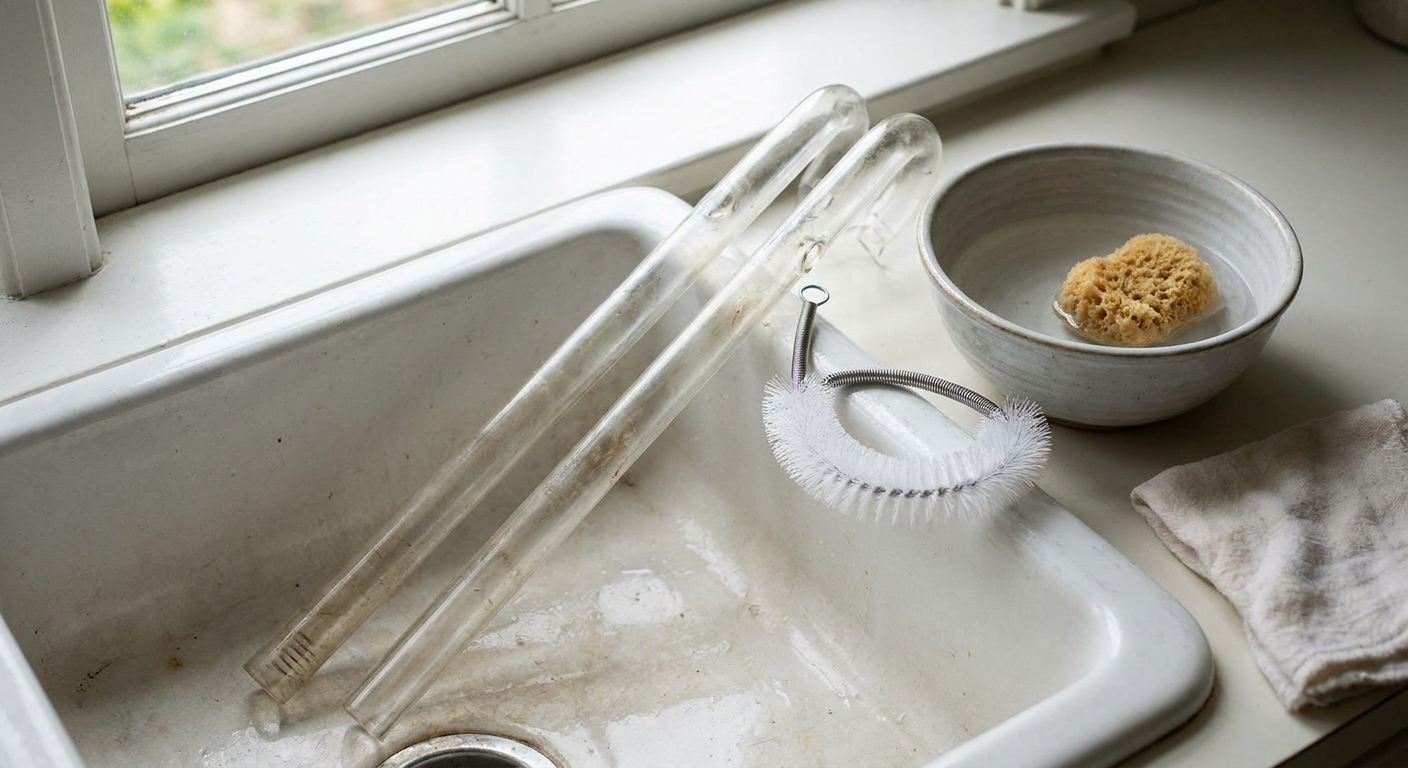
What you are cleaning off
- Soft green algae film: wipes and brushes off fairly easily.
- Hard spot algae: tougher green dots that cling to bends and rims.
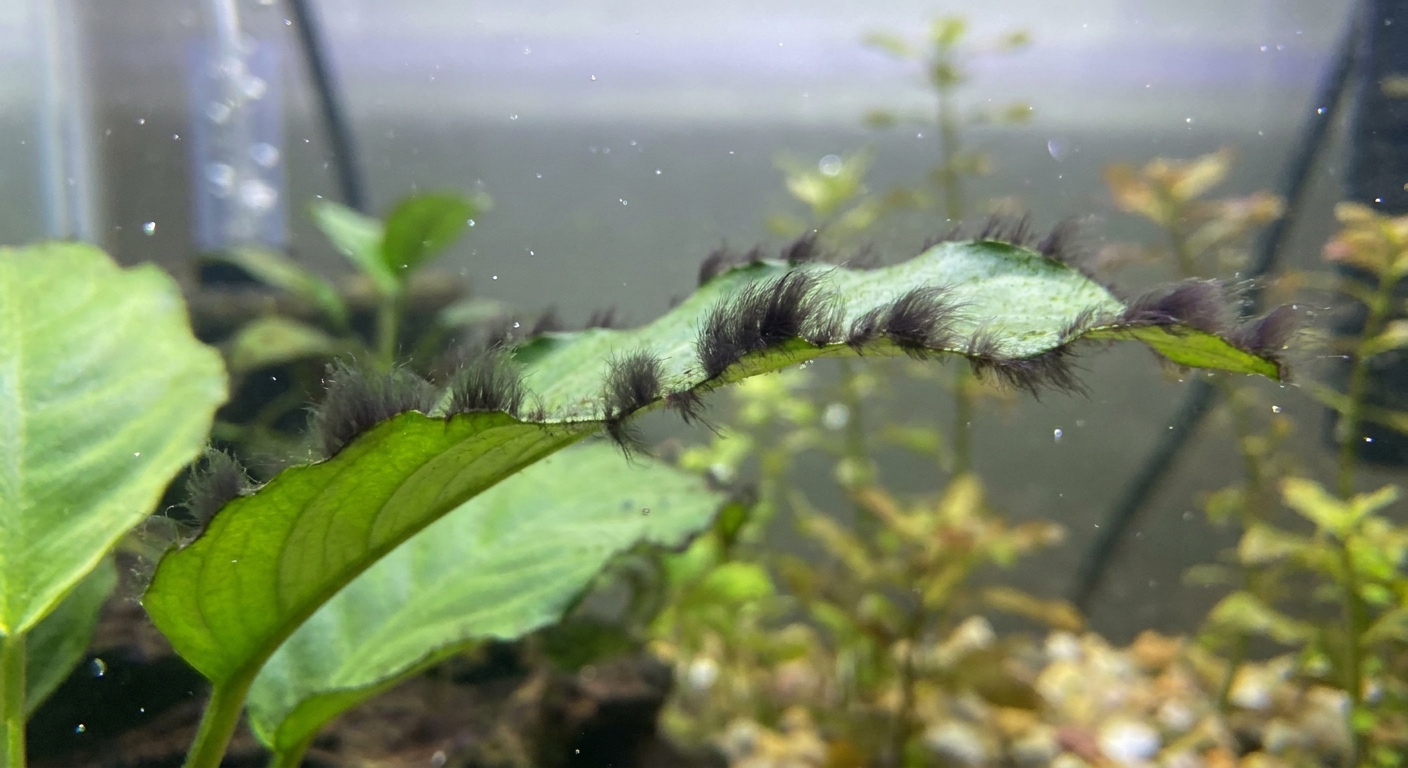
- Black beard algae (BBA): dark, fuzzy tufts that often need a chemical dip and repeat cycles to fully let go. If BBA keeps returning, see How to Get Rid of Black Beard Algae (BBA).
- Mineral scale: white, gray, or tan crust from evaporation and hard water, especially on lily pipe lips and diffuser ceramics.
Supplies that make cleaning safer
Gather everything first so glass parts are handled less.
- Two buckets or bowls (one for cleaning, one for rinsing)
- Household unscented bleach (plain sodium hypochlorite, no fragrances or additives, no splashless gels)
- Dechlorinator that neutralizes chlorine and chloramine
- Spring brush set sized for lily pipes (intake, outflow, and return bends)
- Soft bottle brush or very soft toothbrush (for fittings and edges)
- Nitrile gloves and eye protection
- Microfiber cloth (optional, for drying only)
- Paper towels and a stable surface
Skip these: abrasive pads, salt scrubs, metal brushes, and anything gritty. They can haze glass and damage diffuser ceramics.
Safety first, especially with bleach
- Never mix bleach with acids like vinegar or citric acid. That combination can create dangerous chlorine gas.
- Keep cleaning containers away from pets and kids, and label them if needed.
- Never pour bleach dip water into or near your aquarium. Dispose of it down a household drain with plenty of running water.
- Rinse well and always use dechlorinator before anything goes back on the aquarium.
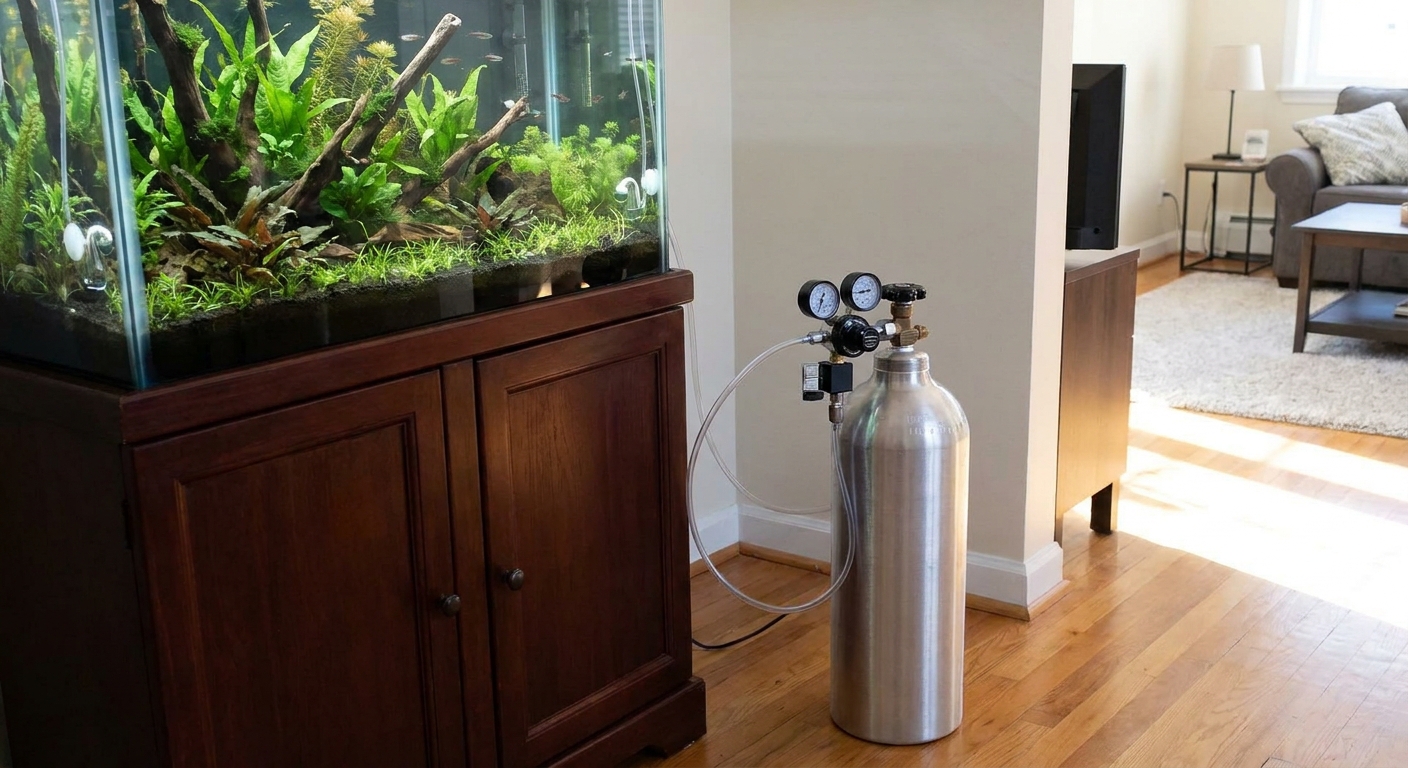
- If you run pressurized CO2, close the cylinder and release line pressure before disconnecting equipment. For setup and safe handling, see Pressurized CO2 Setup for Planted Aquariums.
Clean glass lily pipes
This method handles most algae and a lot of stubborn buildup while being gentle on the glass.
1) Remove the pipes without twisting stress
- Turn off the filter.
- Lower the water level a little if it makes removal easier.
- Support the glass near the bend with one hand while loosening tubing with the other.
- Set the pieces on a towel, not directly on a hard counter.
2) Pre-rinse to remove loose debris
Rinse under tap water to flush out detritus. This keeps your cleaning bath working on algae and scale instead of gunk.
3) Prepare a mild bleach dip
A safe, common working mix is 1 part bleach to 19 parts water. Household bleach strengths vary, but this ratio lands in a gentle range that is effective for algae when paired with brushing.
- Use cool water.
- Fully submerge the lily pipes.
- Soak time: 5 to 15 minutes for algae film and some BBA on glass. Check progress rather than pushing time longer. Persistent patches usually respond better to a second short cycle than one long soak.
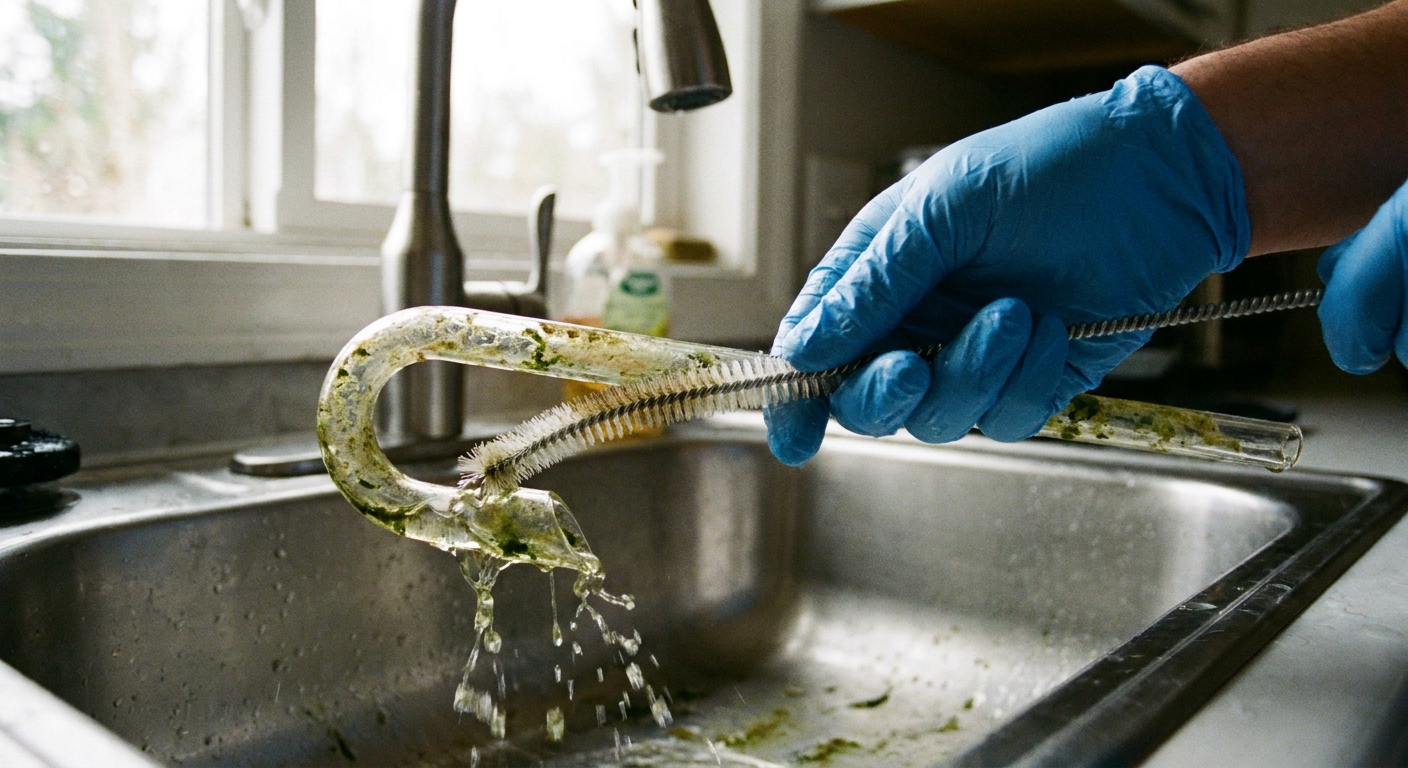
4) Brush gently, especially at bends
Feed a spring brush through the pipe slowly. Let the bristles do the work.
- Use long, smooth passes rather than aggressive scrubbing.
- At tight curves, rotate the brush while moving it to avoid catching and stressing the glass.
- For lips and joints, use a soft toothbrush or bottle brush.
5) Rinse, then dechlorinate soak
- Rinse under running tap water for at least 1 minute per piece, inside and out.
- Fill a clean container with water and add a normal dechlorinator dose for the full container volume, just like you are treating tap water for a water change.
- Soak the glass pieces for 10 to 15 minutes, then swish them around.
- Rinse again with clean water.
Shrimp keeper extra-safety habit: After the dechlorinator soak, do one last rinse with water treated with dechlorinator. It adds peace of mind for delicate livestock.
6) Air dry (optional, but useful)
Let the pipes air dry on a towel. Drying makes leftover haze easier to spot and keeps slippery glass from being handled more than necessary. Do not rely on smell alone as a safety check. Rinsing and dechlorinating are what make it safe.
Clean a glass CO2 diffuser
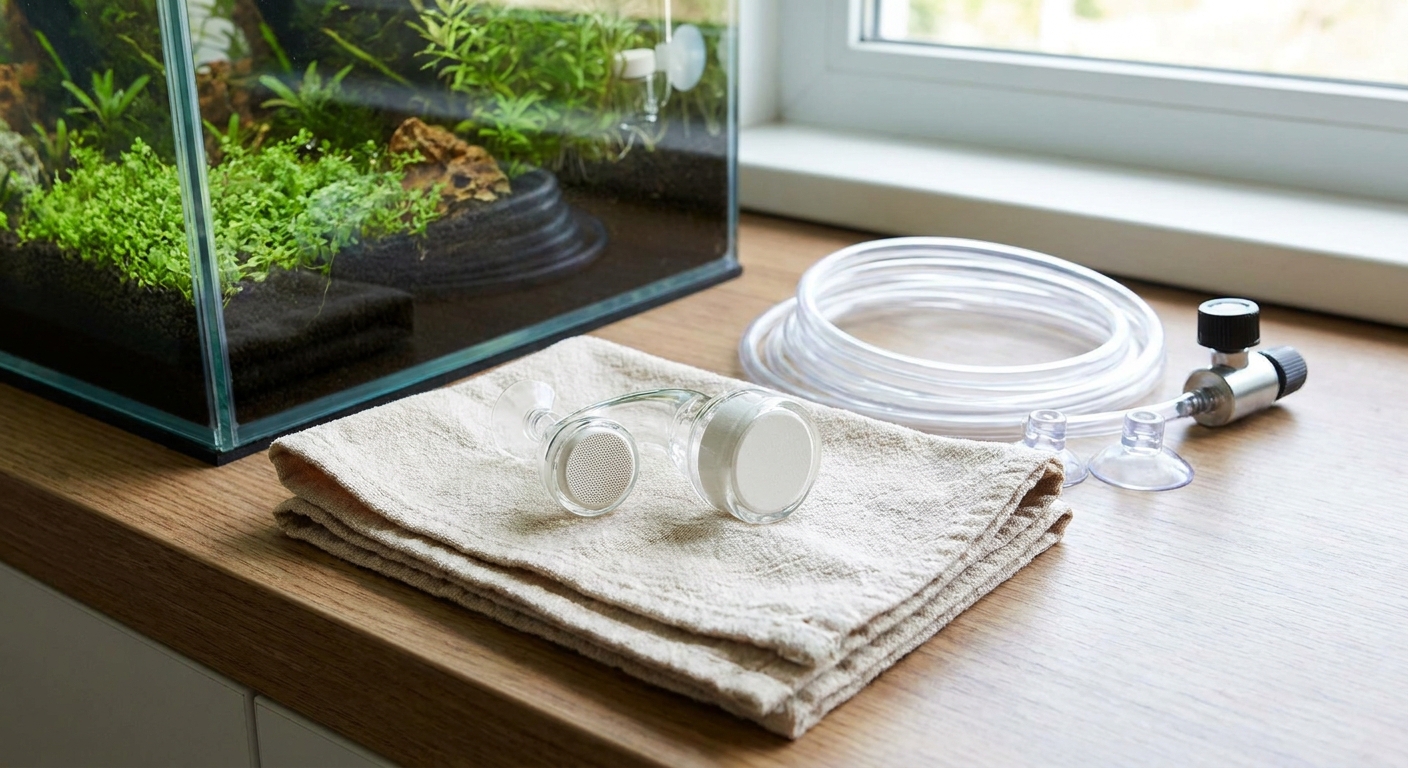
Diffusers have two parts that get dirty in different ways: the glass body and the ceramic disc. The ceramic is where microbubbles form, and it clogs easily with algae and biofilm.
1) Disconnect safely
- Turn off CO2 at the regulator or generator.
- Bleed pressure from the line if possible, then remove the diffuser carefully.
- If you have a bubble counter or check valve, keep track of flow direction when reconnecting.
2) Bleach dip to reopen the ceramic pores
Use the same 1:19 bleach-to-water mix.
- Submerge the diffuser fully so the ceramic disc is covered.
- Soak time: 10 to 20 minutes is often enough for clogged ceramics. Check it rather than automatically going longer.
- Do not scrub the ceramic with anything abrasive. It can damage the surface and make clogging worse later.
3) Rinse thoroughly, then dechlorinate longer than you think
Because the ceramic is porous, it can trap a little bleach solution in its tiny pores. That is why the dechlorinator step matters.
- Rinse under running tap water for 1 to 2 minutes.
- Soak in dechlorinated water for 20 to 30 minutes.
- Swish and refill the dechlorinated soak once if you want maximum safety.
- Rinse again with clean, dechlorinated water if available.
4) Test bubbles in a cup before it goes back in the tank
Place the diffuser in a cup of clean water and gently blow through the airline or run a tiny bit of CO2 briefly. You want to see even, fine microbubbles. If one area is blocked, the ceramic likely needs a repeat soak.
Mineral scale and white crust
Bleach is great for organics like algae and biofilm, but it does not dissolve mineral deposits well. If you have heavy scale, you have two safe options.
Option A: Manual removal
- Use spring brushes to loosen deposits inside pipes.
- For rims and edges, use a soft toothbrush and patience.
- Repeat shorter cleaning cycles more often rather than forcing one aggressive cleaning.
Option B: Acid soak (separate from bleach, always)
If you choose an acid soak, do it in a completely separate container, and only when there is zero bleach involved. Many aquascapers use diluted citric acid or vinegar for scale, then rinse extremely well.
- Vinegar: a common approach is a 1:1 mix of white vinegar and water for 30 to 60 minutes.
- Citric acid: a light soak can be made with a small spoonful in a bowl of warm water, then soak 30 to 60 minutes.
- Important: Never alternate between bleach and acid in the same session unless the item and container have been fully rinsed, washed, and dried in between.
- After an acid soak, rinse very thoroughly. Then consider a dechlorinator soak anyway before returning equipment to the aquarium.
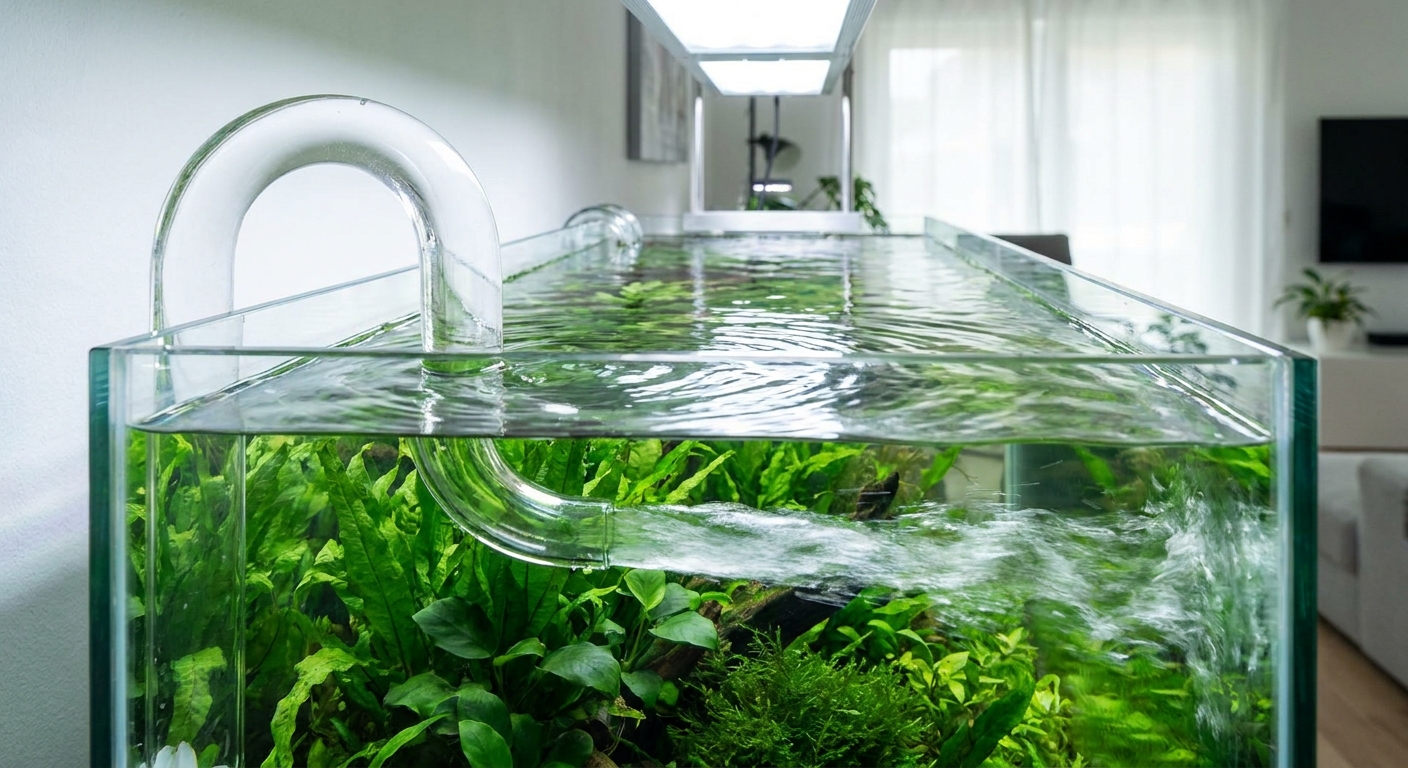
Scale that forms quickly is usually driven by hard water and evaporation at the waterline. Splashing and strong surface agitation can speed up deposits on lily pipe lips and around diffuser glass. Better circulation can also reduce dead spots where film and deposits collect. See Water Circulation With Lily Pipes and Surface Skimmers.
Reinstall without leaks or cracks
- Warm tubing in hot tap water for a minute so it slips on instead of forcing the glass.
- Support the glass near the joint while pushing tubing on, so the stress does not concentrate at the bend.
- Align lily pipes so they are not torqued sideways by stiff hoses.
- If your setup uses small O-rings or gaskets, avoid long bleach soaks on them. Rinse them well, and replace any that look dry, flattened, or cracked.
- After restarting the filter, watch for tiny drips for the first few minutes.
How often to clean them
- Lily pipes: often every 2 to 4 weeks in bright, high nutrient planted tanks. Longer is fine if flow stays strong and glass stays clear.
- CO2 diffusers: whenever bubble size gets larger, output becomes uneven, or algae starts shading the ceramic. Many tanks land around every 3 to 6 weeks.
If you are constantly battling fast regrowth, it can be a sign that the tank is out of balance. Extra light duration, unstable CO2, and low flow areas are common culprits. For lighting fundamentals, see Planted Tank Lighting: PAR, Spectrum, and Photoperiod.
Troubleshooting
The glass looks cloudy even after cleaning
- It may be mineral haze rather than algae. Use a separate scale-focused soak or repeat gentle brushing.
- Check for micro-scratches from abrasive pads. Once glass is scratched, it can look hazy under tank lights.
The diffuser still makes big bubbles
- Ceramic pores may still be clogged. Repeat a short bleach soak and longer dechlorinator soak.
- Confirm CO2 line pressure is adequate and the check valve is oriented correctly.
BBA comes back quickly on the outflow
- Increase or improve circulation patterns so the outflow area is not a CO2 swing zone.
- Review CO2 consistency during the photoperiod. See Pressurized CO2 Setup for Planted Aquariums for stability tips.
A shrimp-sized checklist
- Use unscented bleach for algae and biofilm.
- Use spring brushes for bends. No abrasives.
- Rinse, then soak in dechlorinator, especially for porous ceramics.
- Never mix bleach and acids, ever.
- Dispose of bleach water safely, far away from the tank.
- Reinstall with softened tubing and gentle support to protect glass.
When those lily pipes gleam and that diffuser releases a steady stream of tiny bubbles, the whole aquascape feels brighter. With a warm wave of my little antennae, I’m cheering you on as you keep your underwater jungle looking crisp and clean.