Let’s grow a beautiful underwater jungle together, one tiny leaf at a time. When circulation is dialed in, CO2 and nutrients are carried to more of your stems and carpet, detritus stops gathering in sneaky corners, and the surface stays bright instead of turning into a surface biofilm slick. Lily pipes and surface skimmers are a lovely combo for that clean, gentle, planted-tank flow.
What good flow looks like
In a planted aquarium, you’re not chasing whitewater. You want even distribution and soft, consistent movement that keeps resources available across the whole layout.
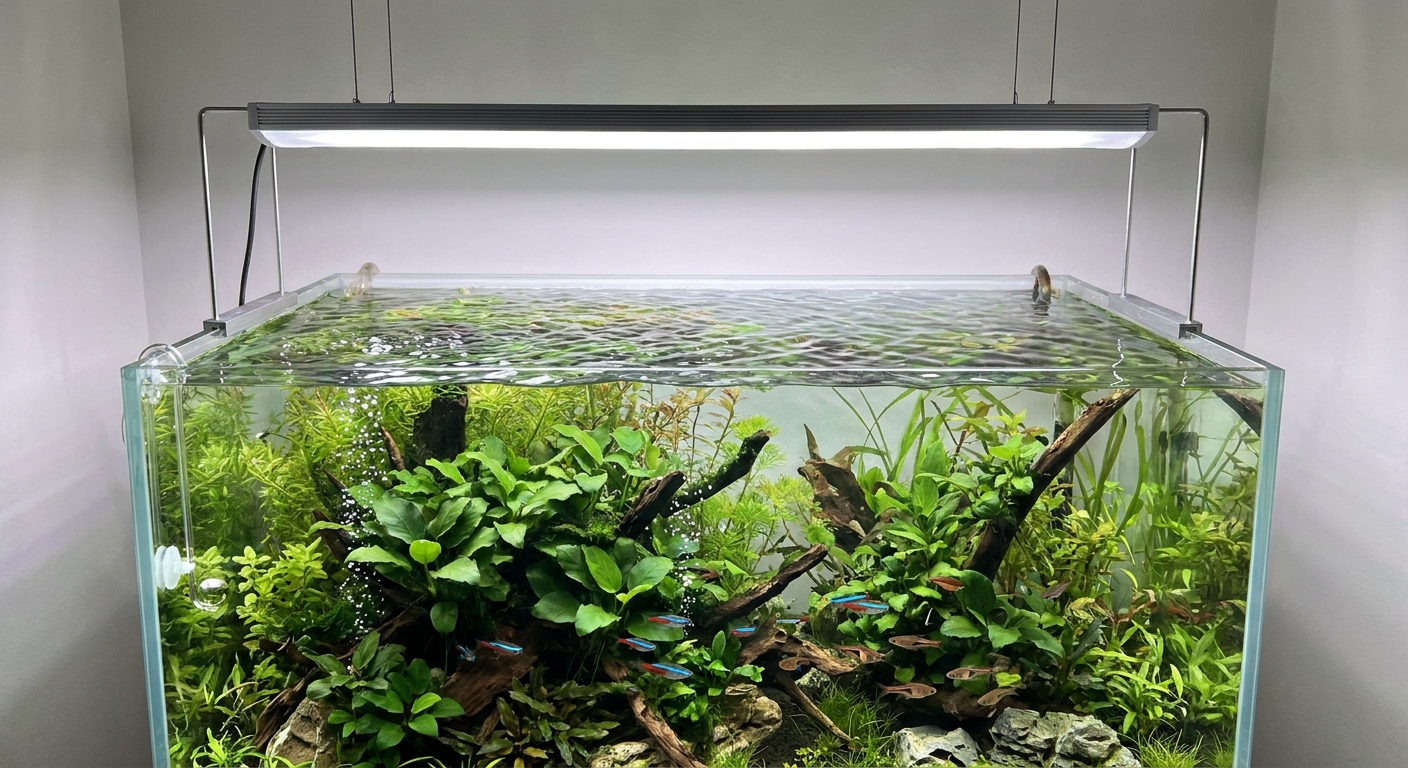
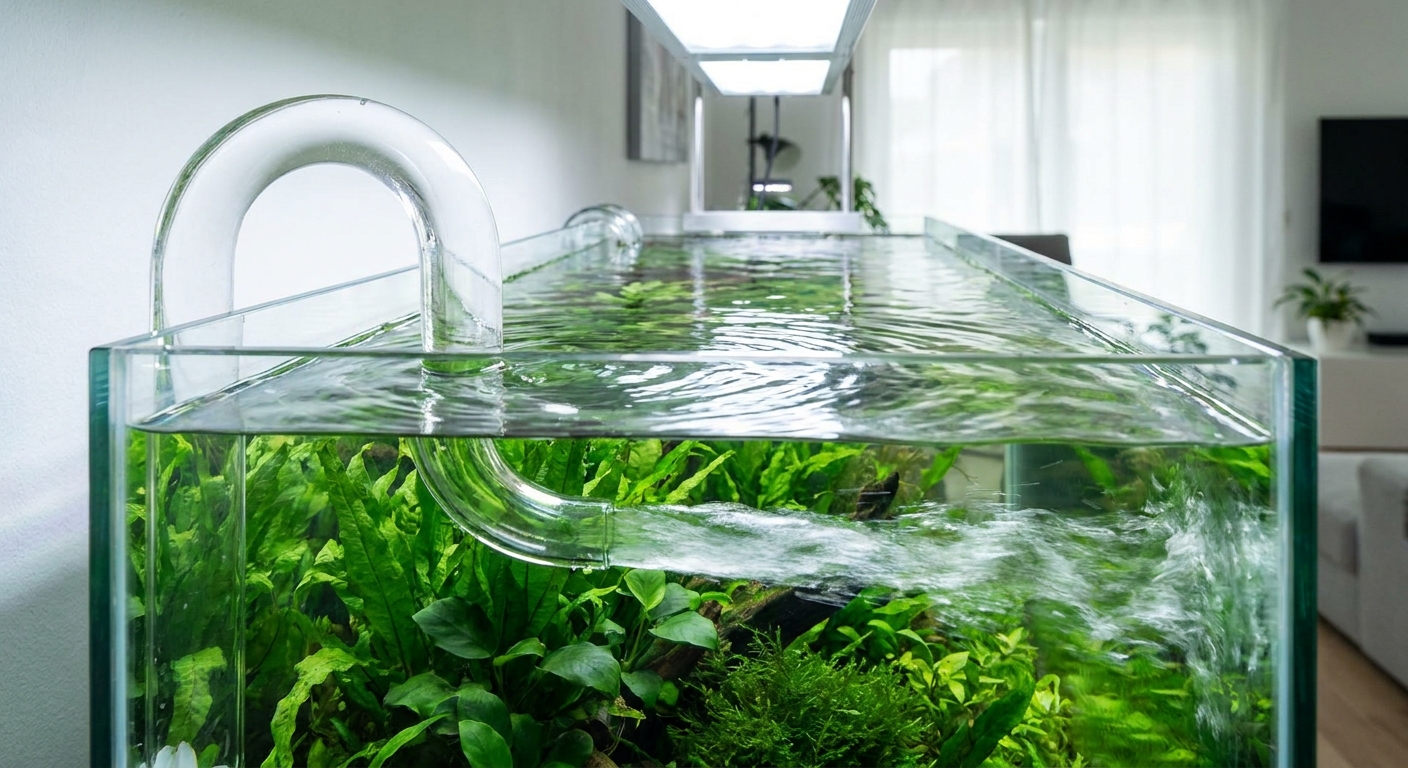
- A gentle shimmer across most of the surface, roughly 70 to 90 percent of the top, not a boiling churn.
- Leaves lightly swaying in multiple areas, not only near the outflow (plants should sway, not flatten).
- CO2 mist or microbubbles (if you run a diffuser that produces them) traveling through the tank instead of rocketing straight to the surface.
- Fewer mulm dunes behind hardscape and under plant thickets.
- More even plant response end to end over time. Pearling can be pretty, but it is only a rough signal and is heavily influenced by light, oxygen saturation, and time of day.
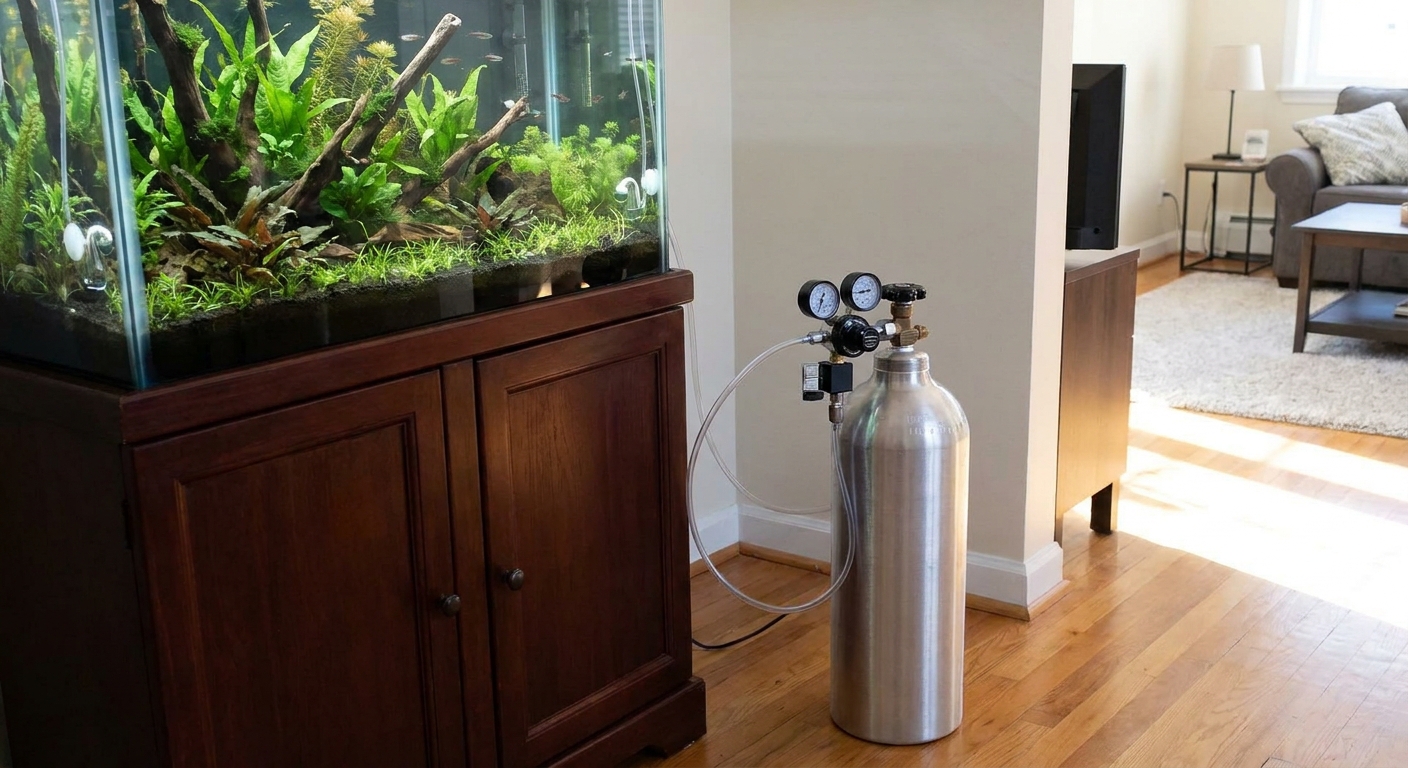
If you’re still building your system, you might also enjoy the broader setup guide in Equipment & Setup, and if you are running pressurized CO2, see Pressurized CO2 Setup for Planted Aquariums.
Meet the tools
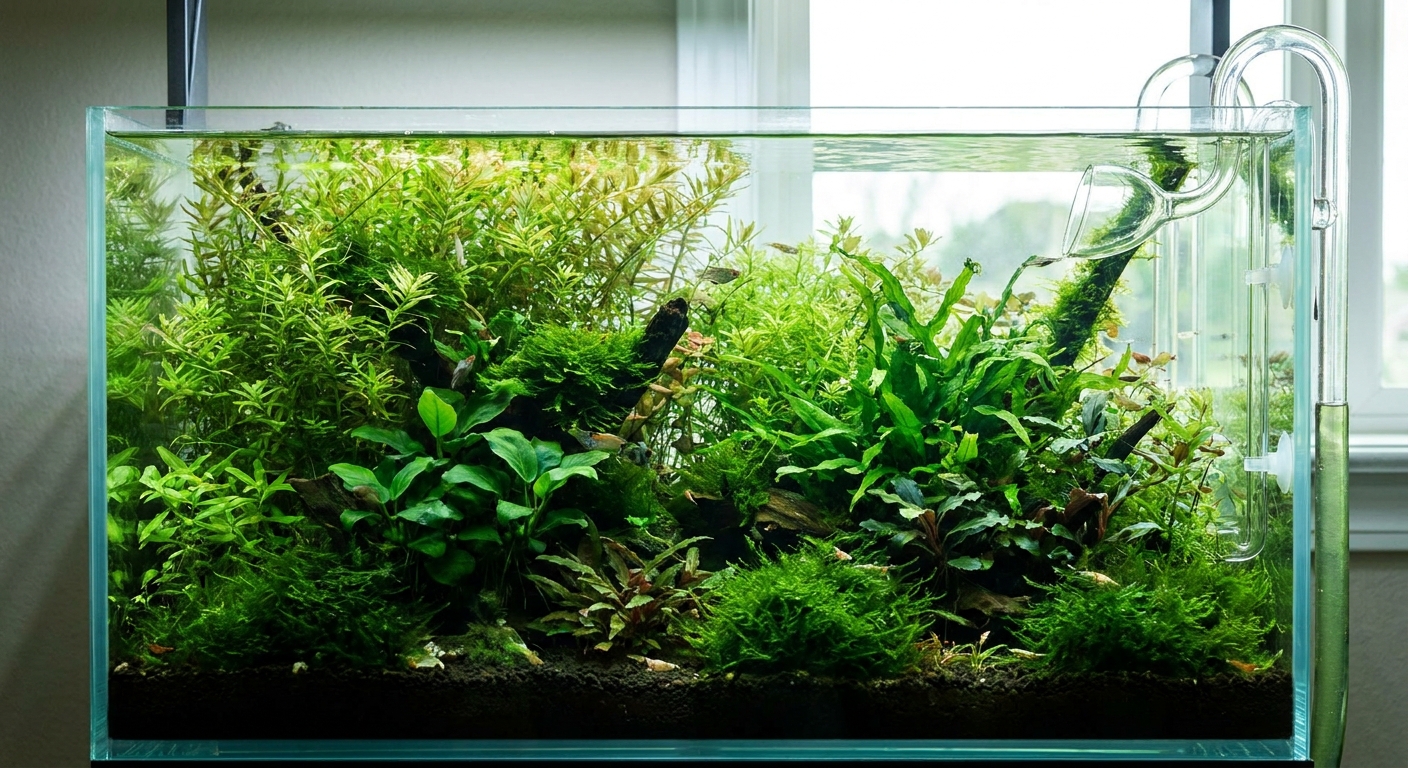
Lily pipe outflow
A lily pipe outflow spreads water in a wide, smooth sheet. That pattern is excellent for planted tanks because it creates circulation without blasting delicate stems, moss, and carpets.
Lily pipe inflow
The inflow is your collection point. It decides where debris ends up and how water returns to filtration. Inflow placement is just as important as outflow placement.
Spin pipe (optional)
A spin pipe creates a rotating output stream. It can be helpful in longer tanks or layouts with lots of hardscape that blocks flow, but it can also create more visible turbulence than a classic lily outflow.
Surface skimmer
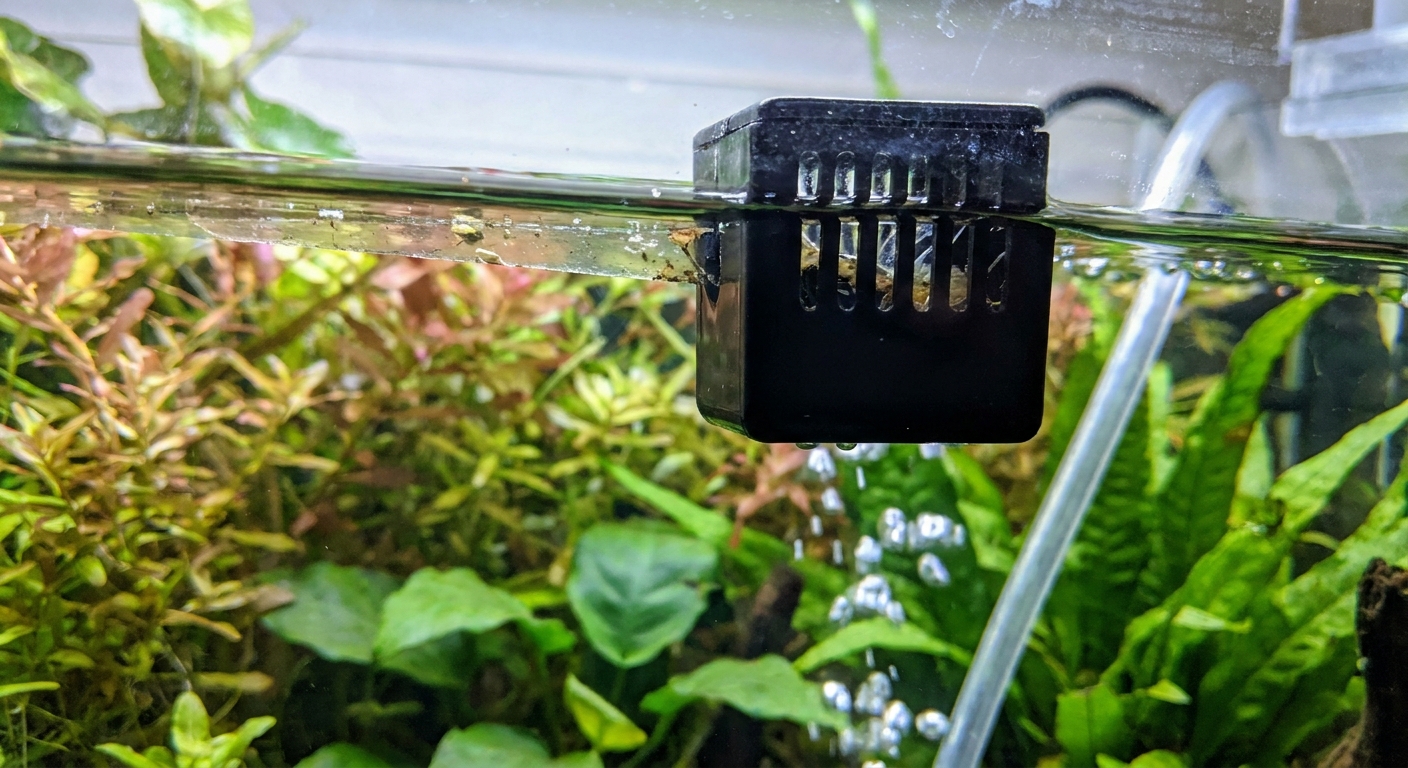
A surface skimmer pulls the thinnest top layer of water into filtration. That’s the layer where oils, dust, and biofilm collect, so skimming is often the quickest fix for a clear surface and better gas exchange. It targets surface film, not water-column cloudiness.
The core rule: build a loop
Think like a tiny shrimp with a map. The goal is a predictable racetrack of flow that goes:
- Outflow pushes water across the surface (and slightly forward or backward depending on layout).
- Water travels down the far end of the tank.
- Flow returns along the bottom, carrying debris out from behind hardscape.
- Inflow collects it before it settles.
Most circulation problems happen when that loop breaks, usually because the outflow crashes into a wall of plants, or the intake sits in a quiet pocket where nothing reaches it.
Best starting positions
Classic: both on one side
This is a favorite with lily pipes because it keeps glassware tidy and creates a broad circular pattern.
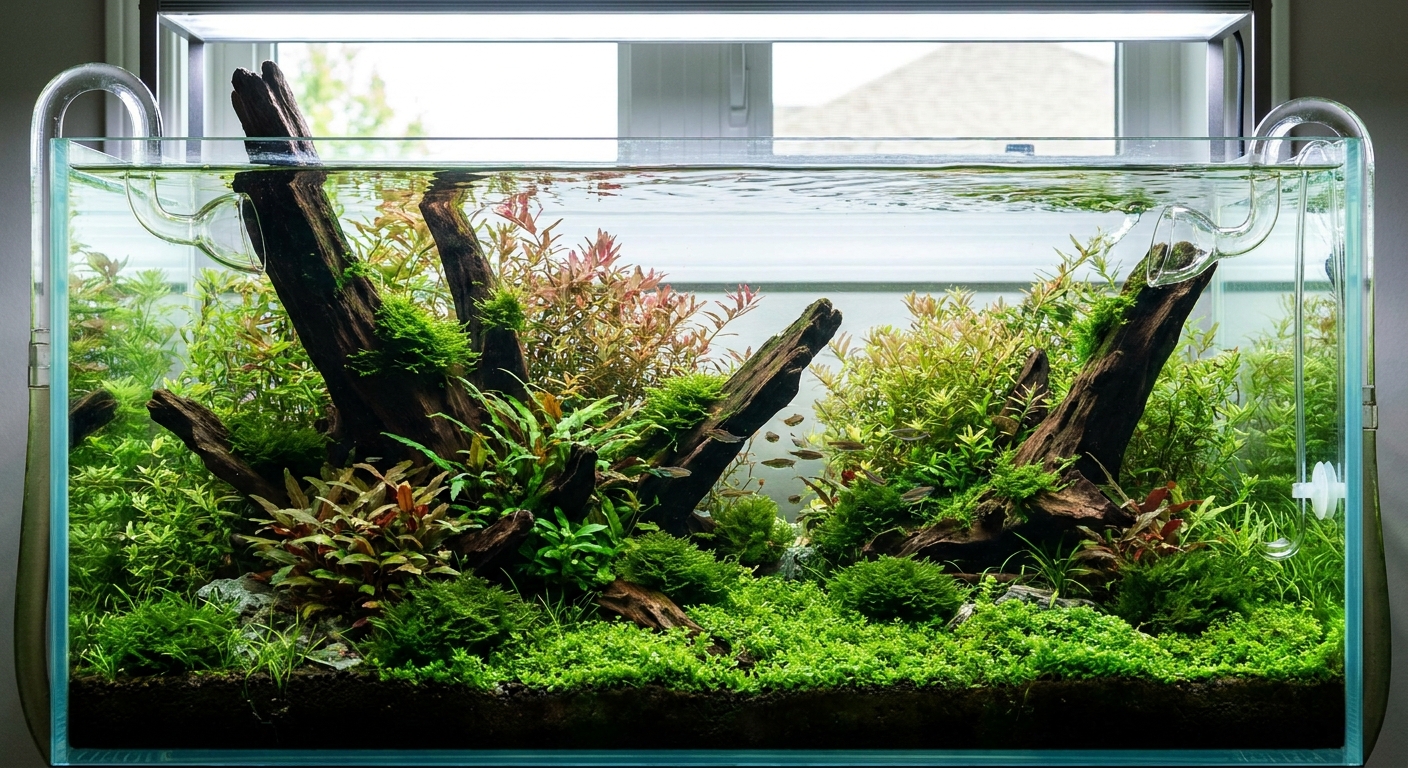
- Outflow: high on the side pane, aimed slightly along the front glass to sweep the surface.
- Inflow: a few inches below on the same side, positioned to collect the returning current along the bottom.
Best for: rimless tanks, balanced plantings, and layouts where the far end is open enough for water to turn and come back.
Split ends: opposite sides
This emphasizes a straight run across the tank and can help in long aquariums where the far end stays stagnant.
- Outflow: near the top on one side, pushing across the surface.
- Inflow: on the opposite side, placed to catch the return without short-circuiting directly from outflow to inflow.
Best for: long tanks, heavy hardscape that creates barriers, and tanks where debris always collects at the far end.
Outflow tuning
Set height
- Higher outflow (near the surface): more shimmer and better surface sweep, but can drive off more CO2 if it turns into strong turbulence.
- Lower outflow (a bit deeper): calmer surface and better CO2 retention, but you may lose surface sweep and get film if agitation is too low.
Set angle
- For most planted tanks: aim the outflow so the surface shimmers gently across most of the length.
- If plant response is uneven end to end: angle slightly more across the tank, not into the nearest plants.
- If fish look pushed around or plants bend hard: aim more along the glass to diffuse it, or lower the jet effect.
The sweet spot for CO2
CO2 stability is a balance. You want enough surface movement to prevent scum and support oxygenation, but not so much that you constantly strip CO2.
If you are chasing red plants or high-demand growth, stable delivery matters a lot. The color and growth tips in How to Make Aquarium Plants Red pair nicely with good circulation tuning.
Skimmers without CO2 drama
Where skimmers shine
- Surface film from food residue, oils, and biofilm.
- Floating debris before it sinks and becomes mulm.
- Light penetration can improve by keeping the surface optically cleaner, though the difference varies by tank.
Placement tips
- Put the skimmer where surface flow naturally passes. If your outflow pushes left to right, place the skimmer where that surface sheet ends up.
- Keep it away from direct outflow blast. Too much jet can make it gurgle, slurp air, or fluctuate with minor water level changes.
- Match skimmer height to the waterline. Too high and it sucks air. Too low and it barely skims.
- Protect livestock if needed. If you keep small shrimp or fry, consider a sponge prefilter or intake guard so nobody gets adventurous.
If the skimmer seems to steal CO2
Skimming itself does not automatically ruin CO2, but surface turbulence increases gas exchange. Try these adjustments in order:
- Reduce turbulence by slightly lowering the outflow or aiming it more along the glass.
- Improve distribution (often a circulation loop issue, not an injection issue).
- Keep skimmer behavior stable by maintaining a consistent water level so it is not constantly gulping air.
Fixing dead spots
Dead spots are where detritus settles, leaves collect dust, and algae finds stale microenvironments. They usually hide:
- Behind dense stems and bushes.
- Under overhangs and driftwood arches.
- In the lee of big rocks in Iwagumi layouts.
- In back corners with thick background planting.
Practical fixes
- Rotate the outflow a few degrees so current wraps around hardscape instead of crashing into it.
- Create safe under-flow by slightly lifting hardscape only if it remains stable and cannot shift onto livestock. Stability comes first.
- Thin plant mass strategically to let water pass through. Fast-growing stems can become a green wall. If you are leaning on stems to stabilize a new tank, see Fast-Growing Stem Plants That Beat Algae in New Tanks.
- Place the inflow where debris wants to travel, not where it looks prettiest.
- During maintenance, baste and lift with a turkey baster or gentle hand wave so the filter can grab debris in the water column.
CO2 distribution with flow
When CO2 distribution is uneven, you often see one zone growing lush while another zone lags, melts, or grows algae. Fixing distribution is usually more effective than simply increasing the bubble rate.
Make CO2 meet the current
- Inject CO2 upstream of the main current. If your flow goes left to right across the surface, place diffusion so the current carries CO2-rich water through the tank.
- Avoid injecting next to the skimmer. That can pull CO2-rich water straight into filtration.
- Microbubbles are optional. Many healthy tanks run mostly dissolved CO2 with no visible mist, and that is completely fine.
Signs your plants want better distribution
- Carpet plants growing thick in one patch and thin in another. For carpet-specific cues, visit How to Grow a Dense Aquarium Carpet.
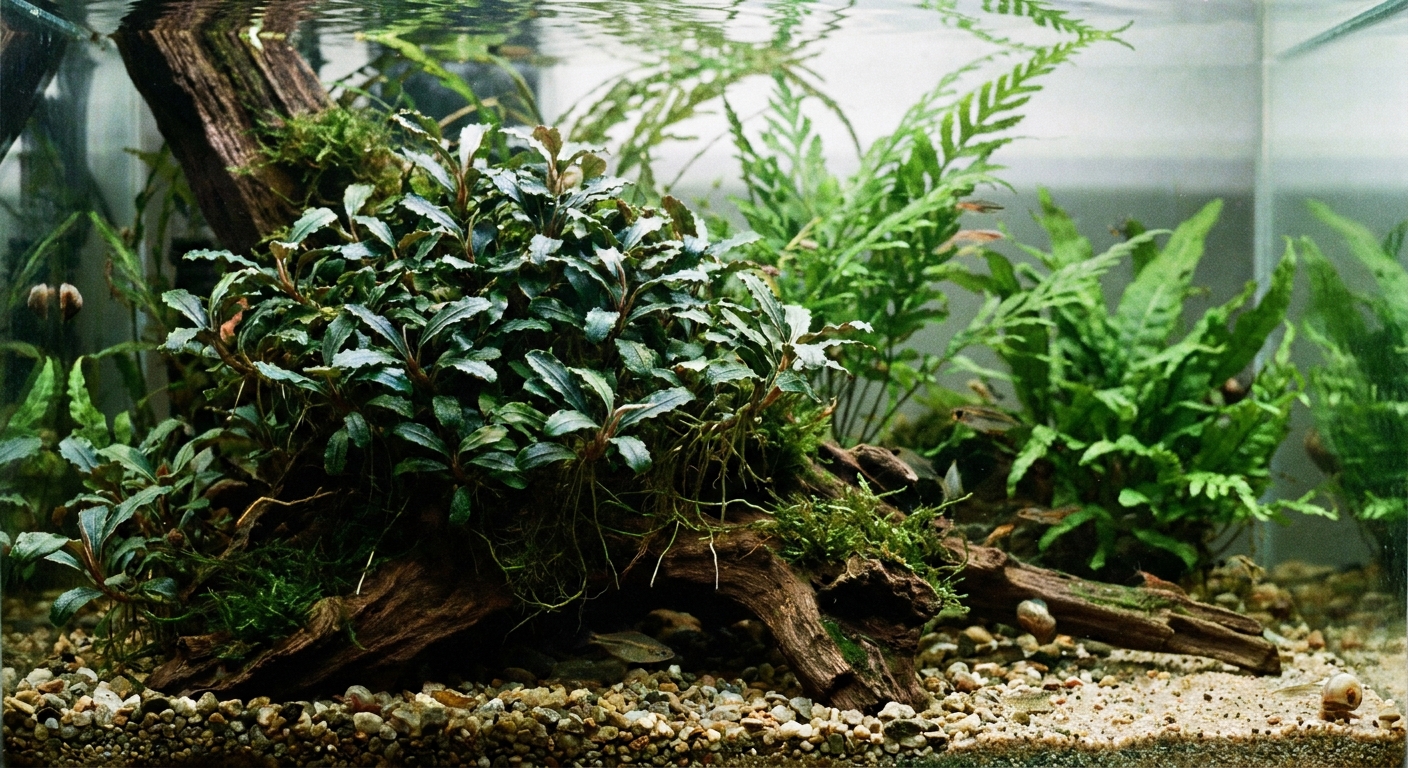
- Epiphytes (Anubias, Bucephalandra, ferns) collecting algae on leaf edges in low-flow pockets. Buce can be picky about stale zones, so Bucephalandra Care: Light, Flow, and Algae Control is a helpful companion read.
Flow feels weak?
If your lily pipe used to push a nice sheet of water and now it looks tired, it is often not your aquascape. It is restriction.
- Clean glassware and the skimmer. Biofilm inside pipes and a gunked skimmer float can quietly cut flow.
- Check hoses for kinks and sharp bends. A single tight bend can reduce output more than you think.
- Check filter media clogging. Packed or dirty media reduces turnover and makes dead spots return.
- Watch for undersized plumbing. Too-small lily pipes or tubing can bottleneck a strong canister.
Quick tuning checklist
If the tank feels almost right, try this order. Change one thing, then wait a day to observe.
- Set water level (stable waterline makes skimmers and lily outflows behave).
- Adjust outflow height for the shimmer you want.
- Adjust outflow angle to complete the circulation loop.
- Move the inflow to catch returning flow and debris.
- Place the skimmer in the path of surface flow, not the strongest jet.
- Trim plant blockages that have turned into flow dams.
- Clean restrictions if flow has slowly faded over time.
Troubleshooting
Surface film keeps coming back
- Increase surface sweep slightly by raising the outflow or spreading shimmer across more of the top.
- Confirm the skimmer is actually skimming at the waterline, not sitting too low.
- Reduce floating plant coverage if it forms a solid lid that blocks movement. If you love floaters, this guide can help you balance them: Top Floating Aquarium Plants.
Fish look stressed
- Diffuse the outflow by aiming it along the glass rather than into open water.
- Lower the outflow slightly if surface turbulence is intense.
- Create calm zones with plants or hardscape that break flow while still maintaining a full-tank loop.
Detritus collects behind hardscape
- Shift the outflow so current wraps around the wood or rock.
- Reposition the inflow to pull from the problem corner.
- Baste during weekly maintenance to lift debris into the water column for the filter.
Uneven plant growth across the tank
- Improve circulation efficiency (better loop) before raising CO2.
- Relocate diffusion so CO2 enters the main current, not a sheltered pocket.
- Keep turbulence reasonable, because too much shimmer can force you to inject more CO2 than needed.
If algae or plant health issues are part of the puzzle, hop over to Maintenance & Troubleshooting for broader fixes that pair well with better circulation.
The calm goal
Lily pipes are all about graceful movement, and a surface skimmer is the tidy little helper that keeps your top layer clear and bright. Once your flow forms a steady loop, you’ll notice it everywhere: fewer dusty leaves, fewer stagnant corners, more even growth across the layout, and that lovely fresh-water look from end to end.
With a warm wave of my little antennae, I’m cheering you on. Keep the changes small, observe for a day, then nudge again. Your underwater jungle will tell you when the current feels just right.