Let’s grow a beautiful underwater jungle together, one tiny leaf at a time!
Black beard algae (BBA) can feel extra rude because it grabs onto your prettiest leaves and hardscape, then waves around like it owns the place. The good news is BBA is beatable. The secret is not one magic bottle. It’s a calm, targeted plan: remove what you can, spot treat what you cannot, then fix the conditions that let it thrive.
How to tell if it’s really BBA
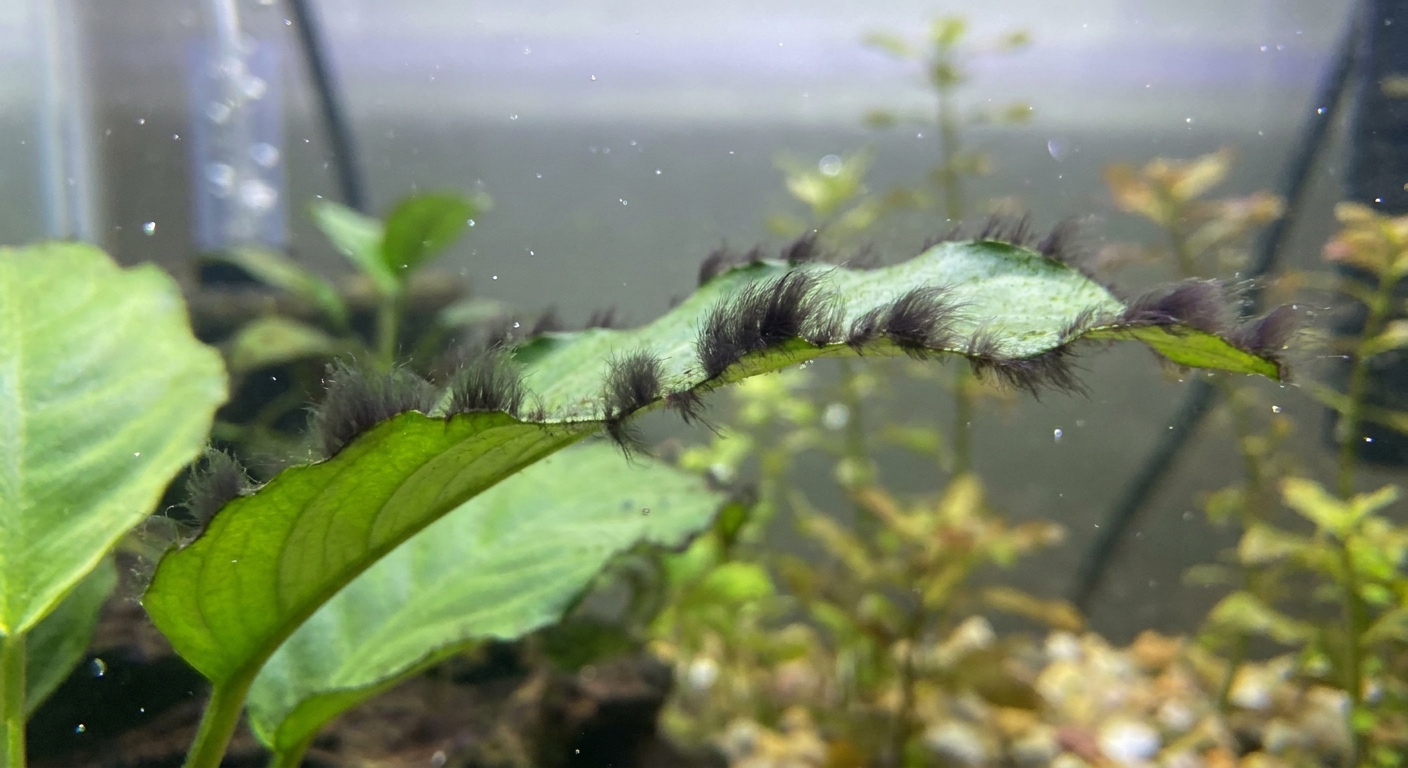
BBA is usually a deep gray, black, or very dark green algae that grows in short tufts. It often appears on:
- Leaf edges (especially slow-growing plants)
- Hardscape like driftwood and rocks
- Filter outlets, lily pipes, and areas with steady flow
- Older leaves that are already struggling
It looks like a tiny beard or brush. If you pinch it, it tends to feel coarse and stays attached.
Common look-alikes
- Staghorn algae: branching, antler-like strands, often lighter gray-green.
- Hair algae: longer, softer green threads that sway freely.
If you’re not sure what you have, pause here and confirm before you treat. Different algae respond best to different tactics, and a BBA-focused plan is not something you want to apply blindly to every mystery fuzz.
Why BBA shows up in planted tanks
BBA is less about “dirty water” and more about plant conditions that are out of balance or inconsistent. Maintenance and organics still matter, but in many planted tanks BBA really takes advantage when plants are not growing steadily.
The most common triggers are:
- Unstable CO2 (swings day to day, or not enough during peak light hours)
- Uneven circulation (dead spots, or flow that mostly jets past plants instead of through them)
- Too much light for the available CO2 and nutrients
- Organic buildup (mulm trapped in dense hardscape, clogged filters, decaying leaves)
- Neglected trimming (old leaves become algae magnets)
BBA commonly attacks slow growers like anubias, bucephalandra, ferns, and mosses because they cannot “outgrow” algae quickly. If you keep epiphytes, this pairing is especially important: good circulation, stable carbon, and gentle, consistent maintenance. If you want a deeper epiphyte-focused layout strategy, swim over to Epiphyte Design Strategies on Hardscape.
The quickest BBA rescue plan (in order)
When BBA is already visible, aim for a two-track approach: remove and kill what’s there, and stabilize what caused it.
- Manually remove the worst patches
- Spot treat remaining tufts
- Stabilize CO2 (or reduce light if you run low-tech)
- Improve circulation and cleanliness
- Stay consistent for 2 to 4 weeks
That timeline matters. BBA rarely disappears overnight, but it does lose its grip when conditions stop favoring it.
Step 1: Manual removal (your strongest move)
Manual removal is not just cosmetic. It removes living algae mass so you are not leaving a big, thriving patch in place while you work on the root cause.
On plant leaves
- Trim and discard badly infested leaves (especially on stem plants, crypts, swords).
- For epiphytes (anubias, buce, java fern), remove only the worst leaves if needed. Keep the plant’s healthy core.
- Do not scrub delicate moss aggressively. Instead, trim the affected section and siphon out loose bits. For moss maintenance, Aquarium Moss Pruning is a helpful companion.
On hardscape
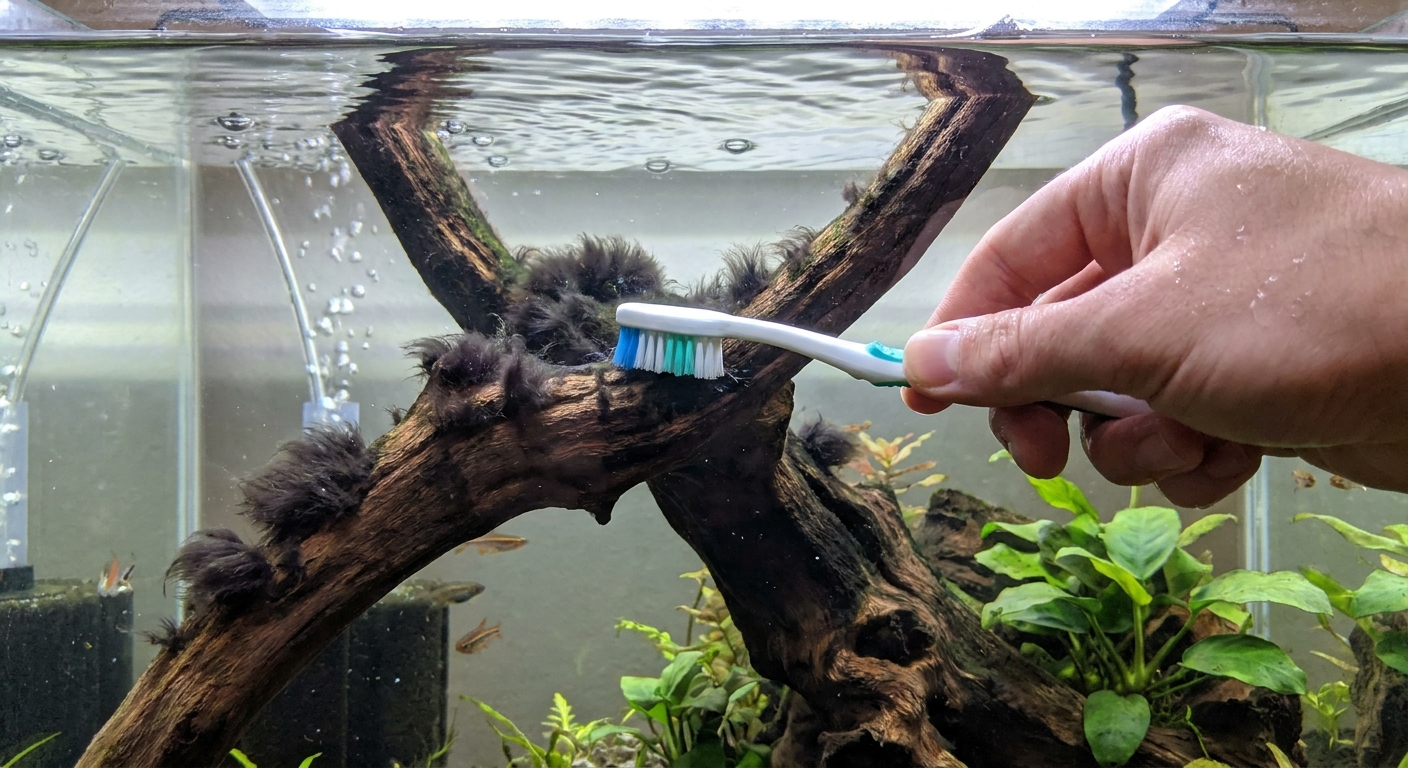
- Use a toothbrush or small detail brush to dislodge tufts while you siphon.
- If a rock can be removed safely, take it out and treat it separately (more on that below).
On equipment
- Clean lily pipes, skimmer parts, spray bars, and intakes. BBA loves stable surfaces in areas with consistent flow.
Tip from a tiny shrimp host: Always siphon while brushing. Even if BBA is not famous for “fragmenting and reattaching” like some green hair algae, loosened pieces and spores can still get moved around the tank, and you do not want extra mess settling elsewhere.
Step 2: Spot treatments that actually work
Spot treating is best for BBA that is firmly attached to hardscape, equipment, or stubborn leaf edges. Two common tools are hydrogen peroxide and liquid carbon products (often glutaraldehyde-based). Both can work, but both must be used carefully.
A simple spot-treat protocol
- Do it on a maintenance day so you can siphon and water change if needed.
- Turn off filter flow (and CO2 if you run it) so the treatment stays on target.
- Use a syringe or pipette to apply the product directly onto the BBA, aiming for the algae and not bathing the whole plant.
- Wait a short contact time, then restore flow.
- Watch livestock for the next hour. If anything looks stressed, stop and do a water change.
Below are the specifics and the extra cautions for each option.
Option A: Hydrogen peroxide (3%) spot treatment
Best for: hardscape tufts, small patches on plants, filter outflow areas.
Typical contact time: about 5 to 10 minutes is common, but do not push it. Shorter is safer, especially with mosses, liverworts, and shrimp-heavy tanks.
Conservative guardrails: Start with the smallest effective amount. Many aquarists keep total peroxide very limited per session and treat the tank in sections over multiple days, rather than trying to “nuke” everything at once. If you are unsure, treat one small patch first, then reassess in 24 hours.
What you should see: over the next 1 to 3 days, BBA often turns reddish, purple, or pale, then loosens and becomes easier to remove.
Safety notes:
- Avoid soaking sensitive plants (many mosses and some liverworts can react poorly).
- Keep an eye on livestock behavior, especially shrimp. If anything seems stressed, stop and do a water change.
- Consider a bit of extra aeration during and after treatment if your tank runs warm or heavily stocked.
Option B: Liquid carbon spot treatment
Best for: persistent BBA on hardscape or tougher-leaved plants (used cautiously).
Typical contact time: a few minutes is often enough. Avoid extended contact on delicate plants.
Safety notes:
- Follow the product’s label for dosing guidance and do not exceed it.
- Be cautious around vallisneria and other sensitive species that can melt from glutaraldehyde exposure.
- Spot treat small sections on different days rather than everything at once.
Option C: Treat removable hardscape outside the tank
If you can remove a rock or piece of wood without collapsing the scape, outside treatment is wonderfully controlled:
- Spray 3% peroxide onto the BBA and let it fizz briefly, then rinse with dechlorinated water and return it.
This avoids exposing fish and plants to a large in-tank dose.
Step 3: Fix the root cause (so it does not come back)
BBA is stubborn, but it is also predictable. When your plants get steady access to carbon, sensible light, and consistent nutrients, BBA loses its advantage.
Stabilize CO2 (pressurized tanks)
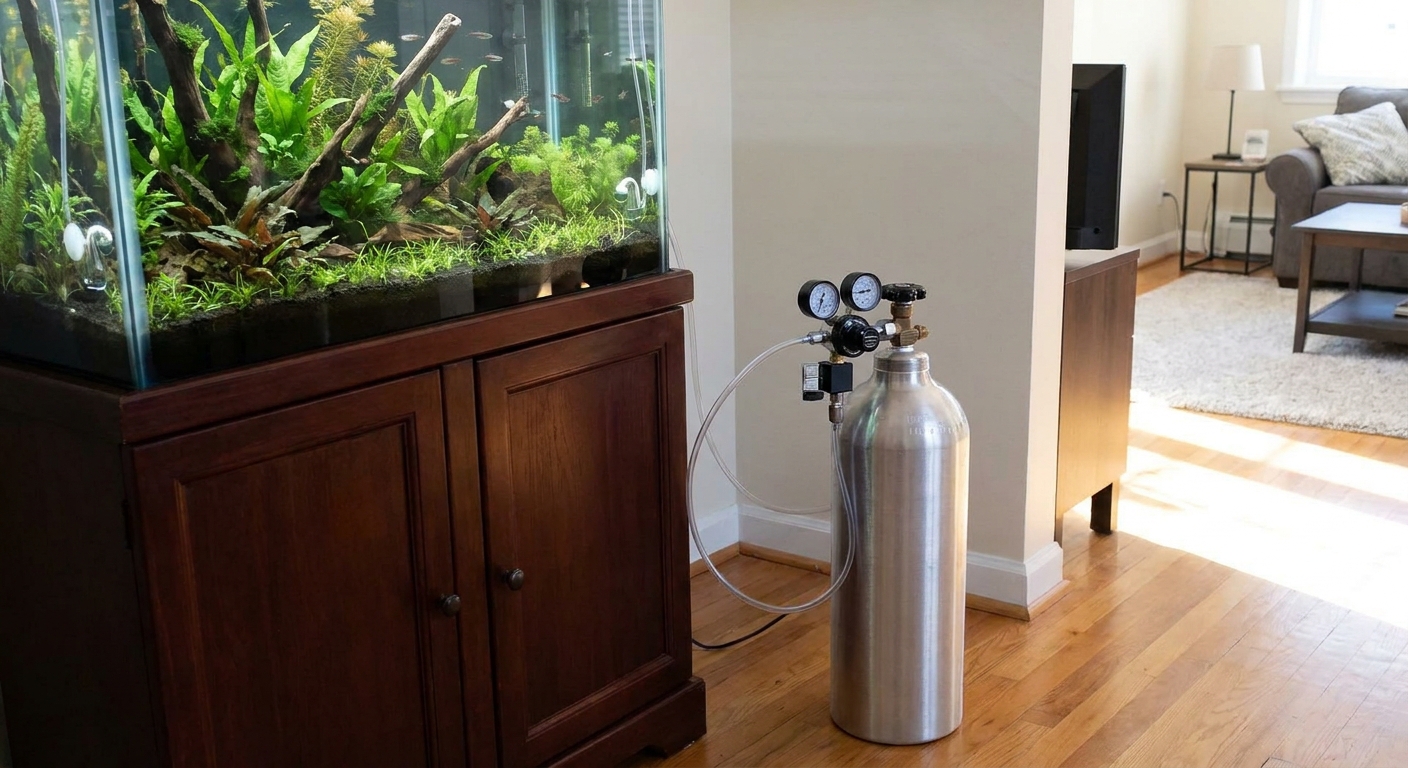
In high-light or CO2-injected tanks, many BBA battles are really CO2 stability battles. Aim for a consistent level during the entire photoperiod, with CO2 ramped up before lights reach full intensity.
- Start CO2 earlier so the tank is near your target concentration when lights turn on.
- Reduce fluctuations: consistent bubble rate, steady surface agitation, clean diffuser, stable water level.
- Check distribution: CO2 needs to reach all corners, not just the diffuser area.
If you are tuning a system, this pairs nicely with Pressurized CO2 Setup for Planted Aquariums.
Improve flow and circulation
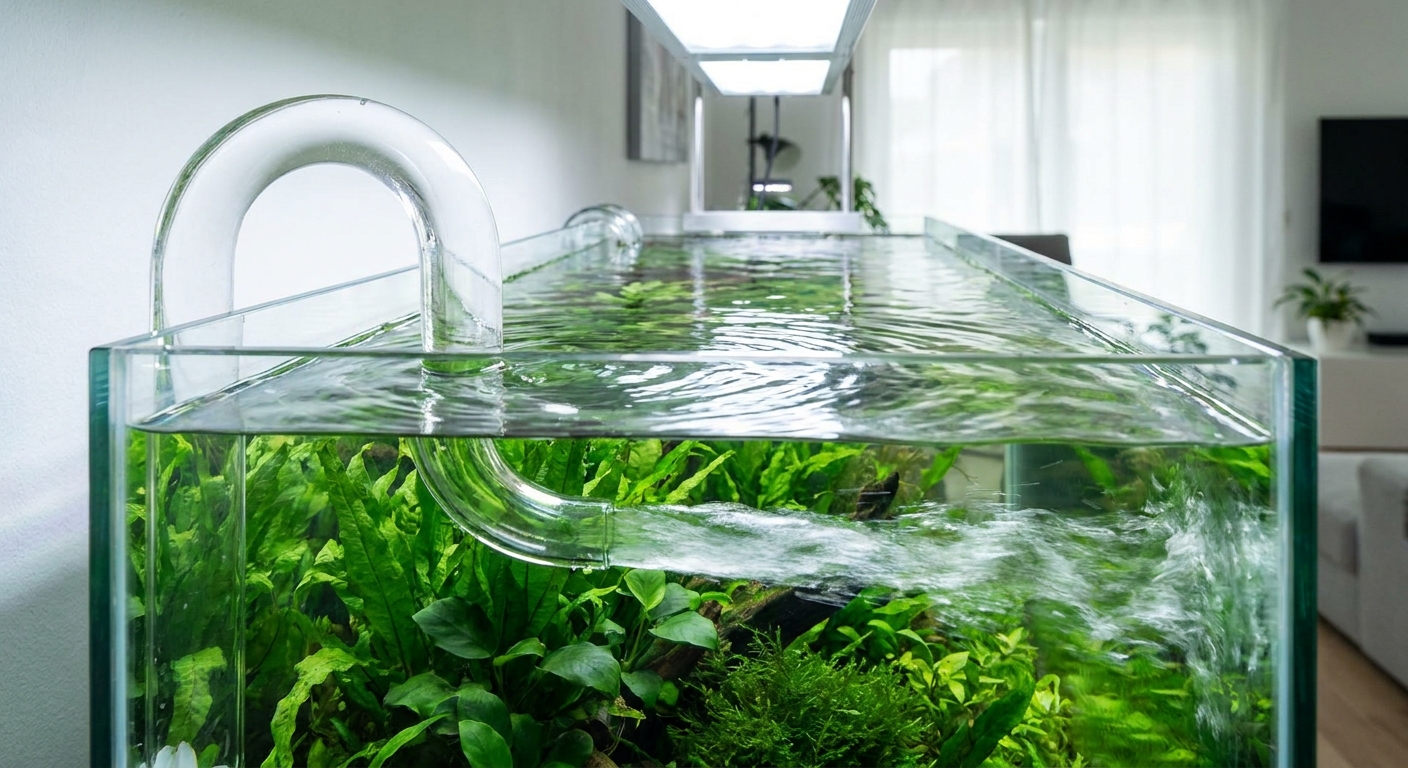
BBA often pops up where circulation is uneven: a narrow outlet jet that bypasses plant mass, or a sheltered pocket where mulm collects and CO2 and nutrients do not move well through leaves. Look for gentle, even circulation that carries CO2 and nutrients through plant groups.
- Re-aim outlets so flow sweeps across the front and back of the scape.
- Clean clogged filter media and tubing that reduce turnover.
- Consider surface skimming if biofilm is limiting gas exchange.
More on getting flow right: Water Circulation with Lily Pipes and Surface Skimmers.
Match light to your tank’s carbon and nutrients
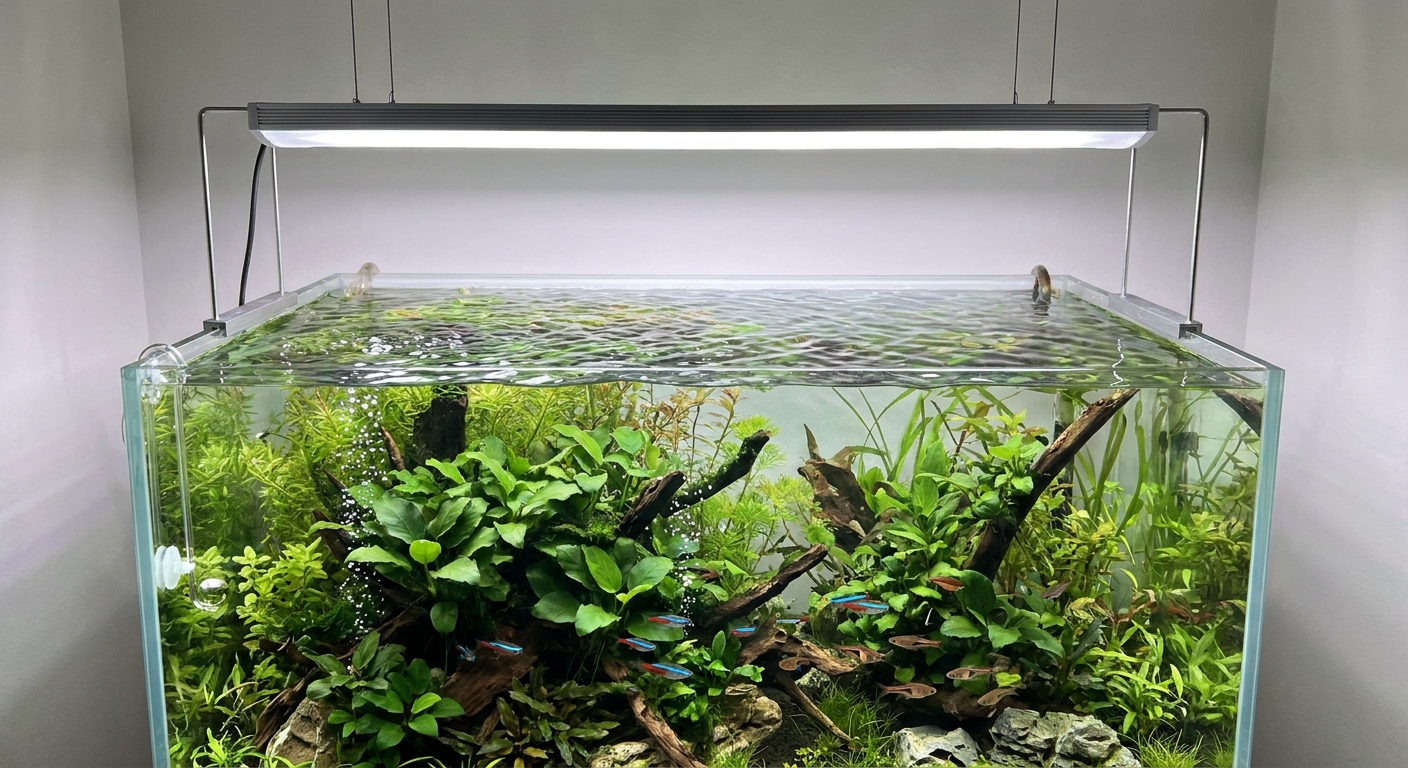
High light with unstable CO2 is a classic BBA recipe. If you cannot improve carbon stability quickly, reduce light intensity or duration temporarily while you correct the system.
- Try a shorter photoperiod (example: reduce by 1 to 2 hours).
- Raise the light higher or dim it if possible.
Lighting fundamentals live here: Planted Tank Lighting: PAR, Spectrum, Photoperiod.
Keep nutrients consistent
BBA is not caused by one single test result, but plants do struggle when nutrients swing wildly or bottom out. If you fertilize, dose consistently. If you do not fertilize, watch for signs of deficiency and avoid letting the tank drift into a “nothing available” zone where plant growth stalls. Healthy, steady plant growth is the long-term pressure that keeps BBA from returning.
Control organics and detritus
BBA loves messy pockets: decomposing leaves, mulm trapped in carpets, debris behind hardscape.
- Vacuum gently during water changes, especially around wood bases and dense plant thickets.
- Rinse mechanical media regularly so it keeps catching debris.
- Remove dying leaves promptly.
BBA removal by location
On anubias, bucephalandra, and java fern
- Trim the worst leaves.
- Spot treat carefully, avoiding prolonged contact with rhizomes.
- Boost circulation around the clump, because epiphytes often sit in shaded, low-flow pockets.
If buce is the main target, see Bucephalandra Care: Light, Flow, and Algae Control.
On moss
- Trim affected sections rather than trying to scrub.
- Spot treat only tiny patches at a time, because moss can be sensitive.
- Siphon loosened algae immediately.
On driftwood and rocks
- Scrub and siphon during a water change.
- Spot treat with peroxide for stubborn tufts.
- If possible, remove and treat outside the tank for better control.
On filter outlets, lily pipes, and intakes
- Clean surfaces thoroughly. BBA often colonizes stable surfaces in areas with consistent flow, especially when light, CO2, and circulation are out of sync.
- Check that your filter is not losing flow from clogged sponges or packed media.
If you suspect filtration is undersized or mismatched, this overview can help: Best Filters for Planted Tanks.
Do algae eaters fix BBA?
Algae eaters can help tidy weakened BBA after you kill it back, but they rarely solve the root cause alone.
- Amano shrimp may pick at dying BBA, especially after spot treatment.
- Siamese algae eaters are often mentioned for BBA, but they vary by species and individual, and they still will not fix unstable CO2 or excess light.
- Nerite snails tend to prefer softer algae films rather than tough BBA tufts.
Think of algae eaters as a clean-up crew, not the main plan.
What not to do
- Do not crank CO2 upward suddenly without watching livestock. Stability is the goal, not chasing a number in a single afternoon.
- Do not blast spot treatments everywhere at once. Treat in sections across multiple days.
- Do not leave dying leaves in the tank “to see if they recover.” BBA loves weak tissue.
- Do not ignore circulation. A beautiful scape can still have hidden dead spots behind wood and rocks.
- Do not assume nitrates alone are the cause. BBA is more commonly tied to CO2 stability and overall balance rather than one single test result.
A simple 14-day schedule
If your tank feels overwhelming, use a steady routine:
Days 1 to 3
- Trim the worst leaves.
- Brush and siphon visible tufts.
- Clean filter intakes and outlets.
Days 4 to 10
- Spot treat a small section every 1 to 2 days (peroxide or liquid carbon).
- Adjust CO2 timing for better stability, or reduce light duration if running low-tech.
- Do one solid water change mid-week and remove loosened algae.
Days 11 to 14
- Reassess: where is BBA returning first? That spot usually points to a circulation pattern, CO2 distribution issue, or a maintenance trap where organics collect.
- Trim any leaves that got “peppered” again.
- Keep maintenance consistent and avoid big swings.
After two weeks, most tanks show clear improvement: BBA looks lighter, stops spreading, and becomes easier to remove.
FAQ
Will BBA go away on its own?
It usually does not. It may slow down, but established tufts tend to persist until manually removed and killed back with targeted treatment, plus a correction in CO2, light, circulation, and cleanliness.
Why did BBA appear after I upgraded my light?
More light increases plant demand for carbon and nutrients. If CO2 delivery and circulation did not improve at the same time, BBA can take advantage of the imbalance. Reducing photoperiod temporarily while stabilizing CO2 often helps.
Why is BBA worst near the filter outlet?
Outlets create steady flow over a stable surface, and they can also highlight a distribution problem: one area gets lots of movement while other plant groups remain carbon-limited. Aim for broad, even circulation through the whole scape, not a single strong jet.
Is BBA dangerous to fish or shrimp?
BBA itself is not usually toxic, but heavy growth can smother plant leaves and reduce plant health. The bigger risk is aggressive chemical treatment. Go slowly, treat in small sections, and prioritize stability.
When your jungle wins
BBA is a bully, but planted tanks are patient. Once your plants get steady carbon, sensible light, and good circulation, they start pearling, filling in, and outcompeting the rough stuff. With a warm wave of my little antennae, I’m cheering you on. Snip the worst leaves, spot treat the tufts, stabilize the tank, and watch your underwater jungle take the space back.