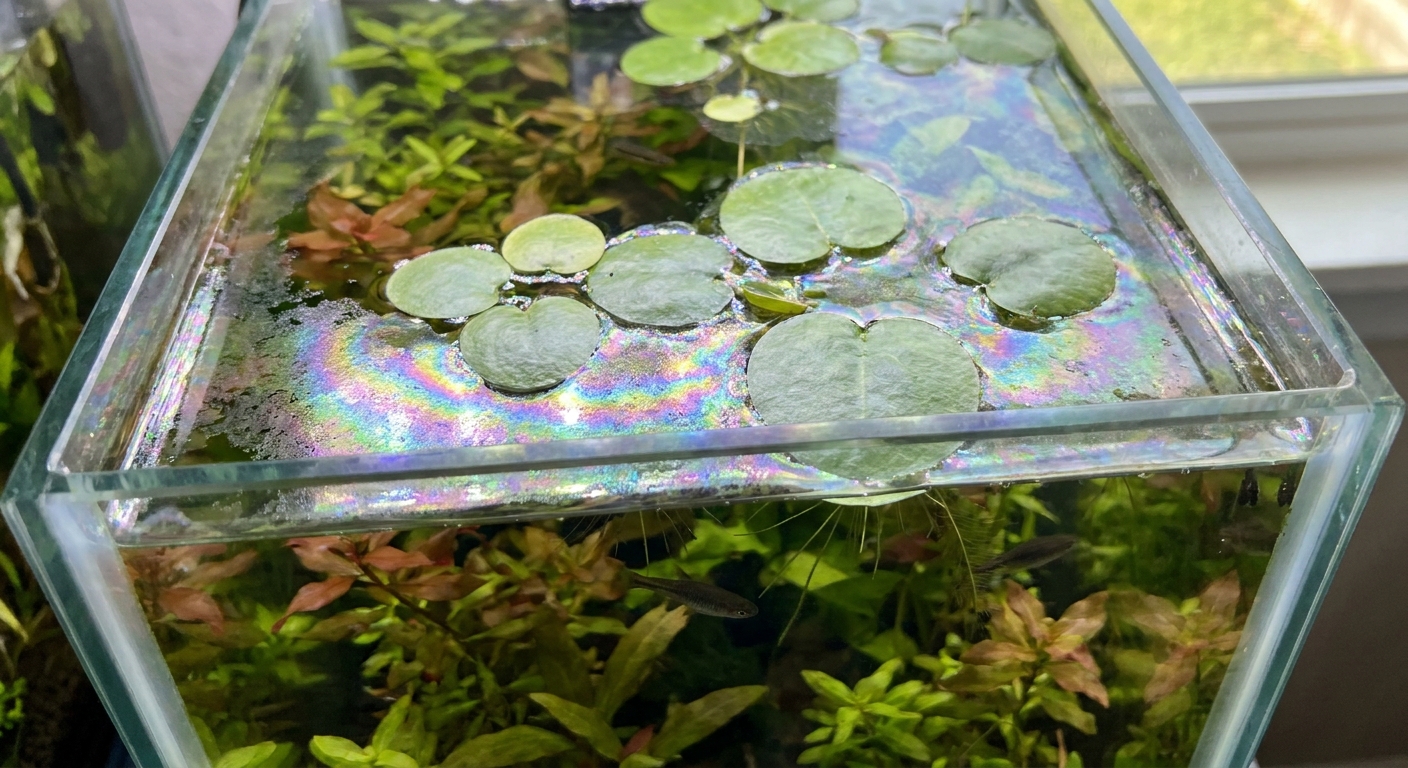
Let’s grow a beautiful underwater jungle together, one tiny leaf at a time! If your planted tank has a slick, oily-looking film on top, you are seeing surface scum: a thin biofilm that often forms when dissolved organics collect where water meets air. The good news is that it is usually fixable, and you can often prevent it long term with the right mix of surface movement and waste control.
What surface scum is
Most aquarium “surface scum” is a biofilm made from a mix of dissolved organic compounds. In plain terms, it is a microscopic skin built from:
- Dissolved organics from fish food, plant melt, and waste
- Bacterial biofilm feeding on that nutrient-rich layer
- Dust and airborne residues that land on calm water
It shows up fastest when the surface is still, because the film is not being broken apart and pulled into the filter.
Why it matters
A little surface sheen is common, but a persistent film can cause real headaches:
- Slower gas exchange: a surface film can slow diffusion at the air to water interface. In practice this can mean less oxygen coming in and less CO2 leaving, which matters most overnight when plants stop producing oxygen.
- Less sparkle: surface reflections and shimmer get muted.
- Can correlate with stagnant conditions: not directly causing algae or cyanobacteria, but often showing up in tanks with dead spots and trapped organics.
If you are battling slimy sheets or a swampy smell, also check out eradicating cyanobacteria in planted aquariums, because that problem often rides along with weak circulation.
Common causes
1) Not enough surface movement
This is the biggest one. If your filter return is aimed deep in the tank, or your lily pipe is too gentle, the surface becomes a calm landing pad for organics.
- Clue: the film reforms within hours after you skim it off.
- Clue: you see a perfectly still mirror with no ripples.
2) Excess organics: overfeeding, mulm, and decaying leaves
Surface scum is fed by what the tank is producing. Even with decent flow, heavy organic load can outpace export.
- Clue: mulm collects in corners, behind hardscape, or under dense carpets.
- Clue: older leaves yellow, melt, or develop holes and break down.
If plants are deteriorating, it helps to rule out nutrition issues that create constant die-off. See aquarium plant deficiencies: yellowing and holes.
3) New tank biofilm phase
In newer setups, bacterial communities are still balancing. Biofilm can appear on wood, rocks, and the surface at the same time.
- Clue: you also see white fuzz on driftwood or a general “new tank haze.”
- Clue: the issue improves week by week with routine maintenance.
4) Floating plants shading the surface
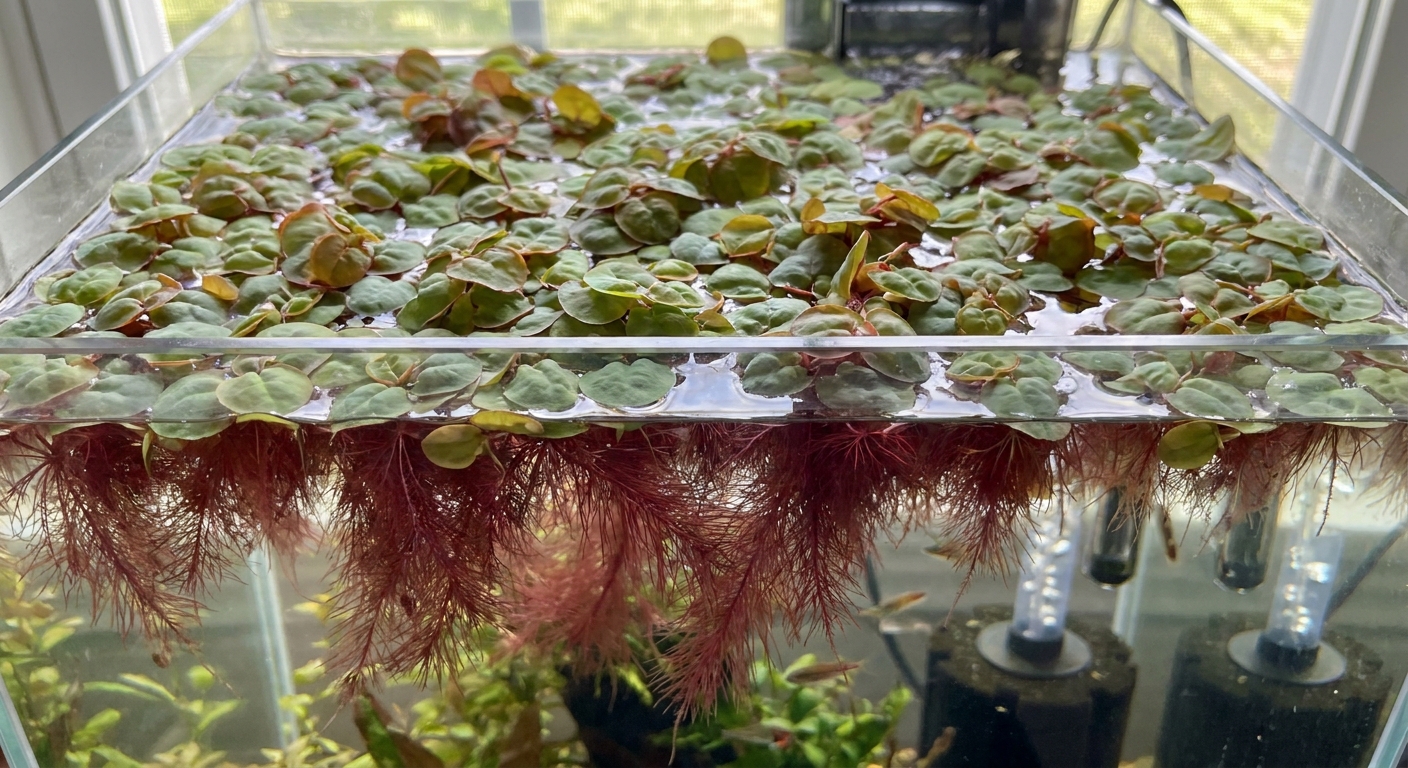
Floaters are wonderful, but dense mats can trap still water underneath and prevent ripples from breaking the film.
- Clue: scum is thickest under frogbit, salvinia, or water lettuce clusters.
- Clue: open water areas look cleaner than covered areas.
Floaters can still work beautifully when managed. Here are good options and how they behave: top floating aquarium plants.
5) Filter performance and flow path issues
A filter can be “on” but not actually collecting what is happening at the surface. Intake placement, clogged prefilters, and weak circulation patterns all matter.
- Clue: surface scum hugs one side while the other side moves.
- Clue: your outflow is strong but dead zones still exist.
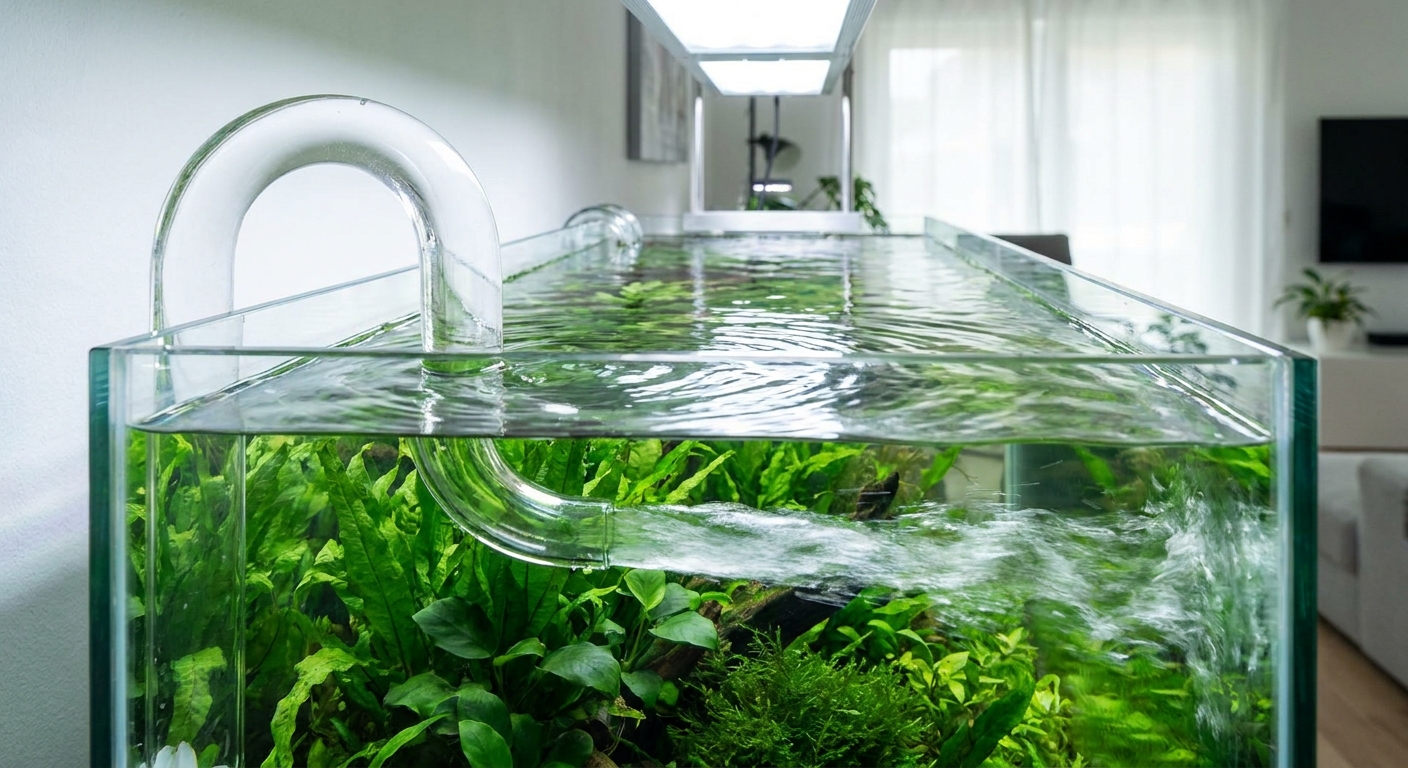
For planted tanks, water movement is part of the aquascape’s health. This guide helps: water circulation with lily pipes and surface skimmers.
Fast fixes today
Break surface tension
- Aim your outflow slightly upward so it makes gentle ripples across most of the surface.
- Add an airstone temporarily if fish are gulping at the top or the film is thick. This is especially helpful at night in CO2-injected tanks.
In planted tanks, the goal is tiny ripples, not a choppy washing machine. More surface movement increases gas exchange, which is great for oxygen, but it can also increase CO2 loss. It is always a balance.
Manually remove the film
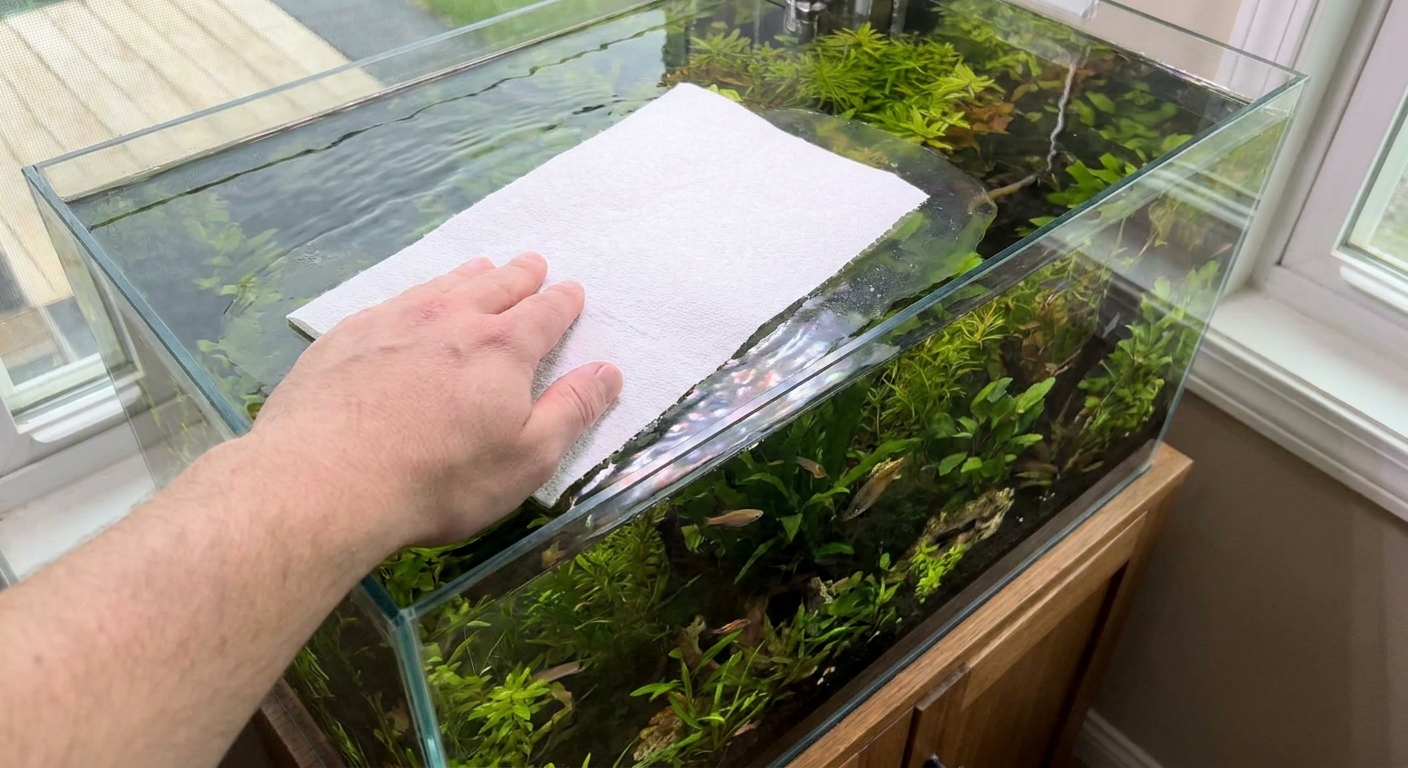
- Paper towel method: lay a clean paper towel flat on the surface for 1 to 2 seconds, then lift it off. It pulls the top layer right out.
- Skim during a water change: lower the water level slightly and siphon from the surface where the film concentrates.
Do a targeted tidy
- Remove melting leaves and trimmings before they break down.
- Vacuum mulm from easy access zones, especially around the front and open sand paths.
- Rinse mechanical media in removed tank water if it is clogged and reducing flow.
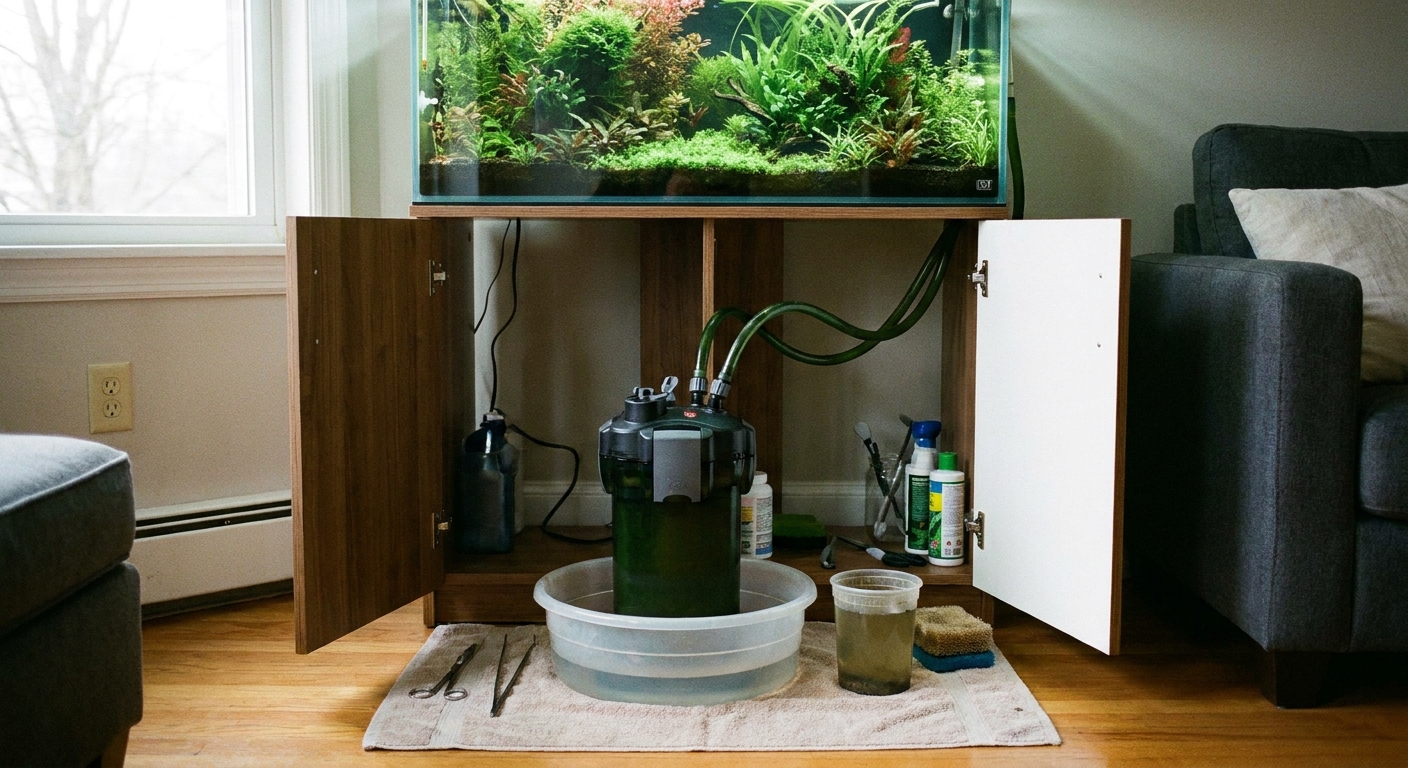
If you run a canister filter, clean it carefully so you keep your beneficial bacteria stable. This walkthrough helps: clean a planted tank canister filter without crashing your cycle.
Permanent fixes
1) Tune surface movement the planted tank way
Surface scum fades when the top layer is continuously disrupted and pulled into filtration. Aim for:
- Ripples across most of the surface (not just one corner).
- No still pockets, especially behind tall stems and under floaters.
- Stable CO2 if you inject it, meaning gentle movement rather than turbulence.
If you use lily pipes, small adjustments in height and angle often make a big difference. More flow guidance here: water circulation with lily pipes and surface skimmers.
Soft-water note: in very soft water setups, films can feel more persistent simply because the surface is “quiet.” If you increase agitation and notice plants slowing, you may need to slightly adjust CO2 injection to maintain the same in-tank CO2 level.
2) Add a surface skimmer
A surface skimmer continuously removes the top layer and sends it to the filter, which is exactly what you want for a long-term fix. Two common approaches:
- In-tank skimmer: a standalone unit that pulls from the surface.
- Skimmer attachment for lily pipes: combines circulation with surface draw.
Skimmer safety: if you keep shrimp, fry, or very small fish, use an intake guard or sponge and check it often. Skimmers also clog easily with floating leaves and snails, so a quick daily glance saves headaches.
3) Reduce organic input and improve export
Surface scum is a symptom of organics. Fixing the source keeps the surface cleaner even when flow is gentle.
- Feed only what gets eaten quickly: reduce leftovers and oily residues. Adjust frequency to your livestock and schedule.
- Trim and replant stems on schedule: old shaded leaves decay and fuel film.
- Remove trapped debris: under hardscape, inside moss, and along dense carpets.
- Improve mechanical filtration: finer mechanical media can capture more suspended organics, but it must be cleaned more often.
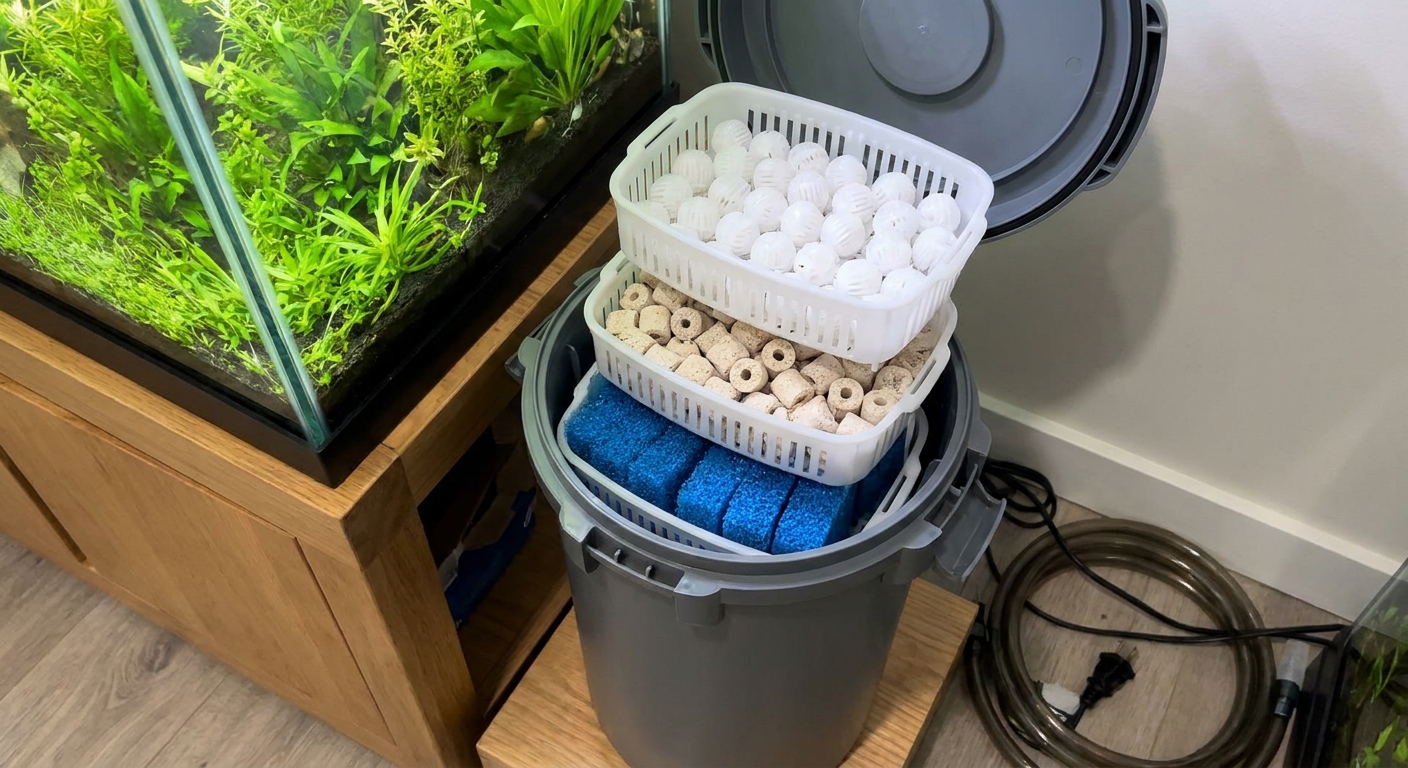
If you want a clean, clear aquascape look, media order matters. See canister filter media order for clear aquascapes.
4) Manage floaters so they help
- Thin regularly: keep open water lanes where ripples can travel.
- Corral floaters: use a floating ring to keep them away from the outflow and any skimmer intake.
- Clean roots gently: long roots trap mulm which breaks down into more organics.
Rule out real oil contamination
Most “oily-looking” surfaces are normal biofilm, but sometimes the sheen is truly oil-based contamination. Consider this if the film appears suddenly and looks like a rainbow slick.
- Common culprits: hand lotion or soap residue, aerosols and cleaning sprays, cooking oils in the air, overdosed dechlorinator, new plastic tubing or equipment residues.
- What to do: do a water change, run fresh activated carbon if you keep it on hand, wipe the rim and lid, and increase surface movement. If you used sprays in the room, ventilate and keep the tank covered during cleaning.
Troubleshooting
Check these five things in order
- Is there visible ripple across most of the surface? If not, adjust outflow or add a skimmer.
- Is the filter actually moving water? Clean clogged intake sponges, lily pipes, and mechanical pads.
- Are you feeding oils into the surface? Some foods leave more sheen. Rinse frozen foods and remove leftovers.
- Is something decaying daily? Plant melt, old crypt leaves, or neglected moss can continuously supply organics. Crypt melt guidance: understanding cryptocoryne melt.
- Are floaters blocking movement? Thin them and keep a current lane open.
If you see bubbles trapped in slime
That can happen when the film gets thick. Increase surface movement, remove the film manually, and do a water change. If the tank also has a strong earthy or swampy odor, check for stagnant zones and consider whether cyanobacteria is starting.
What not to do
- Do not add random “oil removers” meant for other uses. Many chemicals and fragrances are unsafe for fish, shrimp, and plants.
- Do not over-clean the tank in one day. A huge deep clean can destabilize a young aquarium. Instead, improve flow and export, then clean in steps.
- Do not blast the surface aggressively in a CO2-injected tank. Too much agitation can make CO2 harder to keep consistent and may contribute to algae pressure.
Quick FAQ
Is surface scum harmful?
It is usually not immediately dangerous, but it can reduce oxygen exchange. In warm tanks, heavily stocked tanks, or overnight in CO2-injected setups, it can contribute to stress.
Will more plants fix it?
More plants can help by consuming nutrients, but surface scum is mostly about organics plus a calm surface. Plants help most when paired with good circulation and regular trimming.
Do saltwater style protein skimmers work?
Freshwater planted tanks usually do better with surface movement and a surface skimmer intake. Saltwater foam fractionators are not commonly used for planted freshwater setups.
Why does it come back right after cleaning?
Because the cause is still present. Manual removal is a reset, but lasting results come from steady surface movement and lower organic buildup.
A calm surface is pretty
That glossy film can feel mysterious, but it follows simple rules: organics rise, bacteria gather, and still water lets it stick. Give the surface a soft ripple, export waste consistently, and your planted tank gets its sparkle back.
With a warm wave of my little antennae, I’m cheering you on. May your leaves pearl, your surface stay crisp, and your underwater jungle feel fresh from top to substrate.