Let's grow a beautiful underwater jungle together, one tiny leaf at a time! If your aquasoil has been supporting lush growth for a long while, it can quietly run out of the stored nutrients that heavy root feeders rely on. The happy news is you usually do not need a full teardown. With careful, strategic root tab placement, you can bring that rich root zone back to life and keep your layout thriving.
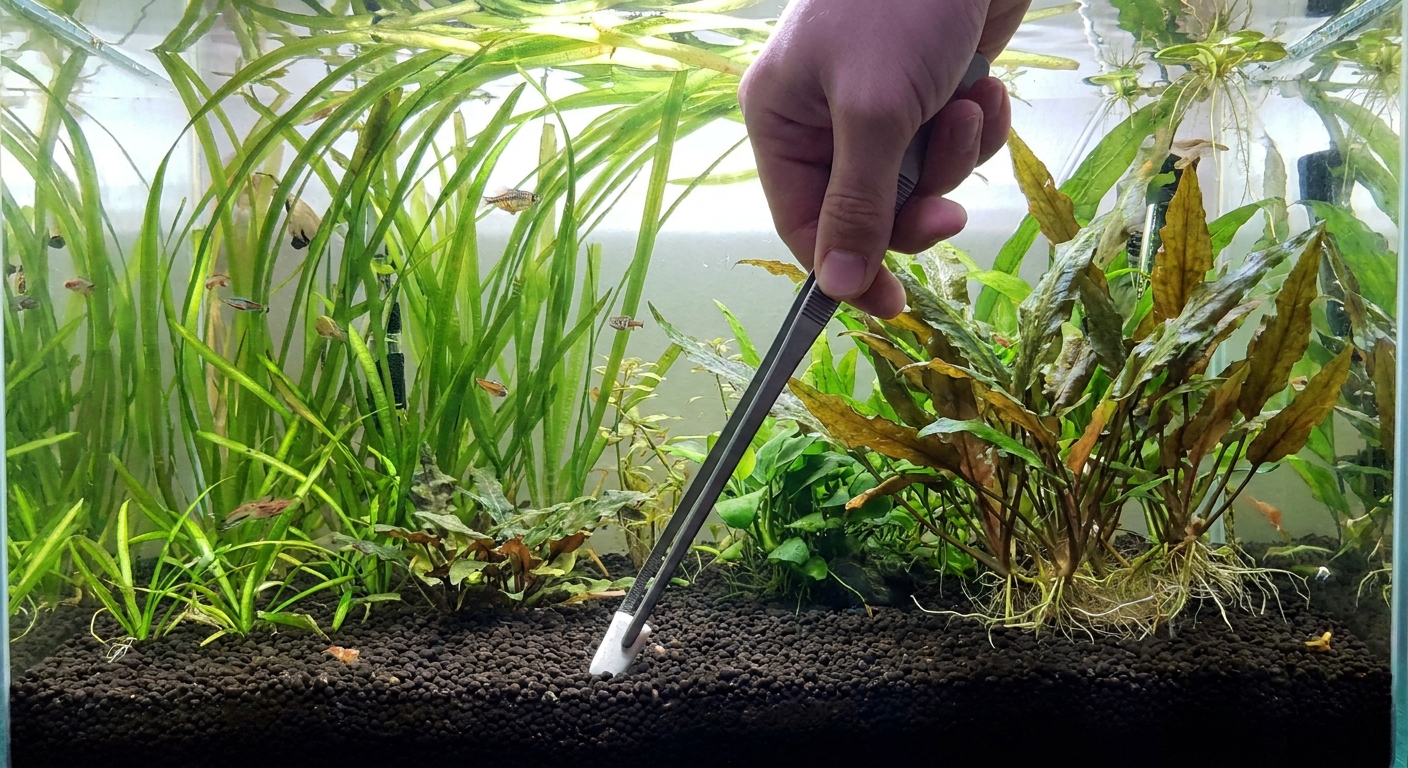
What depleted aquasoil looks like
Aquasoil does not become useless when it ages, but its built-in nutrient charge can fade. In many tanks, the soil still holds structure for roots and houses beneficial bacteria. It just stops feeding plants as strongly from below.
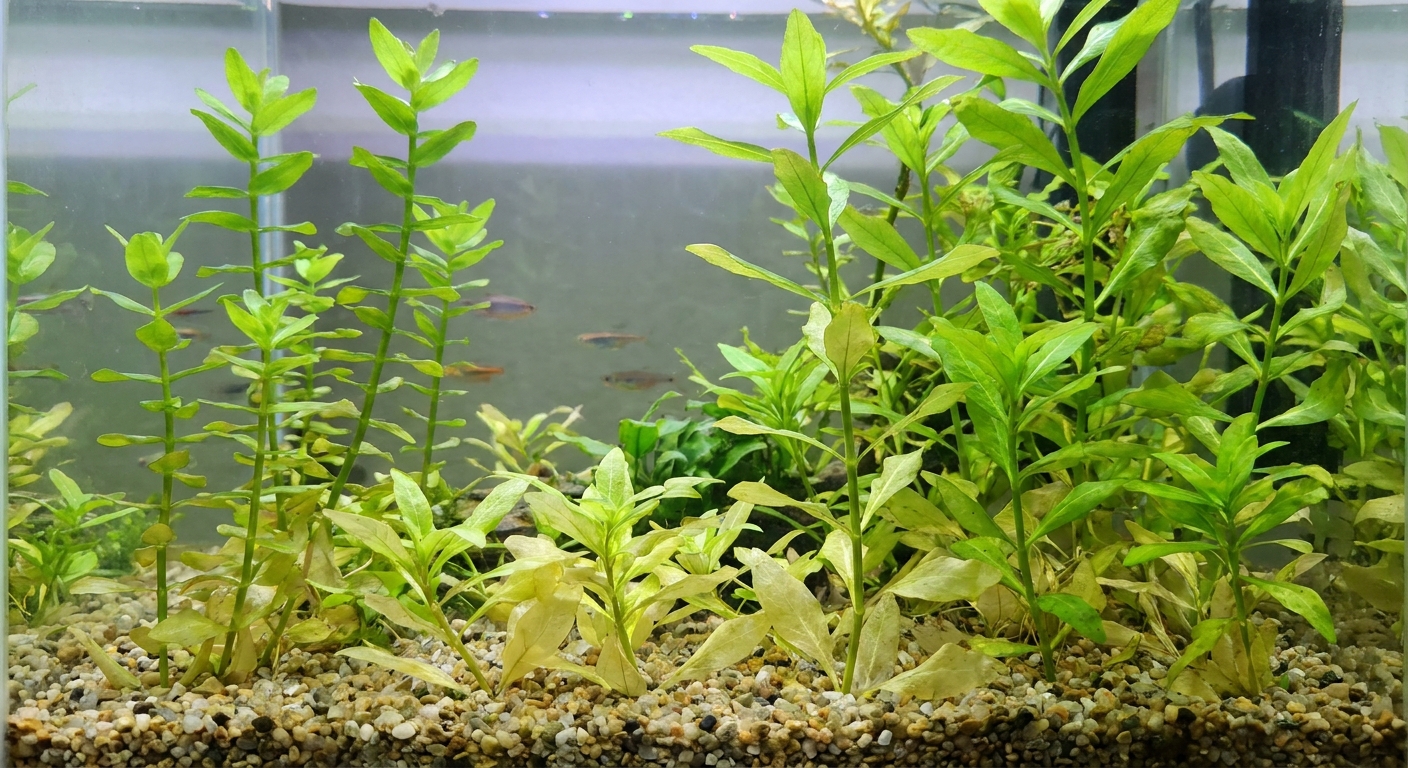
Common signs the substrate is running low
- Root feeders stall: crypts, swords, lotus, and bulb plants stop putting out strong new leaves even when the water column is fertilized.
- Older leaves yellow first, or you see pinholes and weak tissue that repeats after pruning.
- Plants lift or uproot easily because root mass is smaller than it used to be.
- Growth becomes water-column dependent: stems still do okay, but the rooted plants look stuck.
These clues are helpful, but they are not exclusive to substrate depletion. Yellowing and pinholes can also come from things like potassium or magnesium shortages, nitrogen swings, or inconsistent CO2. If you suspect a deficiency, it helps to confirm what you are seeing on the leaves. This guide pairs nicely with aquarium plant deficiencies: yellowing and holes so you can separate substrate hunger from other issues.
Root tabs: what they fix and what they do not
Root tabs are concentrated fertilizers meant to sit in the substrate and release nutrients right where roots can grab them. They are especially useful when aquasoil has aged, or when you run inert caps like sand over soil and want a targeted boost.
Quick note on variability: root tabs are not all built the same. Some are mostly clay and trace minerals, while others include nitrogen sources (sometimes urea or ammonium-forming compounds). That ingredient difference is one reason deep placement matters, and why dosing schedules can vary so much from brand to brand.
Root tabs are great for
- Heavy root feeders (crypts, swords, aponogeton, lotus, dwarf lilies)
- Keeping established layouts intact without removing substrate
- Localized feeding so you do not have to increase water column dosing as much
Root tabs will not replace
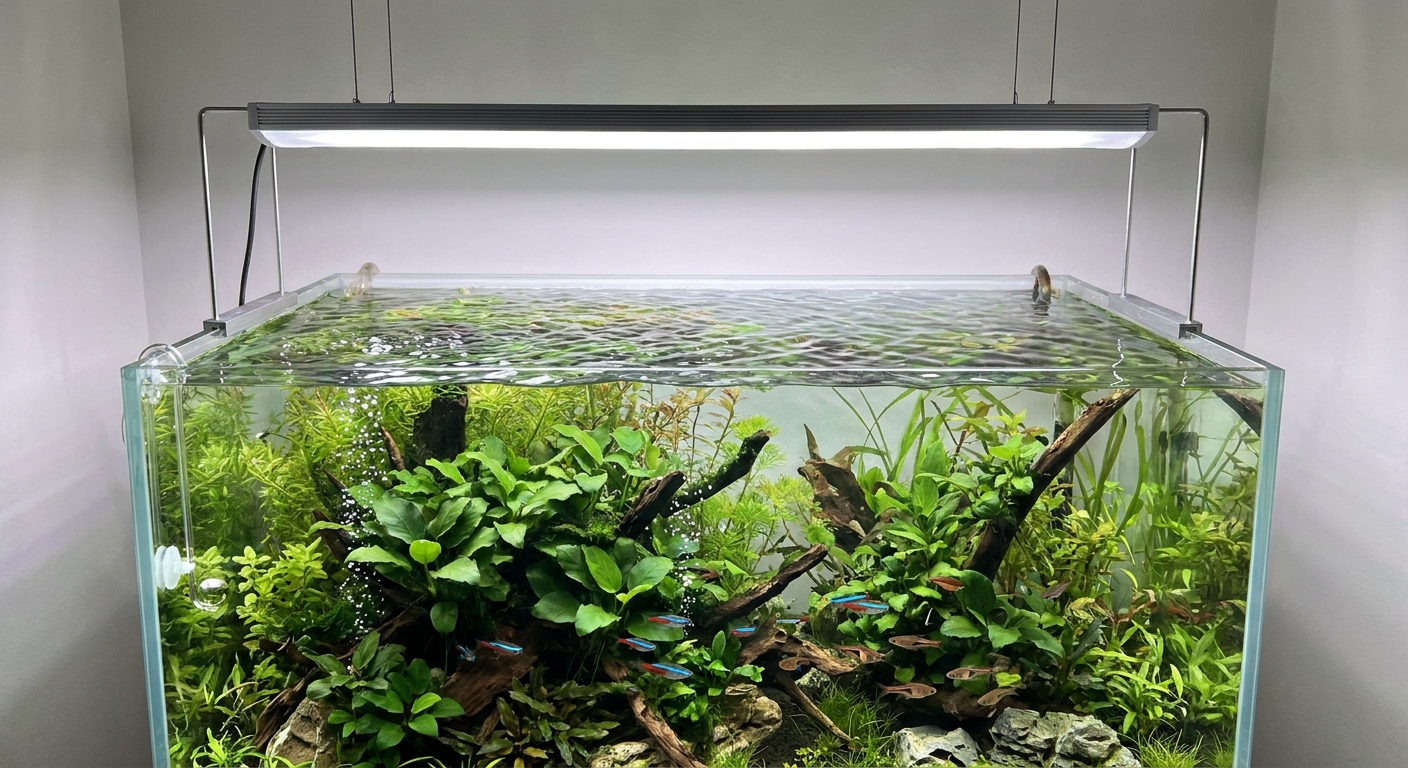
- Stable carbon and light balance. If lighting is intense and nutrients are inconsistent, algae can take advantage. If you are tuning light, peek at planted tank lighting: PAR, spectrum, photoperiod.
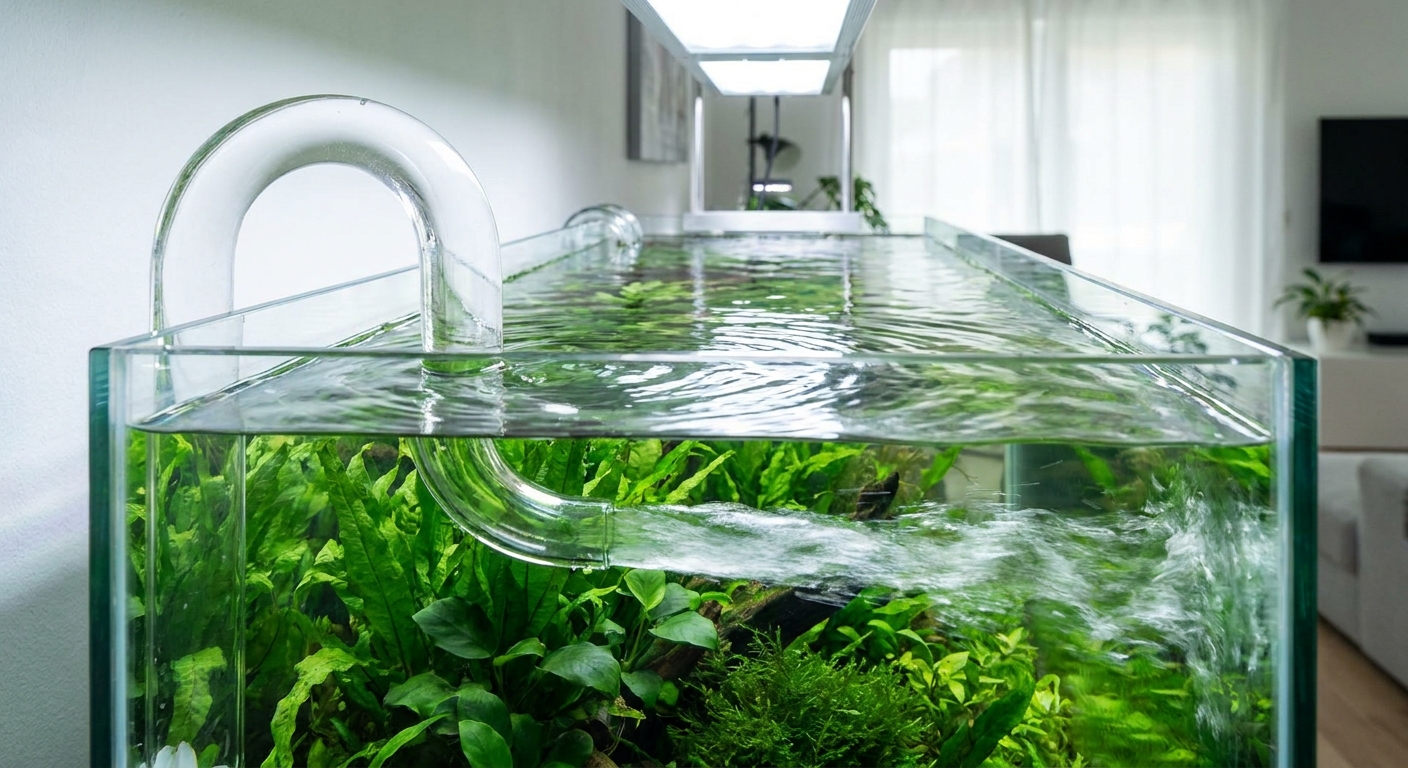
- Good circulation. Nutrients and CO2 still need to reach leaves. Water circulation with lily pipes and surface skimmers can help you spot dead zones.
- Reasonable maintenance. Root tabs are not magic dust for neglected tanks. They work best with routine trimming and steady dosing habits.
Before you add tabs: quick safety check
Root tabs are safe when used thoughtfully, but they are still a concentrated nutrient source. A few minutes of prep helps keep your tank calm and clear.
- Do a small water change first if your tank has elevated nitrates or lots of organic buildup. Clean water gives you a clean baseline.
- Trim melting or decaying leaves so the tank is not processing extra waste at the same time.
- Check for obvious algae triggers such as unstable CO2, very long photoperiods, or overfeeding.
- Know your livestock. If you keep delicate shrimp, avoid crushing tabs in the water and avoid placing them where shrimp constantly dig.
- Plan around diggers. Loaches, goldfish, cichlids, and other enthusiastic excavators can uncover tabs and cause a water-column nutrient leak. For these tanks, place tabs extra deep and farther from the glass edge where they tend to “work the sand.”
If your substrate is compacted or messy, do not stir it aggressively. If you are planning a deeper refresh like re-leveling or cleaning, take a look at how to clean aquasoil without wrecking your layout first.
How many root tabs to use
Brands vary a lot, so always follow the label for maximum dosing. When reviving older aquasoil, it is smarter to start lighter than you think and expand outward over a couple of weeks.
Gentle starting approach
- For a big root feeder (amazon sword, tiger lotus): start with 1 tab near the main crown, then add another tab a week or two later if the plant is large and still hungry.
- For medium rooted clumps (crypt groups): start with 1 tab for a small cluster, or 2 tabs spaced apart for a wide group.
- For carpeting plants: use tabs more sparingly. Many carpets prefer water column nutrition and steady CO2. If you tab a carpet, place tabs far apart and monitor for algae.
Think of this like feeding shrimp. Tiny portions, consistent timing, and careful observation beats dumping in a feast all at once.
Placement: revive aquasoil without a leak
Root tabs work best when they are deep enough to stay put and close enough for roots to find them. Placement also determines how much nutrient escapes into the water column, especially if a tab cracks or gets uncovered later.
Depth
- Push tabs as deep as practical without disturbing the plant's crown.
- In most planted tanks, that means mid-to-lower substrate, not sitting right under the surface.
- If your substrate bed is shallow, 1 inch may be all you can safely manage. Do not try to force a tab to the glass.
- If you have very deep beds, avoid aggressive poking all the way down into untouched layers. The goal is steady root feeding, not churning the entire base.
Distance from the plant
- Place tabs about 1 to 2 inches away from the crown for swords and crypts.
- The “too close” risk is not that roots get annoyed for no reason. It is that a concentrated pocket of nutrients (and in some products, a brief ammonia or urea breakdown zone) can become stressful if it leaks into the water column or sits right against a sensitive crown.
- For large plants, use multiple tabs in a ring around the root zone rather than stacking them in one spot.
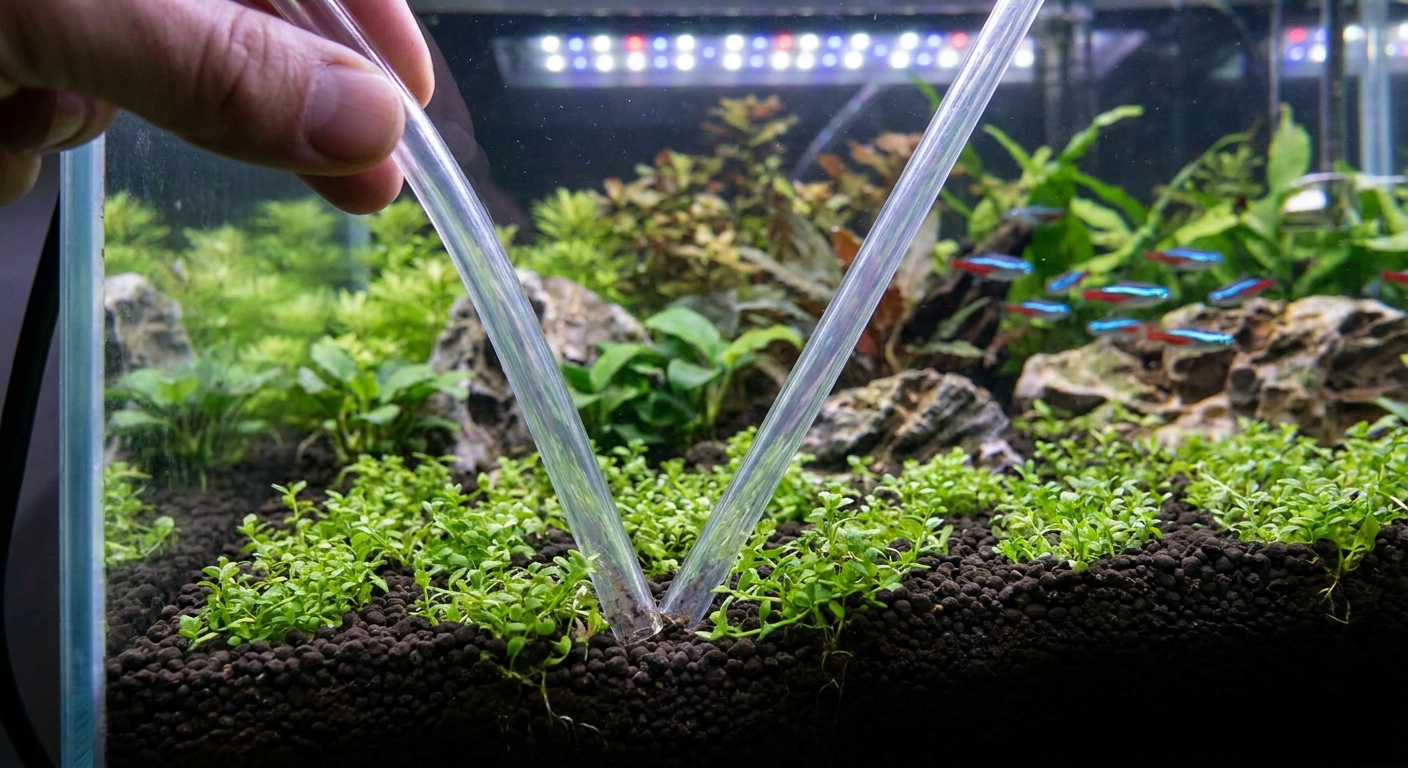
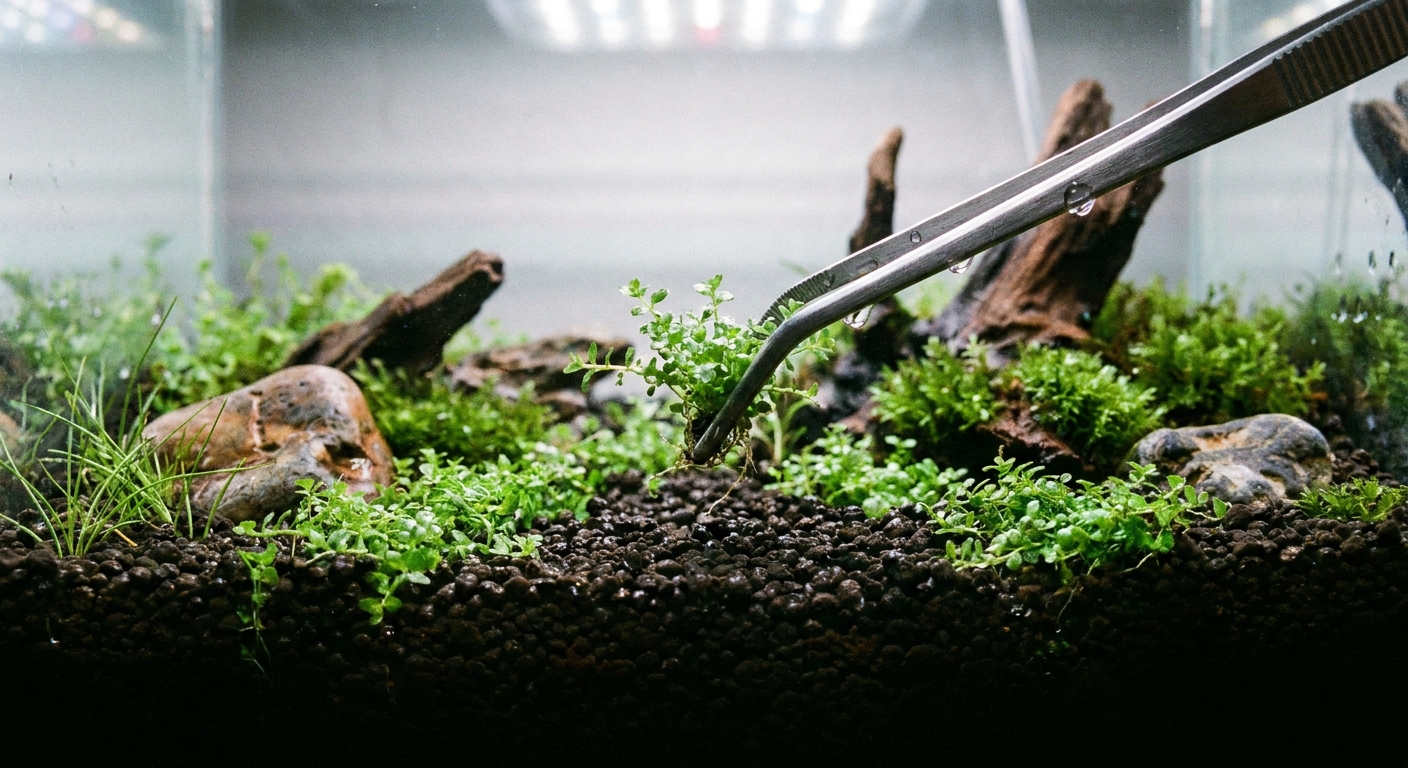
How to insert a tab cleanly
- Grip the tab gently with long tweezers or planting forceps.
- Insert vertically into the substrate at your chosen spot.
- Release at depth, then slowly withdraw the tweezers.
- Pinch or tap the substrate closed so the hole is capped and the tab stays buried.
Sprout tip: If a tab cracks while inserting, stop and carefully pick up crumbs. Tab dust near the surface is a common reason people see sudden algae, because those nutrients can dissolve into the water column fast.
A schedule that keeps plants fed
Old aquasoil often needs ongoing support. The goal is a steady rhythm that matches plant demand and the specific tab you are using.
Easy rhythm for most planted tanks
- Follow the label first. Think of any schedule you see online as a starting point, not a rule.
- Typical slow-release cadence: many hobbyists re-tab heavy root feeder areas roughly every 6 to 10 weeks, then adjust based on plant response, biomass, and whether the product is truly slow-release.
- Monthly check-in: watch new growth. If new leaves are smaller, paler, or distorted, you might need more frequent tabbing, improved water column dosing, or better CO2 stability.
When to hold back
- If you just increased light intensity or photoperiod
- If you recently changed CO2 or filtration flow
- If you are fighting algae already
Algae loves sudden change. If you need algae help alongside nutrient fixes, Maintenance & Troubleshooting has focused guides like how to get rid of black beard algae and eradicating cyanobacteria.
Root tabs by plant type
Cryptocoryne
Crypts are classic root feeders. If your crypts are shrinking over time, tabs usually help. Insert tabs a short distance away from the crown and avoid uprooting them. If crypts melt after a change, that is often transition shock rather than “tab burn.” Still, a tab placed too shallow (or crushed) can contribute to stress by dumping nutrients into the water. If you are dealing with repeated melt, visit understanding cryptocoryne melt.
Amazon swords
Swords can drain a substrate surprisingly fast. A ring of tabs around the plant tends to work better than a single tab directly underneath, especially in mature tanks.
Tiger lotus and bulb plants
Bulbs appreciate rich substrate, but they can also explode with growth if you overfeed. Start with one tab nearby, then expand if the plant is actively producing leaves.
Stem plants
Many stems primarily feed from the water column, but tabs can still help if stems are planted densely and the substrate is old. If stems are struggling, also review trimming and replanting technique in how to propagate aquarium stem plants.
Epiphytes like anubias and bucephalandra
These do not need root tabs under their rhizomes because they are not meant to be buried. Focus on water column nutrition and stable conditions. If you keep buce, bucephalandra care: light, flow, and algae control is a helpful companion.
How to tell it is working
Root tabs do not usually create instant results in a day or two. Roots need time to reach the food, then the plant needs time to build new leaves.
Positive signs in 2 to 6 weeks
- New leaves emerge larger and with stronger color
- More frequent new growth from crypt crowns or sword centers
- Less yellowing on older leaves once new growth stabilizes
- Plants anchor more firmly as the root mass increases
If nothing changes
- Check CO2 stability and photoperiod
- Confirm you are not under-dosing the water column for non-root feeders
- Consider that your substrate might be compacted, limiting root oxygen and movement
Troubleshooting: common root tab mistakes
My water got cloudy after tabbing
- A tab may have cracked or was placed too shallow.
- Do a partial water change, remove visible crumbs, and push future tabs deeper.
- Activated carbon is not usually needed, but if a tab pulverized and the tank looks irritated, a short run can help polish the water while things settle.
Algae appeared after I added root tabs
- Root tabs can leak nutrients into the water column if they are shallow, uncovered by diggers, or disturbed during planting.
- Some products can also create a brief localized spike (especially if they contain nitrogen sources). Keeping tabs buried reduces how much of that ever reaches the water column.
- Reduce photoperiod temporarily, improve circulation, and avoid adding more tabs until the tank stabilizes.
- Fast growers can help consume excess nutrients. See fast-growing stem plants that beat algae.
My plants melted after tabbing
- Melt is often triggered by change, not the tab itself. Keep conditions stable and avoid moving the plant.
- If tabs were crushed or placed very shallow, treat it like a nutrient leak: remove debris, do a water change, and pause additional tabbing.
- For crypts, review crypt melt and focus on patience and consistency.
The tabs keep popping up
- Push them deeper and place them slightly farther from high-traffic areas where fish dig.
- If you have a sand cap, insert the tab through the sand and into the soil below so it cannot float up.
- In very shallow nano substrates, consider using fewer tabs more strategically, or switching to a smaller tab size so you can keep it fully buried.
When root tabs are not enough
Root tabs are a powerful extender, but sometimes the substrate is telling you it needs a bigger refresh.
Consider a deeper reset if
- The aquasoil has turned to fine mud and clouds easily with any touch
- The substrate smells strongly of sulfur when disturbed
- Compaction is severe and plant roots cannot penetrate well
- You want a major layout change anyway
If you do decide to rework the base, take it slow and protect the scape. This guide can help you keep the layout stable: clean aquasoil without wrecking your layout.
Quick checklist
- Identify the problem: rooted plants stalling, repeated yellowing, weak new leaves. Cross-check that it is not CO2, light, or a water column deficiency.
- Start light: fewer tabs, then adjust over 1 to 3 weeks.
- Place deep: mid-to-lower substrate, fully buried, not forced to the glass.
- Target root feeders: swords, crypts, lotus, bulbs first.
- Keep the tank steady: avoid big light or CO2 changes at the same time.
- Watch new growth: that is your clearest signal of success.
With a little careful tabbing, old aquasoil can keep supporting a vibrant aquascape for a long time. And when those rooted plants start pushing fresh leaves again, it feels like the whole underwater jungle takes a happy breath.