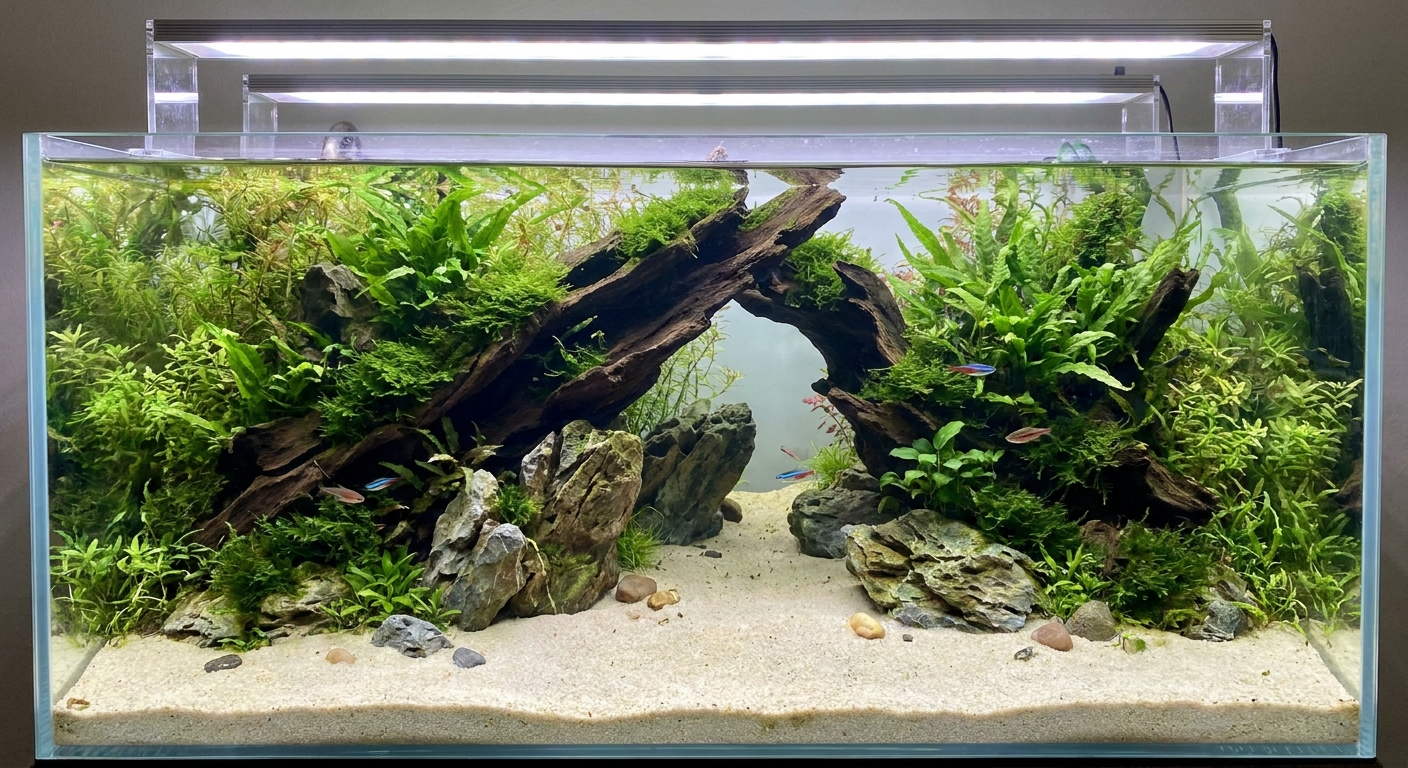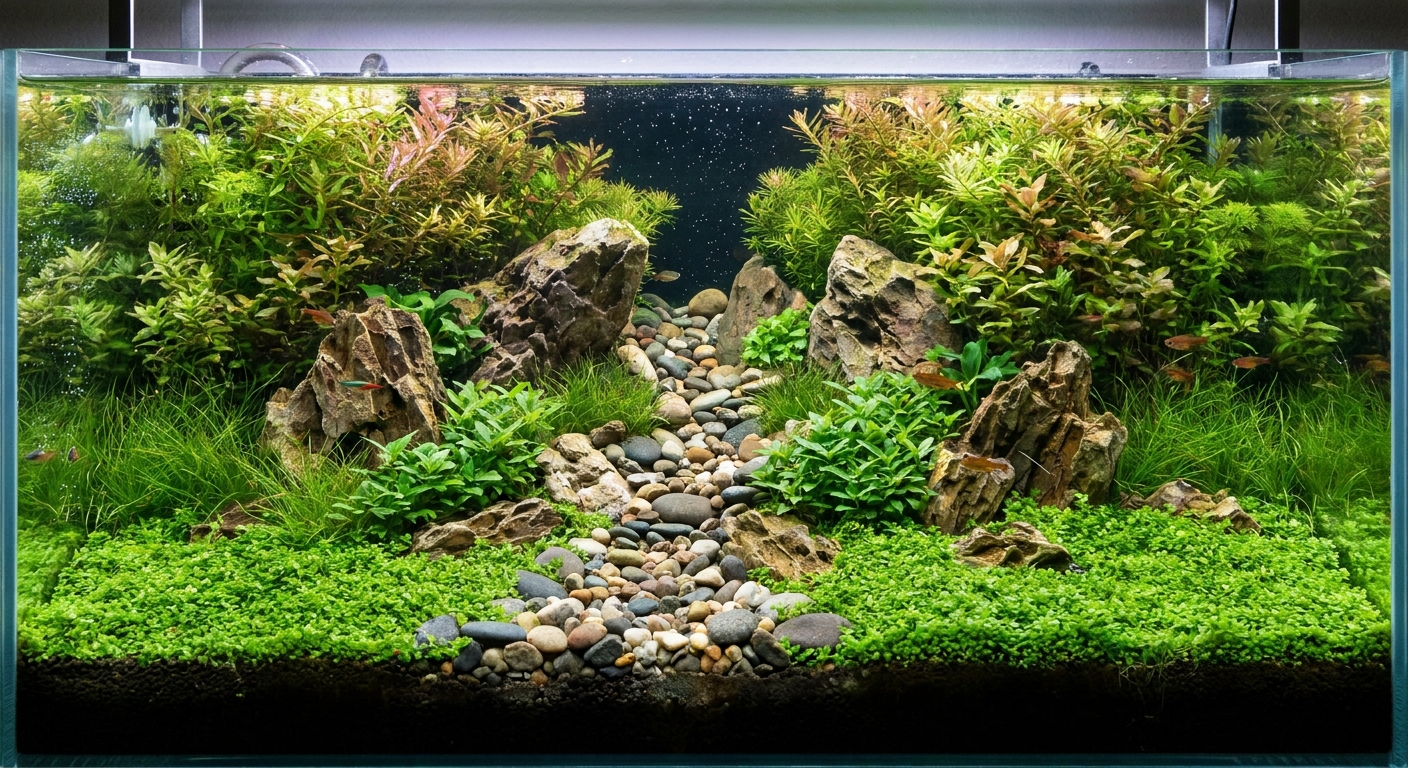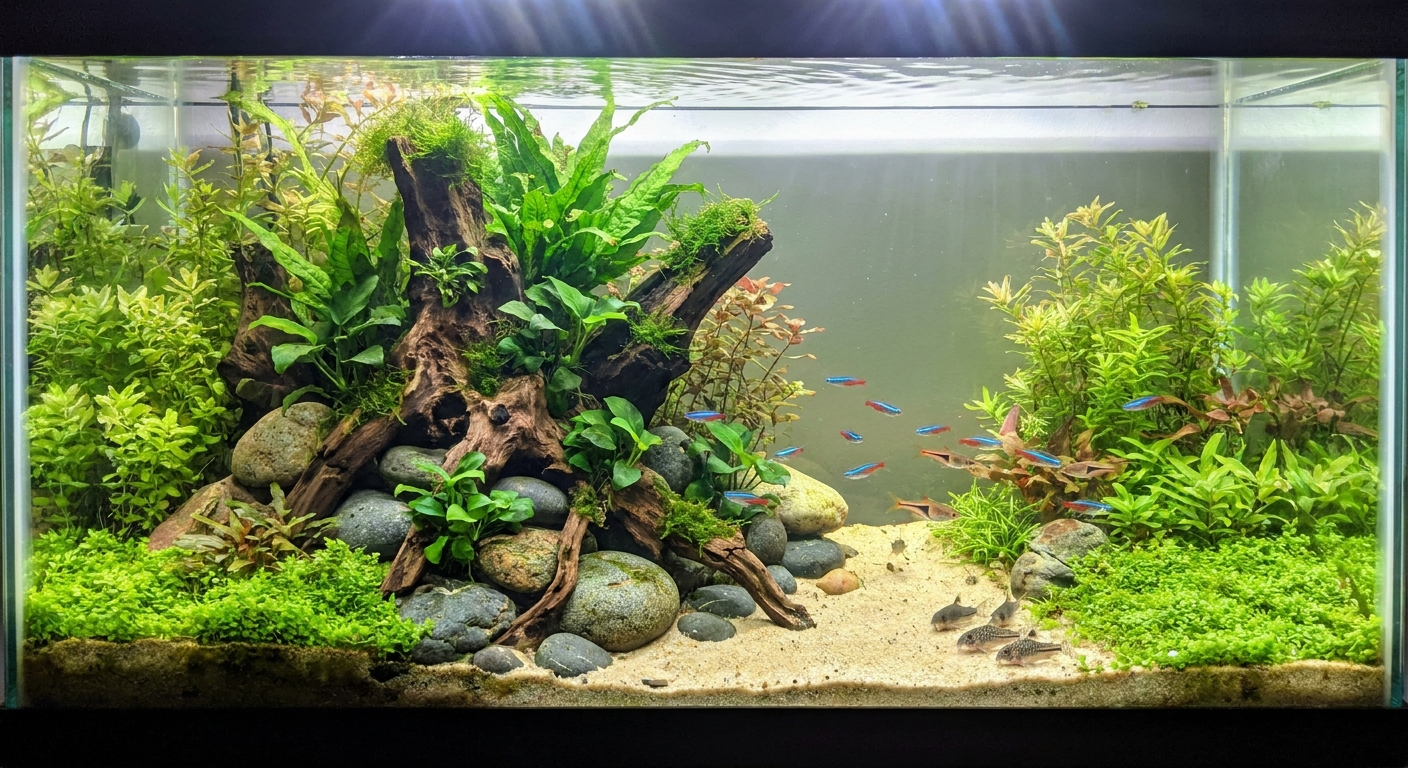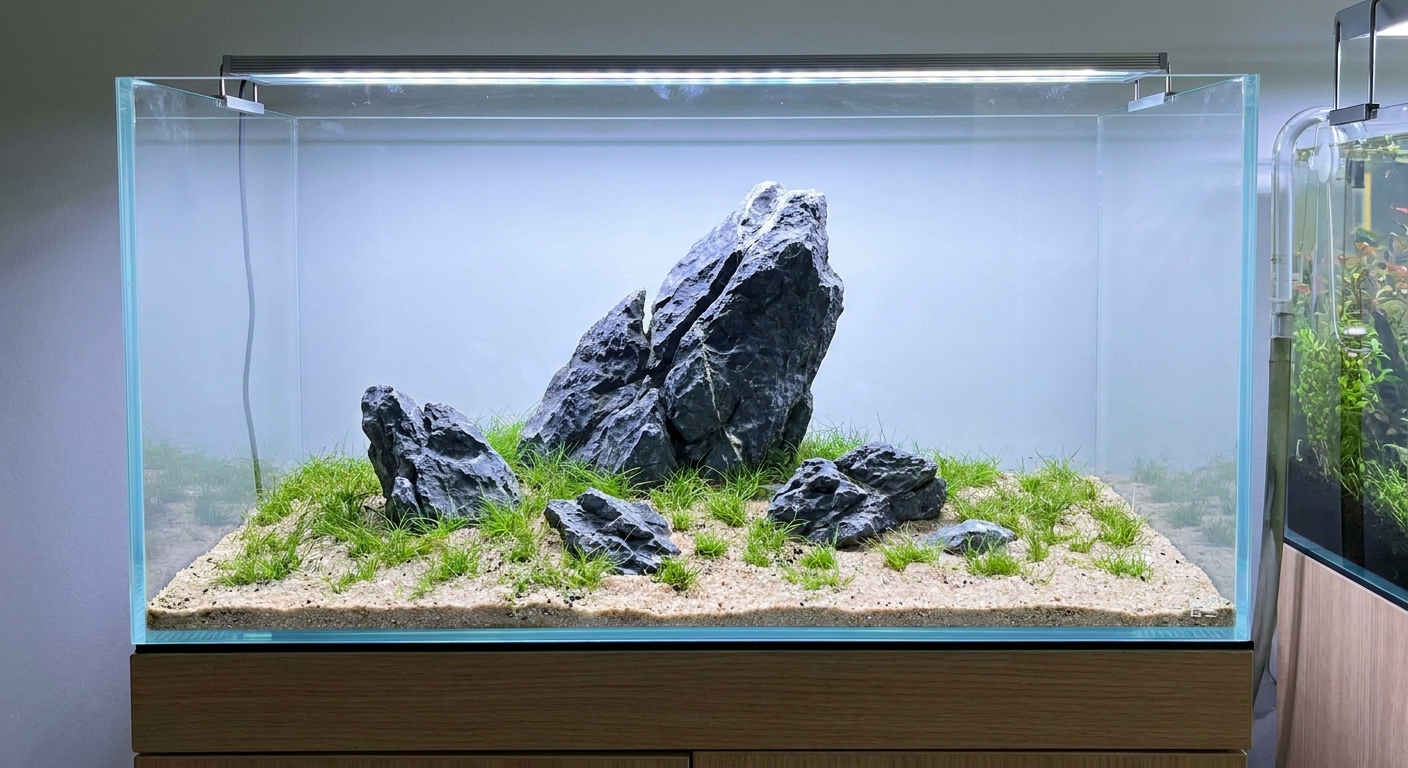
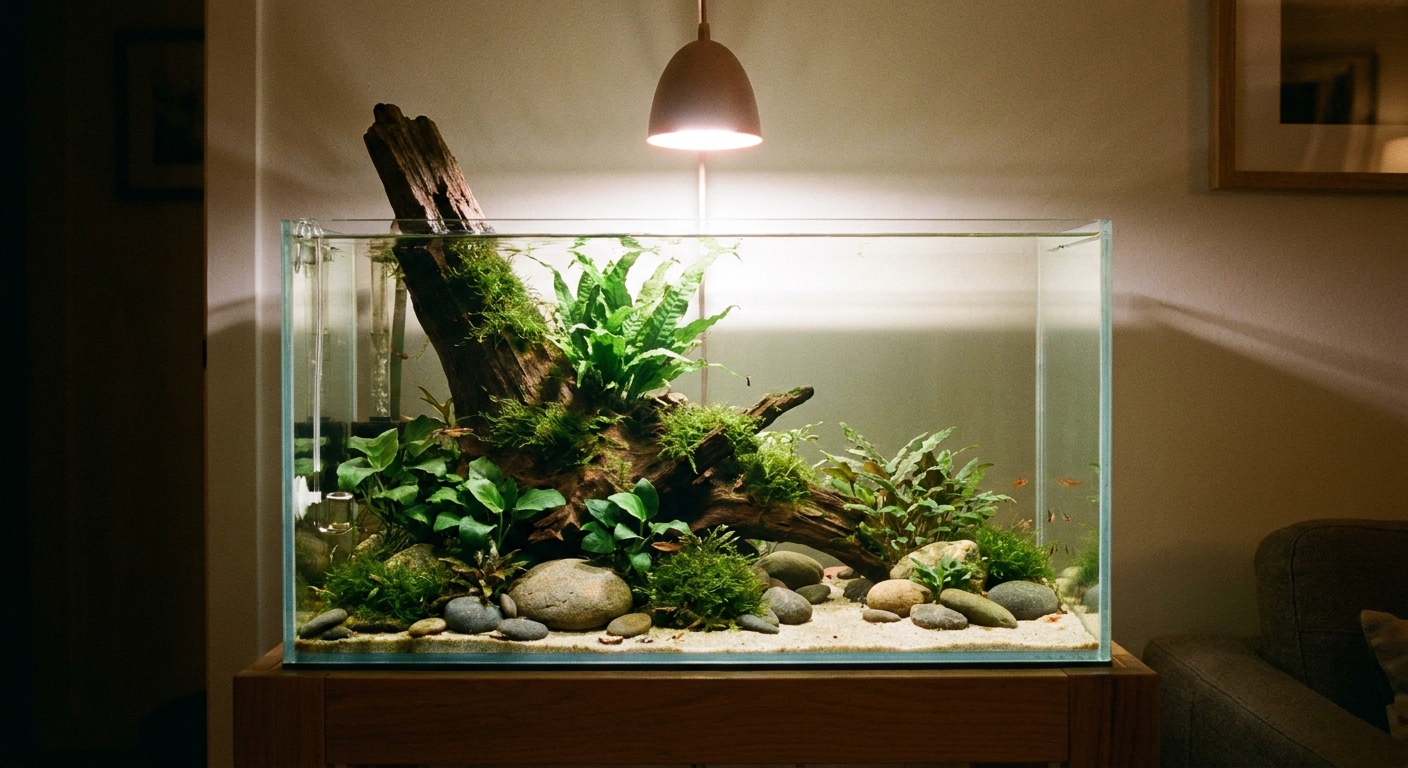
Let’s grow a beautiful underwater jungle together, one tiny leaf at a time! A low-tech planted tank can be calm, lush, and wonderfully reliable without injected CO2, as long as the design matches the slower pace. Think: hardy plants, thoughtful hardscape, gentle light, and a layout that looks better every month instead of needing constant rescapes.
What low-tech really means
In a low-tech tank, plants grow with the carbon available in the water from fish and shrimp respiration, beneficial bacteria and decomposition, and a little CO2 that dissolves in through surface gas exchange. Because CO2 stays limited compared to injected systems, everything needs to run at a steadier, lower demand.
- Lighting: moderate intensity and a consistent schedule
- Fertilization: lighter dosing and fewer swings
- Plant choices: species that thrive without added CO2
- Hardscape: does more of the “visual work” so you are not relying on fast plant growth to fill gaps
If you want the fastest carpet, the reddest stems, and weekly trims forever, CO2 helps. If you want a stable aquascape that matures slowly and stays attractive with minimal stress, low-tech is a cozy home.
Start with the layout
Low-tech plants fill in gradually, so your tank should look intentional from day one even before everything grows in. Build a strong “skeleton” with stone and wood, then use plants to soften edges and add texture.
Pick a simple composition
- Triangle layout: tall mass on one side sloping down to open space on the other
- Island layout: a central mound with open sand or low plants around it
- Valley layout: two planted mounds with a pathway or river of sand between
Need help choosing shapes? Swim over to Nature aquarium layout shapes for a clear way to visualize each option.
Place your focal point on purpose
A focal point is the spot your eyes return to first, like the tip of a branch, a striking stone, or a small opening that frames negative space. Low-tech tanks benefit from a single strong focal point because it keeps the scape feeling clean while plants grow in slowly.
For a friendly guide to placement, see Golden ratio focal points in aquascaping.
Create depth before plants
Depth is the secret spice in low-tech layouts because it makes even slow growth look immersive. Use these techniques during the hardscape build:
- Slope the substrate: higher in back, lower in front
- Use smaller stones toward the back: it mimics distance
- Keep a clear foreground: negative space reads as depth
- Angle wood and lines: point them toward your focal area
For more depth tricks, visit Creating depth in planted aquariums.
Choose slow and steady plants
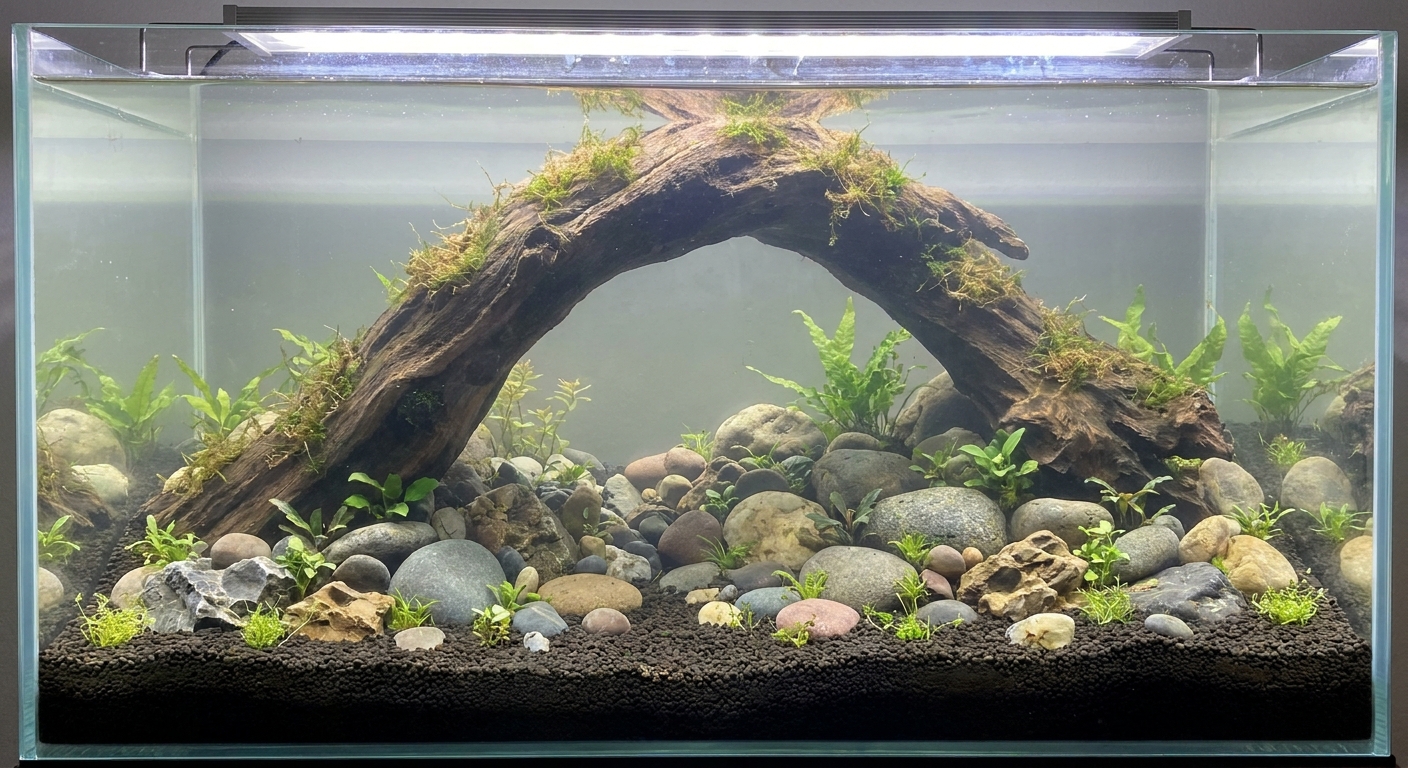
In low-tech, the best plant list is full of species that tolerate lower CO2 and do not demand intense light. A good mix includes epiphytes (attached to hardscape), rooted rosettes, and a few easy background growers.
Best low-tech plant types
- Epiphytes for wood and stone: Anubias, Java fern, Bucephalandra
- Mosses for texture: Java moss, Christmas moss (attach lightly and trim occasionally)
- Rosettes for midground structure: Cryptocoryne wendtii and other Crypts
- Background green walls: Vallisneria, water sprite, some Hygrophila species
- Floaters for nutrient balance and shade: salvinia, frogbit (thin regularly so they do not block all light)
These plants help you design with leaf shape and texture, not just speed. A low-tech tank that mixes broad leaves, fine leaves, and mossy detail looks rich even when growth is slow.
If you want more plant-by-plant guidance, browse Aquatic Plants.
Carpet expectations
Many classic carpets struggle without injected CO2, especially under stronger light where plants need more carbon to keep up. If you want a carpet-ish look in low-tech, aim for options that can behave like a lawn over time, with patience and gentle light.
- Marsilea (hirsuta or minuta): can stay low and spread slowly in some tanks
- Dwarf sagittaria (Sagittaria subulata): more of a short meadow than a golf-course carpet
- Pygmy chain sword (Helanthium tenellum): can creep, but may grow taller in lower light
- Moss edging on stone: a soft “carpet line” without asking your tank to sprint
- Hardscape foreground: clean sand, pebbles, or a rocky shelf can read as intentional minimalism
Light is the main lever
In low-tech tanks, bright light can often become a little algae invitation if plants cannot use the energy fast enough. The goal is steady, moderate light that plants can comfortably match with available CO2 and nutrients.
Simple light targets
- Photoperiod: 6 to 8 hours per day to start
- Consistency: same schedule daily, ideally on a timer
- Intensity: start lower than you think, then increase slowly if you see stretching, pale new growth, or stalled growth
If algae appears early, do not panic and do not crank the light higher. In low-tech, the usual fix is less light plus patience, not more.
For the broader setup pieces that support stable growth, see Equipment & Setup.
Substrate and nutrition
Low-tech tanks do best with a nutrition plan that does not swing wildly. You can build a beautiful scape with inert substrates or nutrient-rich ones, but the design choice should match your plant choices and maintenance comfort.
Two reliable approaches
- Inert substrate plus root tabs: great for Crypts and other root feeders, easy to control, and simple to adjust over time
- Nutrient-rich substrate: can boost early growth, but in the first weeks it may leach nutrients and organics, so keep light modest and go easy on water-column dosing until the tank settles
Fertilizer expectations
Aim for “enough to prevent deficiencies,” not “maximum growth.” Many low-tech tanks succeed with light, consistent dosing and occasional adjustments based on plant signals (yellowing, pinholes, stalling, twisted new growth).
When troubleshooting algae or nutrient issues, the calm-and-methodical steps in Maintenance & Troubleshooting can help you zero in without making the tank swing harder.
Make it look lush sooner
Since growth is slower, design is what creates that “finished” feeling. Here are shrimp-sized secrets that make a big difference.
Plant in groups
Use repeating clusters of the same plant. Big groupings look intentional. Singles look scattered, especially before growth fills gaps.
Layer textures
- Foreground: sand, small gravel, low stones, or sparse low plants
- Midground: Crypts, small Anubias, compact ferns
- Background: taller greens like Vallisneria or easy stems
Hide plant bases
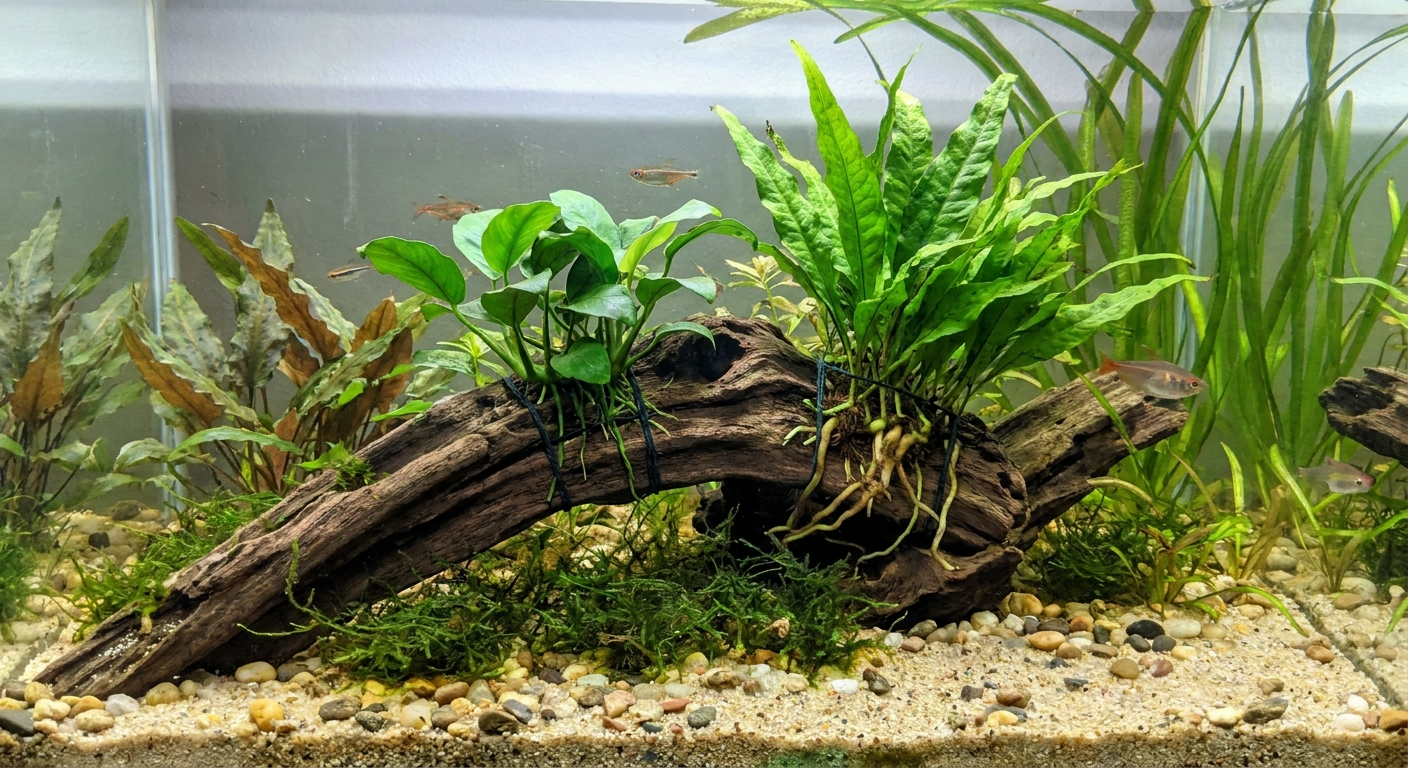
Attach Anubias, ferns, and moss to hardscape to soften transitions. This creates the feeling of an established forest even while rooted plants are settling in.
A low-tech build order
- Pick a layout shape and decide where open space will stay open.
- Place hardscape first and lock in the focal point.
- Slope the substrate to create depth.
- Plant epiphytes onto wood and stone, then plant rooted species.
- Fill gently so the substrate does not collapse (a bowl or bag can diffuse flow).
- Set lighting low for the first couple of weeks, then adjust slowly.
- Do small, consistent maintenance while the tank matures.
If you are new to layout building and want a clear aquascaping walkthrough mindset, the step-by-step approach in Iwagumi aquascape step-by-step for beginners is surprisingly helpful even if you are not building a strict Iwagumi. The planning principles carry over beautifully.
Water and cycling basics
Low-tech does not mean set-and-forget, especially at the beginning. A new tank still needs a safe cycle and a gentle stocking pace so plants and beneficial bacteria can find their balance. Add animals slowly, avoid sudden big changes, and remember that stability is the real magic.
Water parameters matter less as perfect numbers and more as consistent numbers. Some easy favorites like Crypts and Vallisneria can sulk when parameters swing quickly. Keep changes gradual, and your plants will usually forgive you with fresh new leaves.
Maintenance rhythm
Low-tech maintenance is less about constant trimming and more about preventing little problems from becoming big ones.
- Weekly: 10 to 30% water change, wipe glass, remove dying leaves, thin floaters
- Every 2 to 4 weeks: gentle trim and replant if any stems get leggy, rinse filter media in old tank water if flow slows
- Always: keep the light schedule consistent
Slow growth rewards patience. Many plants spend the first couple weeks focusing on roots, then suddenly start pushing clean new leaves once they feel safe.
Common mistakes
Too much light too soon
Fix: shorten the photoperiod and let plants catch up. In low-tech, stability beats intensity.
Overplanting fast stems
Fix: use hardscape and negative space. Choose a few easy background plants and keep the layout readable.
Burying rhizomes
Anubias and Java fern rhizomes should not be buried in substrate.
Fix: tie or glue them to wood or stone so the rhizome stays exposed.
Chasing algae with big changes
Fix: change one variable at a time. Often the first lever is light, then feeding, then fertilizer consistency. If things still feel sticky, look at flow, filter cleanliness, and built-up organics in the substrate.
Low-tech design examples
- Wood-and-fern jungle: driftwood branches with Java fern and moss, Crypts at the base, open sand in front
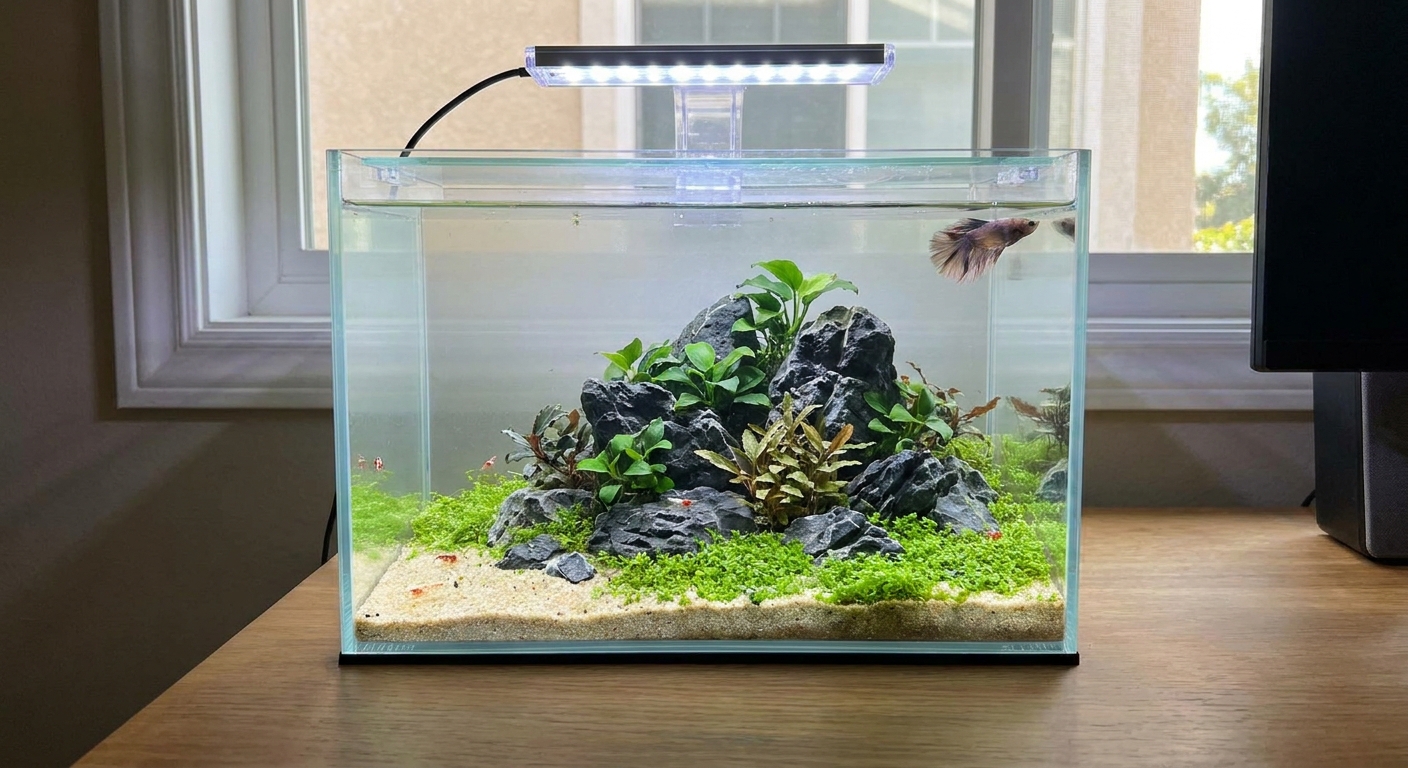
- Rocky valley: two stone mounds, a sand path through the middle, small Anubias tucked into crevices
- Mini nature scene in a small tank: a single stone cluster with epiphytes, floaters for soft shade, and a clean foreground
If you are working with a tiny aquarium, the layout ideas in Nano tank aquascaping ideas for 5 and 10 gallons translate perfectly to low-tech, because nanos also reward smart hardscape and plant choices over raw growth speed.
When to consider CO2
A low-tech tank can be stunning, but it helps to know when CO2 might match your goals better:
- You want a dense carpeting plant quickly and evenly
- You want very high light or very red, demanding stems
- You prefer frequent trimming and rapid transformation
Otherwise, low-tech is not less. It is simply a different kind of beauty: slower, steadier, and often more forgiving.
A simple low-tech promise
Design for the pace you are keeping. Let hardscape carry the composition. Choose plants that enjoy gentle light and steady routines. Then give the tank time to breathe, root, and settle.
With a warm wave of my little antennae, I’m cheering you on as your scape turns from fresh-planted to fully grown jungle, bubble by bubble.