Let’s grow a beautiful underwater jungle together, one tiny leaf at a time! Bucephalandra, or Buce for short, is one of those premium slow-growers that rewards patience with velvety leaves, subtle color shifts, and that tidy, perched-on-hardscape look aquascapers love. The trick is simple: because Buce grows slowly, anything “extra” in the tank (too much light, unstable CO2, low or uneven flow that lets detritus settle, nutrient swings) shows up as algae long before Buce can outgrow it.
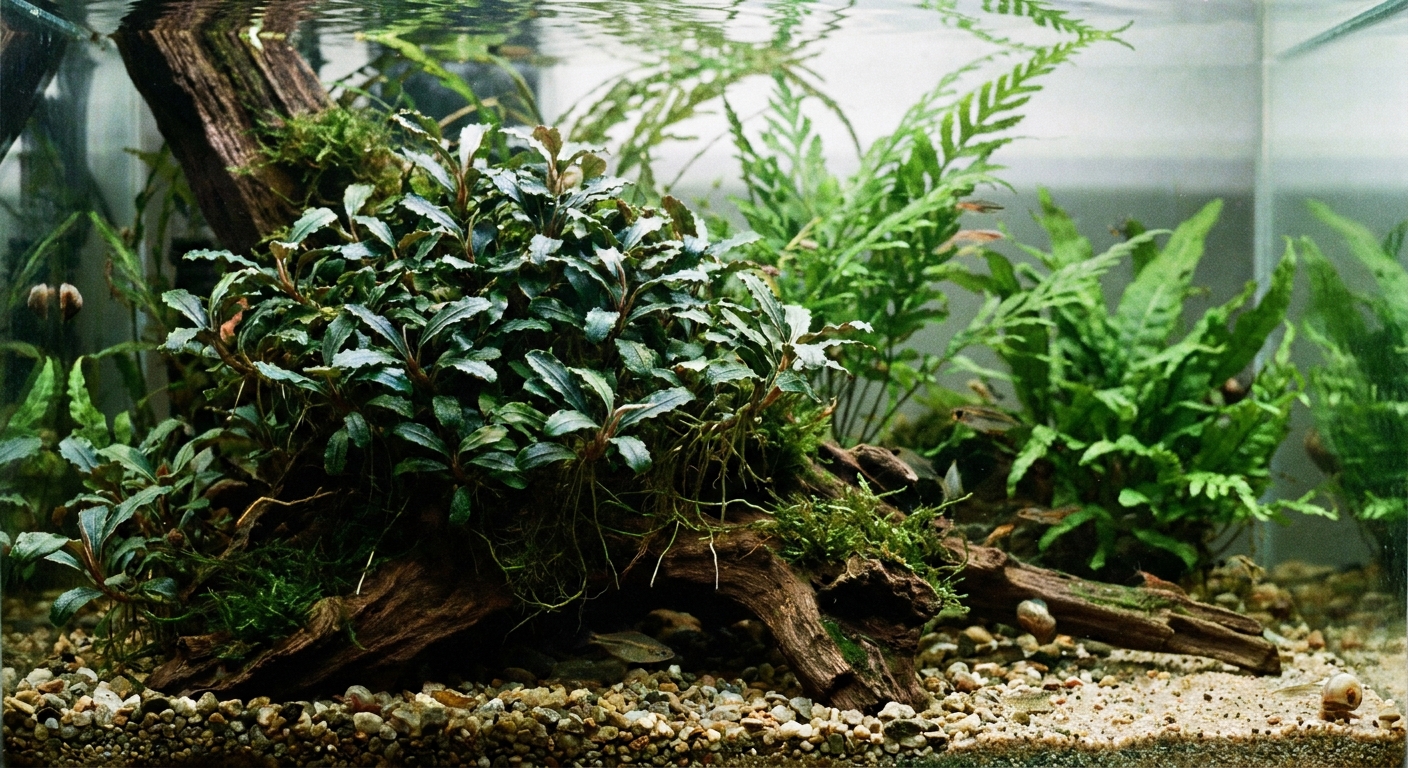
Bucephalandra at a glance
- Plant type: Rhizome epiphyte (like Anubias and many ferns)
- Best use: Hardscape accents on wood and rock, shaded midground details, nano tank focal textures
- Growth speed: Slow
- Key rule: Keep the rhizome above the substrate to prevent rot
- Main challenge: Algae on older leaves due to slow growth
If you enjoy building hardscape scenes, Buce fits beautifully alongside other epiphytes. For layout and placement ideas, see Epiphyte Design Strategies on Hardscape.
Water parameters Buce cares about
Bucephalandra is often described as “easy,” and it can be, but it is not a fan of sudden change. Stability matters more than chasing perfect numbers.
Typical tolerated ranges
- Temperature: 22 to 26°C (72 to 79°F)
- pH: 6.0 to 7.5 (stable is more important than exact)
- GH: 3 to 10 dGH
- KH: 1 to 6 dKH in many community planted tanks (some tanks run 0 dKH successfully, usually with active substrates or careful buffering and monitoring)
- Ammonia and nitrite: Always 0
- Nitrate: Commonly 5 to 20 ppm in planted tanks
Many Buce varieties do fine outside these numbers if conditions are consistent. When Buce looks grumpy, it is often reacting to change, not a slightly “imperfect” reading.
Stability tips (the algae prevention version)
- Keep weekly maintenance consistent. Irregular water changes often cause nutrient swings that show up as algae on slow growers.
- Avoid big, sudden jumps in light and CO2. Buce handles low and medium tech setups well, but sudden changes invite algae.
- Do not strip the tank “too clean” all at once. Removing obvious mulm is good, but avoid scrubbing every surface spotless in one session. Gradual cleaning helps keep biofiltration steady.
Lighting: the Buce sweet spot
Here is the Buce paradox: it can tolerate brighter light, but the brighter you go, the more precise your balance must be with CO2, nutrients, and flow. Most algae issues on Buce are really lighting issues first.
Best lighting intensity
- Low to medium light is the easiest path to clean leaves.
- High light can work, but usually only when CO2 and dosing are stable and flow is excellent.
Photoperiod guidance
- Start at 6 to 7 hours per day for new setups or new Buce.
- Move to 7 to 8 hours if algae stays controlled and other plants are thriving.
- Avoid long photoperiods while troubleshooting. It usually makes algae feel brave.
Placement tricks that keep leaves clean
- Tuck Buce under taller plants or hardscape overhangs for gentle shade.
- Face the plant into soft flow so detritus does not settle on the leaves.
- Keep Buce away from the brightest hotspot directly under the strongest part of the fixture.
If you are building a low-tech aquascape where Buce is a star, this pairs nicely with Low-Tech Planted Tank Design Without CO2.
Flow: the difference maker
Bucephalandra naturally grows clinging to rock and wood in moving water. In aquariums, steady circulation helps in three big ways: it keeps leaves free of settling mulm, reduces dead spots that collect organics, and improves nutrient delivery to slow-growing tissue. That all supports more stable biofiltration and fewer “algae-friendly” pockets.
What good flow looks like
- Leaves gently sway, but the plant is not being blasted or uprooted.
- No mulm piles up on the rhizome or in the leaf bases.
- Surface movement is visible (gas exchange helps overall stability).
Common flow mistakes
- Dead zones behind hardscape. Buce placed in a calm pocket becomes a detritus catcher.
- All flow at the surface. The midground can still be stagnant even with a rippling surface.
- Pointing the outflow directly at Buce. Too much direct current can lodge debris in the plant and can stress new attachments.
CO2 and fertilization
Buce can thrive with or without injected CO2. The key is choosing a lane and keeping it consistent.
If you run CO2
- Prioritize stability over maximum levels. Big daily swings are algae-friendly and Buce-unfriendly.
- Match light to CO2. Bright light without stable CO2 is a common recipe for spot algae on slow growers.
- Ensure good circulation so CO2-rich water reaches the leaves.
If you do not run CO2
- Keep light modest and do not chase fast growth.
- Lean fertilization often works better than heavy dosing in low-tech tanks.
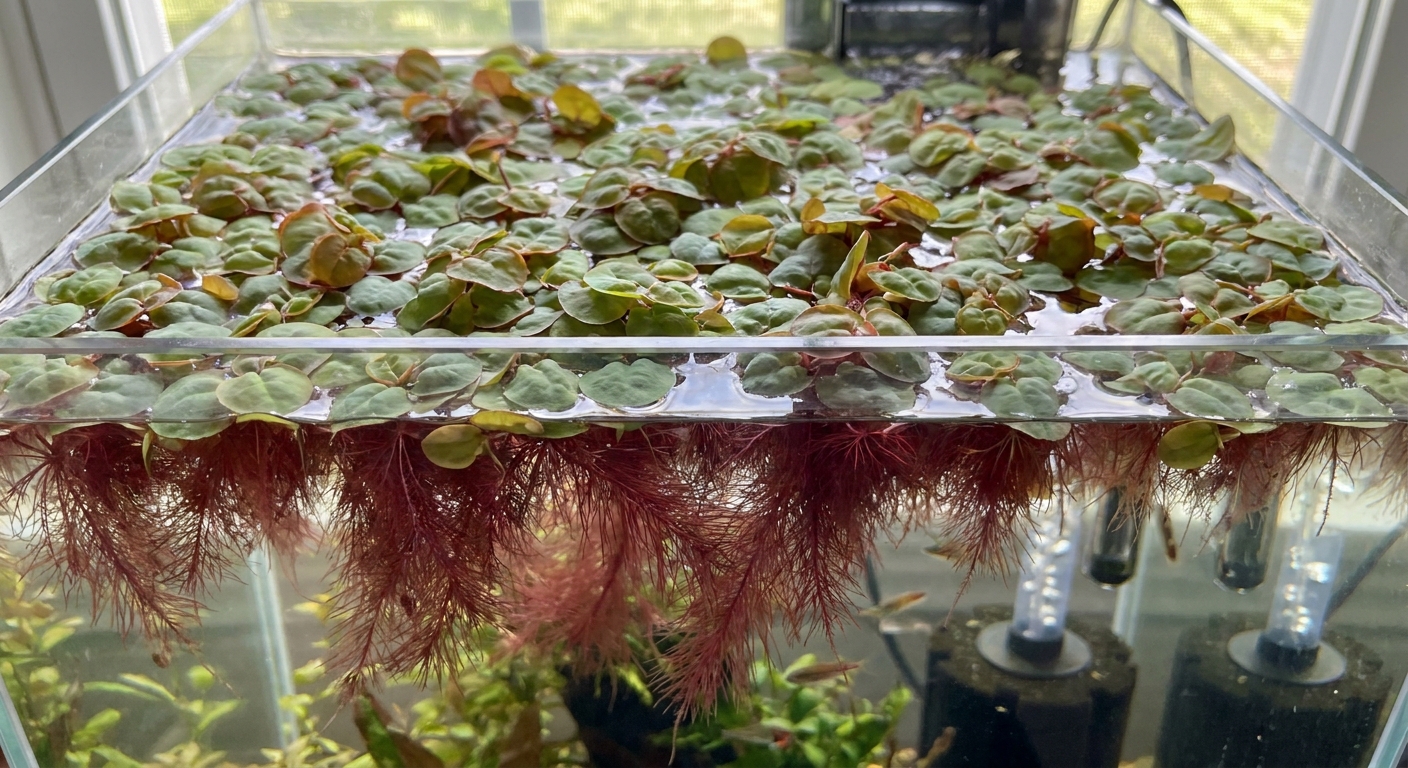
- Consider floating plants as gentle nutrient competition and shade. See Top 7 Floating Aquarium Plants for Algae Control and Fry Protection.
Nutrients Buce responds to
- Potassium and micronutrients support steady leaf development and reduce stalling.
- Consistent nitrate and phosphate availability helps prevent on and off growth that makes algae more likely.
Because Buce is slow, deficiencies may show up gradually as smaller new leaves, pale new growth, or stalled rhizome extension. Fix changes gently and wait for the next leaves, since old leaves rarely heal fully.
Planting and attachment
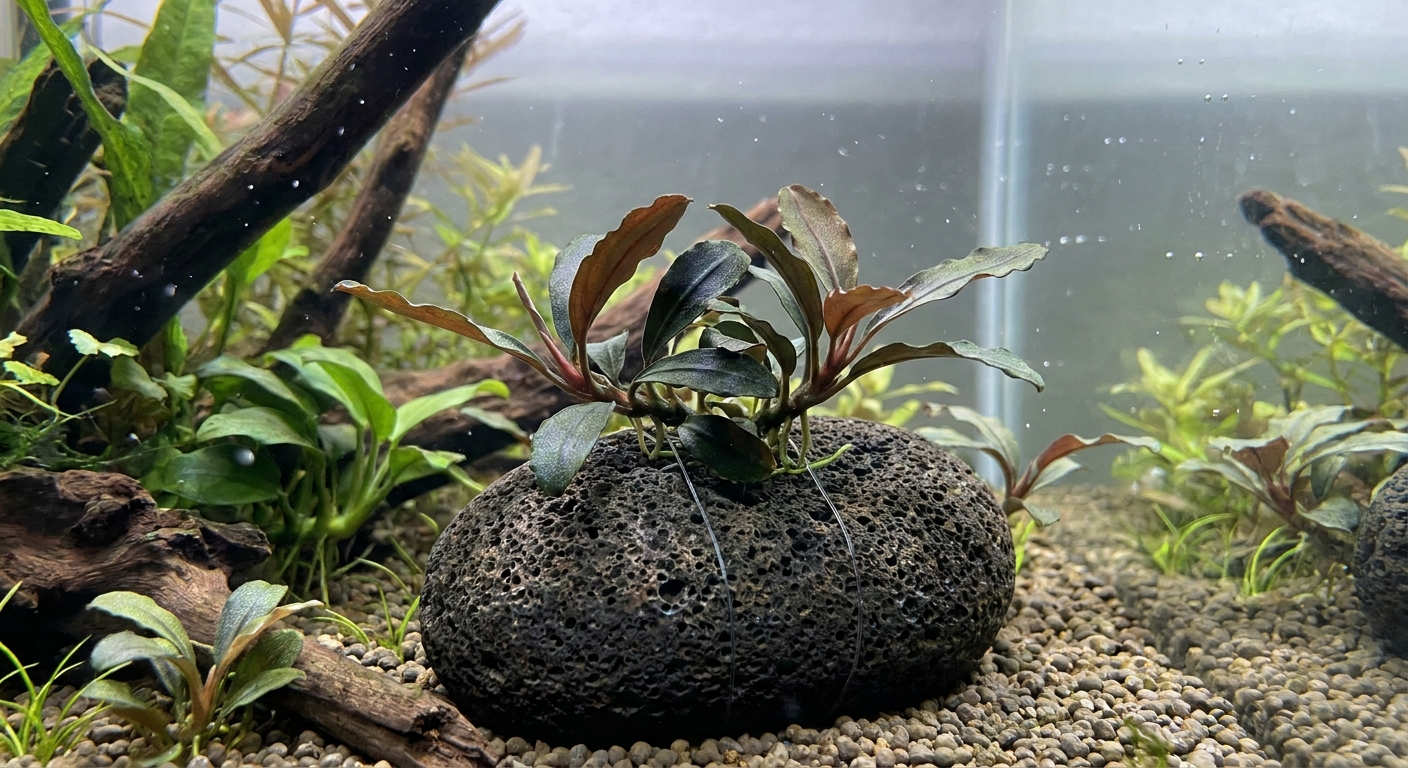
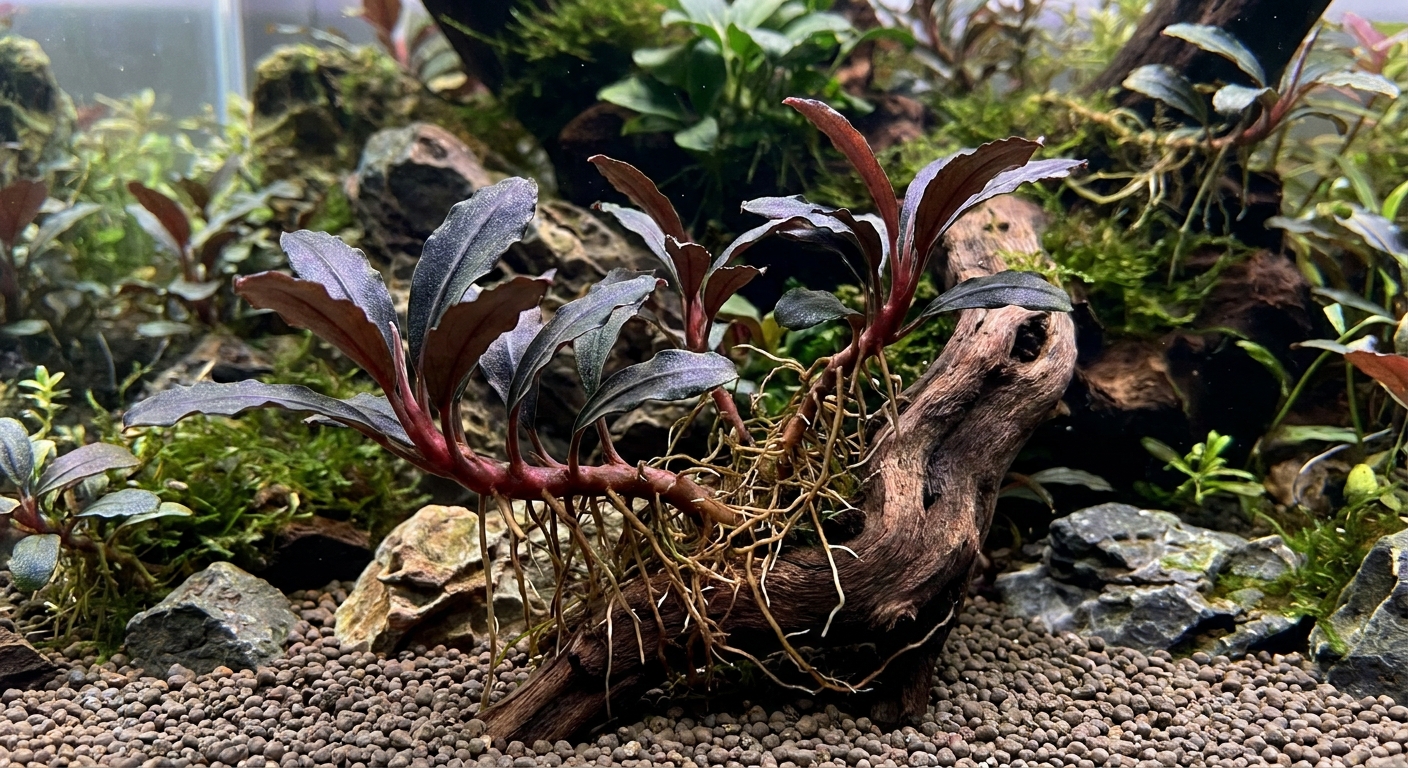
Bucephalandra is happiest when attached to hardscape. The rhizome is the thick horizontal stem where leaves and roots emerge. If it gets buried, it can suffocate and rot.
Best ways to attach Buce
- Cotton thread: Great for small clumps, naturally breaks down after the roots grip.
- Cyanoacrylate gel: A tiny dab on rock or wood works well when used sparingly. The goal is to anchor the plant without smothering tissue, whether you catch a bit of root or a small section of rhizome.
- Wedge placement: Tuck roots into a crevice so the rhizome stays exposed.
Placement checklist
- Rhizome visible and not pinched
- Leaves not shaded into darkness
- Gentle flow across the plant
- Easy to remove later for cleaning or trimming
If you are blending wood and stone, Buce is a wonderful bridge plant that softens transitions. See Blending Driftwood and Rocks Naturally.
New Buce: rinse and inspect
Premium plants deserve a calm landing. Most Buce problems in the first month are not “mystery diseases,” they are a mix of transition stress and hitchhikers you did not invite.
- Rinse thoroughly. Swish the plant in a bowl of tank water to knock loose grit and shipping debris.
- Inspect the rhizome and leaf bases. Look for snails, egg clutches, and any mushy spots.
- Keep it easy to remove at first. Attach to a small pebble or a removable hardscape chip so you can pull it for cleaning if needed.
If you are deciding between tissue culture and potted plants (and why hitchhikers differ), see Tissue Culture vs Potted Aquarium Plants.
Keeping Buce algae-free
Algae on Buce is common because the leaves are long-lived. The goal is not perfection. The goal is new growth that stays clean, while older leaves are gradually replaced.
Step 1: Lower the pressure
- Reduce intensity or shorten photoperiod to 6 to 7 hours for a few weeks.
- Shift Buce slightly into shade rather than moving everything else.
Step 2: Improve leaf cleanliness
- Adjust outflow so midground plants get circulation.
- Rinse mechanical media as needed so detritus does not keep returning to the water column.
- Lightly turkey baste around Buce before water changes to lift settled mulm.
Step 3: Keep nutrients steady
- Inconsistent dosing often causes algae to cycle between blooms and lulls.
- In low-tech tanks, avoid heavy dosing just in case. Buce rarely needs aggressive feeding to look great.
Step 4: Use targeted cleanup
- Spot clean: Gently rub affected leaves between fingers during a water change to dislodge soft algae films.
- Prune smart: Remove the worst older leaves so the plant can focus on clean new growth.
- Hardscape hygiene: Algae often starts on nearby rock or wood and then spreads. Clean the neighborhood, not just the plant.
Common algae and fixes
Green spot algae
- Often linked to: High light, long photoperiod, and slow leaf turnover
- What helps: Shorten photoperiod, reduce intensity, and aim for nutrients that do not swing wildly. In some tanks, green spot improves when phosphate is not chronically bottomed out and light is moderated. Heavily dotted old leaves often never look perfect again, so prune strategically.
Black beard algae
- Often linked to: CO2 instability, organic buildup, inconsistent maintenance
- What helps: Stabilize CO2 routine, improve circulation, reduce trapped detritus, remove badly affected leaves
Brown diatoms
- Often linked to: New tanks, silicate-rich water, low competition from faster plants
- What helps: Time, steady maintenance, gentle wiping, increased plant mass elsewhere in the tank
Hair algae
- Often linked to: Excess light and imbalance between light, CO2, and nutrients
- What helps: Reduce light, increase consistency, manually remove strands before they spread
For a broader algae and maintenance workflow, swim over to Maintenance & Troubleshooting.
Trimming and propagation
Bucephalandra propagation is slow and satisfying. It spreads by extending the rhizome and producing new growth points.
How to divide Buce
- Wait until the clump has multiple growth points and a rhizome long enough to split.
- Use clean scissors or a blade to cut the rhizome so each piece has several leaves and healthy roots.
- Re-attach each division to hardscape with the rhizome exposed.
Pruning for looks and algae control
- Remove older leaves that stay algae-covered. This is normal housekeeping for slow growers.
- Keep the crown airy. Buce packed too tightly can trap debris.
Acclimation and melt
Buce can pause after being moved, and some varieties drop a few older leaves while adapting to new water and light. This is not always a disaster.
What transition stress can look like
- Older leaves yellowing or developing pinholes after shipping
- A few leaves melting while the rhizome stays firm
- New leaves coming in smaller at first, then sizing up as the plant settles
Gentle acclimation checklist
- Start in lower light for 2 to 3 weeks.
- Place in steady flow so leaves stay clean and oxygenated.
- Avoid major rescapes around it during the first weeks.
- Do not bury the rhizome even just a little.
Very slow growth is normal. Depending on variety, light, and whether you run CO2, a healthy Buce might only put out a new leaf every couple of weeks, or even slower. Watch for firm rhizome and clean new growth, not rapid expansion.
Bucephalandra FAQ
Can Bucephalandra grow in gravel?
It can sit near gravel, but the rhizome should not be buried. If you want it near the substrate, wedge it against a small stone or wood piece so the rhizome stays exposed and roots can reach downward.
Does Buce need CO2?
No. CO2 can increase growth speed and color in some setups, but Buce looks great in low-tech tanks when light is kept moderate and maintenance is consistent.
Why is algae only growing on my Buce and Anubias?
Slow growers are the first to show imbalance because their leaves stay in the tank a long time. Usually the fix starts with less light, steadier CO2 (if used), better circulation around the leaves, and removing the worst older leaves.
How long does Buce take to attach?
Often a few weeks, sometimes longer depending on conditions. Keep it stable, keep the rhizome exposed, and avoid tugging on it to check.
A calm recipe for Buce
If you want the simplest path to clean, showy Buce, aim for this combination:
- Low to medium light (no hotspot blasting)
- Steady circulation through the midground
- Consistent routine for water changes and dosing
- Rhizome always exposed, attached to rock or wood
- Willingness to prune older leaves so new growth can shine
With that gentle balance, Buce becomes the kind of plant you can admire up close, like a little rainforest canopy made of tiny, patient leaves. Warm antennae wave, and happy scaping.