Let’s grow a beautiful underwater jungle together, one tiny leaf at a time!
If your Cryptocoryne suddenly turns mushy, riddled with holes, or seems to “disappear” leaf by leaf, take a slow, calming breath. Cryptocoryne melt is one of the most common planted tank surprises, and it is often more like a reset than a failure. With the right moves, the roots and crown can stay perfectly alive and push fresh leaves that match your new tank conditions.
What crypt melt is
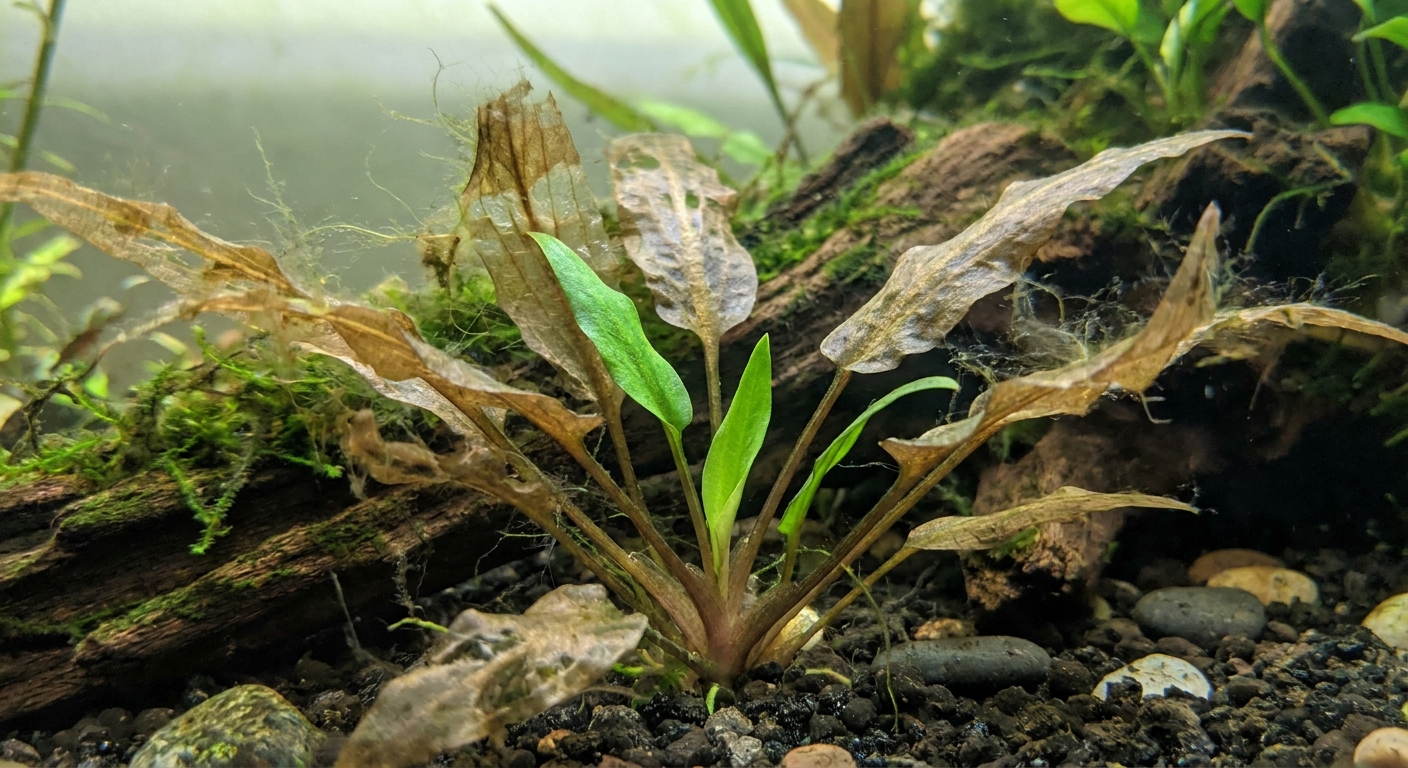
“Crypt melt” is the hobby nickname for what happens when a Cryptocoryne sheds leaves after a significant change in its environment. Instead of trying to force old foliage to work in a new setup, it often drops stressed leaves and regrows new ones better suited to the conditions.
In practice, many Cryptocoryne are strong root feeders with a persistent root system and a tough crown (the growth point where leaves emerge). Even when the leaves look hopeless, the underground parts can stay viable.
Melt vs normal leaf aging
- Normal aging: One or two older outer leaves yellow slowly while the center keeps growing.
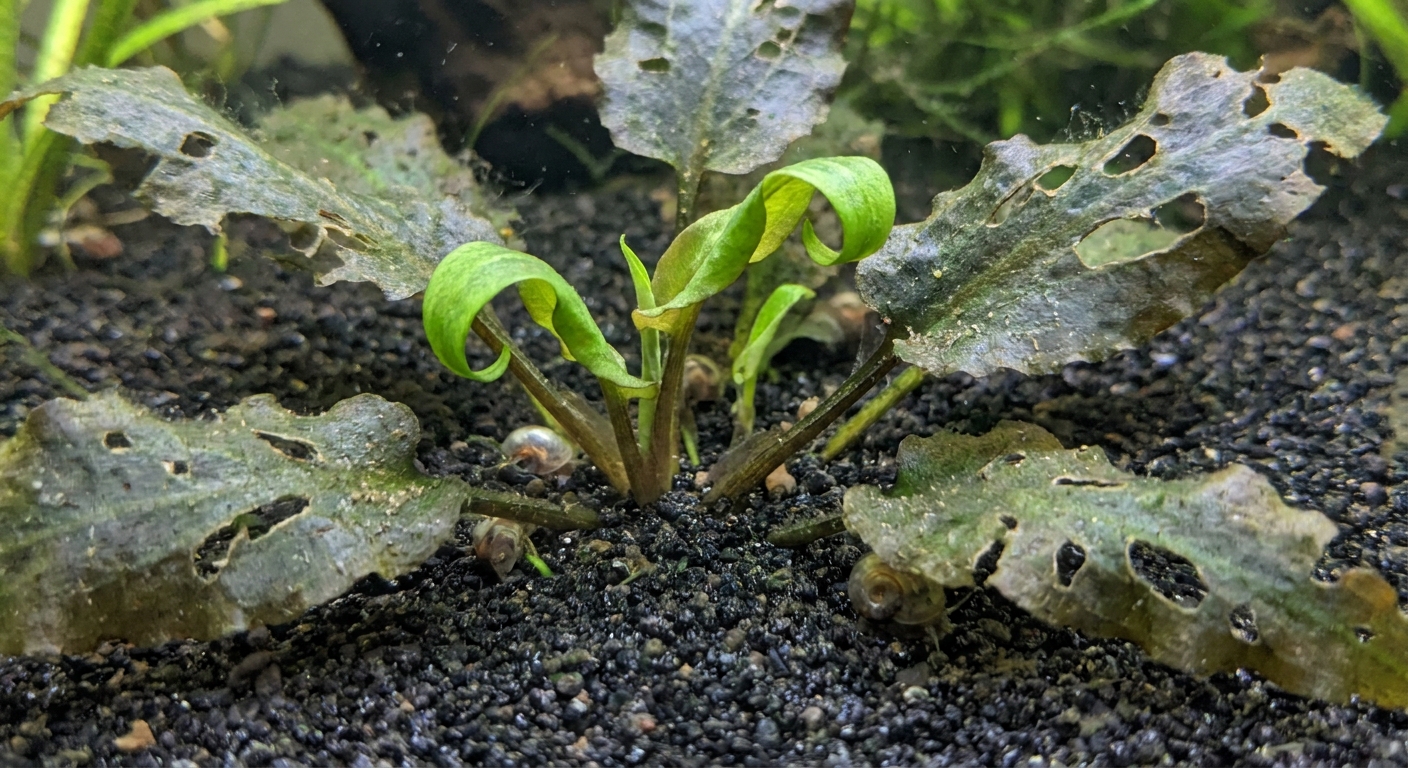
- Melt: Multiple leaves soften quickly, become translucent, develop pinholes, or collapse into mush over days to a couple of weeks.
Why crypt melt happens
Crypts are famous for disliking sudden change. In nature, many species live along river margins where conditions shift seasonally, but they adjust gradually. In aquariums, changes can be abrupt, and the plant responds by ditching its current leaves.
1) Parameter shifts after moving or replanting
A new tank, a new shop shipment, a rescape, or even replanting the same crypt can trigger melt. Common triggers include changes in:
- Temperature
- pH and KH
- GH and mineral balance
- Conductivity and total dissolved solids
- Flow and oxygen levels around the leaves
2) Emersed to submerged transition
Many store-bought crypts are grown emersed (leaves formed in air) because it is easier for farms to produce them that way. When you plant them underwater, those emersed leaves can melt even if your tank is perfectly fine. The good news is that once the plant “converts,” the new submerged leaves tend to be sturdier and more stable.
3) Lighting changes
Crypt leaves adapt to the light they grew under. Swapping to brighter lights, extending photoperiod, removing floating plants, or changing from low-tech to high-tech can all cause older leaves to fail while the plant recalibrates.
4) CO2 changes or instability
Crypts can thrive with or without injected CO2, but they dislike instability. Common patterns that trigger melt include:
- CO2 added suddenly to an established low-tech tank
- Big swings from inconsistent CO2 timing
- Excess CO2 with low surface agitation, which can be dangerous for fish and shrimp and often shows up alongside overall instability
If you are running a low-tech tank, Verdant Aqua’s approach to steady growth without injected CO2 can help keep conditions calmer over time. See Low-Tech Planted Tank Design Without CO2.
5) Substrate disturbance and root stress
Crypts build deep root systems. Uprooting them, trimming roots aggressively, or constantly shifting them during layout tweaks can set them back.
Very fine or very deep substrates can also compact over time, especially in low-flow areas. When that happens, water circulation into the root zone can drop and the plant can struggle.
6) Nutrient imbalance at the roots
Many crypts melt when they cannot feed at the roots, especially in inert substrates. Issues include:
- Too little nutrition: no root tabs or enriched substrate, especially in sand or gravel
- Too much organic waste: pockets of mulm and decay around the crown that encourage rot
- Possible nutrient gaps: pinholes and weakening older leaves are sometimes linked to potassium or general underfeeding, but they can also come from transition stress or physical damage
7) Ammonia spikes in new setups
In a new aquarium, fluctuating ammonia and nitrite can damage leaf tissue and invite melt. Crypts may still survive, but the leaves can be the first thing to go.
8) Medications and treatments
Some tanks see melt after certain treatments, especially algaecides or stronger medications. If you need to treat fish, focus on stability before and after, and be ready to trim melting leaves promptly if plants react.
Can your crypt be saved?
When leaves melt, the key question is not “Do the leaves look good?” It is “Is the crown and root system still healthy?”
Signs the plant is still alive
- A firm crown where leaves emerge
- Roots that are tan to light brown and not foul-smelling
- Tiny new leaves or nubs emerging from the center
- A base that is not turning to mush
Signs of true rot
- The entire crown turns mushy and collapses when touched
- A strong rotten smell from the base
- Roots turn black and disintegrate easily
- No new growth for several weeks, paired with a softening crown
If only leaves are melting but the base is firm, treat it as a recovery project, not a loss.
Recovery plan
When melt starts, the best strategy is gentle stabilization. Crypts reward patience.
Step 1: Trim melting leaves
Use scissors to trim at the base of each melting leaf. This reduces decaying organics, discourages algae, and frees energy for new growth.
- Trim leaves that are translucent, mushy, or collapsing.
- Leave any leaf that is still firm and photosynthesizing, even if it looks imperfect.
Step 2: Stop moving the plant
Pick the spot and let it settle. Crypt roots like to anchor and explore. Repeated repositioning extends the recovery period.
Step 3: Check planting depth
The crown should sit at or slightly above the substrate surface. If it is buried, gently brush substrate back until the crown can “breathe.” A buried crown is more likely to trap debris and soften.
Step 4: Stabilize for 2 to 4 weeks
Choose consistency over perfection:
- Keep photoperiod steady. Often 6 to 8 hours is plenty during recovery.
- Avoid big chemistry swings from large, infrequent water changes.
- If using CO2, keep it consistent day to day.
Step 5: Feed the roots, gently
If your substrate is inert, add a root tab near, not under, the crown. Placing it too close can irritate the base. Aim for a few centimeters away so nutrients diffuse into the root zone.
Step 6: Keep flow and oxygen reasonable
Moderate circulation helps prevent detritus from smothering the crown. If your tank is very still, a small increase in surface agitation can improve gas exchange without blasting the plant.
Prevention that works
Crypts are not fragile plants. They are plants that like calm transitions. Prevention is mostly about avoiding abrupt shifts.
Acclimate to new tanks and new water
- Match temperature during planting day.
- Avoid dramatic pH and hardness jumps if you can. If your tap water is very different from the store’s water, expect some melt and focus on stability afterward.
- Do not stack major changes, like a new light plus new CO2 plus a big rescape.
Change light slowly
If you upgrade lighting, try one adjustment at a time:
- Reduce intensity at first if your fixture allows it.
- Start with a shorter photoperiod, then increase gradually.
- Add floating plants temporarily if the tank suddenly feels too bright.
Keep substrate plans crypt-friendly
Crypts can grow in many substrates, but they do best when their roots can eat and breathe.
- In sand or gravel, use root tabs on a routine.
- Avoid burying the crown too deep.
- During rescapes, disturb the root zone as little as possible.
Practice small maintenance
Large overhauls can trigger melt. If you are also dialing in algae control and plant health, the calm, steady approach in Maintenance & Troubleshooting pairs nicely with crypt keeping.
How long does melt last?
Most cases settle down in 1 to 3 weeks, followed by signs of new growth. Full recovery often takes 4 to 8 weeks, depending on species, light, and root nutrition.
And sometimes it takes longer, especially after repeated disturbance, very low light, or if the plant is converting from emersed growth. Slow is normal for Cryptocoryne. A crypt that produces one sturdy new leaf every week or two is often doing just fine.
Common scenarios
“My crypt melted after I planted it, but the roots look fine.”
This is the classic case, and it is especially common with emersed-grown plants. Trim the melting leaves, do not uproot it, and keep conditions steady. New leaves often emerge adapted to submerged life and your tank’s water chemistry.
“It was growing well, then melted after a big water change.”
That points to a sudden parameter shift. For the next few weeks:
- Use smaller, more frequent water changes.
- Match temperature carefully.
- If you remineralize RO water, keep your recipe consistent.
“Leaves have holes but are not melting into mush.”
Holes can be melt in slow motion, but they are also commonly tied to nutrient issues or physical damage. Check:
- Overall fertilization and whether the plant is getting root nutrition
- Snail or fish nibbling
- Older leaves that are naturally being replaced during transition
“The whole base is turning soft.”
This is more serious. Gently uncover the crown. If it is mushy and foul-smelling, remove the plant to protect water quality. If only a portion is soft, you can sometimes salvage firm offshoots by separating them carefully. Avoid replanting repeatedly. Stability is still the goal.
Crypts in aquascaping
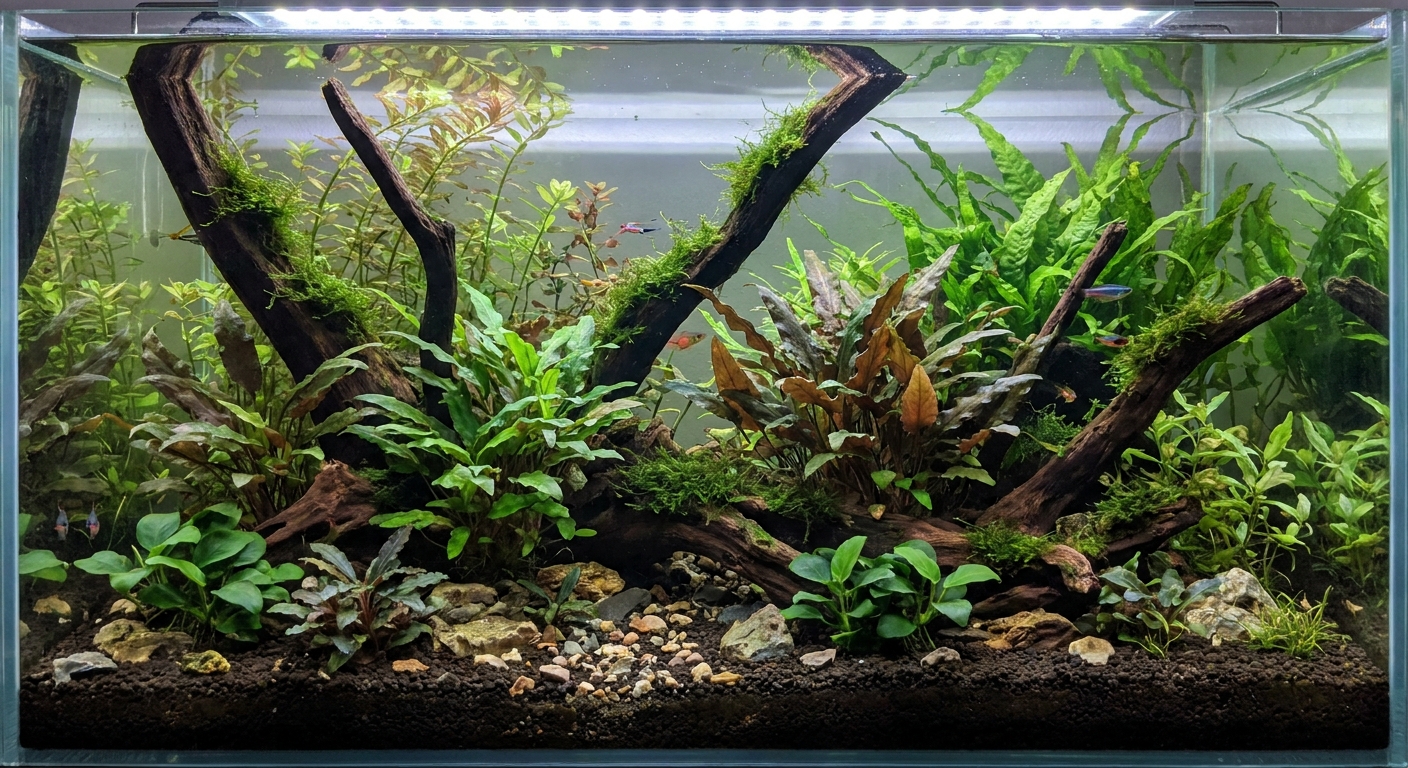
Crypts are beloved in aquascaping because they create a grounded, natural midground. Melt can leave empty spots fast, especially in fresh layouts.
- Plant in groups: clusters recover more gracefully than single plants.
- Frame the crypt zone: stones or wood make temporary bare patches look intentional.
- Pair with epiphytes: Anubias, Bucephalandra, and Java fern can keep the scene lush while crypts reboot. For placement ideas on wood and rock, see Epiphyte Design Strategies on Hardscape.
Quick do and do not
Do
- Trim melting leaves promptly
- Keep light, CO2, and maintenance consistent
- Feed the roots with an appropriate substrate or root tabs
- Be patient and watch for new center growth
Do not
- Keep uprooting and replanting the crypt
- Make multiple big changes at once
- Increase light intensity dramatically during recovery
- Bury the crown deeply under substrate
FAQ
Will crypt melt kill my fish or shrimp?
Melt itself is not toxic, but decaying plant matter can raise organics and contribute to ammonia in small or newly set up tanks. Trimming melting leaves and maintaining steady filtration helps keep everyone safe.
Should I remove the plant completely if it melts?
Only remove it if the crown is rotting. If the base is firm, leaving it planted is usually the fastest route to recovery.
Do all Cryptocoryne melt?
Most can melt under stress, but some are more sensitive than others. Many hobby favorites like Cryptocoryne wendtii bounce back reliably once settled.
Can I prevent melt 100 percent?
Not always. Even with great care, a crypt may still shed older leaves after a move or major change. The goal is to minimize the triggers and help it regrow quickly.
A calm ending
Cryptocoryne melt looks like a disaster, but it is usually a plant doing a wardrobe change for its new underwater world. Keep your tank steady, keep the crown clean and well-fed, and give it time. Soon enough, those fresh crypt leaves can become the soft, leafy foundation of your aquascape again.
If you want more plant-centered guidance, you can browse the rest of Verdant Aqua’s Aquatic Plants library.