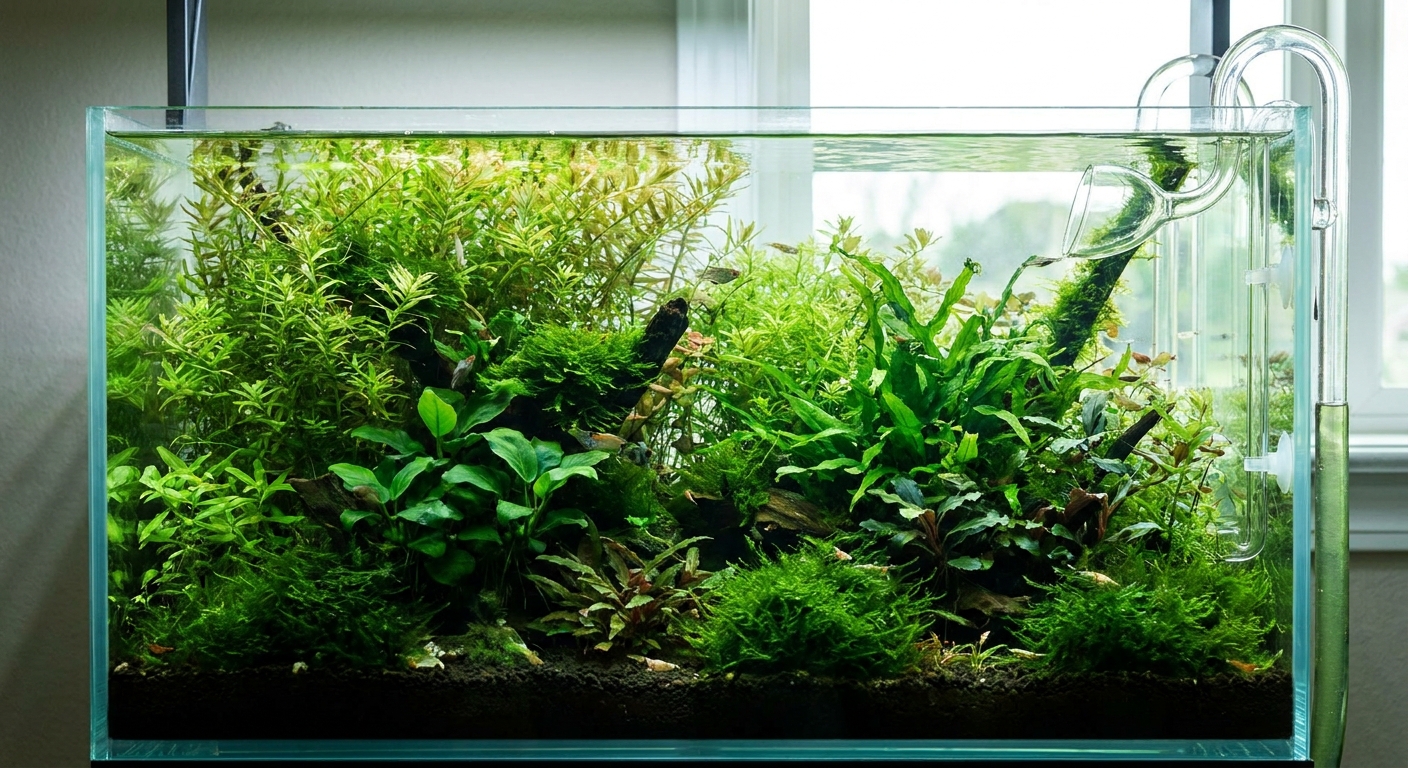
Let’s grow a beautiful underwater jungle together, one tiny leaf at a time! Clear water in a planted aquascape is not just about a strong filter, it’s about how you stack the media so gunk gets trapped early, bacteria get a steady home, and polishing resins like Purigen do their job without clogging.
The simple rule: dirty to clean
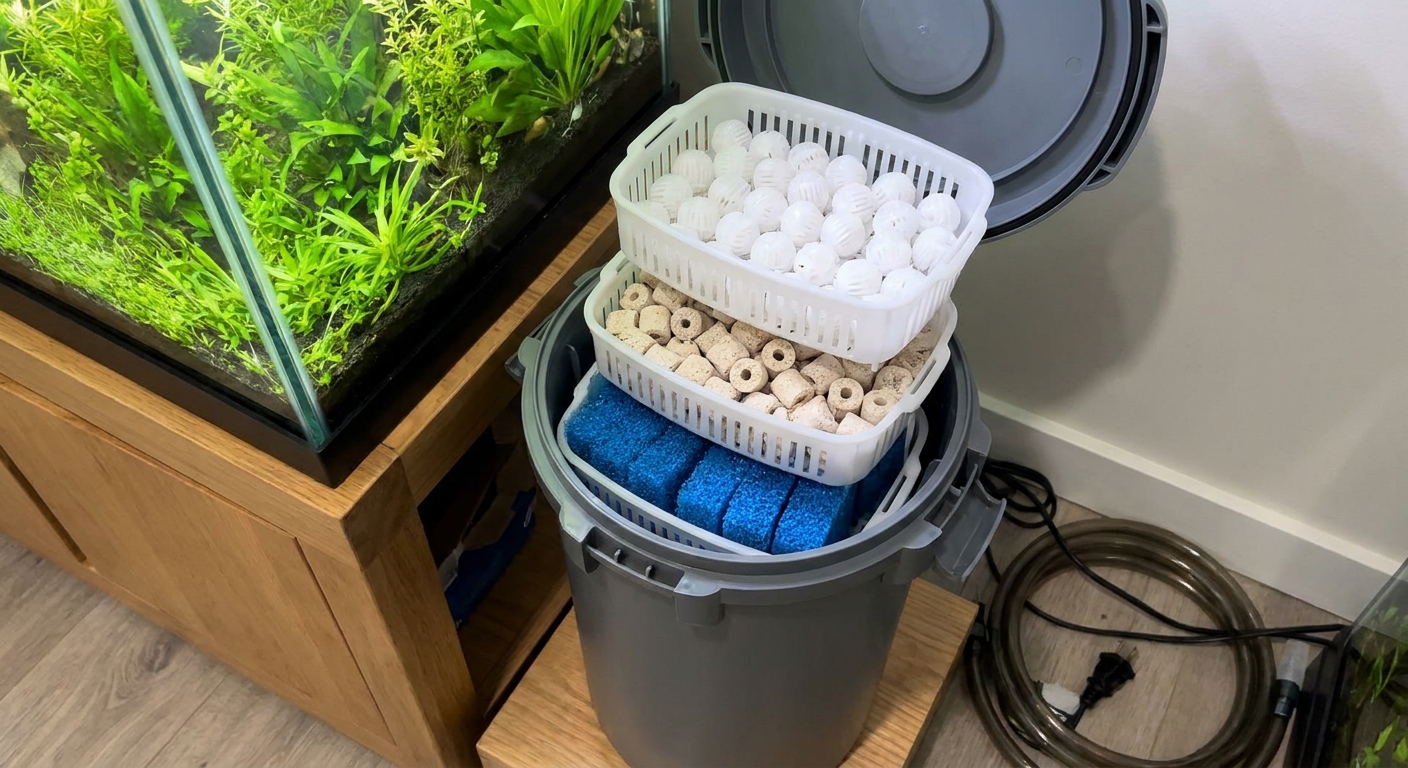
In many canister filters, a dependable way to stack media is to follow a “dirty to clean” progression along the actual water path:
- Mechanical first to catch debris before it packs into everything else.
- Biological next so beneficial bacteria get stable flow and oxygen without being buried in mulm.
- Chemical last (like Purigen) so it “polishes” already clarified water and tends to last longer.
This approach usually keeps flow steadier and maintenance more predictable, but it is not the only valid layout. The best stack is the one that matches your canister’s intended flow design and still gives you strong mechanical filtration up front.
First: confirm your flow path
Canisters are not all built the same. Some push water bottom to top through stacked trays. Others pull water top to bottom. The media order should follow the water path, not the physical tray number.
- If your canister is bottom to top, put mechanical media in the bottom tray and Purigen in the top tray.
- If your canister is top to bottom, do the opposite: mechanical in the top tray, Purigen in the bottom tray.
Not sure? Look for arrows on the canister head, check the manual, or track where the intake and output channels route water. If your filter includes a stock pad or built-in prefilter stage, consider keeping it in place and stacking the rest of your media around it.
A common media order (step by step)
Below is a common, reliable layering for planted aquascapes using sponges, bio media, and Purigen. Adjust thickness and quantities to fit your baskets, and always keep the order aligned with your canister’s flow direction and any manufacturer prefilter stages.
1) Coarse mechanical sponge (first)
Start with a coarse sponge or coarse foam pad. Its job is to intercept big bits:
- plant trimmings
- fish waste
- mulm loosened during maintenance
- substrate dust after rescapes
Why it matters: the coarser the first layer, the slower it clogs, and the more it protects everything after it.
2) Fine mechanical sponge or floss (second)
Next, add a fine sponge or a thin layer of filter floss. This catches smaller particles that make water look hazy.
- Use fine sponge for stability and reusability.
- Use floss for quick water polishing, especially after trimming or replanting.
Planted tank tip: floss clogs fast in aquascapes that get frequent trimming. If your flow drops quickly, switch to fine sponge as the “everyday” layer and save floss for short-term cleanup.
3) Biological media (third, largest section)
Now give your beneficial bacteria a roomy neighborhood. Common choices include ceramic rings, sintered glass, or other high-surface-area bio media.
- Fill most of your available basket space with bio media.
- Rinse new bio media quickly in dechlorinated water to remove dust.
- Avoid compressing it too tightly. Water should move through it evenly.
Why it matters: stable biological filtration helps keep ammonia and nitrite at zero, especially in CO2 aquascapes where feeding, plant growth, and livestock loads can change quickly.
4) Purigen (last, as a polishing stage)
Place Purigen last in the flow path, in a fine mesh bag. It typically works best when it receives pre-filtered water.
- Keep the bag flat and not overstuffed so water can pass through.
- Do not bury Purigen under loose debris-catching layers.
- Position it where it will not be crushed so tightly that flow bypasses around it.
What Purigen does well: it is designed to remove many dissolved organic compounds that tint water and contribute to that “old tank” yellowing. In aquascapes with driftwood, it can help brighten water, although results vary with tannin load, contact time, and what else the resin is binding.
Intake pre-filter sponge
If your intake allows it, a pre-filter sponge on the intake strainer is one of the simplest clarity upgrades for planted tanks.
- It traps leaves and mulm before they reach the canister.
- It can reduce how often you have to open the canister.
- It protects shrimp and small fish from being pulled in.
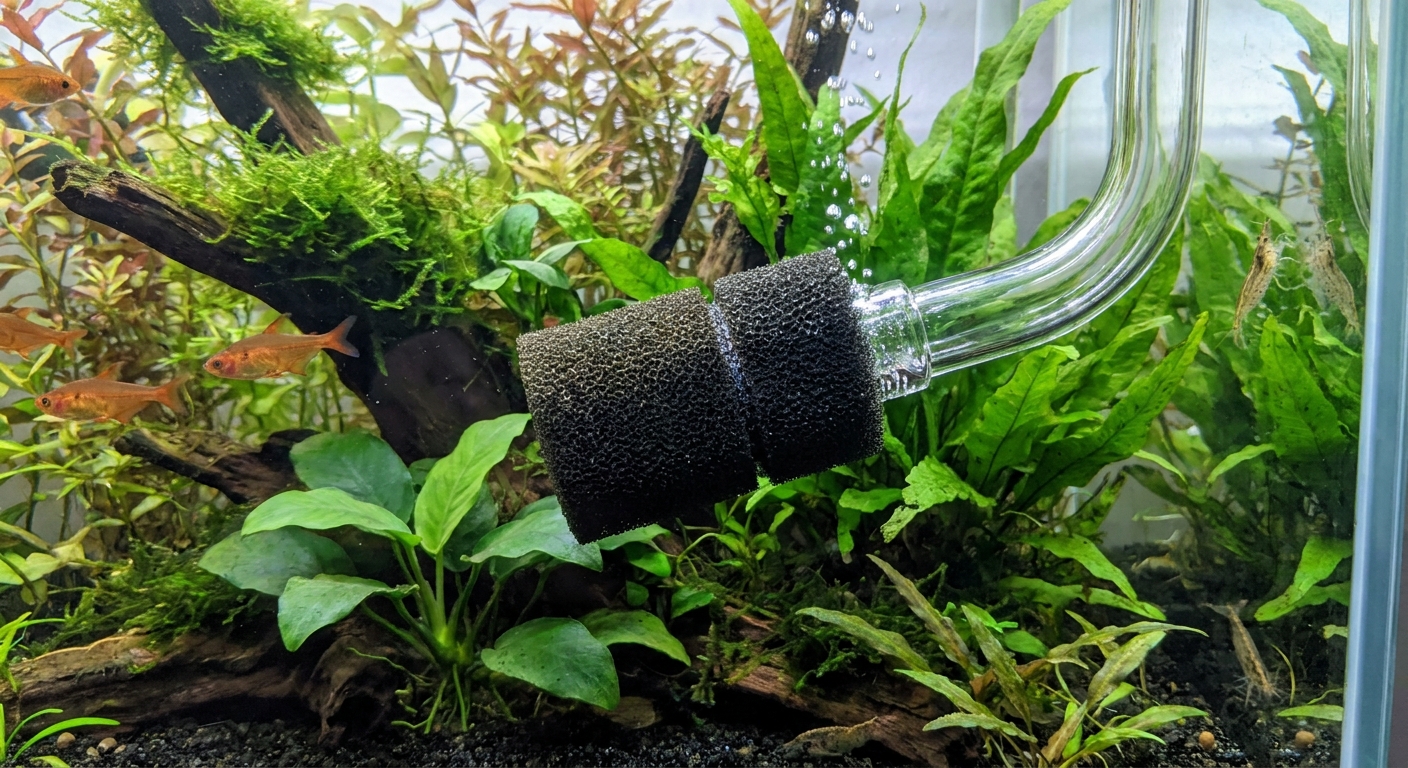
When you use an intake sponge, you can often simplify the inside of the canister to fewer mechanical stages because the pre-filter takes the heavy hit.
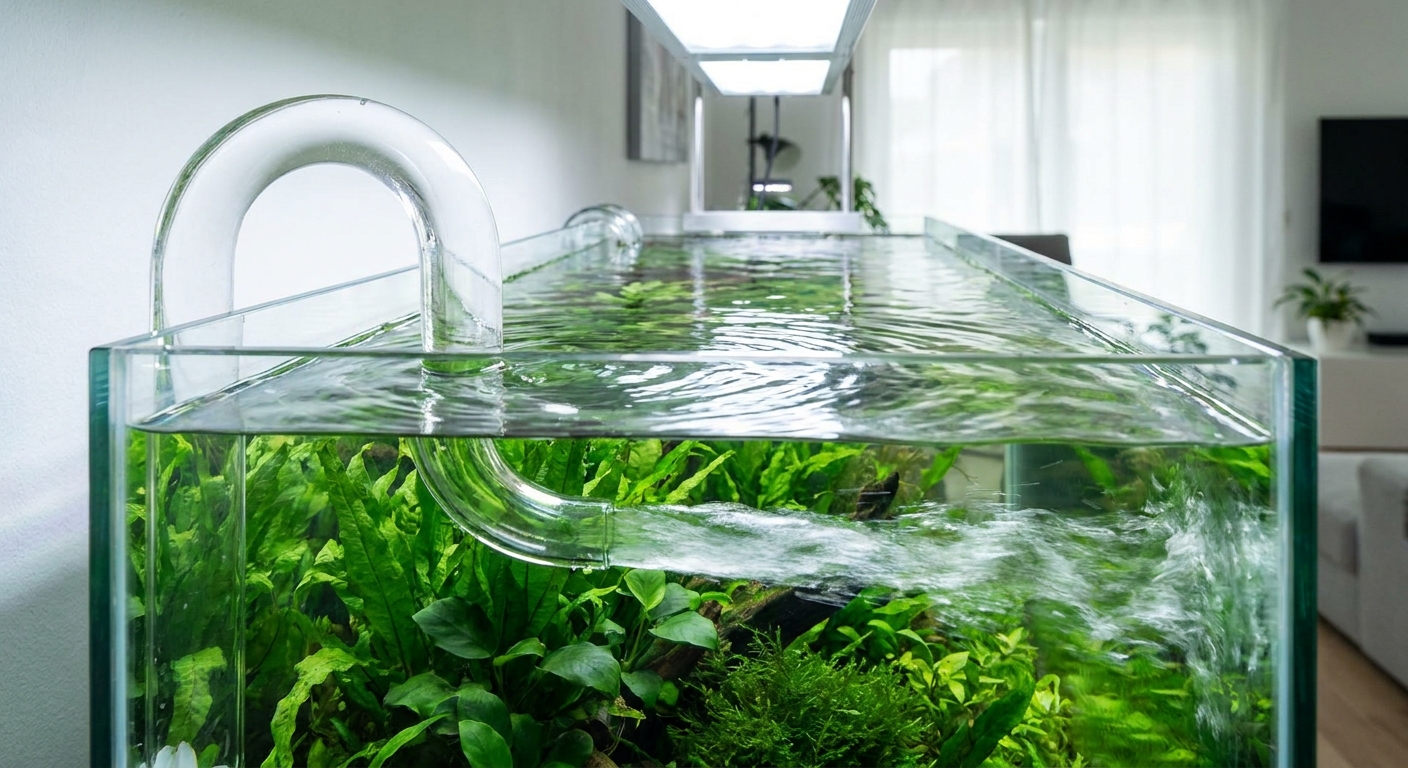
For flow and surface film management ideas that pair nicely with clear water goals, see Water circulation with lily pipes and surface skimmers.
Pack baskets to prevent bypass
Even a perfect media order fails if water finds an easier path around the media. To prevent bypass:
- Fit media snugly so it seals to basket edges.
- Use sponge as gasket material if your canister has gaps around trays.
- Keep floss thin and evenly spread so it does not bunch up and force water around it.
- Do not overfill Purigen bags. A brick-hard pouch encourages channeling.
If your canister uses stacked trays with a center chimney, make sure each tray is seated correctly so water is pushed through media rather than around it.
Maintenance that keeps flow steady
Aquascapes stay sparkling when mechanical media is serviced more often than bio media. Instead of cleaning on a rigid schedule, use flow and loading as your guide.
Weekly to biweekly: mechanical cleaning
- Rinse coarse and fine sponges in removed tank water, especially when flow starts to dip.
- If using floss, replace it when flow noticeably drops or it looks packed.
- Clean the intake pre-filter sponge (if you use one). This alone can restore flow.
Monthly to every few months: bio media light rinse
- Only rinse bio media if it is heavily coated and restricting flow.
- Swish gently in removed tank water. Do not scrub it spotless.
- Never replace all bio media at once.
As needed: Purigen regeneration or replacement
Purigen darkens as it exhausts. Follow the manufacturer’s directions for regeneration and safety, and always dechlorinate thoroughly afterward. If you prefer not to regenerate, replace with fresh resin when clarity benefits fade.
For broader filter selection tips in planted tanks, you can also visit Best filters for planted tanks: canister vs HOB vs sponge.
Common mistakes and easy fixes
Putting Purigen first
What happens: debris coats the resin bag, flow drops, and the resin exhausts early.
Fix: move Purigen to the last stage and strengthen mechanical filtration ahead of it.
Using fine floss as your main mechanical layer
What happens: crystal clear water for a few days, then a sudden flow crash.
Fix: rely on coarse plus fine sponge for daily driving, and use floss only when you need temporary polishing.
Letting bio media become the gunk catcher
What happens: if mechanical filtration is too light, detritus can settle deep into the bio section. That can restrict flow through the basket and lower oxygen delivery where bacteria live.
Fix: keep a clear mechanical section first so bio media receives cleaner water and stays open-flowing.
Cleaning bio media until it looks brand new
What happens: over-cleaning can reduce beneficial bacteria and destabilize the tank.
Fix: clean for flow, not for perfection. A little brown bio media is normal.
Quick setups
New aquascape with cloudy water
- Coarse sponge
- Fine sponge
- Thin floss (temporary)
- Bio media
- Purigen (optional, last)
Once the tank clears and flow stabilizes, remove the floss layer or swap it for fine sponge.
Shrimp-focused planted tank
- Intake pre-filter sponge
- Coarse sponge in canister
- Bio media
- Purigen (last, optional)
This keeps baby shrimp safer and reduces how often the canister needs to be opened.
High-trim Dutch or jungle style tanks
- Coarse sponge
- Fine sponge
- Bio media (generous)
- Purigen (last)
Heavier planting and frequent trimming usually means more suspended bits. Strong mechanical stages help the aquascape look freshly groomed without your flow dropping every few days.
If you love dense growth, pairing solid filtration with smart plant choices helps too. See Fast-growing stem plants that beat algae in new tanks.
Chemical media notes
Chemical media is best treated as a tool, not a default requirement. If you are troubleshooting plant nutrient availability, chasing a specific algae issue, or you simply prefer a more hands-off, biologically driven tank, consider running chemical media part time and observing results.
If you do run chemical media, keep it last in the flow. Common “chemical last” options include activated carbon (often useful short-term), Purigen (organic polishing), and specialty resins designed for particular goals. In planted tanks, go slowly with anything that can strip compounds out of the water, and watch plant response.
FAQ
Should I run Purigen all the time in a planted tank?
You can, but you do not have to. Many aquascapers use it continuously for extra clarity, while others use it only when water starts to yellow or after heavy maintenance. If you run it full time, watch flow and regenerate or replace when it exhausts.
Does Purigen remove fertilizer?
Purigen is aimed primarily at dissolved organics. Most common macro nutrients in planted tanks (like nitrate, phosphate, and potassium) are inorganic and are typically not the main target. However, some fertilizers contain organic components or chelated traces, and heavy use of chemical media can reduce certain dissolved organics that your plants and microbes might otherwise process. If you notice plant growth changing after adding chemical media, remove it for a couple of weeks and compare.
Do I need activated carbon if I have Purigen?
Usually no for day-to-day aquascaping. Carbon is most useful for specific short-term jobs, like removing certain medications or odors. For routine planted tank clarity, good mechanical filtration plus bio media often gets you most of the way there, with Purigen as an optional final polish.
Why is my water still cloudy with the right media order?
Cloudiness can come from different sources:
- Mechanical haze from fine particles: add or refresh fine mechanical media, and confirm there is no bypass.
- Bacterial bloom (milky look): give it time, avoid overfeeding, and keep oxygen and flow steady.
- Microbubbles (sparkly look): check for tiny air leaks at hoses and fittings, and make sure the intake is not sucking air.
For broader troubleshooting, Verdant Aqua’s Maintenance & Troubleshooting section is a helpful next stop.
Clear water, happy plants
When your media is stacked to match your canister’s flow path, the whole aquascape feels calmer. Less debris swirling, less maintenance drama, more time to enjoy pearling leaves and tidy hardscape lines. And yes, with a warm little wave of my antennae, I’m cheering you on as you tune your filter into a quiet, crystal-clear current.