Let’s grow a beautiful underwater jungle together, one tiny leaf at a time! If your tank suddenly looks like pea soup, don’t panic. Green water is most often a free-floating algae bloom, and the good news is that it can be cleared quickly once you target the cause.
Quick check before you treat
A few fast clues help confirm you are dealing with true green water and not something that only looks similar.
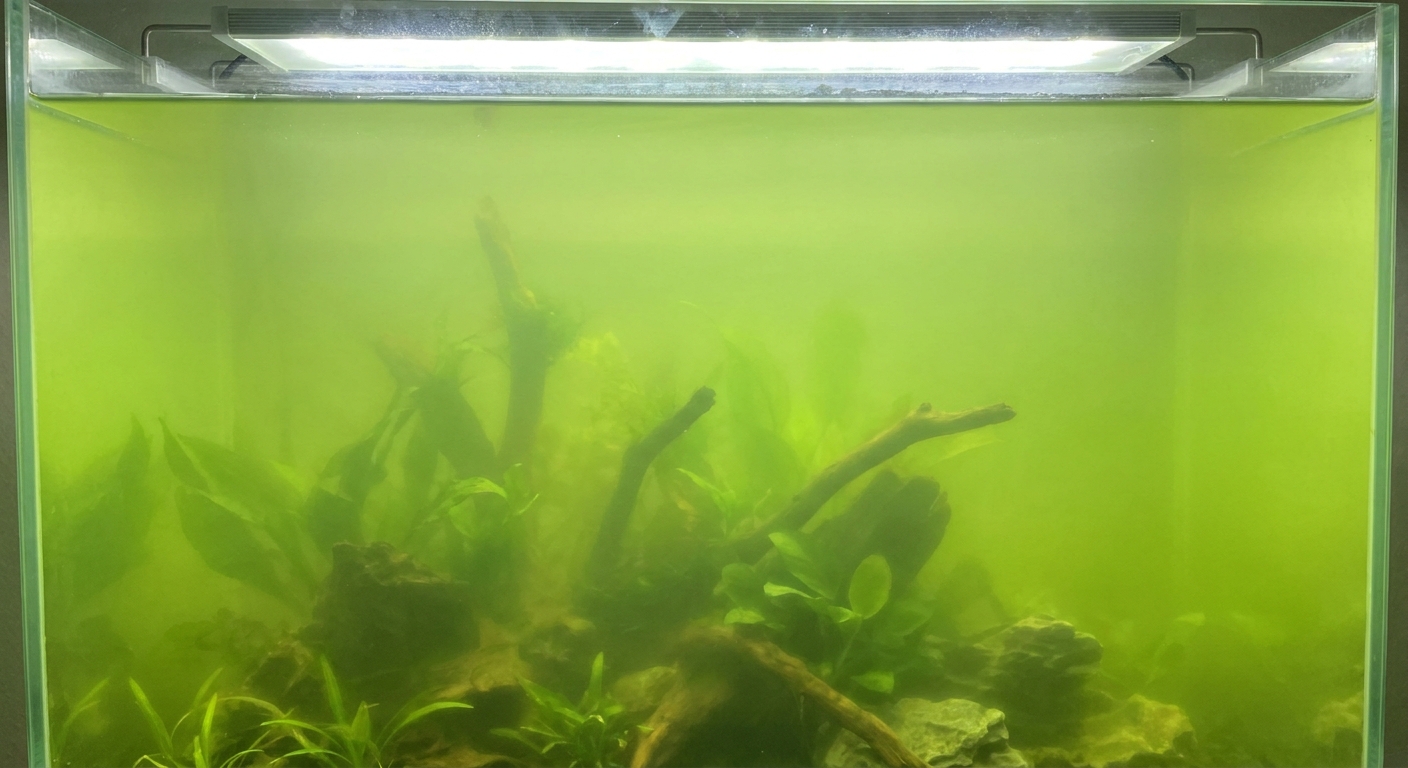
- Looks like: a uniform green haze through the whole tank, often getting worse under bright light.
- Glass can look clean: because the algae are suspended in the water column, not stuck to surfaces.
- Flashlight test: shine a flashlight through the tank. Green water often shows glittery specks in the beam.
- Rule out lookalikes: stirred substrate or detritus can cloud water (usually gray or brown), and tannins from wood tint water tea-colored, not neon green.
What green water is (and is not)
Green water is caused by microscopic, single-celled algae suspended in the water column. Because the algae are floating, your glass can look clean while the water stays cloudy green.
- Green water: uniform green haze, often sudden, often worse in bright light.
- Bacterial bloom (milky or white cloud): looks grayish or white, common in new tanks or after big disruptions.
- Green dust algae on glass: a film on surfaces, not a water-column bloom.
Why it happens: three triggers
Green water blooms when algae get a quick advantage. Usually it’s not one mistake, but a short chain of conditions that line up.
1) Too much light
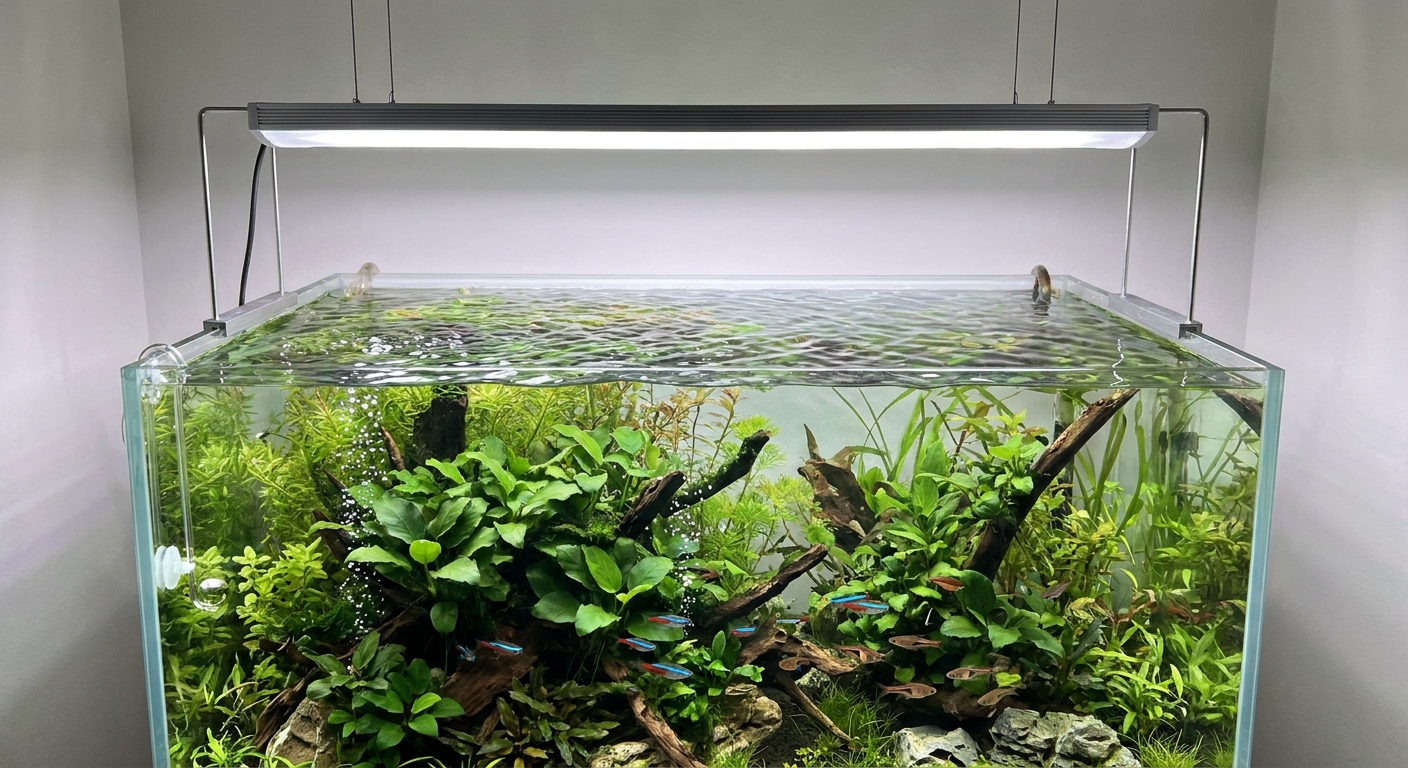
Long photoperiods, direct window sun, or a light that’s simply too strong can push a tank into bloom mode, especially if plant mass is still building. If you want a deeper lighting tune-up, hop over to planted tank lighting: PAR, spectrum, and photoperiod.
2) Excess nutrients and organics
Extra nitrogen and phosphorus can come from heavy feeding, overstocking, dying plant matter, rich soils leaching early on, or a buildup of dissolved organics.
3) Not enough plant competition (or unstable CO2)
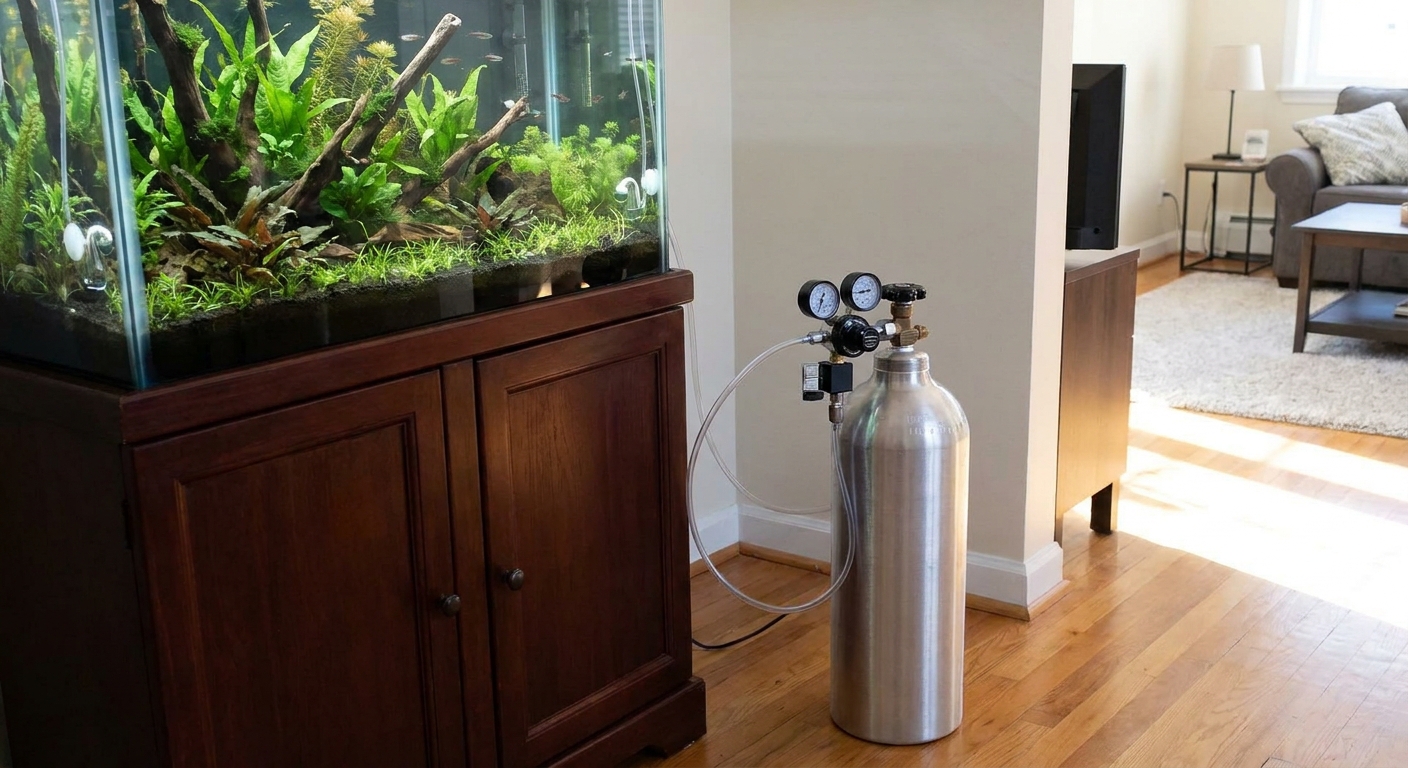
In new layouts, plants may not yet be growing fast enough to “drink” nutrients. In high-tech tanks, unstable CO2 can stall plants while algae keeps cruising. If you run CO2, this guide can help you steady the system: pressurized CO2 setup for planted aquariums.
Fast ways to clear green water
There are three reliable “get it clear again” tools. Which one you choose depends on speed, budget, and how much equipment you want to add.
One important reality check: water changes alone often feel like they should work, but green water algae can reproduce quickly. You will usually need to reduce light and improve competition (and sometimes add UV or ultra-fine filtration) to actually stop the cycle.
Option A: UV sterilizer
A UV sterilizer works because green water algae must pass through the unit. UV light inactivates or ruptures algae cells so they can no longer keep blooming. Then your mechanical filtration and water changes remove the suspended material.
- Typical timeline: 24 to 72 hours for noticeable improvement, sometimes faster.
- Best for: persistent pea-soup blooms, tanks where you cannot reduce light much, and outbreaks that keep coming back.
- Watch-outs: UV only treats what flows through it, and it does not fix the underlying cause. It can reduce some free-floating microbes in the water column, but it does not wipe out your beneficial nitrifying bacteria on surfaces and in filter media.
Usage tips: Flow rate matters. Run it continuously until the water clears, and keep the unit maintained (a dirty sleeve can reduce effectiveness). Pair it with fine mechanical media like floss so the “disabled” algae gets removed instead of lingering.
Option B: Diatom filter
A diatom filter uses diatomaceous earth as an ultra-fine filter layer. It can physically strain out tiny particles, including suspended algae, very quickly. Think of it as the fastest mechanical polish.
- Typical timeline: Often clears within hours.
- Best for: quick clearing, especially if you already have one or can borrow one.
- Watch-outs: It is more hands-on than UV and needs correct setup and flow. It’s also a “use when needed” tool, not a permanent solution.
Option C: Extended blackout
Blackouts work by starving algae of light. Because green water algae reproduce fast, you want a blackout long enough to break the bloom, then you must correct the imbalance so it does not rebound.
- Typical timeline: 3 to 5 days is common for green water.
- Best for: low-tech tanks, budget fixes, and tanks where adding equipment isn’t an option.
- Watch-outs: Blackouts can stress some plants if repeated often, and the bloom can return if light and nutrients go right back to the old levels. Some tanks need more than one cycle if the root cause is still in place.
How to do it:
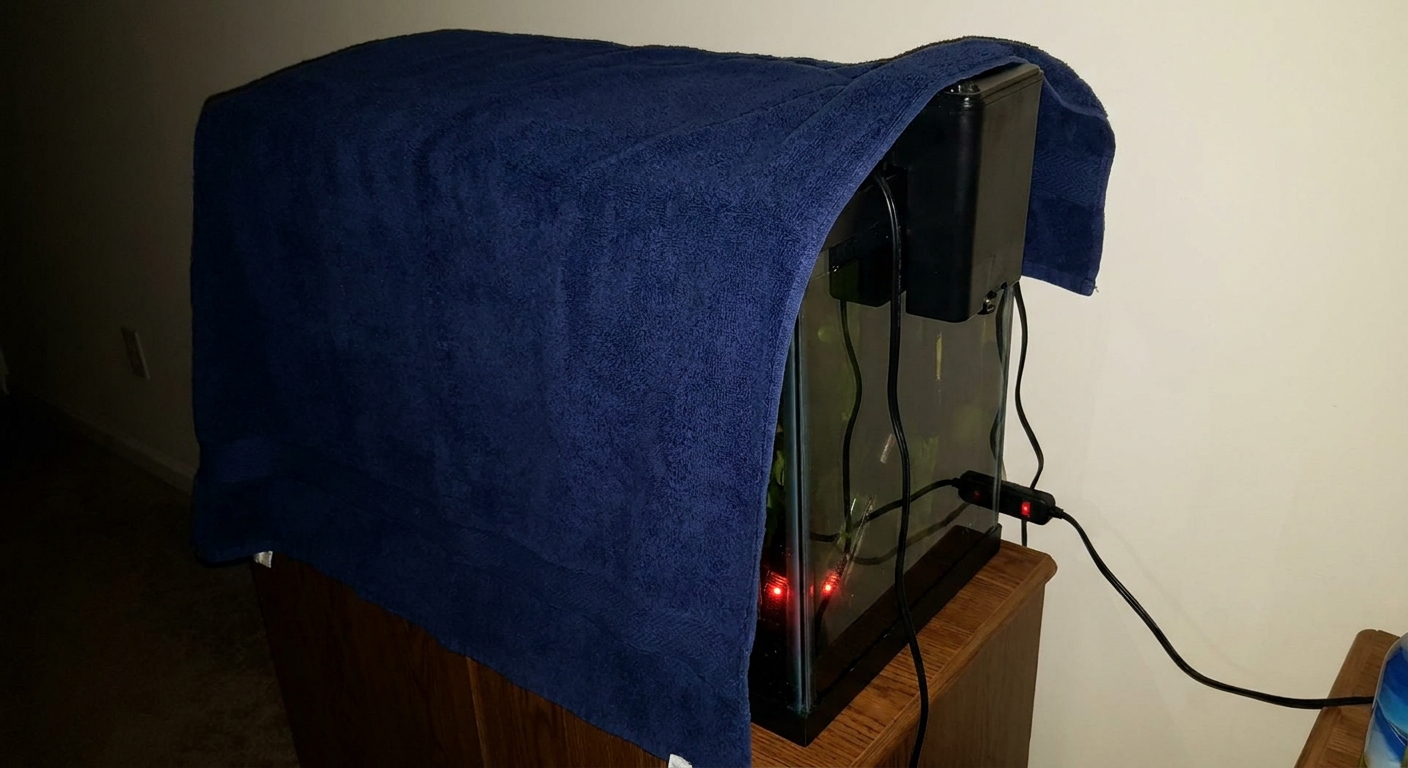
- Turn the aquarium light off completely. Block ambient room light with a towel or blackout wrap.
- Keep filtration running and add aeration if livestock is acting stressed.
- Pause or reduce fertilizer dosing during the blackout. When lights return, resume gently instead of dumping the tank back into full-dose day one.
- Feed very lightly, or pause feeding if livestock allows (many tanks can handle a few days easily).
- After 3 to 5 days, uncover the tank and do a large water change (50 percent is common) to remove dead algae and dissolved organics.
- Restart lighting at a reduced photoperiod (for example 5 to 6 hours) and ramp up gradually.
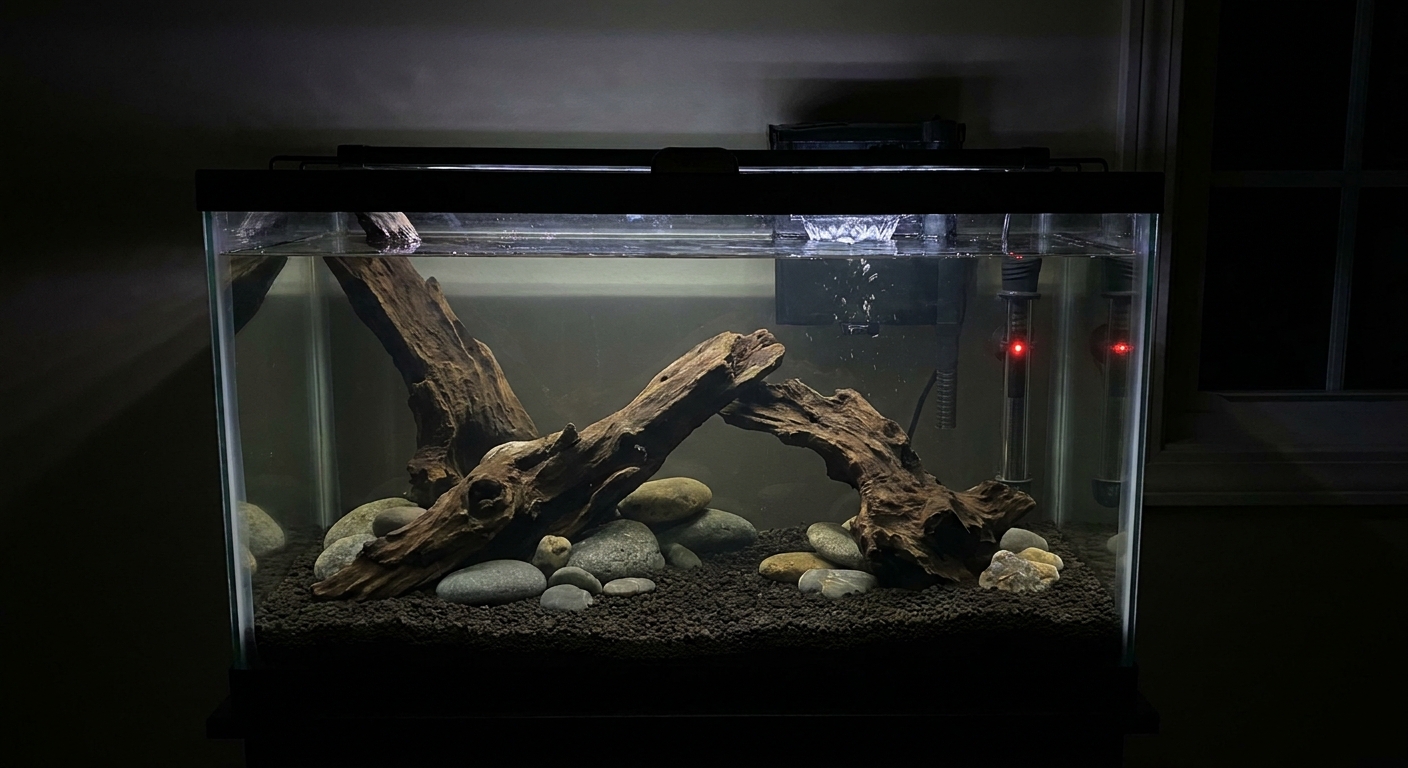
If you like the blackout concept as a setup strategy, you might also enjoy the dark start method for aquascapes, which uses darkness up front to reduce early algae pressure in certain builds.
Keep it clear checklist
Once the water clears, the goal is to make sure algae does not get a second easy win. This is the part that turns a quick rescue into long-term stability.
Step 1: Fix the light
- Reduce photoperiod: Aim for 6 to 8 hours for most planted tanks, especially during recovery.
- Reduce intensity: Dim the fixture if possible, raise it, or add floating plants temporarily.
- Eliminate sunbeams: Move the tank away from direct window sunlight or shade that window.
Floating plants are wonderful “sun umbrellas” and nutrient sponges. See top floating aquarium plants for algae control and fry protection.
Step 2: Cut dissolved waste
- Vacuum obvious debris and remove melting leaves.
- Do a few larger water changes over a week instead of one massive water change and then nothing.
- Feed smaller portions, and make sure food is gone in a couple minutes.
Step 3: Improve circulation and mechanical capture
Green water is floating, so your filter’s ability to move water through fine media matters. Better circulation also prevents dead zones where organics accumulate.
- Add or refresh filter floss to polish the water.
- Clean prefilters and intakes so flow does not quietly collapse.
- Consider flow upgrades or better positioning of outlets.
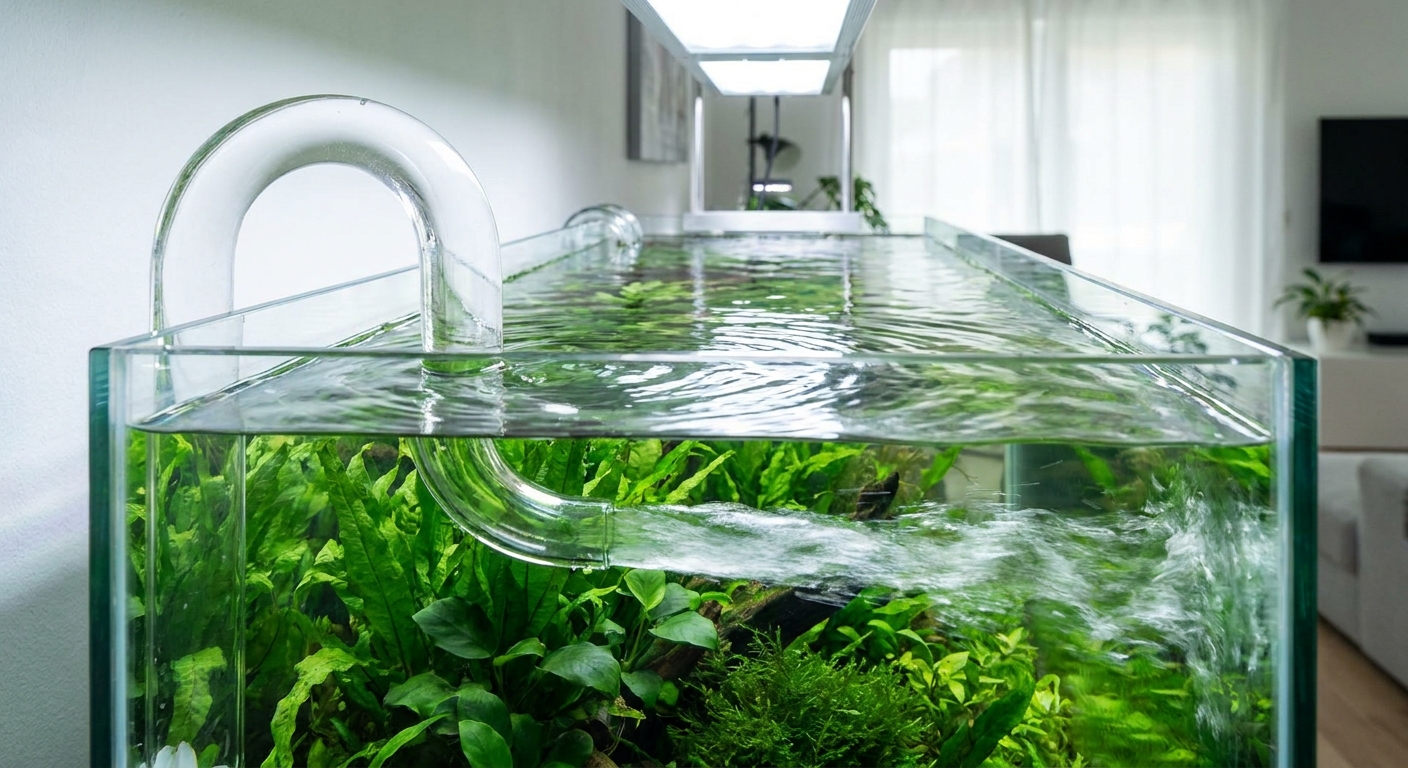
If you want to tune flow without turning your tank into a whirlpool, this guide helps: water circulation with lily pipes and surface skimmers.
Step 4: Strengthen plant competition
Healthy, actively growing plants are the sweetest algae prevention tool. In recovery, fast growers are especially helpful.
- Increase plant mass if your layout is sparse.
- Trim and replant stems to keep them in “growth mode.”
- Consider adding fast stems temporarily, then swap back to slower species later.
For great early-stage helpers, see fast-growing stem plants that beat algae in new tanks.
New tanks vs established tanks
New tanks
New setups are especially prone to green water because plant mass is small, biofiltration is still maturing, and lighting is often set optimistically high to “help plants.” A temporary reduction in light and a boost in fast-growing plants usually makes a big difference.
Established tanks
If an older, stable tank suddenly goes green, look for a recent change:
- New light or increased photoperiod
- Missed maintenance leading to reduced flow
- Overfeeding or a change in food
- A disrupted filter clean that released trapped waste
- Plant die-off (including crypt melt)
If you suspect plant melt is part of the trigger, this one is a calm lifesaver: understanding cryptocoryne melt.
Common questions
Is green water harmful to fish and shrimp?
Green water algae itself is usually not directly toxic, but the bloom can swing oxygen and pH over a day-night cycle. During the day, photosynthesis can push pH up. At night, algae and plants respire, oxygen can drop, and pH often falls. If the bloom is very dense, add surface agitation and keep an eye on livestock behavior.
Should the filter be turned off during a blackout?
Nope. Keep filtration and aeration running. The goal is to remove algae and keep oxygen stable.
Will water clarifiers fix it?
Some clarifiers can clump particles so filters catch them, but they often do not solve the underlying imbalance. For repeatable results, UV, diatom filtration, or a proper blackout plus rebalancing is more dependable.
Why did it come back after it cleared?
That usually means the clearing method removed algae cells, but the conditions that created the bloom stayed the same. Reduce light, reduce organics, improve flow and mechanical filtration, and increase plant competition.
A simple recovery plan
If you want a straightforward path, here’s a gentle plan that fits most planted aquariums:
- Pick one clearing method: UV sterilizer (fast and set-and-forget), diatom filter (fast mechanical polish), or a 3 to 5 day blackout (equipment-free).
- Do a large water change after the water clears or after the blackout ends.
- Reset lighting to a shorter day and lower intensity, then slowly ramp up over 2 to 3 weeks.
- Polish the tank with fine floss and restore strong, even circulation.
- Boost plant growth with more plant mass and consistent CO2 (if used).
With a warm wave of my little antennae, I’m cheering you on. Green water looks dramatic, but it’s usually a short chapter. Once your plants take the lead again, the whole aquascape starts to sparkle.