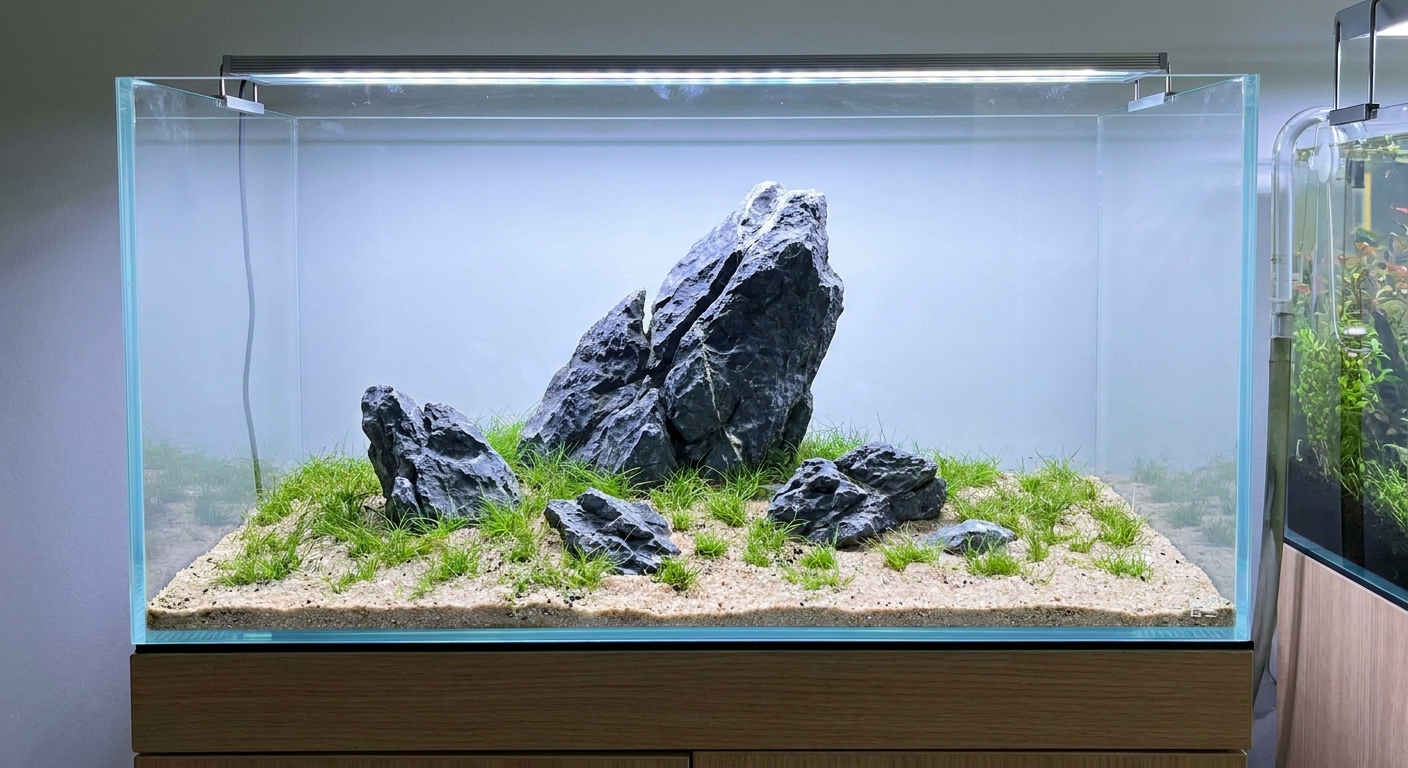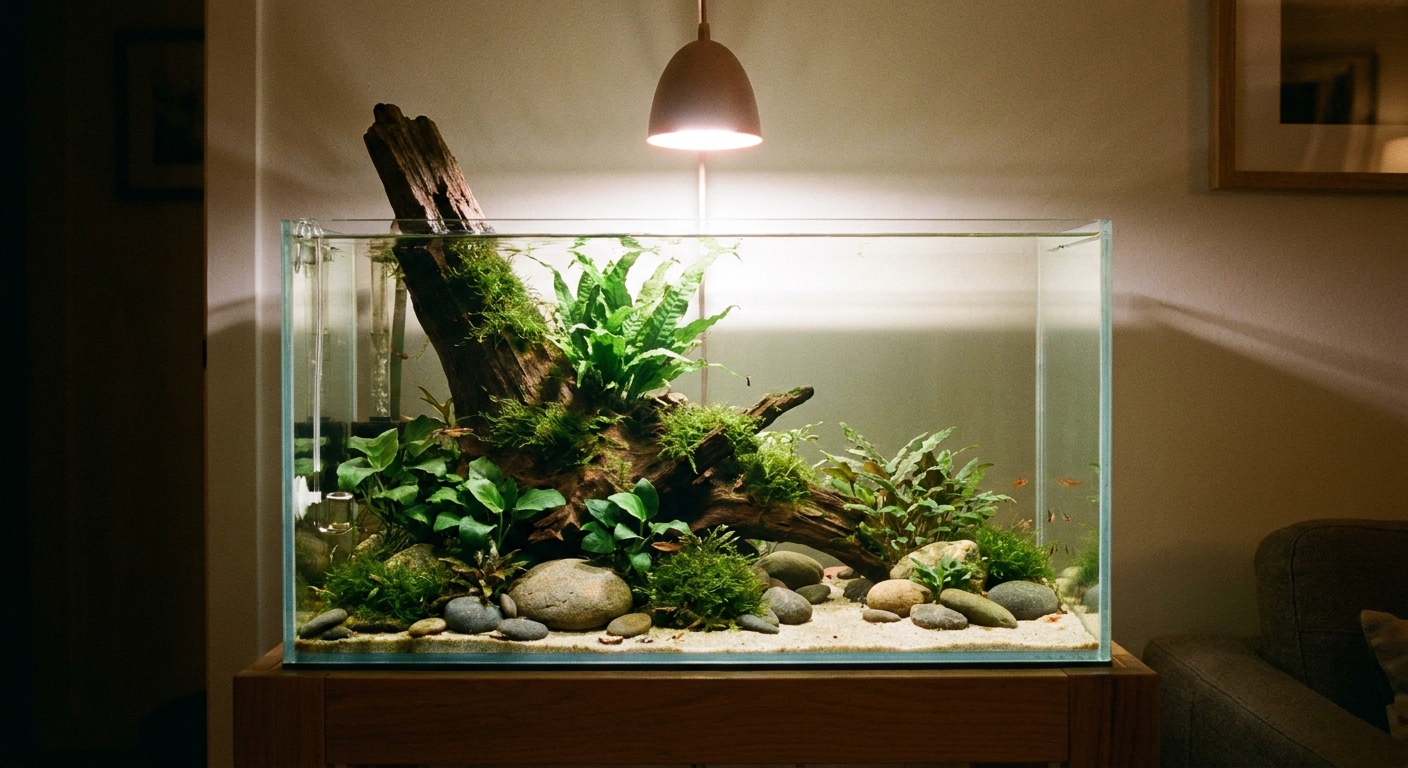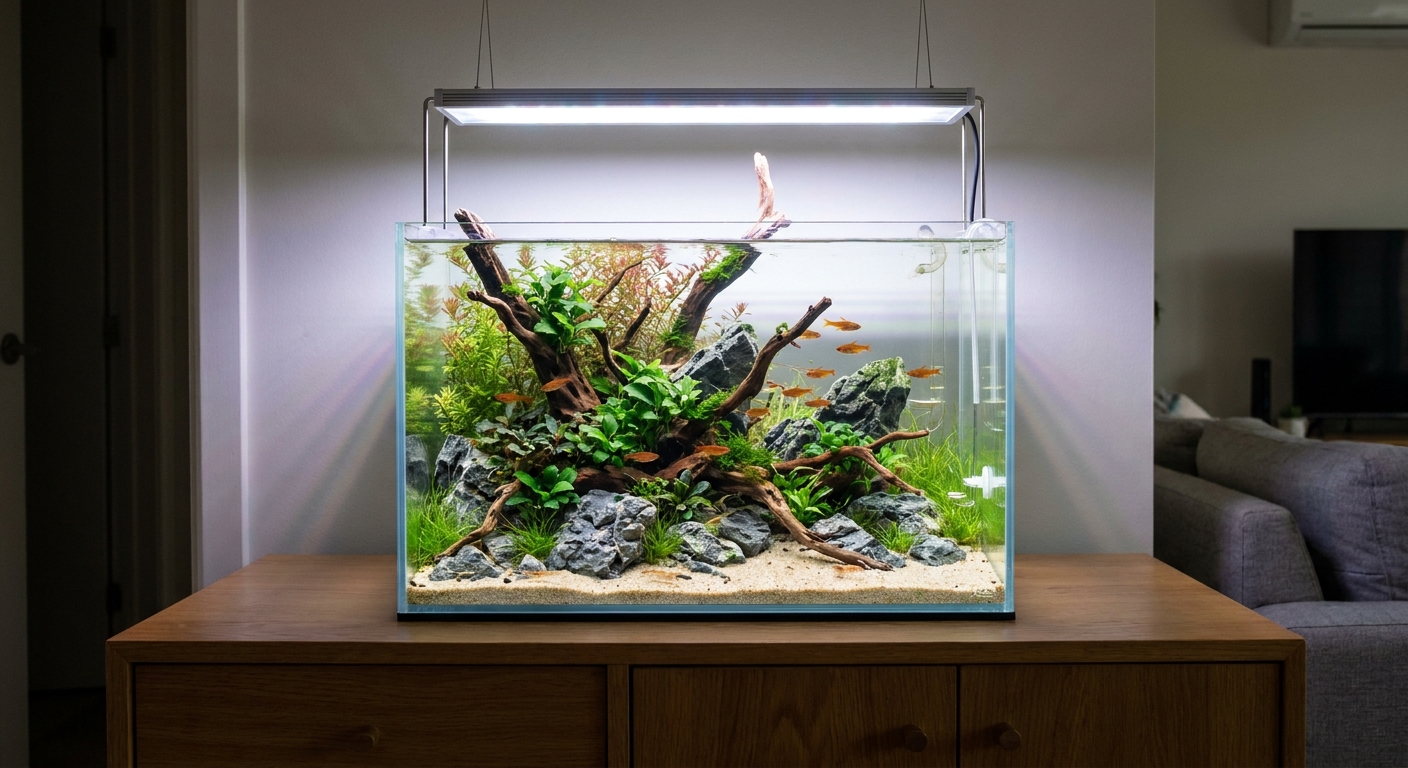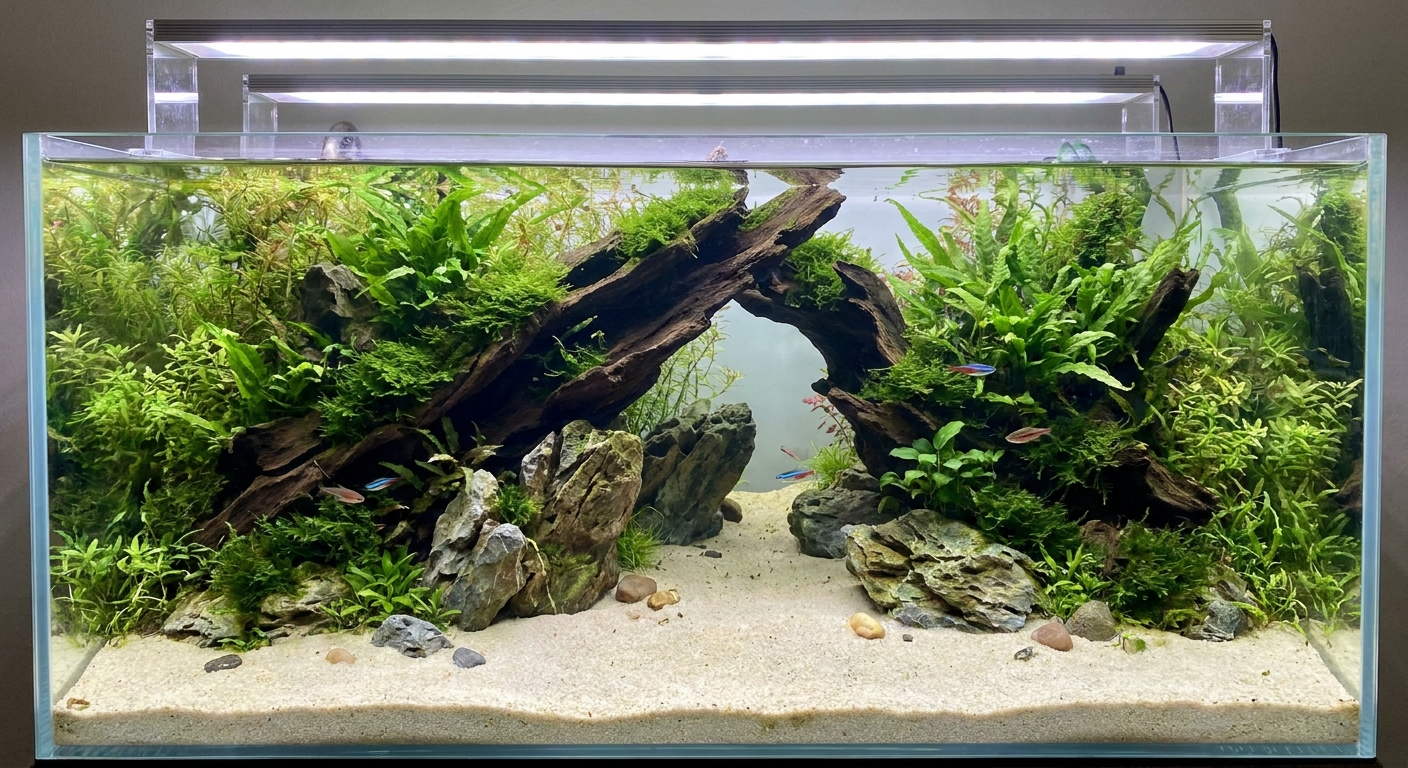
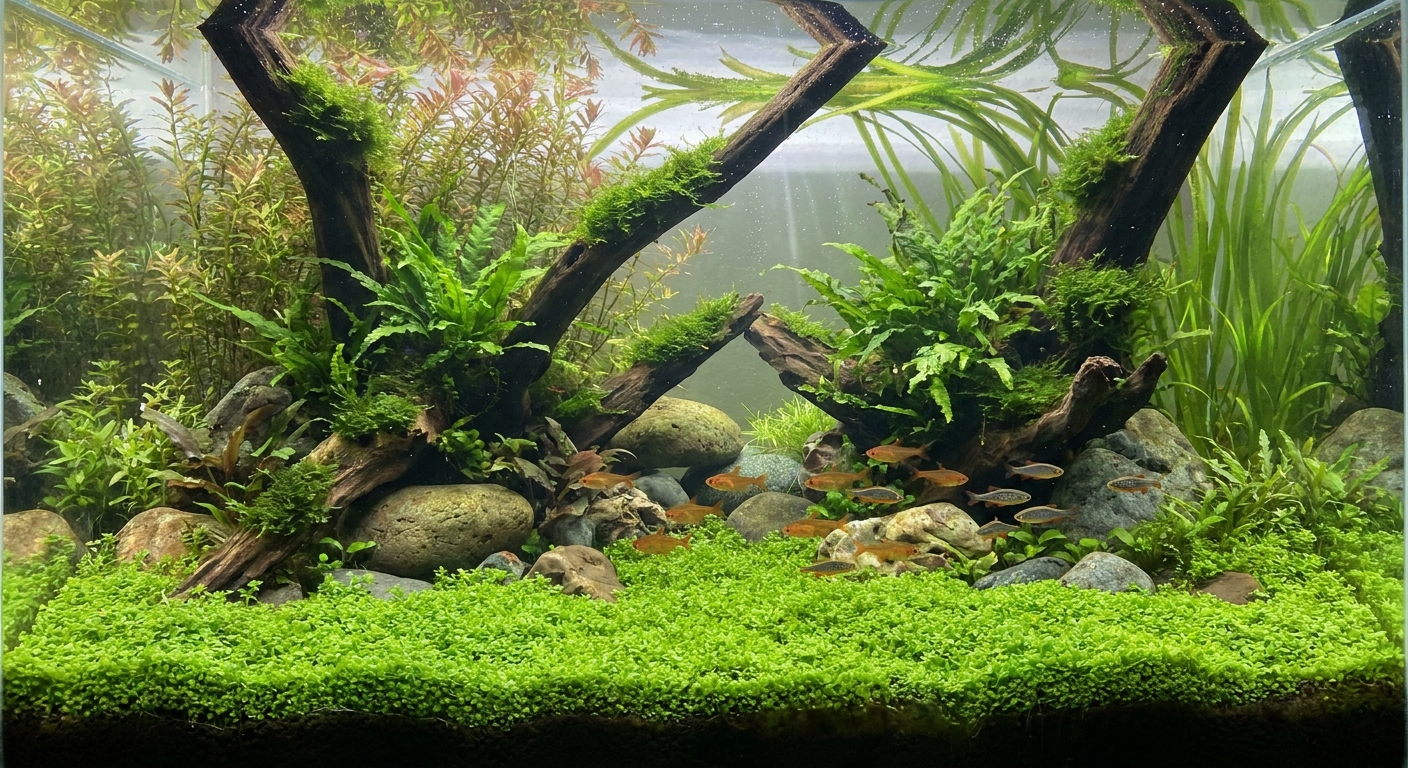
Let's grow a beautiful underwater jungle together, one tiny leaf at a time! A dense carpet is one of the most magical sights in aquascaping: a soft green meadow that makes rocks look taller, driftwood look older, and fish look like they are gliding over a hilltop.
Carpeting plants are also the quickest way to learn a big planted-tank truth: foreground success is less about “a perfect plant” and more about matching the plant to your CO2, light, and maintenance style. With a warm wave of my antennae, here is how to pick the right carpet and actually get it to fill in.
What a dense carpet needs
A carpet becomes dense when the plant produces new runners or side shoots faster than algae can claim the gaps. These four ingredients make that happen.
- Consistent carbon: either injected CO2 or a true low-tech plant choice that tolerates slower growth.
- Enough light at the substrate: carpeting plants sit in the shade of everything. The light must reach the floor.
- Nutrition in the right place: some carpets feed heavily from roots (hairgrass, crypts, Marsilea), while others are mixed feeders that appreciate both a healthy substrate and water-column fertilization (HC, Monte Carlo).
- Regular trimming: trims keep carpets low, prevent self-shading, and encourage denser growth. How they respond depends on the plant type.
If your goal is a bright, tight carpet like in many Nature Aquarium layouts, CO2 makes everything easier. If you prefer a calmer, lower-maintenance tank, pick a carpet that is happy without CO2 and accept a slower fill-in.
Top carpeting plants
Here are the most popular foreground carpeting plants and what they typically need to thrive. Water parameters vary by species and local water, so treat these as practical ranges, not strict rules.
Dwarf Baby Tears (Hemianthus callitrichoides, “HC”)
HC is the tiny, famous one. When it is happy, it makes a miniature-leaf carpet that looks like velvet. When it is not happy, it melts, lifts, or grows upward into a tangled puff.
- CO2: Strongly recommended. Without injected CO2, results are often inconsistent and slow.
- Light: Medium-high to high at the substrate.
- Feeding: Mixed feeder. Benefits from a good substrate, but also responds strongly to steady water-column nutrients.
- Growth style: Creeping stems that root as they spread.
- Best use: Showy, tight carpets in high-energy aquascapes.
Monte Carlo (Micranthemum tweediei)
Monte Carlo is a favorite because it can carpet in more tanks than HC, with slightly larger leaves and a more forgiving attitude. With CO2 it grows fast and low. Without CO2 it can still work, but it usually grows slower and may trend taller.
- CO2: Helpful, not always mandatory. For the densest, lowest carpet, use CO2.
- Light: Medium to high at the substrate.
- Feeding: Mixed feeder. Water-column dosing matters, especially in inert substrates.
- Growth style: Creeping runners and clumps.
- Best use: Reliable green foreground that still looks natural.
Dwarf Hairgrass (Eleocharis acicularis “mini” and Eleocharis parvula)
Dwarf hairgrass makes a grassy meadow. It spreads by runners under the substrate, then pops up new blades. It can work in low-tech tanks, but CO2 and good light speed everything up and help it stay shorter and denser.
- CO2: Optional but beneficial. Without CO2, expect slower runner growth and a taller look.
- Light: Medium or better. Low light often leads to thin, leggy growth.
- Feeding: Often appreciates root-zone nutrition, especially in sand or gravel.
- Growth style: Runners through the substrate.
- Best use: Iwagumi-style fields, slopes, and pathways.
Glossostigma elatinoides (Glosso)
Glosso is a classic carpeting plant with a bold, bright look. It can form an incredible carpet, but it tends to lift and grow upward when light and CO2 are not strong.
- CO2: Recommended for reliable carpeting.
- Light: High at the substrate to keep it creeping.
- Feeding: Mixed feeder. Stronger tanks usually need consistent water-column nutrients, too.
- Growth style: Creeping stems with paired leaves.
- Best use: High-light scapes where you want a bright “fresh” foreground.
Staurogyne repens (S. repens)
This is more of a low foreground bush than a true micro-carpet, but it can create a dense, short hedge effect and blend beautifully into rocks and hardscape edges.
- CO2: Optional. CO2 helps it stay compact and branch densely.
- Light: Low-medium to high. More light equals tighter growth.
- Growth style: Stem plant that bushes with trimming.
- Best use: Foreground-to-midground transitions and rock bases.
Marsilea (Marsilea hirsuta, M. crenata)
Marsilea is a “clover fern” lookalike that can carpet slowly and steadily. In lower energy tanks it often becomes a sparse, charming groundcover. With better conditions it can form a more continuous carpet.
- CO2: Not required, but helps density and speed.
- Light: Low-medium to medium-high.
- Growth style: Creeping rhizomes and runners.
- Best use: Natural-looking, lower-maintenance carpets.
Cryptocoryne parva
One of the smallest crypts, and one of the slowest. It will not “zip” across your tank like hairgrass, but it can create a tidy, durable foreground over time.
- CO2: Optional. CO2 speeds growth but is not necessary.
- Light: Low-medium to medium.
- Growth style: Rosette that spreads by runners slowly.
- Best use: Patient aquascapers who want a stable, easy foreground.
Moss carpets (Java moss, Christmas moss) on mesh or stone
Moss can be shaped into a carpet effect by attaching it to mesh, flat stones, or decor, then letting it fill in. It is not the same as a rooted lawn, but it can be very effective in shrimp tanks.
- CO2: Not required.
- Light: Low to medium.
- Growth style: Branching fronds that need trimming to stay tidy.
- Best use: Low-tech setups, shrimp-focused tanks, and shaded areas.
If you are building an Iwagumi layout, you may also enjoy our step-by-step aquascape walkthrough here: Iwagumi aquascape step-by-step for beginners.
CO2 and carpeting plants
Carpeting plants sit closest to the substrate where flow is weaker and waste can settle. They benefit from stable CO2, not just “some CO2 sometimes.” Instead of chasing a single magic number, aim for a stable, fish-safe level and keep it consistent every day.
Practical CO2 targets
- Low-tech (no injected CO2): Pick plants that tolerate slower growth. Expect months, not weeks, for full coverage.
- Pressurized CO2, moderate and steady: Great for Monte Carlo, hairgrass, S. repens, Marsilea, and many mixed carpets.
- Pressurized CO2, higher and very stable: Often needed for the tightest HC and Glosso carpets, especially in deeper tanks.
Stability beats intensity. Big daily swings in CO2 can stress livestock and invite algae. A simple, non-mathy check many aquascapers use is a drop checker as a trend indicator. Whatever tool you use, the goal is the same: consistent CO2 during the photoperiod, with fish behaving normally.
If you want a carpet without injected CO2, Verdant Aqua has a dedicated guide here: Low-tech planted tank design without CO2.
Lighting for carpets
Foreground plants do not care how bright the water surface looks. They care how much usable light reaches the bottom.
- Tank depth matters: deeper tanks need stronger lights to deliver the same intensity to the substrate.
- Hardscape shadows matter: tall rocks and wood can shade the foreground. Plant shade-tolerant options in darker zones.
- Photoperiod matters: long light hours do not replace intensity. Overly long photoperiods often increase algae pressure.
For many tanks, a controlled photoperiod around 6 to 8 hours is a good starting point, adjusted based on plant growth and algae signals. Some mature or lower-light tanks can run longer, but if algae appears, shortening the photoperiod is often gentler than drastic fertilizer cuts or blackouts.
For broader setup choices, visit: Equipment & Setup.
Substrate and fertilizing
A carpet is mostly roots, runners, and new shoots. Give that root zone something to work with, and remember that several popular carpets also drink heavily from the water column.
Aquasoil vs inert substrate
- Aquasoil: Often the easiest path to a dense carpet because it provides nutrients and supports rooting.
- Inert sand or gravel: Can still work, but plan on using root tabs and steady water-column fertilization.
A fertilizer approach that avoids common traps
- Use a complete fertilizer if you run a planted tank with medium to high light and/or CO2. Carpets use more than just nitrates.
- Do not starve the tank to fight algae. Weak, stalled carpets are algae magnets.
- Balance matters: CO2, light, and nutrients should rise together. Strong light with low CO2 is a classic carpet failure recipe.
If you are troubleshooting algae or melt, the calm, practical path is here: Maintenance & Troubleshooting.
Flow at carpet level
This part is easy to miss because the surface can look lively while the foreground stays still. A gentle push of water across the carpet helps deliver CO2 and nutrients, and it keeps debris from settling into the leaves.
- Aim for circulation across the foreground, not a sandstorm.
- Watch for dead zones behind stones where debris collects.
- After planting day, keep flow steady, but avoid blasting fresh plugs loose.
Planting method
The way you plant on day one decides whether you get a lawn or a patchy field.
For HC and Monte Carlo (pots and tissue culture)
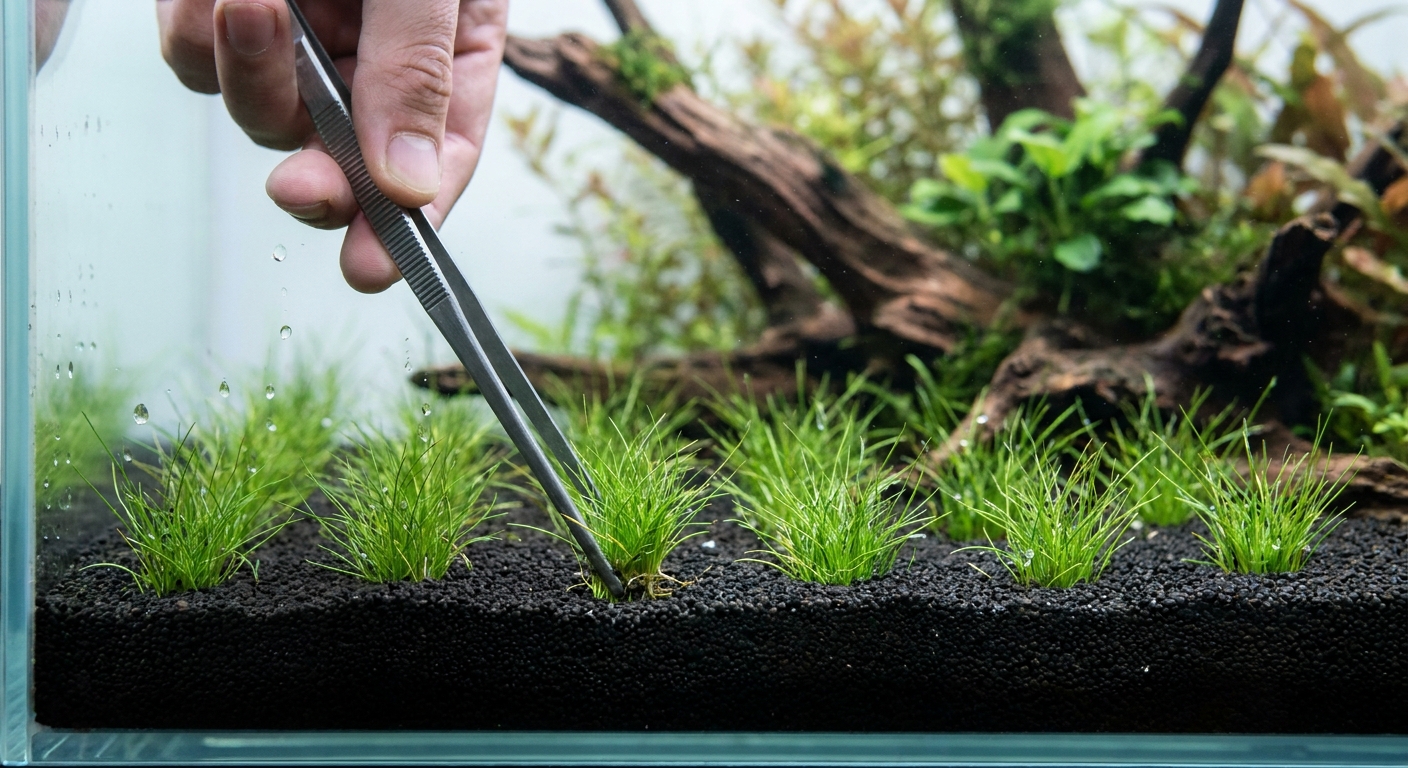
- Break it into tiny portions. Think thumbnail-sized, not golf-ball clumps.
- Plant shallow. Tuck roots into the substrate and keep leaves above it. Smothered leaves melt.
- Use spacing. Small plugs spaced about 1 to 2 cm apart fill in faster than big clumps because more edges are growing outward.
- Reduce disturbance. After planting, pour water onto a plate or plastic bag so the flow does not uproot your new carpet.
For dwarf hairgrass
- Separate into small tufts of just a few blades each.
- Plant deeper than HC. Hairgrass needs the crown and roots anchored, or it will float up.
- Expect an adjustment phase. Older blades may yellow while the plant establishes runners. New blades are the real sign of success.
Early weeks tip
In the first couple of weeks, carpets love gentle housekeeping. During water changes, lightly lift debris off the carpet with a turkey baster or siphon just above the leaves. Less gunk means fewer algae footholds while the plugs knit together.
Trimming for density
Trimming is not just for neatness. It is how you keep the carpet from shading itself, and for many plants it encourages new low growth.
How to trim by plant type
- HC and Monte Carlo: When it reaches about 2 to 4 cm tall, trim the top like mowing a lawn. Remove trimmings so they do not decay in the carpet. Repeating this encourages denser, lower growth.
- Dwarf hairgrass: Trim to an even height to encourage fresh blades and keep light reaching the base. Avoid scalping all the way to the crowns in one go.
- S. repens: Cut tops to force side shoots. Replant healthy tops if you want to fill gaps.
- Crypt parva: Trim is mostly cleanup. Remove older outer leaves and let it slowly spread by runners.
A simple trimming rhythm
In higher energy tanks with CO2, trims can be needed every 1 to 3 weeks. In low-tech tanks, trims are less frequent, but still helpful for keeping the carpet clean and encouraging fresh growth once it is established.
Common carpet problems
The carpet uproots and floats
- Cause: Planted clumps are too big, planted too shallow, or flow is too strong during filling and early weeks.
- Fix: Replant in smaller portions, use planting tweezers, and fill the tank gently. Consider lowering flow briefly right after planting, then restoring it.
HC or Glosso grows upward
- Cause: Not enough light at the substrate and/or insufficient CO2.
- Fix: Increase usable light at the bottom (fixture strength, height, or spread), improve circulation, and stabilize CO2. Trim the tall growth and replant healthy horizontal pieces.
Hairgrass browns at the base
- Cause: Detritus buildup, weak circulation at the substrate, or growth that is too dense and untrimmed, blocking light.
- Fix: Trim, gently vacuum just above the carpet during water changes, and adjust flow so water moves across the foreground.
Algae caught in the carpet
- Cause: An imbalance, often strong light with unstable CO2, plus trapped debris.
- Fix: Shorten photoperiod, stabilize CO2, keep up with water changes, and manually remove algae strands. Healthy new growth is the long-term solution.
Melt after planting
- Cause: Emersed-to-submersed transition, stress from shipping, and changing conditions.
- Fix: Remove decaying leaves, keep conditions steady, and be patient. New submersed growth is the goal.
Pick the right carpet
If choosing feels overwhelming, here is a gentle shortcut.
If you have pressurized CO2 and medium-high light
- Monte Carlo for an easier, reliable carpet
- HC for the smallest, tightest look (more demanding)
- Dwarf hairgrass for a meadow effect
If you have no CO2
- Marsilea for a natural groundcover
- Cryptocoryne parva for a slow, sturdy foreground
- Moss attached to mesh or stones for a carpet-like texture
If your tank is small (nano)
Nano tanks can carpet beautifully because light reaches the substrate more easily, but stability matters even more. Smaller water volume means CO2 and nutrients can swing quickly. If you love compact layouts, peek at: Nano tank aquascaping ideas for 5 and 10 gallons.
FAQ
Can I grow Dwarf Baby Tears without CO2?
Sometimes, but it is one of the least forgiving options without injected CO2. If you want a similar vibe with a better chance of success, Monte Carlo or Marsilea are usually calmer choices.
Why does my carpet look thin even though it is alive?
Most often it is low light at the substrate, not enough nutrition (either in the root zone or the water column), or trimming that is too rare. Density comes from runners, fresh low growth, and time.
Do carpets need root tabs?
If you use aquasoil, you may not need them right away. In inert substrates, root tabs are often a big help, especially for hairgrass, Cryptocoryne parva, and Marsilea.
How long does it take to fully carpet?
With CO2 and good conditions, many carpets begin to connect in a few weeks and fill more completely in 1 to 3 months. Without CO2, it can take several months or longer depending on plant choice and light.
A cozy finishing touch
A dense carpet is not a sprint. It is a steady little routine: consistent CO2 (or a low-tech-appropriate plant), light that reaches the substrate, a fed root zone and water column, and trims that keep growth low and clean. Keep those pieces humming, and the gaps will close like magic.
If you would like more foreground layout ideas, Verdant Aqua's aquascaping guides live here: Aquascaping Design. Now go sprinkle those tiny plugs across the sand, and let the meadow begin.