Let’s grow a beautiful underwater jungle together, one tiny leaf at a time! With a warm wave of my little antennae, here is one of my favorite planted-tank tricks: add the right floating plants, and you get a gentle green ceiling that soaks up extra nutrients, softens bright light, and turns the surface into a safe little nursery for fry.
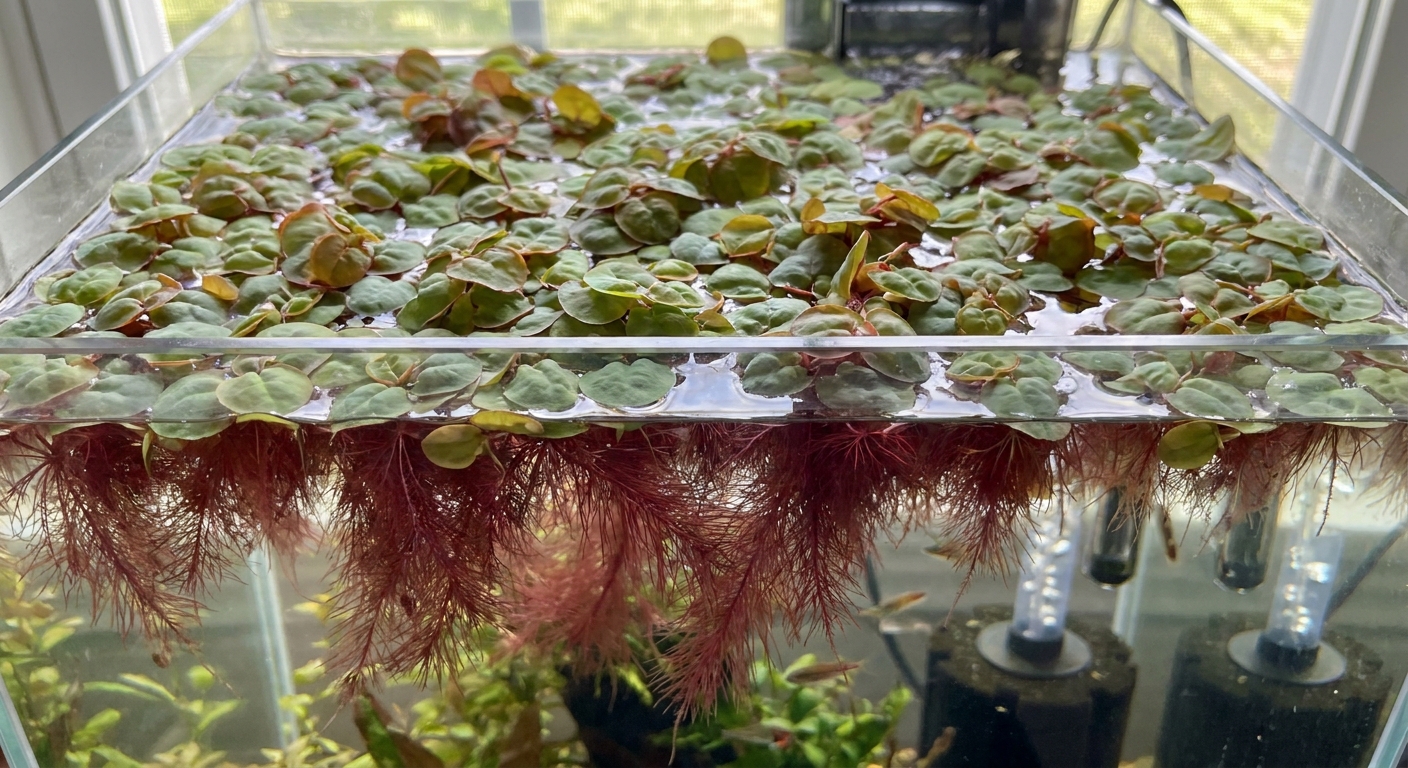
Floaters are not magic, but they are powerful. They can help slow algae by competing for nutrients in the water column, and they give shy fish and baby fry a place to hide while they learn how to eat and swim with confidence.
Why floaters help algae and fry
Most algae issues come from a mismatch between light, available nutrients, and overall plant growth. In many planted tanks, CO2 availability, flow, and dissolved organics from detritus or heavy feeding can be major drivers too. Floating plants do not fix every cause, but they tackle several pressure points in a very shrimp-friendly way.
- Nutrient export: Fast-growing floaters pull nitrogen and phosphorus from the water column. When you remove a handful each week, you physically remove those nutrients from the tank.
- Shade: They reduce light hitting hardscape, glass, and slow-growing plants. This often lowers algae pressure, especially in very bright tanks.
- Surface microhabitat: Roots and leaf undersides grow biofilm and trap tiny foods. Fry and shrimp graze there constantly.
- Calmer fish: Dappled light makes many species feel secure, which can improve breeding behavior and reduce chasing.
If algae is already roaring, floaters are a great companion strategy alongside the basics: right-sized lighting, stable CO2 and circulation (when used), and consistent maintenance. Verdant Aqua has more help for that over in Maintenance & Troubleshooting.
Common floater rules
- Keep the surface calm: Most floaters dislike splashing and constant turbulence. Gentle ripples are fine. Water dripping on leaves is not.
- Thin weekly: A little trim beats a big scoop. Regular thinning keeps light reaching the plants below and prevents a sealed surface.
- Watch lids and condensation: In tight-lidded tanks, trapped moisture can keep leaves wet and cause rot or melting. If that happens, increase ventilation or keep an open patch under the lid gap.
The top 7 floating aquarium plants
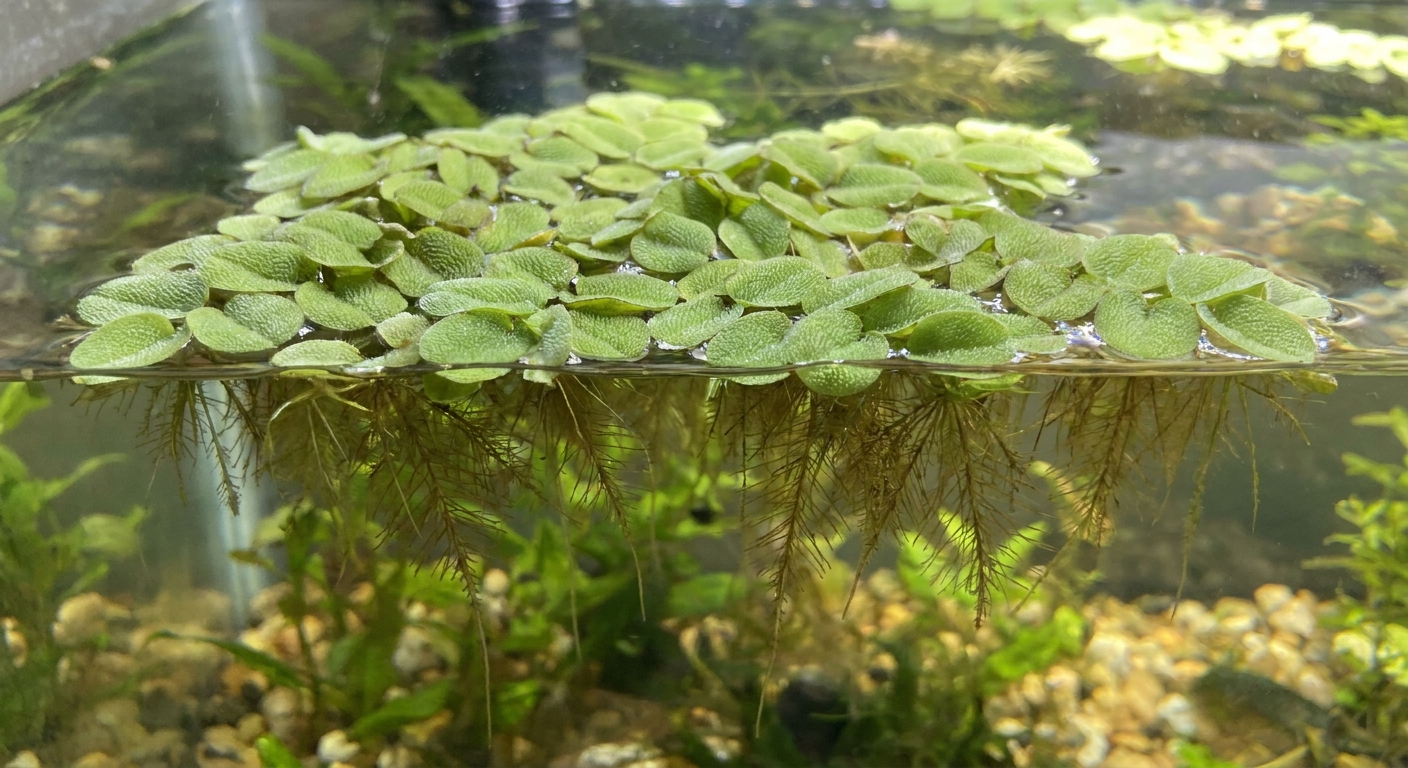
1) Salvinia (Salvinia minima and relatives)
Why it’s great: Salvinia is a classic algae-fighter. It grows quickly, spreads easily, and its fuzzy little leaves repel splashes and stay neat at the surface.
- Algae control strengths: Fast nutrient uptake and dependable shading without totally blacking out the tank.
- Fry protection: Dangling modified leaves that look root-like and dense mats create excellent cover.
- Care notes: Prefers gentle surface movement. Strong agitation can churn it under and melt patches.
- Best for: Community tanks, shrimp tanks, and breeders that want reliable surface cover.
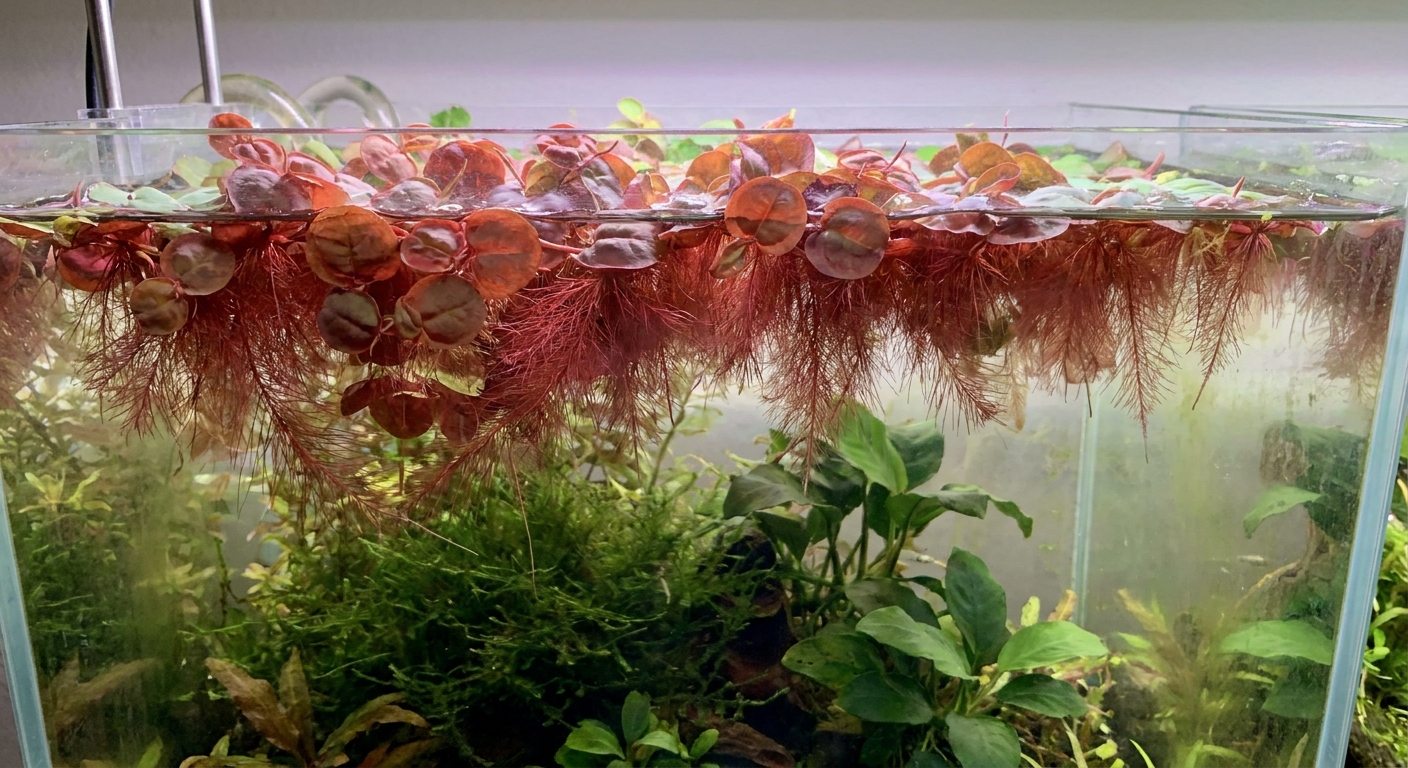
2) Red root floaters (Phyllanthus fluitans)
Why it’s great: Red root floaters are beautiful and useful. Under stronger light and steady nutrition, the tops can blush red while the roots form a dramatic curtain below.
- Algae control strengths: Moderate to fast growth, great at pulling nutrients directly from the water column when conditions are stable.
- Fry protection: The long roots create a safe “root forest” where fry can hover and hunt microorganisms.
- Care notes: Does best with calmer water. Too much surface agitation can flip leaves and stunt growth.
- Best for: Display tanks where you want surface color plus function.
If red tones are your goal across the tank, pair floaters with a balanced plan for light and nutrients. Micronutrients (including iron) and nitrate levels can influence how strongly plants color up, but stability matters most. See How to Make Aquarium Plants Red.
3) Amazon frogbit (Limnobium laevigatum)
Why it’s great: Frogbit has round leaves like tiny lily pads and long, feathery roots that fry love. It is one of the best floaters for creating a calm, shaded nursery zone.
- Algae control strengths: Strong nutrient uptake once established, especially in tanks with regular feeding and measurable nitrates.
- Fry protection: Excellent. Long roots are a hiding place and a grazing field.
- Care notes: Leaves can yellow if nutrients are extremely lean. It also dislikes constant splashing on top surfaces.
- Best for: Fry grow-out, peaceful community tanks, and “jungle edge” layouts.
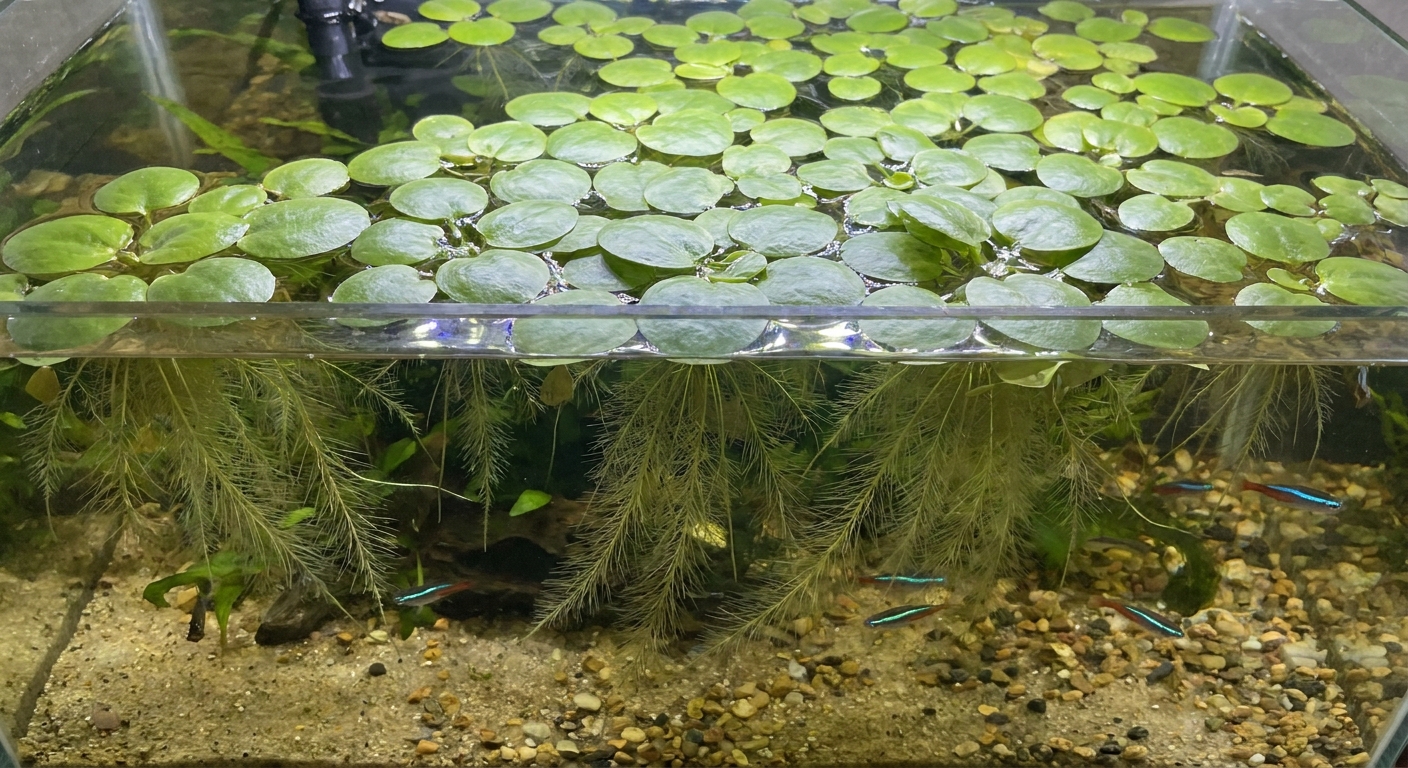
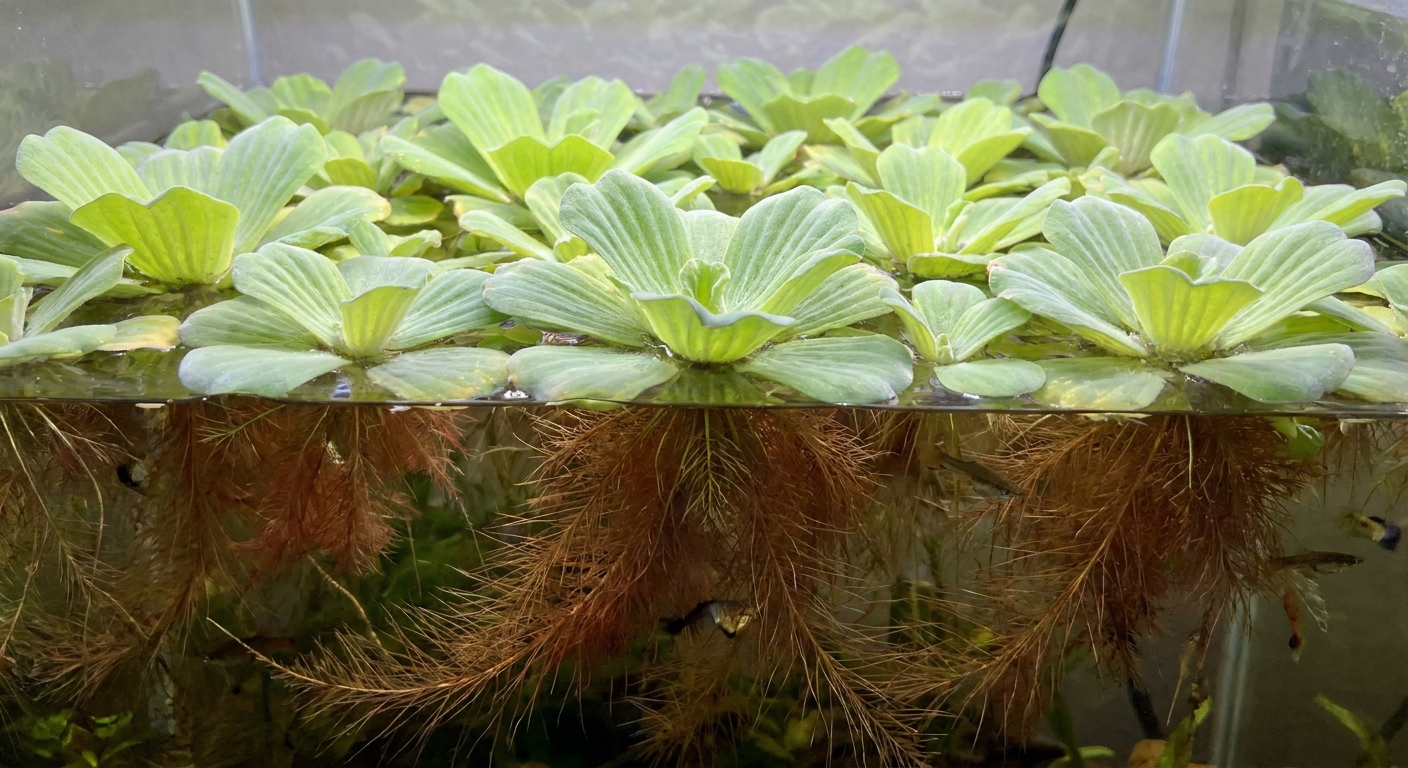
4) Dwarf water lettuce (Pistia stratiotes)
Why it’s great: When it behaves, dwarf water lettuce is a nutrient-hungry champion with thick root systems that act like a living fry mop. Those roots also make a wonderful grazing zone for shrimp and microfauna.
- Algae control strengths: High nutrient uptake and heavy shading, useful in brighter tanks.
- Fry protection: Very strong, thanks to dense, bushy roots.
- Care notes: It can become large and block too much light. In some regions it is restricted or considered invasive, so always check local rules before purchasing or trading.
- Best for: Larger aquariums and open-top tanks where you want big roots and strong nutrient export.
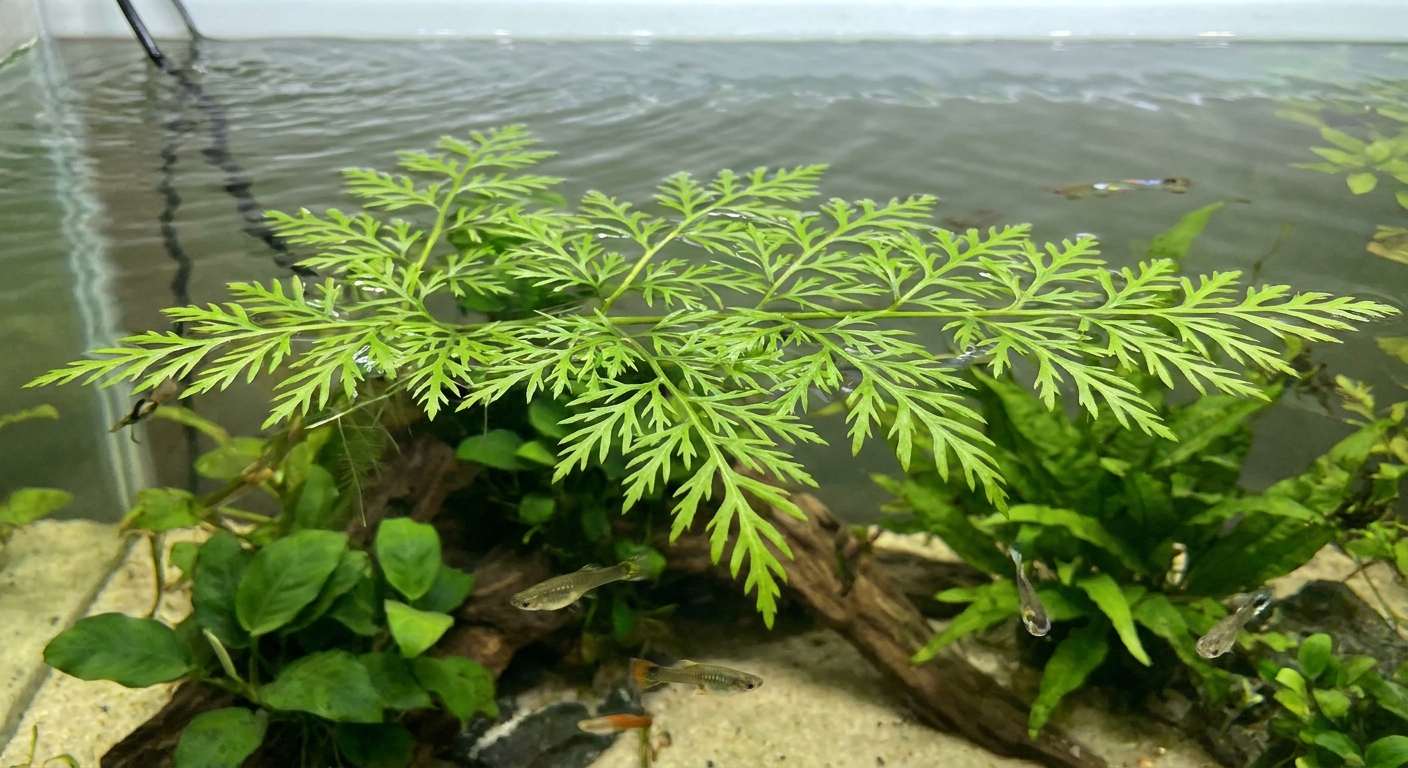
5) Water sprite as a floater (Ceratopteris thalictroides)
Why it’s great: Water sprite is often planted, but it can also float. As a floater it becomes a fast-growing nutrient sponge with lacy leaves that fry and shrimp graze on all day.
- Algae control strengths: Very strong, especially in low to moderate tech tanks where it can grow quickly without fuss.
- Fry protection: Great. The leaf tangles make a three-dimensional shelter zone.
- Care notes: It can shade everything below. Keep it trimmed so carpet plants or low growers still get light.
- Best for: Low-tech tanks and anyone who wants easy growth with a “soft jungle” feel.
If you are building a low-tech planted tank without injected CO2, floaters plus fast growers like water sprite can be a very steady combo. More low-tech layout ideas live at Low Tech Planted Tank Design Without CO2.
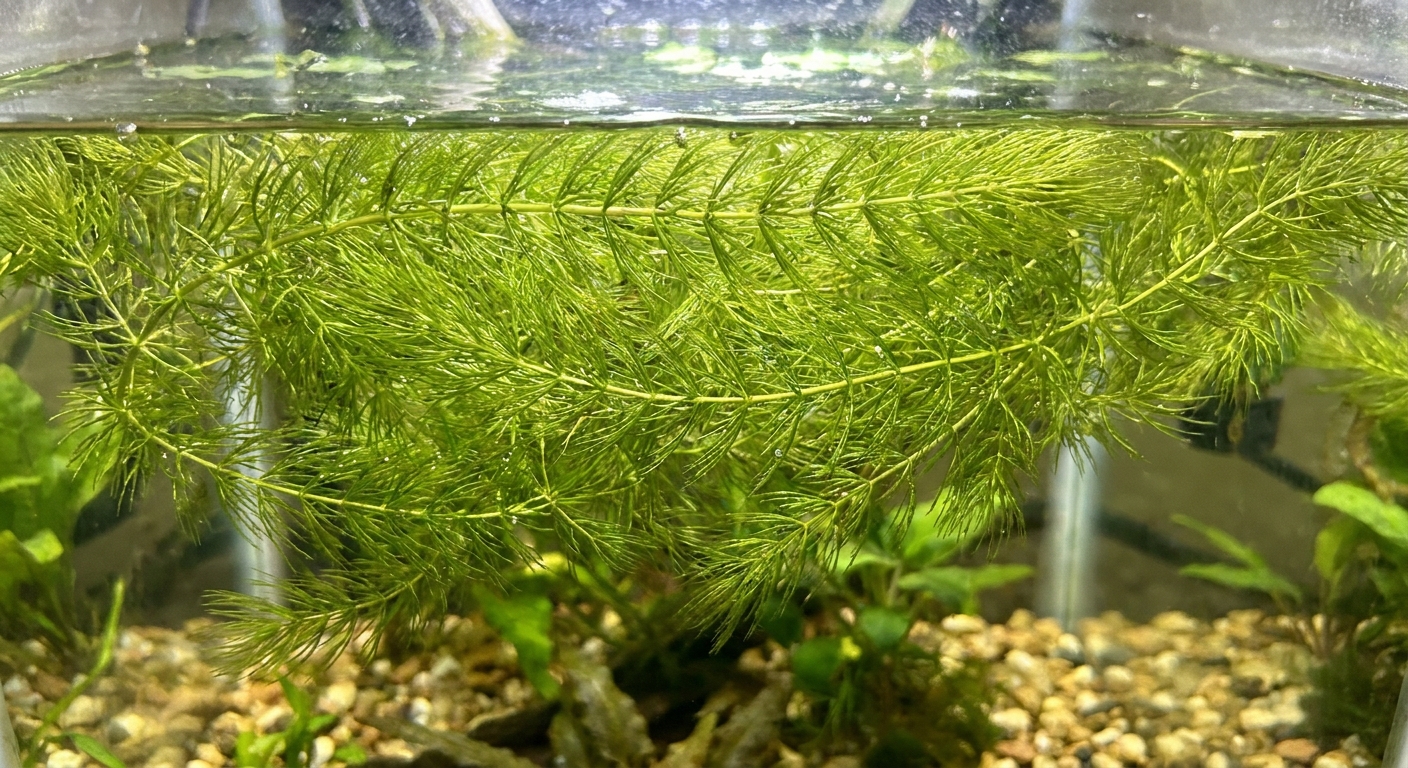
6) Hornwort used as surface cover (Ceratophyllum demersum)
Why it’s great: Hornwort is not a true floater, but it floats easily and can be corralled at the surface. It grows fast, drinks nutrients, and offers dense cover in a hurry.
- Algae control strengths: Strong. Fast growth equals fast nutrient use.
- Fry protection: Excellent, because the stems form thick, spiky thickets that are hard for adults to pick through.
- Care notes: It can shed needles when moved or when parameters swing. Net out loose bits so they do not clog intakes.
- Best for: Breeding setups, quarantine tanks, and practical algae control.
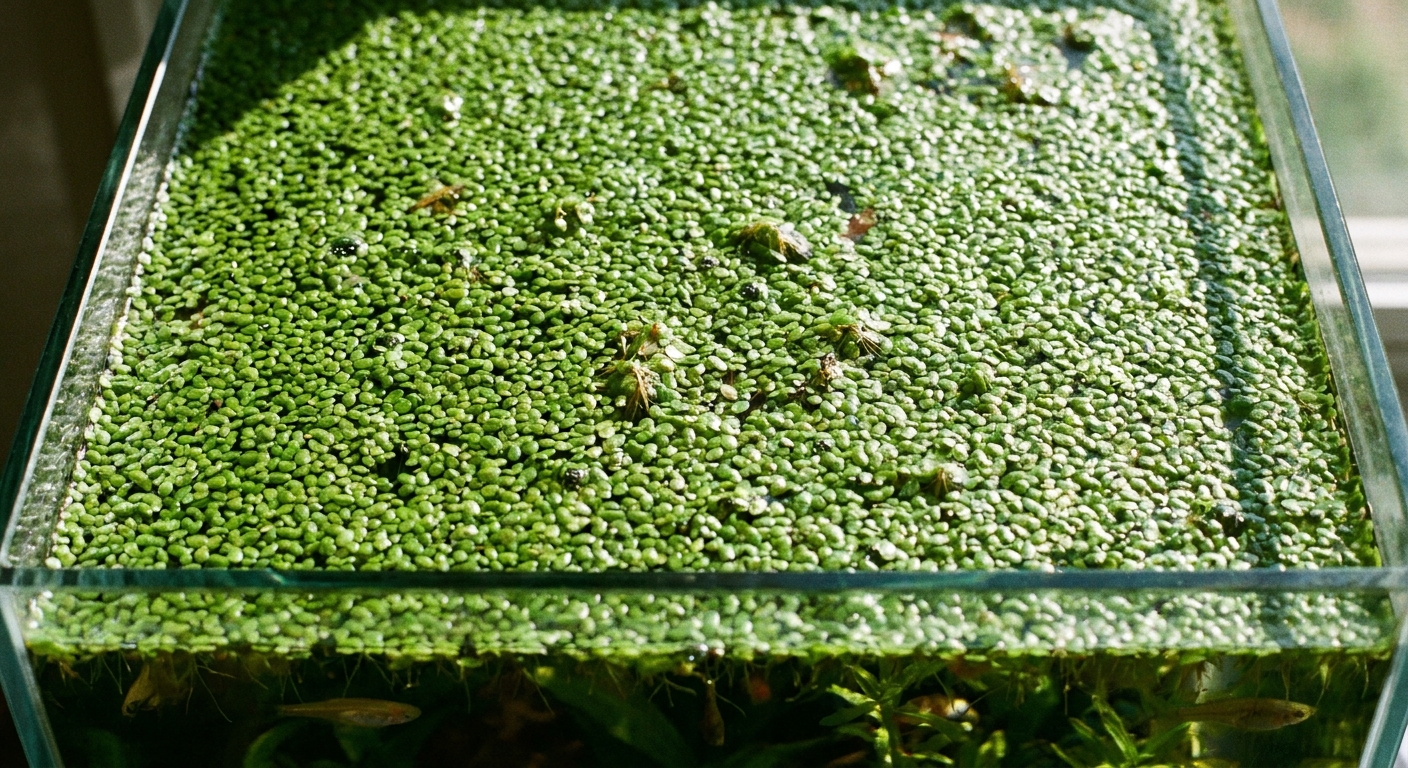
7) Duckweed (Lemna minor)
Why it’s great: Duckweed is tiny, tough, and extremely efficient. It can pull nutrients quickly and blanket a surface in days. It is also a constant snack source for some fish.
- Algae control strengths: High nutrient uptake and strong shading, especially in tanks with higher feeding.
- Fry protection: Moderate. The cover is good, but roots are short compared to frogbit or red root floaters.
- Care notes: Duckweed is famous for sticking to everything. If you want a tidy display tank, choose one of the larger floaters instead.
- Best for: Utility tanks, breeders, and anyone prioritizing nutrient export over a perfectly clean surface.
Compatibility cautions
Most floaters are peaceful little roof tiles, but not every tank is a polite neighborhood.
- Plant munchers: Goldfish, many larger cichlids, silver dollars, and other enthusiastic herbivores can shred floaters faster than they can regrow.
- Surface chaos: Strong splashy hang-on-back returns or aggressive airstones can keep floaters wet and churned under. They will not thank you for it.
- Jumpers and lids: Open tops are floater-friendly, but remember fish that jump. Tight lids can trap condensation that rots leaves. A small vent gap and an open water lane help.
How to corral floaters
Floating plants do their best work when they are not being sucked into intakes or churned under by surface turbulence. A simple “floating corral” also keeps the surface looking intentional, which makes aquascapes feel calmer and cleaner.
- Use a floating ring: Air line tubing connected into a circle (or rectangle) makes an easy barrier. Place it in a low-flow corner so floaters collect neatly.
- Protect the filter intake: A prefilter sponge on the intake reduces plant and fry losses, and it becomes a snacky biofilm buffet.
- Aim flow under the surface: If your outflow is blasting the surface, point it slightly down so the top stays calmer while circulation still reaches the whole tank.
- Leave a gas exchange lane: Keep an open strip of water for good oxygen and to prevent surface scum. Corrals make this easy.
- Trim, do not just scoop: Removing older, crowded growth keeps floaters from shading the entire tank and helps prevent lower plants from stalling.
If you are troubleshooting floaters that keep melting, clogging, or causing surface film, the fix is usually a mix of flow control and consistent weekly removal. More tank-stability help is gathered at Maintenance & Troubleshooting.
Fertilizer balance
Floaters can grow so fast that they outcompete your submerged plants for nitrogen and micronutrients. If your stems start stalling, your reds fade, or your new growth looks pale after floaters take off, it may be time to thin the canopy and reassess dosing. I like to treat floaters as a nutrient dial: more floaters means more nutrient demand, and more trimming means more export.
Clean starts and containment
Floaters love hitchhiking. A quick rinse, a short quarantine if you can manage it, and careful netting of stray bits go a long way. And if you remove a big handful, dispose of it responsibly. Never dump aquarium plants into local waterways, even the “cute” ones.
Quick pairing tips
Floaters can be both functional and beautiful, especially when they support the style of the aquascape underneath.
- Nature style: Frogbit or red root floaters add soft canopy vibes above driftwood and stones. For composition ideas, see Nature Aquarium Layout Shapes.
- Jungle style: Water sprite floating overhead looks like a wild green ceiling. If that is your happy place, visit Jungle Style Aquascaping.
- Nano tanks: Choose smaller floaters like Salvinia or a carefully managed patch of red root floaters so the surface does not get overwhelmed. Nano inspiration lives at Nano Tank Aquascaping Ideas for 5 and 10 Gallons.
Floating plant FAQ
Will floating plants eliminate algae completely?
They can strongly reduce algae by competing for nutrients and lowering light intensity, but they work best as part of a balanced setup. If CO2 is unstable, flow is poor, organics are building up, or lighting is extremely strong, algae can still win in certain spots.
How much surface should floaters cover?
A nice starting point is about 25 to 50 percent coverage. Increase coverage if algae is persistent or fish are timid. Decrease coverage if carpets and foreground plants begin stretching or stalling.
Do floaters cause low oxygen?
A heavily sealed surface mat can reduce gas exchange. Tanks with adequate surface movement and or aeration usually avoid issues, but I still recommend leaving an open lane, keeping gentle circulation, and thinning regularly.
Why do my floaters melt or turn yellow?
The most common causes are too much turbulence, water splashing on leaves, condensation keeping leaves wet, and very lean nutrients. Calm the surface, reduce splashing, and keep your tank stable with consistent maintenance.
What is the easiest floater for beginners?
Salvinia is a friendly starting point for most tanks. For a breeder-friendly “instant fry jungle,” floating water sprite and hornwort are also very forgiving.
Floaters are tiny up top, but they do big work underneath. Pick one that matches your tank’s flow and your aquascape style, corral it neatly, and keep a steady weekly trim. Soon the surface will look like a leafy green sky, and your fry will have a safe place to grow brave.