Let’s grow a beautiful underwater jungle together, one tiny leaf at a time. And yes, that jungle needs clear, steady water flow to stay healthy without blasting your plants flat like a leaf in a whirlpool.
In planted tanks, a filter is not just for trapping gunk. It shapes flow patterns (how CO2 and nutrients move), determines how much biological media you can run (how stable your tank feels), and changes the look of your aquascape (how “invisible” your gear can be).
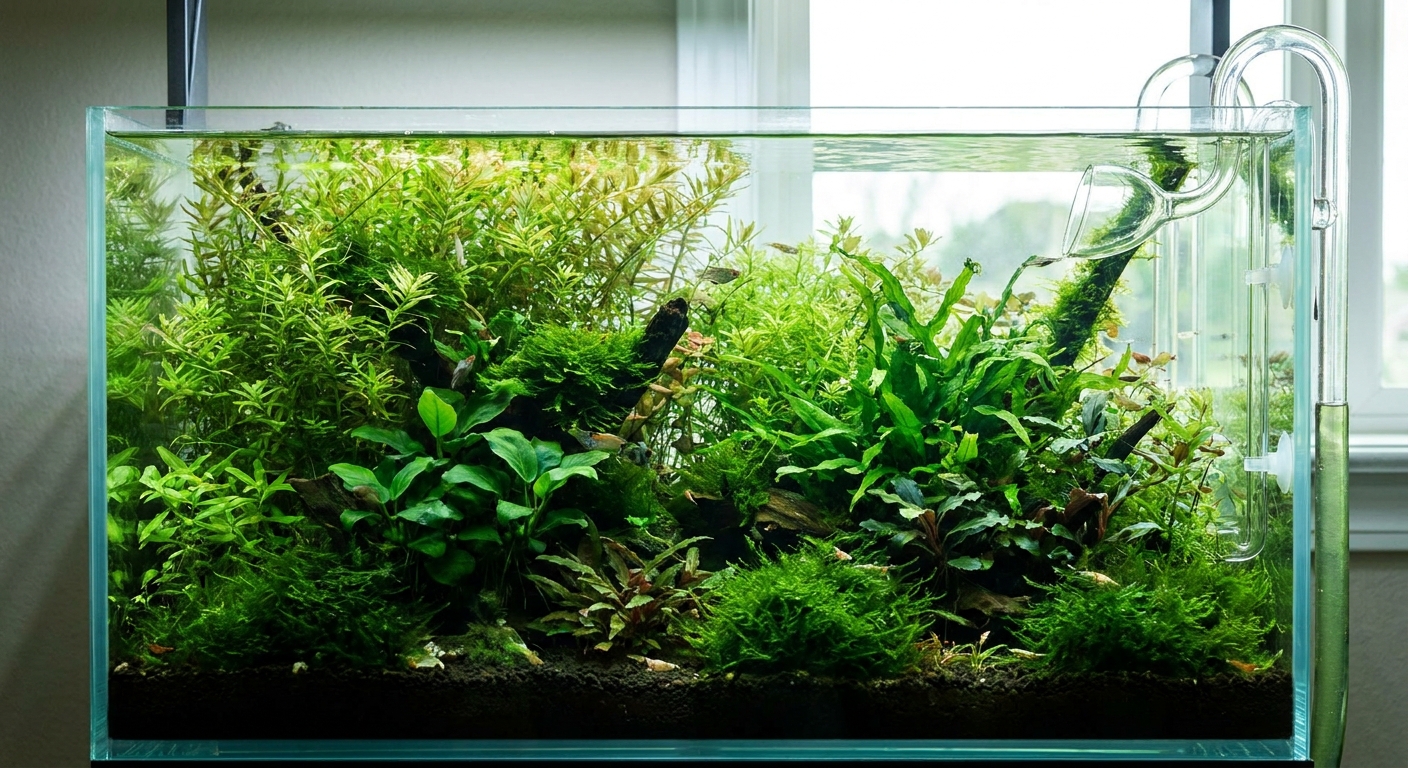
Quick comparison
If you want the short version before we swim deeper, here’s how the three filter types usually stack up for planted tanks.
| Filter type | Flow control and distribution | Media capacity | Visual impact in aquascape | Best fit |
|---|---|---|---|---|
| Canister | Strong, adjustable, excellent with spray bars or lily pipes | High, lots of biological media options | Lowest in-tank clutter (especially with glass pipes) | Show tanks, CO2 tanks, medium to large planted setups |
| Hang-on-back (HOB) | Moderate, surface-focused, can be gentle | Medium, limited by basket size | Visible on rim, minimal in-tank hardware | Simple planted tanks, budget-friendly, easy maintenance |
| Sponge | Gentle, localized, depends on airlift or powerhead | Low to medium bio, limited staged mechanical polishing | Most visible in-tank equipment | Shrimp tanks, fry tanks, low-flow plant setups |
What planted tanks need
Flow that moves CO2 and nutrients
Plants love consistency. In CO2-injected tanks, flow is what helps CO2-rich water reach every leaf. In low-tech tanks, flow still matters because it distributes oxygen, fertilizers, and warmth evenly.
- Too little circulation can create dead zones where detritus piles up and algae finds a foothold.
- Too much direct jet flow (especially from a narrow outlet) can uproot carpets, shred moss tips, and stress shrimp and fish.
If you are working on layout and plant placement, you will also love learning how flow interacts with depth and composition. See Creating Depth in Planted Aquariums for design decisions that make flow easier to manage.
Enough media for stable biology
In planted tanks, plants do consume nitrogen, but they do not replace filtration in stocked aquariums. A stable biofilter helps your tank handle feeding, trimming days, and new livestock without swinging into cloudy water or algae blooms.
Mechanical capture for polished water
That crystal look comes from trapping fine debris before it breaks down. Canisters usually win here because they can stack coarse to fine media in a controlled path. HOB filters can do a solid job depending on design. Sponge filters can catch a surprising amount of debris (especially fine-pore sponges), but they typically lack staged coarse-to-fine polishing at higher flow-through unless paired with extra filtration.
How much flow is enough
People love quoting turnover numbers, so here is a practical starting point for planted tanks:
- Most planted aquariums do well around 5 to 10x tank volume per hour in real, in-tank circulation.
- High-tech CO2 tanks often land toward the upper end because even distribution makes CO2 easier to use.
- Shrimp tanks, delicate moss, and sand-heavy layouts often prefer the lower end with gentler diffusion.
Two important caveats. First, manufacturer flow ratings are usually measured with empty filters and no media, and real-world flow drops as sponges and biomedia load up. Second, a high number is useless if it is all a single harsh jet. Aim for even, usable circulation that reaches behind hardscape and across your carpet without digging trenches.
Canister filters
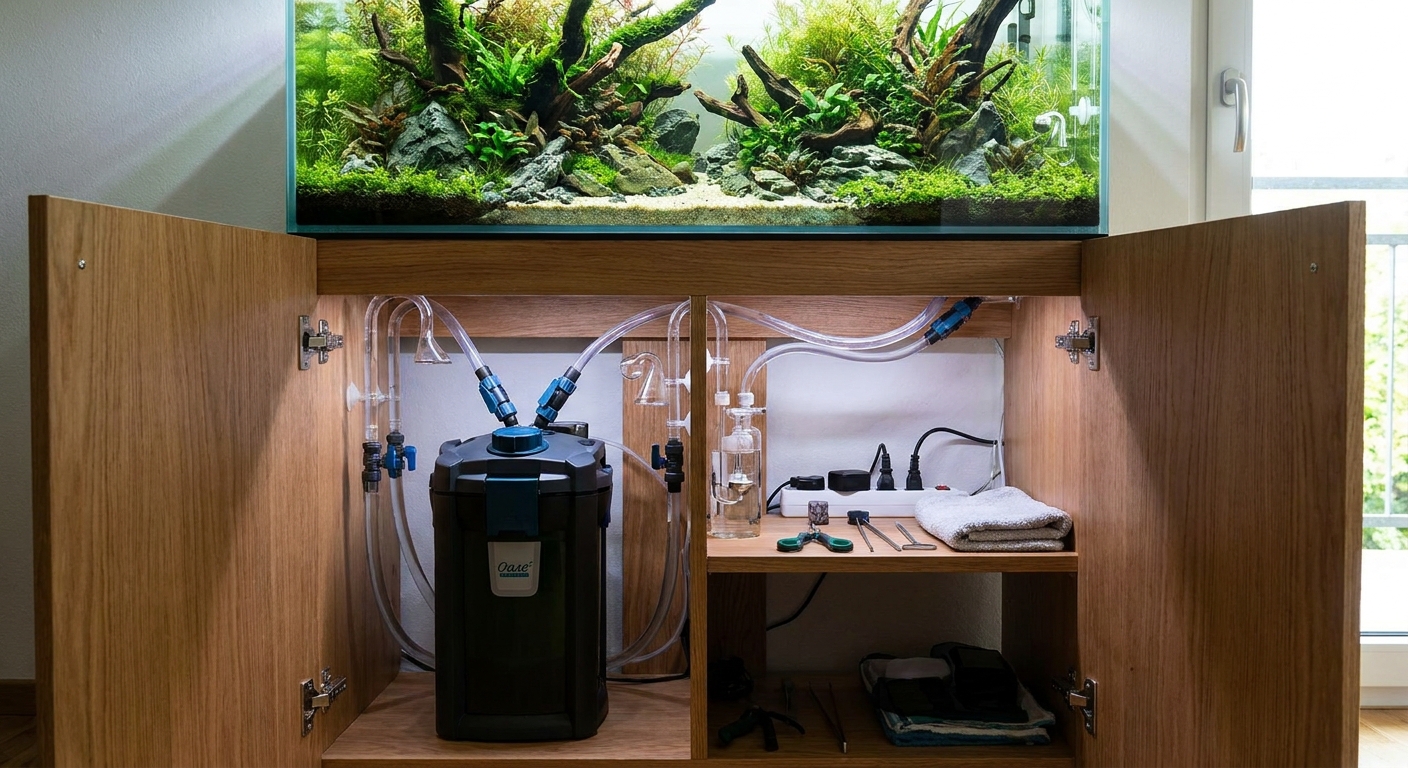
Canisters are the classic choice for aquascaping because they hide most of the equipment outside the tank while delivering strong, controllable filtration. They also give you the most freedom to tune “what the water is doing” without cluttering the scape.
Flow and distribution
Canisters often provide the best balance of turnover and directional control. You can tune flow with valves and shape it using different outlets:
- Spray bar: spreads flow across the tank length, great for gentle, even circulation in plant-heavy layouts.
- Lily pipe outflow: creates a smooth, rolling current and can maintain a clean surface line if aimed correctly.
If your mosses get battered, consider gentler distribution, a wider outlet, or a small change in hardscape placement. For pruning tips that also improve flow-through, visit Aquarium Moss Pruning.
Media capacity
This is the canister superpower. More volume means more options: coarse prefilter sponge, fine floss for polishing, and plenty of biological media. In planted tanks, that extra bio capacity helps keep things steady when you do big trims, rescaping, or heavier feeding.
Visual impact
Inside the tank, canisters can be nearly invisible if you use slim intake and outflow hardware. In high-end aquascapes, glass inflow and outflow keep the “nature” feeling strong.
Tradeoffs
- Maintenance is less frequent, but more involved when it is time to clean.
- Too much flow is possible if the canister is oversized for a delicate layout. You can mitigate this with spray bars, diffused returns, or dialing down flow.
- Leaks are uncommon with proper maintenance, but they are serious if hoses or seals are neglected. Regular inspection matters.
- Surface skimming is possible with the right intake approach or attachments, but it is not as “built-in” as many HOB setups.
One extra planted-tank perk: an intake prefilter sponge is not just for shrimp safety. It also keeps plant trimmings and mulm out of the canister, which makes canister cleanings easier and more consistent.
Hang-on-back filters
HOB filters are beloved for being simple, accessible, and easy to service. For many planted tanks, especially low to moderate bioload setups, they can be a great match.
Flow and distribution
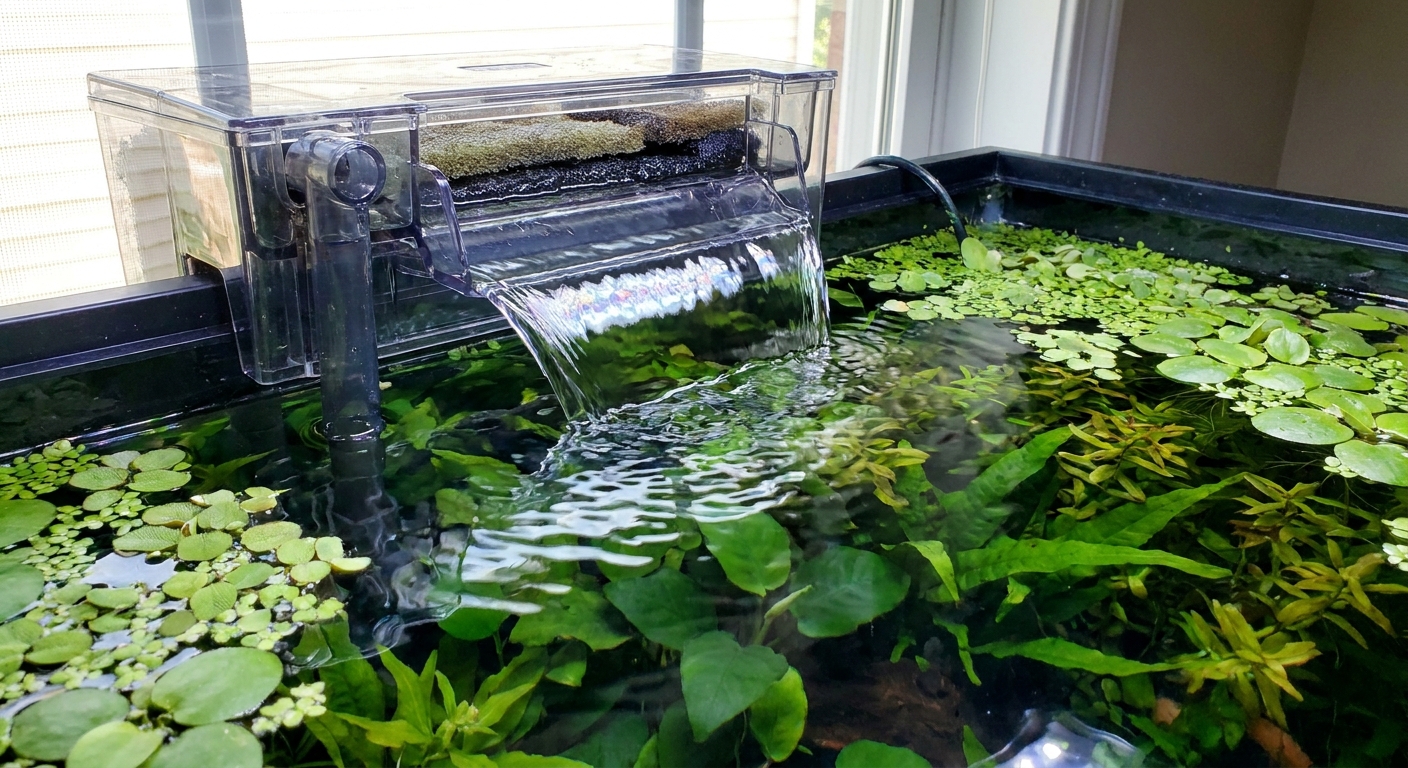
HOB flow typically returns as a waterfall or spillway. That means:
- Surface agitation is common, which improves oxygenation but can drive off CO2 faster in injected tanks.
- Flow is usually more top-focused unless you shape it with a baffle or the tank is small enough that the return circulates everything.
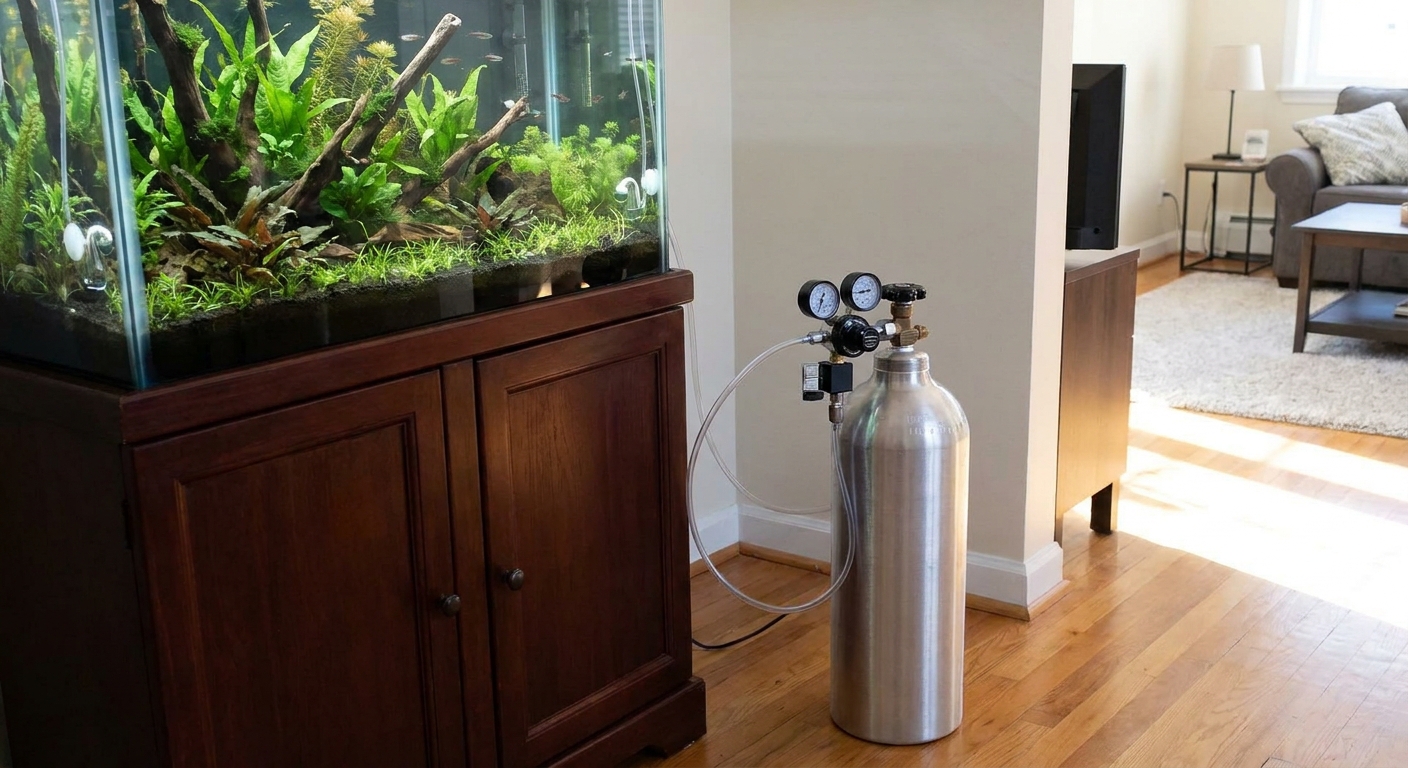
If you run pressurized CO2, surface movement becomes a balancing act: enough ripple for healthy gas exchange, not so much that your CO2 efficiency drops noticeably. For the CO2 side of this equation, see Pressurized CO2 Setup for Planted Aquariums.
Media capacity
HOB media space is moderate. Many designs allow a sponge block plus some biomedia. The main limitation is physical size. If your tank is heavily stocked or you want lots of fine mechanical polishing, a HOB may feel cramped compared to a canister.
Visual impact
Inside the tank, a HOB can be quite clean, usually just an intake tube. But it is visible on the rim and can disrupt the pure lines of a rimless aquascape.
Tradeoffs
- Evaporation and water level matter: low water can increase splashing and noise and change flow behavior.
- Surface skimming: some HOB setups do this naturally, which can reduce biofilm, but can also increase CO2 loss.
- Great for frequent tinkerers: easy to open, easy to rinse media, easy to adjust.
- Noise and heat: some units are nearly silent, others have a steady waterfall sound. They usually add minimal heat.
Sponge filters
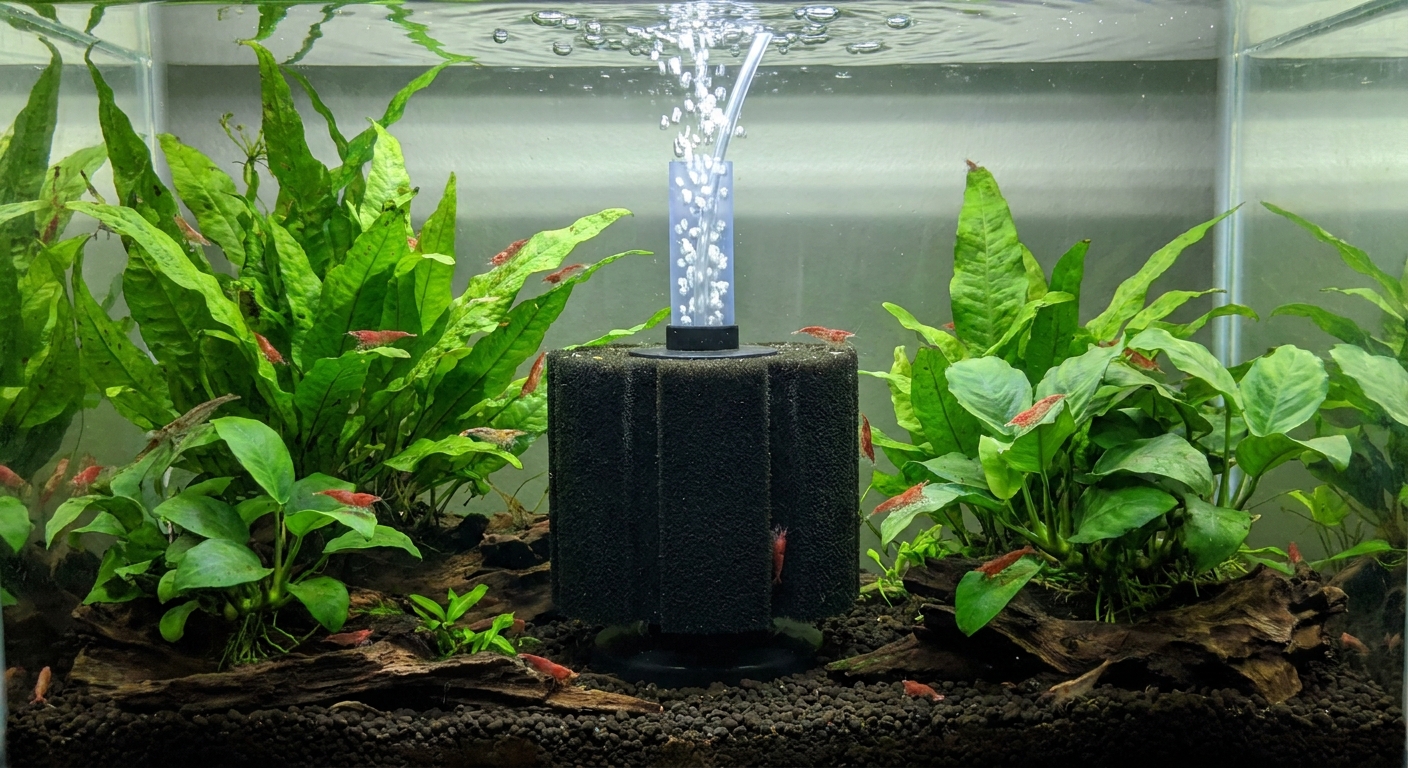
Sponge filters are gentle, shrimp-safe, and wonderfully simple. In planted tanks, they shine when you want soft flow, maximum safety for tiny livestock, and dependable biological filtration.
Flow and distribution
Classic sponge filters run on airlift. That creates:
- Gentle upward flow near the sponge
- Minimal current elsewhere unless the tank is small or you add a powerhead
For lush plant growth, the main risk is not that sponges are “bad”, it is that the tank may develop low-circulation pockets. You can compensate by placing the sponge strategically, using two sponges at opposite ends, or pairing the sponge with a small circulation pump.
Media capacity
Sponges provide lots of surface area for bacteria, but they have limited staged filtration. They trap debris well, but ultra-fine polishing is usually weaker than a canister loaded with layered mechanical media. Many planted keepers pair a sponge with another filter type when they want extra-clear water.
Visual impact
This is the sponge filter’s biggest downside for aquascaping. It sits in the tank, and even a small sponge can pull attention away from a clean hardscape composition. You can hide it behind tall plants or hardscape, but it still takes space.
Tradeoffs
- Excellent for shrimp and fry, because there is no strong intake to trap them.
- Easy to maintain, but you must rinse the sponge regularly to prevent flow reduction.
- Air bubbles add movement and oxygen, but can increase surface agitation and CO2 loss in injected tanks.
- Noise and power: the filter itself is quiet, but the air pump can hum. Quality pumps and soft tubing routing make a big difference.
Choosing by tank style
High-tech CO2 tanks
Best pick: Canister filter. You get strong media capacity and the best ability to shape flow so CO2 reaches every corner. Pair it with a gentle outlet style so plants sway rather than whip.
Low-tech tanks
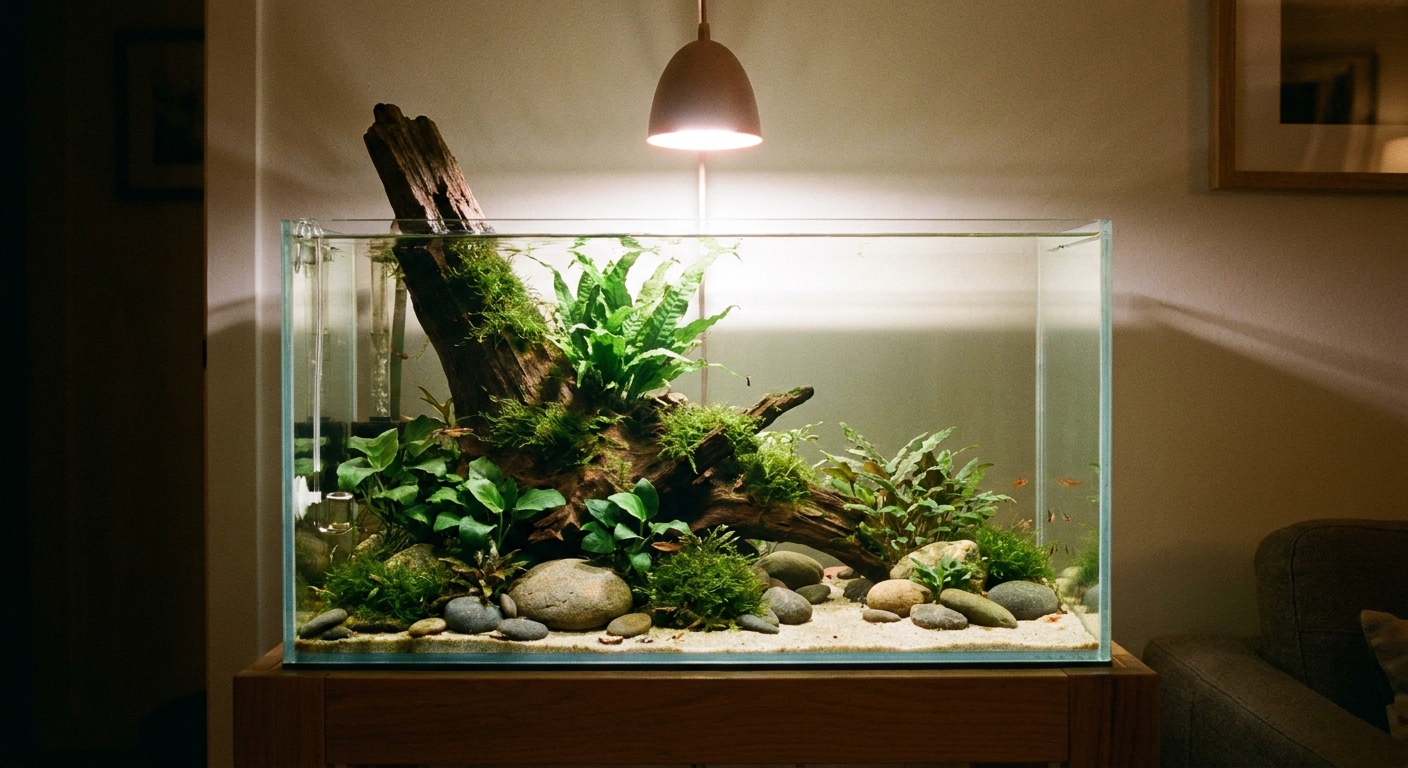
Best pick: HOB or sponge, depending on your priorities. HOB filters provide convenient mechanical filtration and easy maintenance. Sponge filters are great if you want gentle flow and livestock safety. If you are designing a low-tech layout, see Low-Tech Planted Tank Design Without CO2.
Nano aquascapes (5 to 10 gallons)
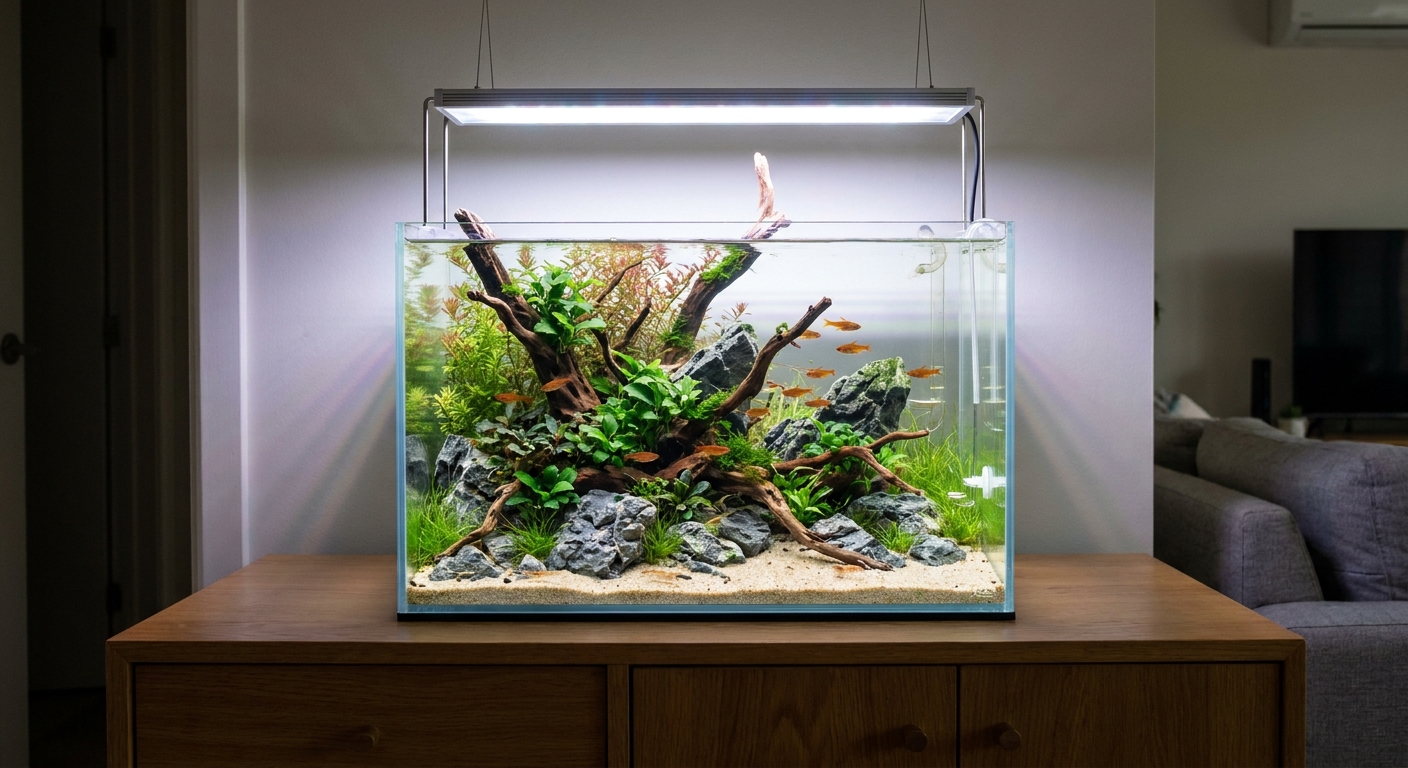
Best pick: Small canister or small HOB if you want cleaner visuals, or a sponge if shrimp are the stars. In tiny tanks, “too much flow” happens easily, so prioritize a controllable return and gentle distribution. For layout inspiration that considers equipment visibility, visit Nano Tank Aquascaping Ideas.
Shrimp-first planted tanks
Best pick: Sponge filter for safety and soft flow. If you want clearer water, combining a sponge with another gentle method can work well, but always keep intake safety in mind.
Flow tips
Use plants and hardscape to soften flow
Aim returns so flow glides along the front glass or across the surface, then rolls down and around. Dense stems and hardscape edges can diffuse strong current into a more plant-friendly sway.
Build a slow racetrack
Many planted tanks thrive with a consistent loop: outflow pushes water one direction, it returns along the opposite side, and detritus collects in predictable areas for easy cleanup.
Shield delicate plants
Carpets, mosses, and fine-leaved stems hate being hammered. Gentle outlets, spray bars, and smart aiming keep leaves intact and algae less tempted.
Want plants that help you stabilize new tanks while your filtration finds its rhythm? See Fast-Growing Stem Plants That Beat Algae in New Tanks.
Maintenance expectations
Canister
- Clean prefilters or intake sponges more often than the whole canister. This keeps flow steadier and reduces “deep clean” days.
- Rinse mechanical media when flow drops or water looks hazy.
- Preserve beneficial bacteria by avoiding over-cleaning all media at once.
HOB
- Rinse sponges and replace fine floss as it clogs.
- Keep the intake clear of plant trimmings after big pruning sessions.
- Watch water level to prevent splashing, noise, and extra CO2 loss.
Sponge
- Rinse the sponge in removed tank water as flow slows.
- Check airline and airstone for clogging if bubbles weaken.
- Place sponges where they are easy to service without uprooting plants.
If you are troubleshooting cloudy water, algae flare-ups, or flow issues after maintenance, the guides in Maintenance & Troubleshooting can help you steady the tank again.
Common mistakes
Chasing maximum flow
A strong rating on a box does not guarantee good in-tank distribution. Gentle, even circulation usually beats a powerful jet that leaves dead zones.
Ignoring intake safety
Baby shrimp can slip into surprisingly small gaps. If shrimp are part of your jungle, cover intakes with sponge prefilters. As a bonus, prefilters also reduce clogging inside canisters and HOBs.
Over-polishing a tank that needs some mulm
In planted tanks, a little biofilm and mulm can be part of the ecosystem. The goal is not sterile, it is stable and clear enough to enjoy the view.
Letting the filter become a nutrient trap
If detritus builds up inside a filter for too long, it breaks down and can fuel algae. Regular mechanical cleaning keeps the filter from becoming a compost bin.
My checklist
- If you want the cleanest aquascape look and maximum media: choose a canister.
- If you want easy access and simple maintenance: choose a HOB.
- If shrimp safety and gentle flow are top priority: choose a sponge.
- If you run CO2 and hate dead spots: prioritize adjustable flow and good distribution, often canister territory.
- If you love rimless minimalism: avoid bulky in-tank gear when possible.
With the right filter, your plants get the steady currents they crave, your water stays clear enough to admire every tiny bubble, and your aquascape can shine like a little slice of riverbank magic.