Let’s grow a beautiful underwater jungle together, one tiny leaf at a time!
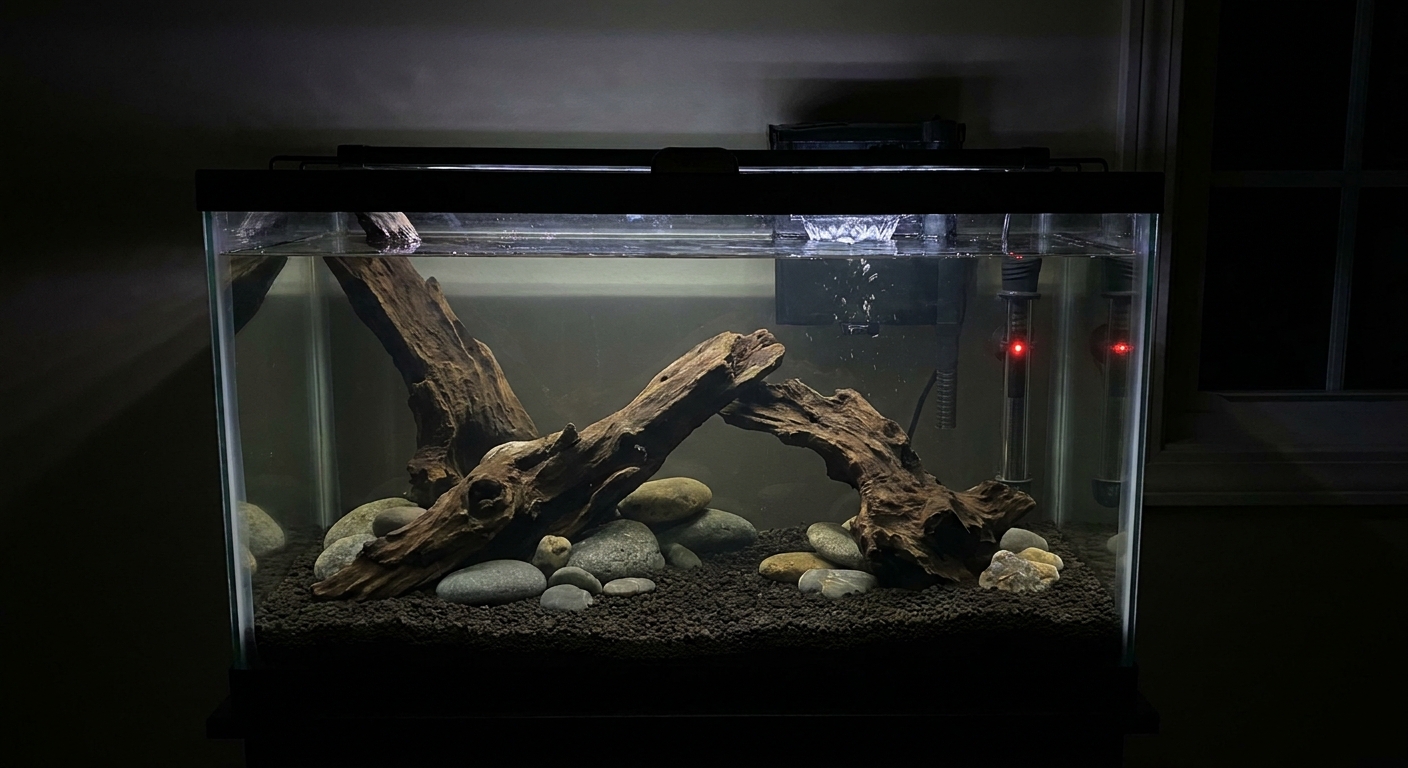
The dark start method is a calm, patient way to begin an aquascape. You set up the tank with hardscape, aquasoil, filtration, heat, and circulation, then you run it with no lights and no plants for a few weeks. In the dark, beneficial bacteria can establish and aquasoil can release its early nitrogen without feeding algae. When it is time to turn the lights on, the tank is steadier and your first plants get a gentler welcome.
What dark start is, and why it works
Aquasoils are fantastic for planted tanks because they contain nutrients, but many release nitrogen in the first days and weeks. In planted tank talk, people often say “ammonia,” but what matters is the balance between toxic NH3 and plant-friendly NH4+, which shifts with pH and temperature. Plants can use ammonium (NH4+) readily, but NH3 is the form that becomes dangerous, especially as pH rises.
Early on, that nitrogen release can cause two common headaches:
- Algae blooms when lights are on and nutrients are abundant.
- Unstable cycling as the tank goes through big swings in ammonia and nitrite.
Dark start aims at both problems by changing the starting conditions:
- No light means algae cannot capitalize on the nutrient spike.
- Time + flow + oxygen lets nitrifying bacteria colonize filter media and hardscape surfaces.
- Targeted water changes export excess nitrogen and organics as the substrate settles.
It is still a real cycle. You are simply doing it before you add the extra variables of strong light, CO2, and plant mass.
When dark start is a great idea
Dark start is most helpful in these setups:
- New aquasoil builds, especially nutrient-rich soils or deep soil beds.
- Hardscape-heavy layouts like stone mountains or rooty driftwood scenes where detritus can collect.
- High light and CO2 plans, where early algae can snowball quickly.
- Slow grower focused tanks such as epiphytes, mosses, and Bucephalandra, where you cannot rely on fast stems to outcompete algae at the start.
It is less necessary (but still possible) for inert substrates like sand or gravel with root tabs, or for very low light low tech tanks. If you are building low tech from the start, this guide on low tech planted tank design without CO2 can help you choose a simpler path.
What you need before you begin
Dark start is simple, but it still needs strong basics:
- Filter with biomedia (a place for bacteria to live). Run it 24/7.
- Heater if your room is cool. Stable warmth speeds bacterial growth. Many aquascapers aim for the mid 70s F (about 24 to 26 C) during cycling, then adjust later for livestock.
- Water circulation so oxygen reaches the substrate surface and hardscape.
- Dechlorinator for all new water.
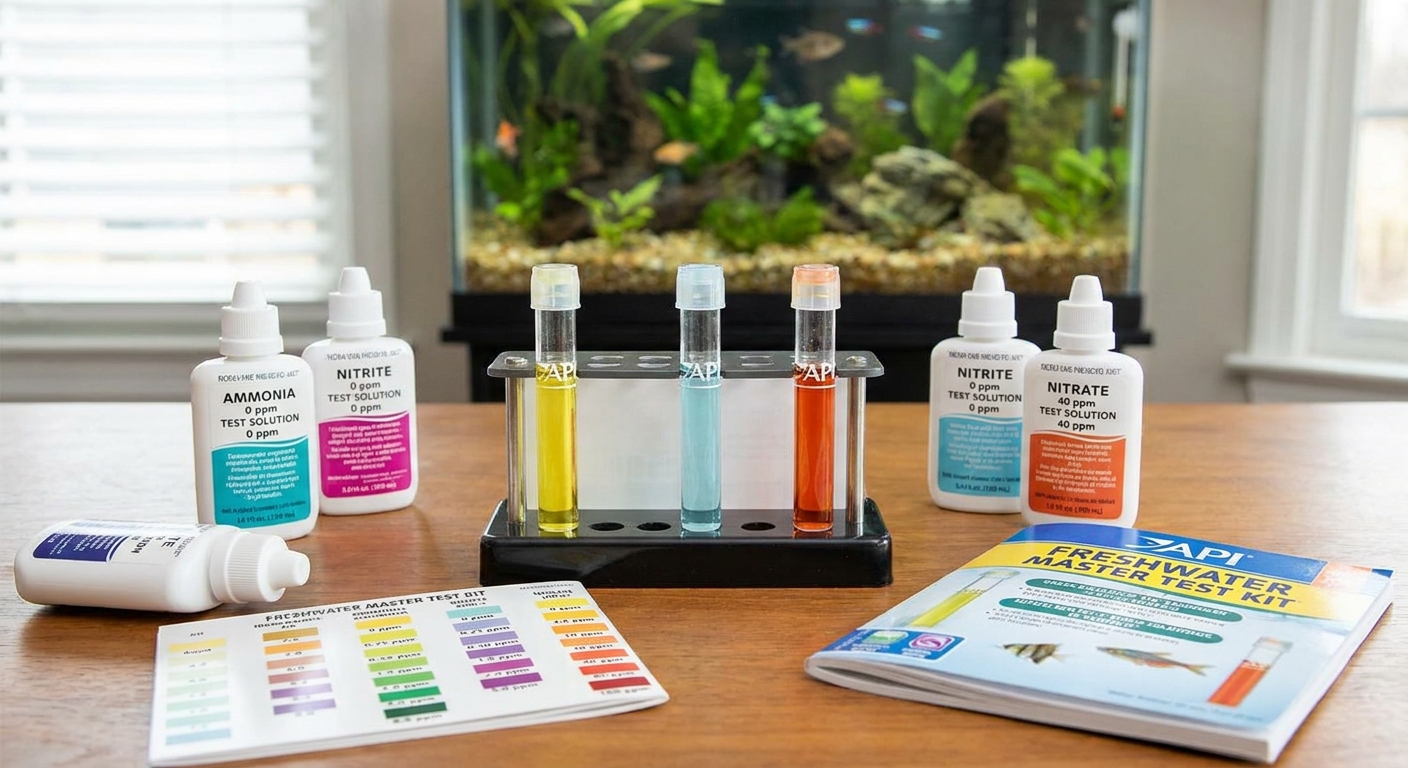
- Test kit for ammonia, nitrite, and nitrate.
- Optional: an air stone if surface agitation is low.
Skip these during dark start:
- No aquarium light schedule (keep lights off).
- No fertilizers (aquasoil is already rich).
- No CO2 injection (not needed yet). CO2 does not “use up” oxygen, but overdosing CO2 or reducing surface agitation while chasing CO2 can lower oxygen availability and gas exchange, which is the last thing you want during a bacterial build-up phase.
If you cover the tank to block light, keep it breathable. A towel or cardboard on the glass is fine, but do not seal the tank so tightly that you restrict airflow or surface agitation.
For gear planning, Verdant Aqua’s Equipment & Setup guides can help you dial in a stable foundation before you ever plant a single stem.
Step by step: dark start cycling
1) Build the aquascape dry
Place your aquasoil, rocks, and driftwood. Secure anything that might shift. If you are combining wood and stone, this guide to blending driftwood and rocks naturally can help your layout look intentional from day one.
Tip: If you are using driftwood that tends to float, make sure it is anchored well before filling.
2) Fill gently and start all equipment
Fill the tank slowly to avoid blasting craters into the soil. Start the filter and heater right away. The whole goal is a stable, oxygenated environment for bacteria to settle in.
3) Keep it dark
Turn the aquarium light off. Ambient room light is fine, but avoid bright windows or direct sun. Many aquascapers cover the glass with a towel or cardboard if the tank sits in a bright space.
4) Do water changes based on tests
Here is the most important reframe: there is no magic calendar. Rich aquasoils can leach a lot early, mild soils less, and every tank volume behaves differently. Use your test results to decide how aggressive to be.
A very common approach looks like this:
- Week 1: frequent changes (often every day or every other day), especially with nutrient-rich soils and smaller tanks.
- Weeks 2 to 3: a few changes per week.
- Weeks 3 to 6: weekly changes, adjusting up if ammonia or nitrite keeps showing up.
If you want a simple “when in doubt” rule, increase water changes any time ammonia or nitrite is clearly measurable, and especially if ammonia climbs and stays elevated. Water changes keep the process cleaner and reduce the chance of a funky, sour start.
5) Feed the cycle only if needed
With most aquasoils, there is already enough nitrogen to start cycling. If you are using inert substrate (or a very mild soil), you may need an ammonia source. Many hobbyists use pure household ammonia or fish food, but it is easy to overdose. If you do not feel confident, keep it simple and let the system settle naturally, or choose a more straightforward planted start with fast growers.
6) Test ammonia, nitrite, and nitrate
A typical pattern looks like this:
- Ammonia rises first (from aquasoil).
- Nitrite rises next as bacteria begin converting ammonia.
- Nitrate rises as the cycle matures.
Two safety notes I like to keep taped to the shrimp brain:
- Higher pH means more NH3 (the toxic form) relative to NH4+. So the same test reading can be more dangerous at higher pH.
- Nitrate appearing is a good sign, but it does not automatically mean you are ready for a full bioload on day one.
During dark start, you are waiting for the tank to reliably process ammonia and nitrite without drama.
How long should a dark start take?
Most dark starts take 3 to 6 weeks. Some finish sooner, and some take longer depending on temperature, filter maturity, water chemistry, and how much ammonia the soil releases.
A dark start is “done” when the tank can handle waste. A practical readiness check is:
- Ammonia: 0 ppm
- Nitrite: 0 ppm
- Nitrate: present (often 10 to 40 ppm before a water change)
If you want higher precision, an optional processing test is to add a controlled, measured ammonia dose (commonly 1 to 2 ppm) and see if the tank can bring ammonia and nitrite back to zero within about 24 hours. Only do this if you are comfortable measuring and controlling ammonia. If you are not, no worries. Watching ammonia and nitrite settle to zero repeatedly while nitrate remains present is a perfectly reasonable approach.
What you will see during dark start
Bacterial haze
Cloudy water in the first days can happen as microbes bloom. It does not automatically mean failure. Keep filtration running, keep oxygen high, and continue water changes. It usually clears on its own.
Biofilm on wood
That pale, fuzzy, jelly-like film on driftwood is common in new setups. With lights off, it is usually just a temporary buffet for snails or shrimp later. You can gently siphon it during water changes if it is heavy.
Brown dusting on hardscape
A light brown coating can still appear even without strong lighting, especially if the tank gets ambient light and your water has silicates. Keep it dark, keep flow steady, and keep up with water changes. It often fades once the tank stabilizes and you begin a balanced planting phase.
Common mistakes
- Running the light “just a little”: even a short daily photoperiod can feed algae when ammonia is present.
- Not enough oxygen: nitrifying bacteria love oxygen. Ensure surface agitation and decent flow.
- Skipping water changes: dark start is not “set and forget.” Early water changes are the secret sauce.
- Cleaning the filter too aggressively: do not rinse biomedia in tap water. If flow drops, swish media gently in removed tank water.
- Turning lights on suddenly at full blast: the transition matters. A slow ramp prevents algae surprises.
If you run into cloudy water, algae, or cycling stalls, the guides in Maintenance & Troubleshooting are a good next stop.
Transition day: add plants and light
1) Big water change
Do a 50 to 80 percent water change right before planting. This reduces nitrate and removes dissolved organics that built up during cycling.
2) Plant heavily
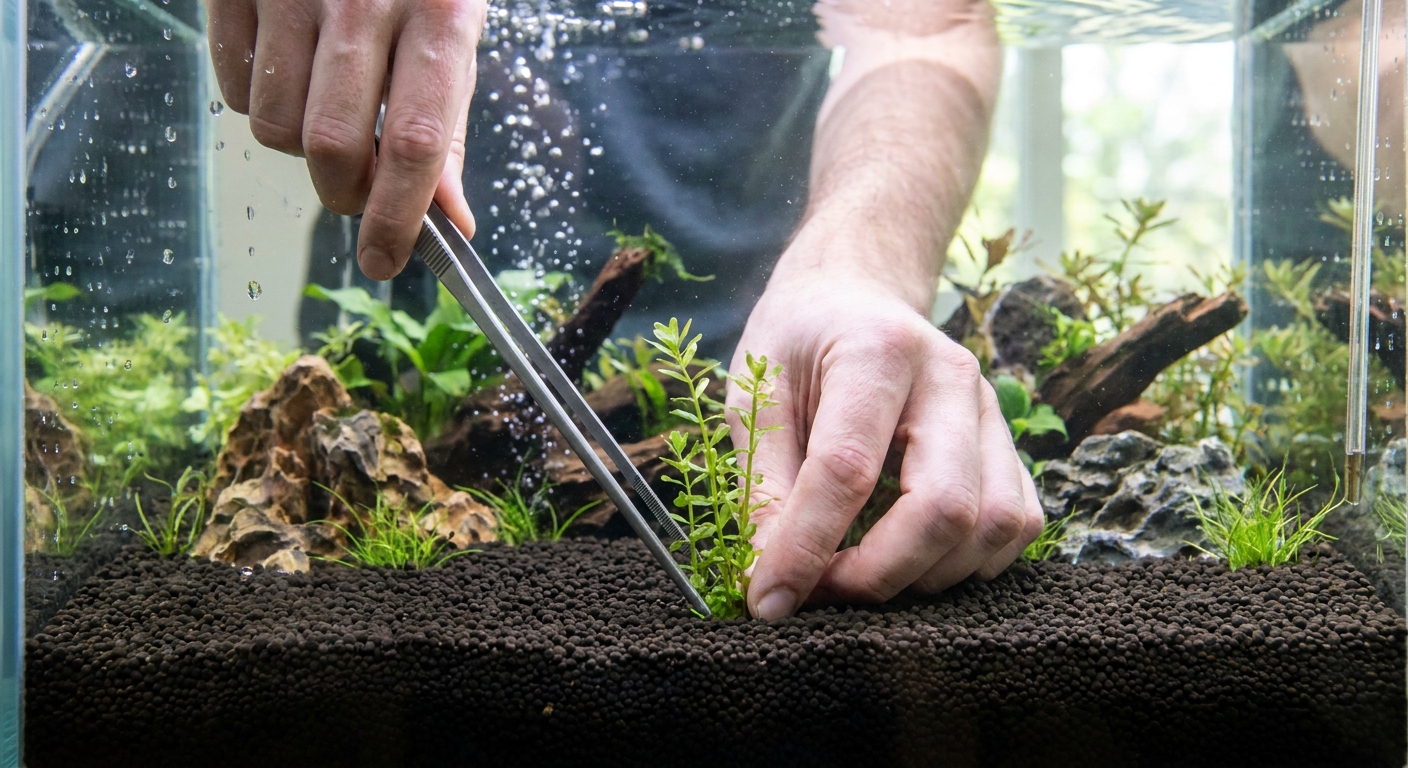
When the lights turn on, plants should be ready to “drink” nutrients immediately. Aim for lots of biomass.
If you want algae-resistant starters, choose fast growers and easy plants. This guide to fast growing stem plants that beat algae in new tanks is perfect for that first big planting.
3) Start gentle with light
Begin with 5 to 6 hours per day for the first 1 to 2 weeks, then increase slowly if everything is clean and stable. Light intensity matters too. If you are unsure how to balance spectrum, PAR, and schedule, see planted tank lighting: PAR, spectrum, photoperiod.
4) CO2 (optional): ramp slowly
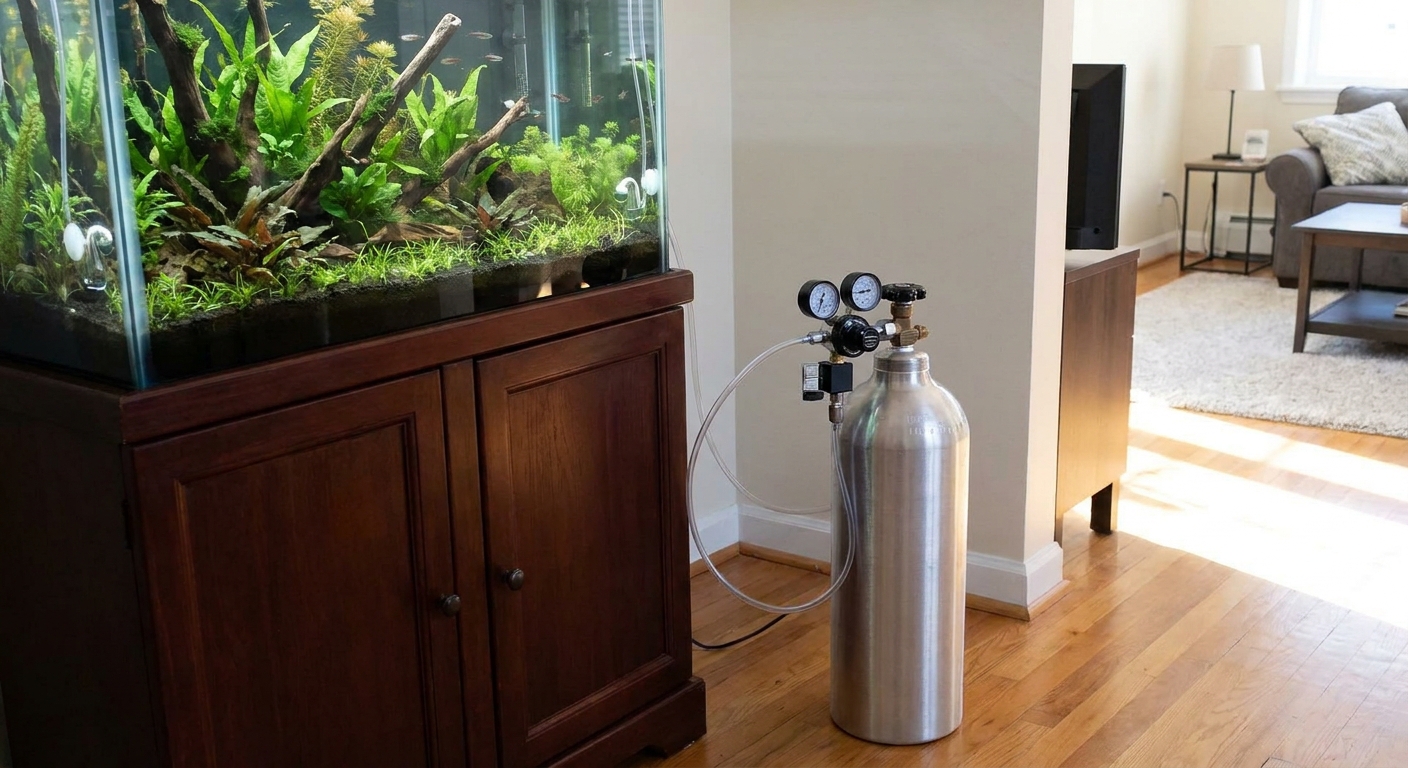
If your plan includes pressurized CO2, introduce it carefully once plants are in and actively growing. CO2 is powerful, but it is also one more variable. If you want a deep setup walkthrough, visit pressurized CO2 setup for planted aquariums.
5) The first 7 to 14 days after planting
This is where you keep algae sleepy while plants grab hold.
- Water changes: many aquascapers do 30 to 50 percent two or three times in the first week, then weekly in week two. Adjust based on how the tank looks and what your tests say.
- Fertilizers: go easy at first if you used a rich aquasoil. Once you see new growth and stable parameters, you can begin modest dosing if your plants call for it.
- Filter care: avoid major cleanings. Let the biofilter stay settled unless flow drops.
Dark start vs planted start
Both paths can lead to a gorgeous aquascape. The best choice depends on your patience and your planting style.
- Dark start is great if you want to reduce algae risk and begin with a more stable biofilter, especially when using nutrient-rich aquasoil.
- Planted start is great if you can plant very heavily with fast growers immediately and you enjoy managing the first month actively with light control and water changes.
There is no “shrimp police” here. Choose the method that fits your tank, your schedule, and your comfort level.
FAQ
Does dark start eliminate algae completely?
No method can promise zero algae. Dark start simply removes the biggest early trigger, which is strong light combined with fresh aquasoil nitrogen release. Good planting, reasonable lighting, and steady maintenance still matter once lights are on.
Can I add snails or shrimp during dark start?
It is best to wait. During cycling, ammonia and nitrite can spike and harm livestock. Add animals only after the tank is fully cycled and stable.
Can I run the filter with no water changes and just wait?
You can, but waiting alone often leads to very high ammonia and a messy, smelly start, especially with rich aquasoils. Water changes are part of what makes dark start clean and controlled.
Should I dose bacteria in a bottle?
It can help, but it is not required. The core requirements are oxygen, surface area, time, and stable filtration. If you do use bottled bacteria, follow the product directions and keep expectations realistic.
What if I am using mostly epiphytes and moss?
Dark start can be a smart match for slow growers. When you do plant, attach epiphytes to hardscape and keep early lighting modest. If you are planning Bucephalandra, this care guide is helpful: Bucephalandra care: light, flow, and algae control.
A gentle start makes a stronger jungle
Dark start is all about patience. You are letting the tank do its quiet bacterial work before the bright, bubbly plant show begins. Keep it dark, keep it oxygenated, change water generously when your tests call for it, and watch parameters with calm curiosity. Then when the lights finally click on, your aquascape is ready to grow into something lush.
With a warm wave of my little antennae, I’m cheering you on. Your underwater jungle is on its way.