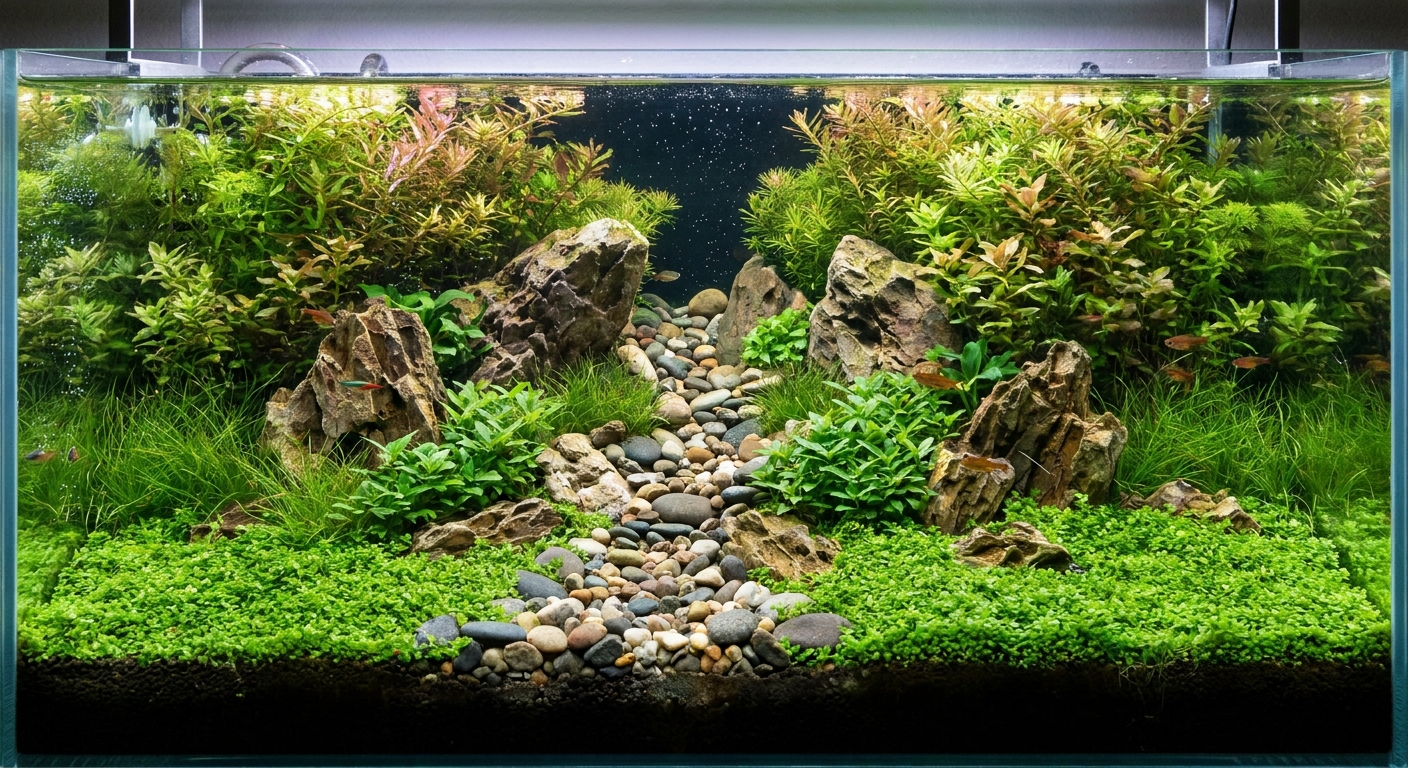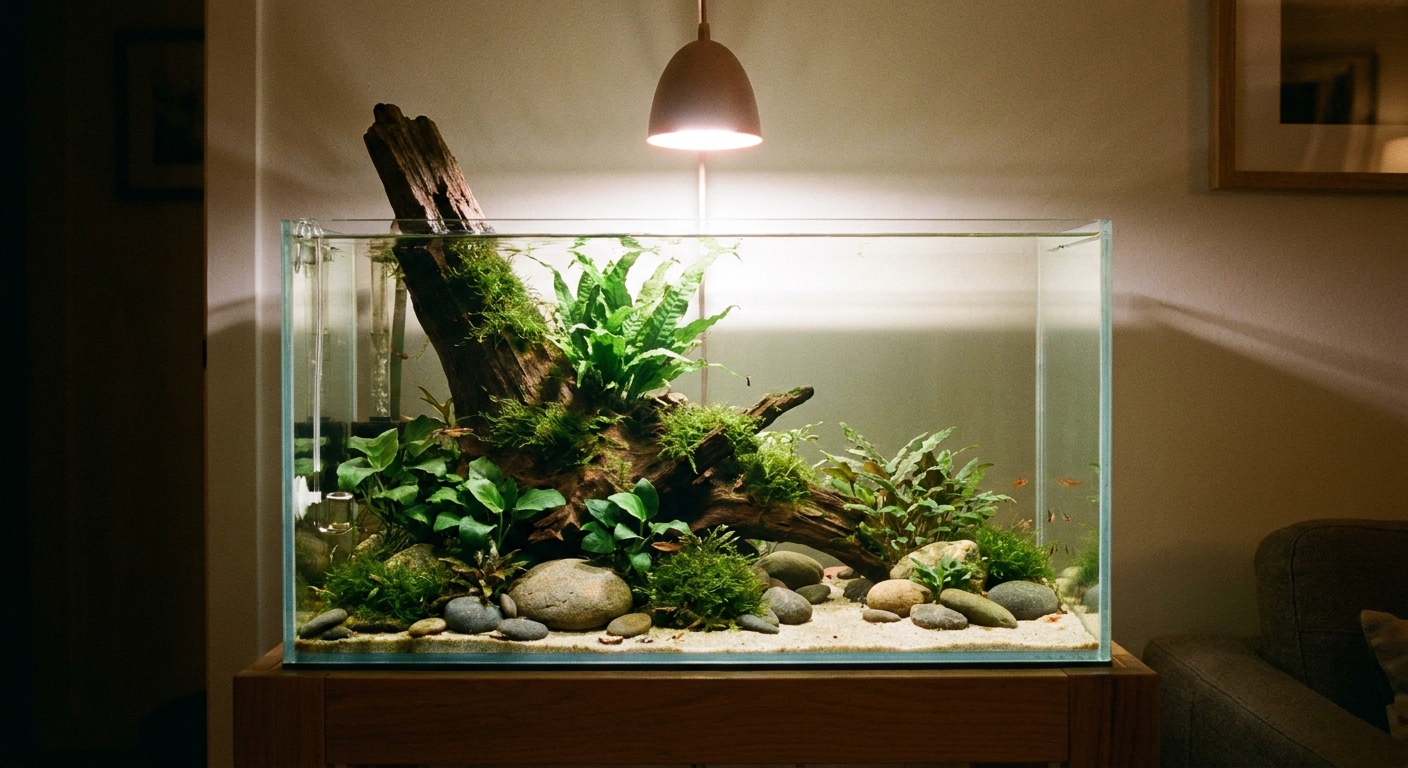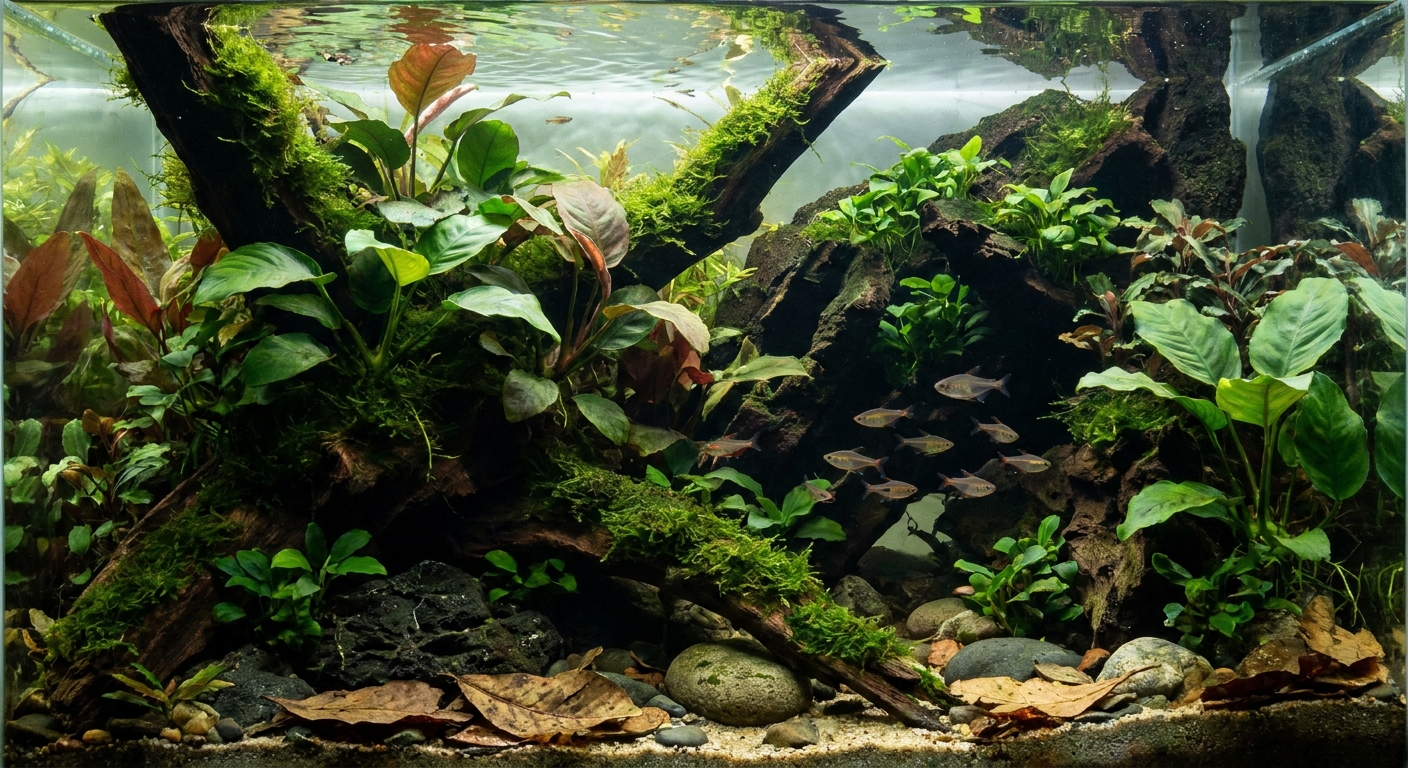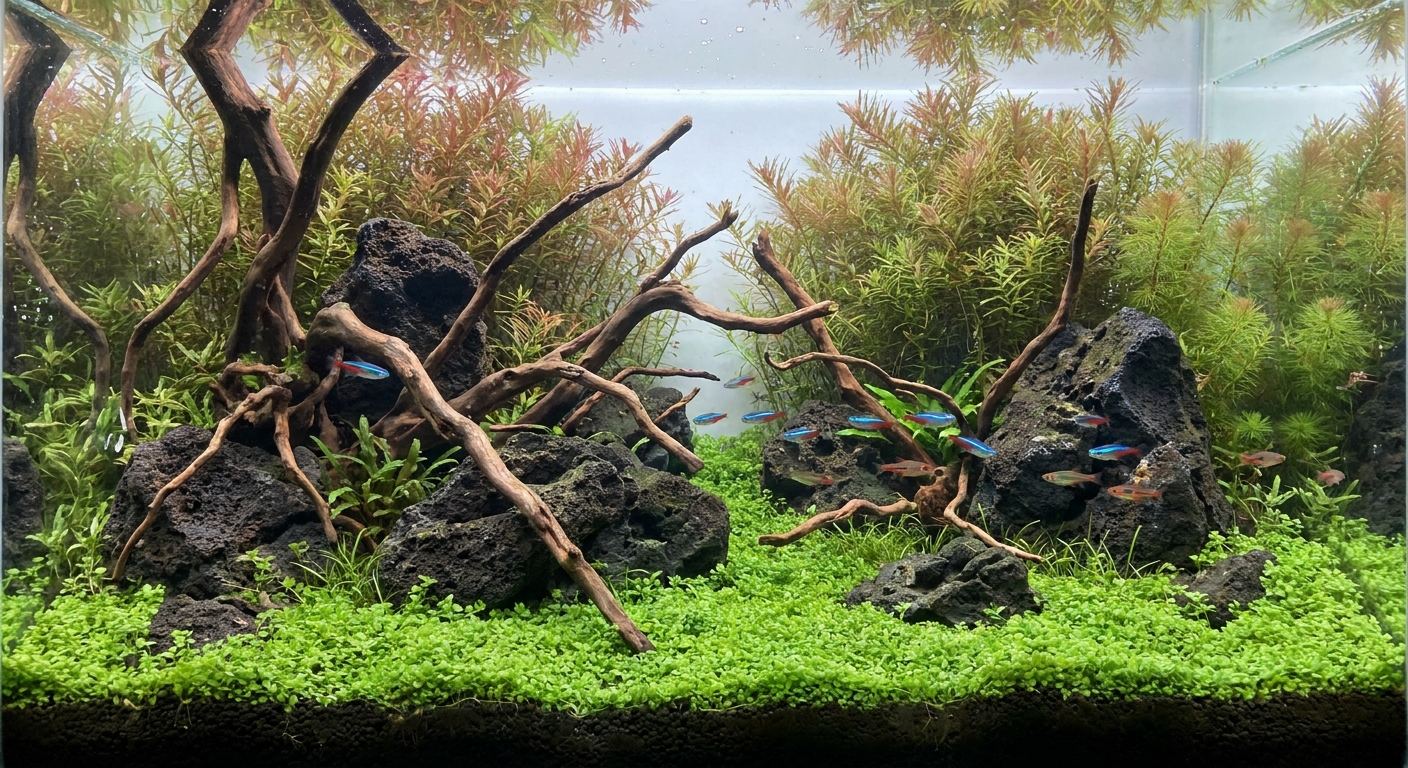
Let’s grow a beautiful underwater jungle together, one tiny leaf at a time. Jungle-style aquascaping is all about that lush, overgrown feeling, but with a secret: the best jungles are planned. When the structure is right, the tank looks wild and natural while still being simple to service, satisfying to trim, and kind to fish and plants.
What organized chaos means
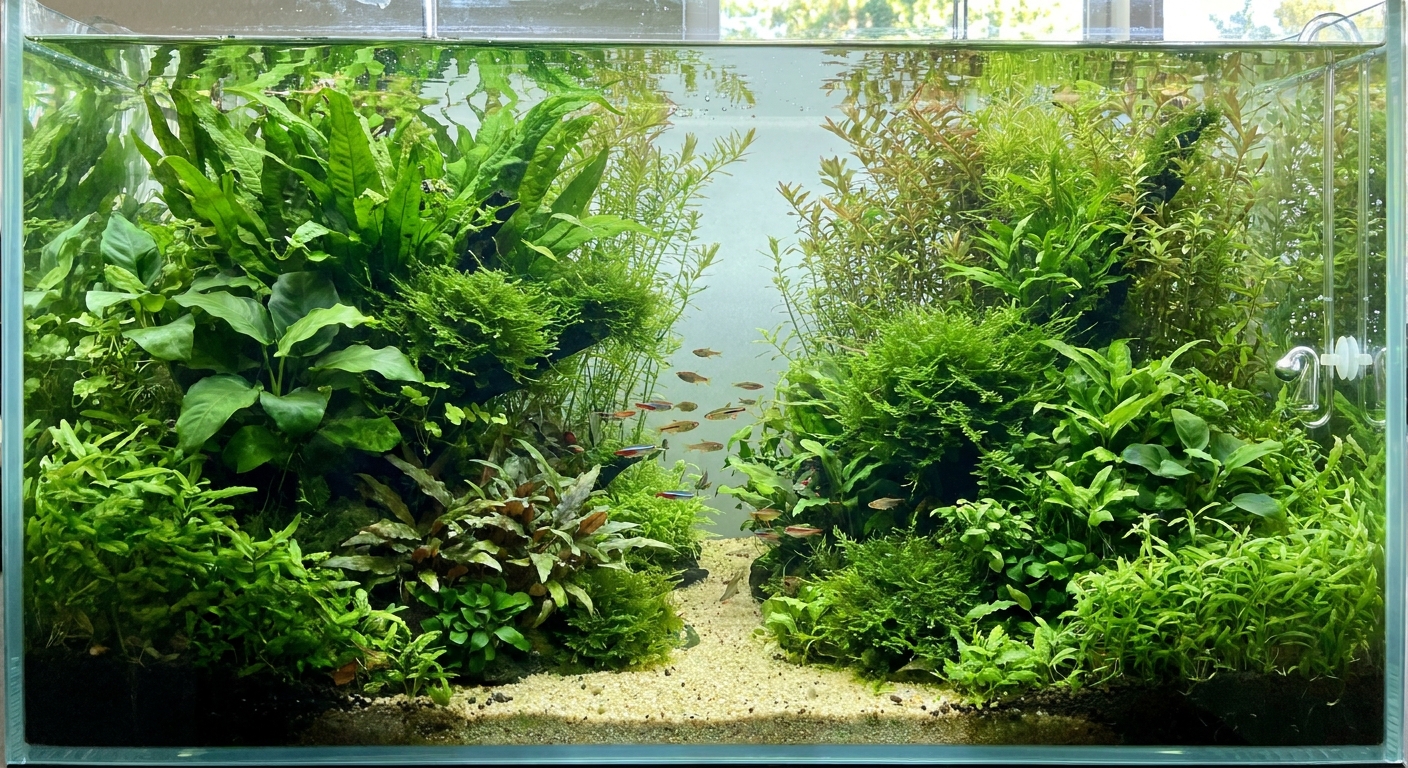
A jungle-style tank is not a random pile of stems. It is a layout with two personalities living together:
- Chaos: mixed leaf shapes, overlapping stems, and an overgrown canopy that feels like nature.
- Organization: hidden hardscape structure, intentional negative space, and planned access for maintenance.
If you can name your open areas and your plant zones before planting, you are already doing jungle style correctly.
The structure behind the wild
1) Pick one clear path
Jungle style looks best when the eye can travel. Choose one main pathway and protect it from becoming a green traffic jam. Good path options include:
- Front-to-back river path: open sand or a short carpet that pulls you into the scene.
- Side sweep: a curving channel that starts wide in front and narrows toward the back for depth.
- Midwater corridor: plants stay dense on the sides, leaving a clean swimming lane in the middle.
The path is not just for looks. In many tanks, open lanes make debris easier to spot and siphon, especially where flow naturally slows and fine particles settle. If your detritus collects elsewhere, that is your tank showing you the real “siphon map.”
2) Build plant walls and ceilings
Jungle style often has two strong masses:
- A back wall: tall stems or large rosettes form the jungle backdrop.
- A canopy: surface or near-surface growth that creates shade and that immersive, enclosed feeling.
To keep it organized, avoid letting every plant compete for the same vertical space. Instead, assign roles: background climbers, midground bushes, and a soft foreground edge.
3) Anchor it with hardscape bones
Even when the wood and rocks are mostly hidden later, they should guide the composition from day one. Use hardscape to create:
- Terraces: slight steps in substrate height that give plants a clear tier to occupy.
- Plant pockets: protected spots where slow growers can settle without being swallowed by stems.
- Shadow lines: gaps under wood that create depth even when greenery gets thick.
For a more natural look when your plants start to sprawl, this guide helps hardscape feel believable: Blending Driftwood and Rocks Naturally.
Plants that stay manageable
The easiest jungle-style tanks mix a few reliable plant categories instead of collecting everything at once. Think in layers and behaviors, then choose species that match your light, CO2 approach, and trimming tolerance.
Fast growers: the jungle engines
Fast stems help you reach that mature, overgrown look quickly, and they are your best nutrient sponges during the early weeks. The trick is to limit how many different fast stems you use so pruning stays simple.
- Use 1 to 3 main stem species as your background mass.
- Group them in chunks, not scattered singles.
- Place the fastest grower where trimming is easiest to reach.
Go-to examples: Hygrophila polysperma, Limnophila sessiliflora, Rotala rotundifolia, Ludwigia repens. (Pick fewer, not more.)
Midground texture: the tangle layer
This is where jungle style becomes magical. Choose plants with different leaf sizes and orientations so they overlap naturally. Broad leaves create shade and drama. Fine leaves add softness.
Go-to examples: Cryptocoryne wendtii, Java fern (Microsorum pteropus), tiger lotus (Nymphaea lotus) if you are willing to manage its surface leaves, and smaller swords in larger tanks.
Epiphytes and moss: controlled wildness
Epiphytes are perfect for jungle style because they look ancient and established, but they do not demand constant replanting. Attach them to wood and rock to make your hardscape feel like it has been underwater forever. For placement ideas that still look tidy, visit Epiphyte Design Strategies on Hardscape.
Go-to examples: Anubias (nana types), Bucephalandra, Java fern, and mosses like Java moss or Christmas moss.
Floaters: canopy with a dimmer
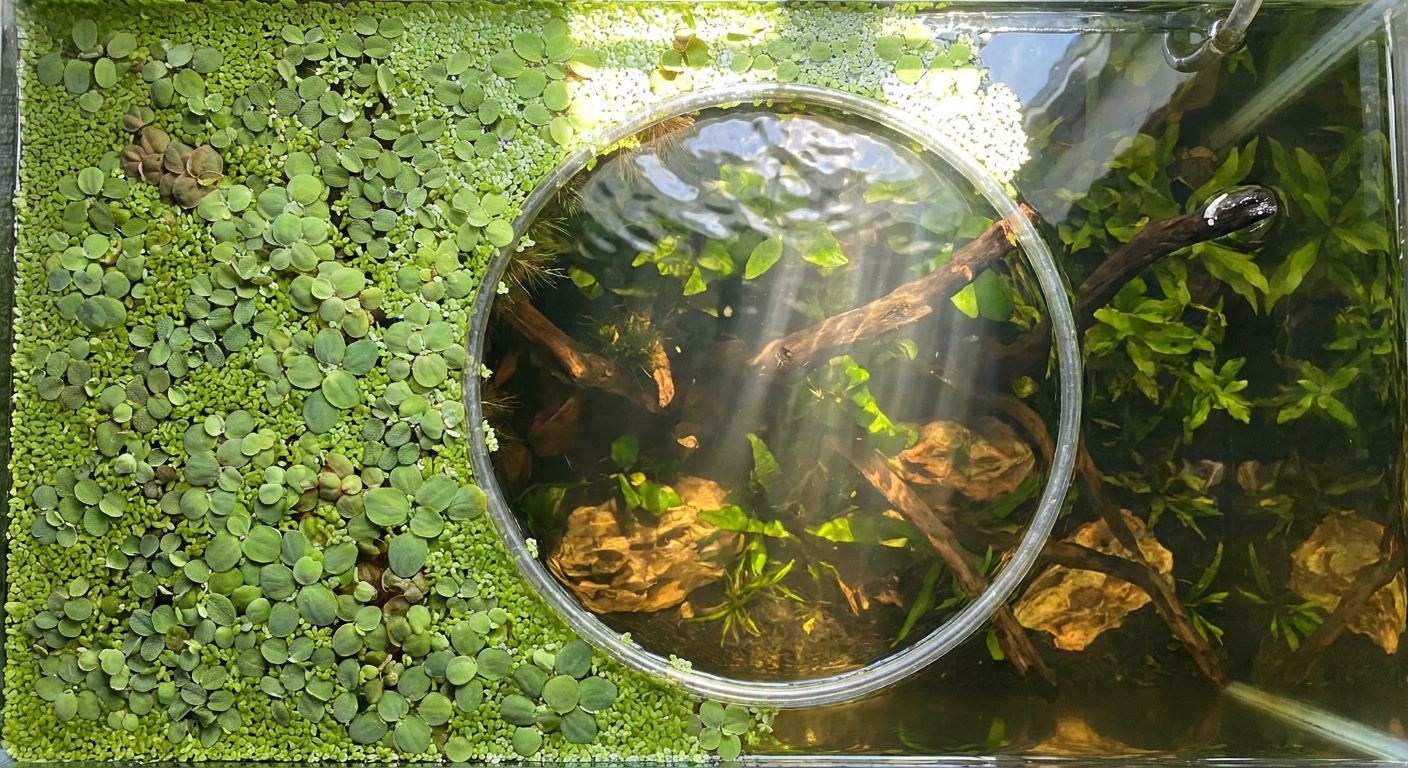
Floaters can make a tank feel like a flooded forest in a hurry. They also reduce light intensity below, which can help discourage some algae patterns in bright setups. The key is to keep them from sealing the entire surface. Leave a bright window for gas exchange and for plants below that need more light. Too much surface coverage can also increase surface biofilm and stagnation, especially in low-flow corners.
Go-to examples: Amazon frogbit, Salvinia, red root floaters.
Rules that prevent a mess
Use big groups, not confetti
Jungle style can handle variety, but it still needs readable shapes. Plant in groups so the tank has bold masses and calmer transitions. A helpful rule is: if a plant is used, it should appear in at least two spots, or be a deliberate standout near the focal area.
Hide hardware on purpose
Jungle tanks look best when equipment disappears behind leaves, but water still needs room to move. Place dense plants where they conceal, and keep intake and output areas clearer so circulation does not collapse. If you are still dialing in setup, Equipment & Setup is a friendly place to start.
Make depth with overlap and scale
Depth is the jungle-style superpower. Create it by:
- Using smaller-leaf plants farther back.
- Overlapping layers so you never see the back wall all at once.
- Raising substrate toward the rear so plants naturally stack.
If you want to push perspective even more, this pairs beautifully with jungle style: Creating Depth in Planted Aquariums.
Choose a focal point
Jungle style still needs one spot where the eye rests. It might be a twist of driftwood, a bright plant cluster, or a small opening that reveals stones beneath. Focal points keep the jungle from feeling flat. If you enjoy composing with intention, Golden Ratio Focal Points in Aquascaping is a fun guide.
Fish and inverts in a jungle
A lush tank can be incredibly fish-friendly when it is designed with behavior in mind.
- Keep swimming space on purpose: that path or corridor is not only visual, it is a comfort zone for schooling fish.
- Avoid pinch points: tight gaps between rock and glass can trap debris and can also stress larger fish. Leave enough room to net a fish without dismantling the scape.
- Know your gardeners: some fish and inverts uproot, nibble, or bulldoze. If you keep diggers or big grazers, lean harder on epiphytes, wood-attached plants, and sturdier root feeders.
Maintenance paths
The biggest jungle-style mistake is building a tank that looks amazing for two weeks and then becomes impossible to service. Maintenance paths prevent that.
Create three access zones
- Glass zone: keep 1 to 2 inches of space from the front glass and side panels where possible. This makes algae scraping easy.
- Siphon zone: your main path should allow a gravel vac to reach the places where debris collects.
- Hands-in zone: leave at least one open corner where you can reach down to replant, retrieve leaves, or move a stem group without uprooting everything.
Plan for plant removal
In a jungle tank, some plants will eventually lose their spot. When that happens, it should be possible to remove a whole section without tearing up the substrate like a storm. Building plant groups around hardscape boundaries helps you lift and replant in clean chunks.
Pruning for wild
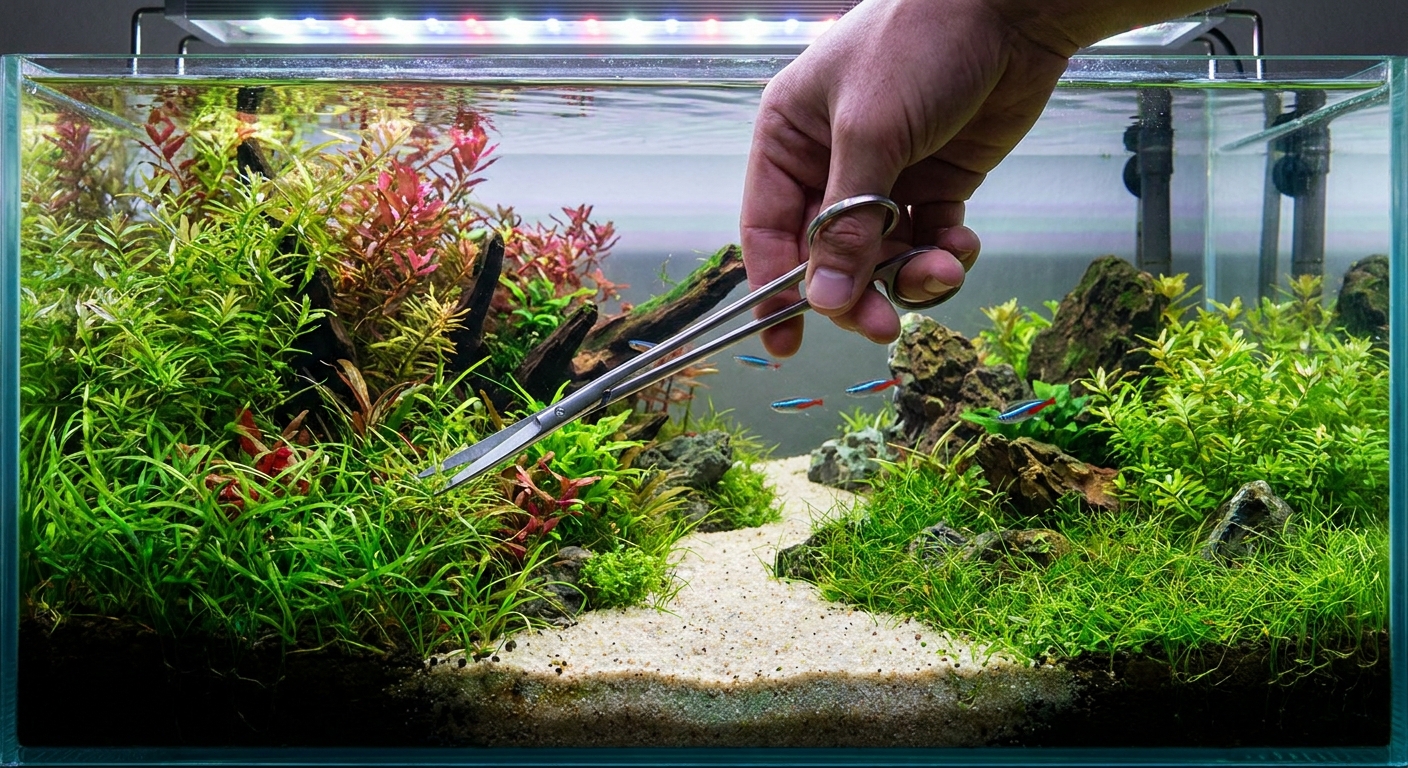
Pruning is where organized chaos is won or lost. The goal is to keep density while avoiding harsh, flat hedge lines.
Use staggered trims
- Trim one stem group today, a different one next week.
- Leave some tall, some medium, some short within the same group.
- Replant tops selectively to keep the base from turning into bare sticks.
Open tiny windows
Instead of clearing big areas, open small windows that reveal rock, wood, or shadow. Those glimpses create depth and keep the jungle feeling intentional.
Control the canopy
Surface growth is powerful. Keep it from smothering everything by:
- Skimming floaters weekly or as needed.
- Preventing stems from sealing the surface in a single mat.
- Leaving a brighter zone above your focal point so it stays visible.
When pruning and algae start tugging at your patience, Maintenance & Troubleshooting can help you steady the tank without losing the jungle vibe.
Lighting, nutrients, and oxygen
Jungle style is a lot of plant mass, which means your tank’s balance can shift quickly. A few steady principles help:
- Start with moderate light: intense light plus dense planting often invites algae if CO2 and nutrients are not equally strong.
- Feed plants consistently: dense growth can use up macros (like nitrogen and potassium) and micros (like iron and trace elements) faster than you expect. It is better to watch the plants for deficiency signs and adjust gradually than to blindly crank dosing.
- Watch flow through the jungle: dead spots can contribute to debris buildup and struggling leaves, especially deep in thickets.
One safety note: dense plant mass and heavy surface cover can mean lower oxygen at night, when plants respire. Keep reasonable surface agitation and steady filtration, and avoid letting floaters seal the surface.
If you are aiming for a jungle look without injected CO2, it is absolutely possible, but plant choice and pacing matter. This guide is made for that approach: Low-Tech Planted Tank Design Without CO2.
Timeline expectations
A jungle-style tank changes fast, especially once stems take off. A simple timeline keeps your expectations realistic.
- Weeks 1 to 2: plants adapt, roots grab, and growth may look uneven. Focus on stability and gentle cleanup.
- Weeks 3 to 6: the jungle starts to connect. Begin light shaping trims and protect your path and focal point.
- Month 2 and beyond: refine. Stagger trims, thin thickets for flow, and start making “windows” of shadow and hardscape.
Common problems and fixes
The tank looks like a green blob
- Fix: strengthen contrasts. Add one broad-leaf mass and one fine-leaf mass, then create a clear path or window between them.
- Fix: reduce species count in the background so the silhouette reads as one shape.
Lower leaves melt and bases get bare
- Fix: thin the canopy and trim stems in a staggered way so light reaches lower sections.
- Fix: replant healthy tops and remove the oldest bottoms instead of repeatedly cutting at the same height.
- Fix: check stability first. Sudden changes in CO2, light, or fertilization can trigger “melt,” especially after major rescapes.
Detritus builds up inside thickets
- Fix: increase gentle circulation and keep a siphon-friendly lane.
- Fix: selectively thin the densest clumps so flow can pass through.
Algae appears after the tank gets too lush
- Fix: reduce light intensity or duration slightly and increase trimming frequency so new growth stays strong.
- Fix: keep nutrients stable rather than swinging between underfeeding and overfeeding.
- Fix: open the canopy a bit so gas exchange and flow improve through the mass.
A simple jungle blueprint
- Choose your path and mark it with sand, short plants, or open substrate.
- Build hardscape bones that create tiers and pockets.
- Plant in layers: background engines, midground texture, foreground edge.
- Add epiphytes to hardscape for age and detail.
- Let it grow for a few weeks, then begin staggered trims.
- Maintain the path and open small windows to keep depth.
That is the heart of organized chaos. Dense, breathing, vibrant, and still friendly to maintain.
If you want to browse more layout approaches that pair nicely with jungle style, visit Aquascaping Design.
Jungle style FAQ
Is jungle style the same as Nature Aquarium?
They can overlap, but jungle style leans heavier into wild density and layered growth. Many Nature Aquarium layouts stay more composed with clearer open space and sharper trimming lines. Verdant Aqua’s overview of composition styles lives here: Nature Aquarium Layout Shapes.
Do I need CO2 for a jungle tank?
No. CO2 can make growth faster and denser, but jungle style can work beautifully in low-tech setups if you choose hardy plants, keep lighting reasonable, and accept a slower pace.
How do I keep it wild without constant work?
Use fewer fast-growing species, build clear access lanes, and rely more on epiphytes and slower plants for the aged-jungle feeling. Then prune in small, regular sessions instead of waiting for a full takeover.