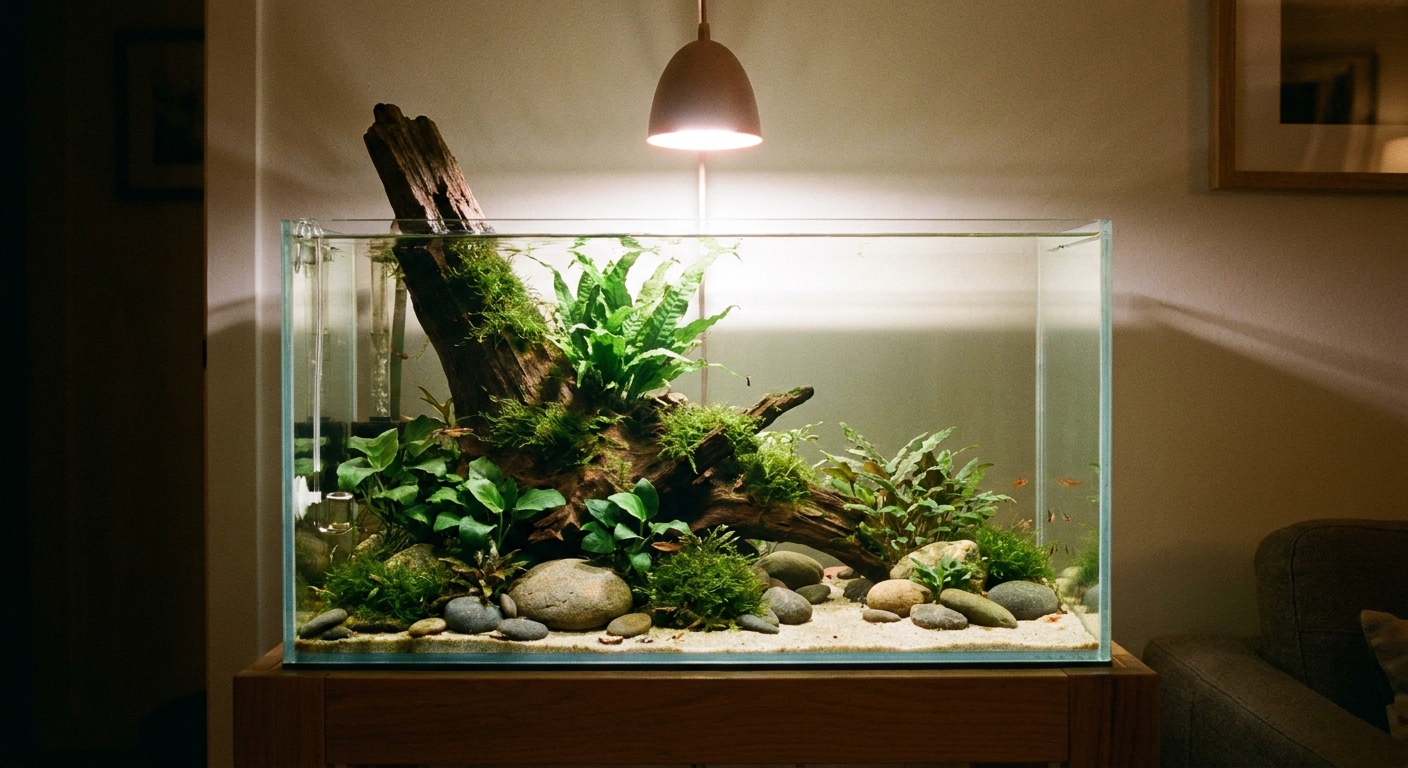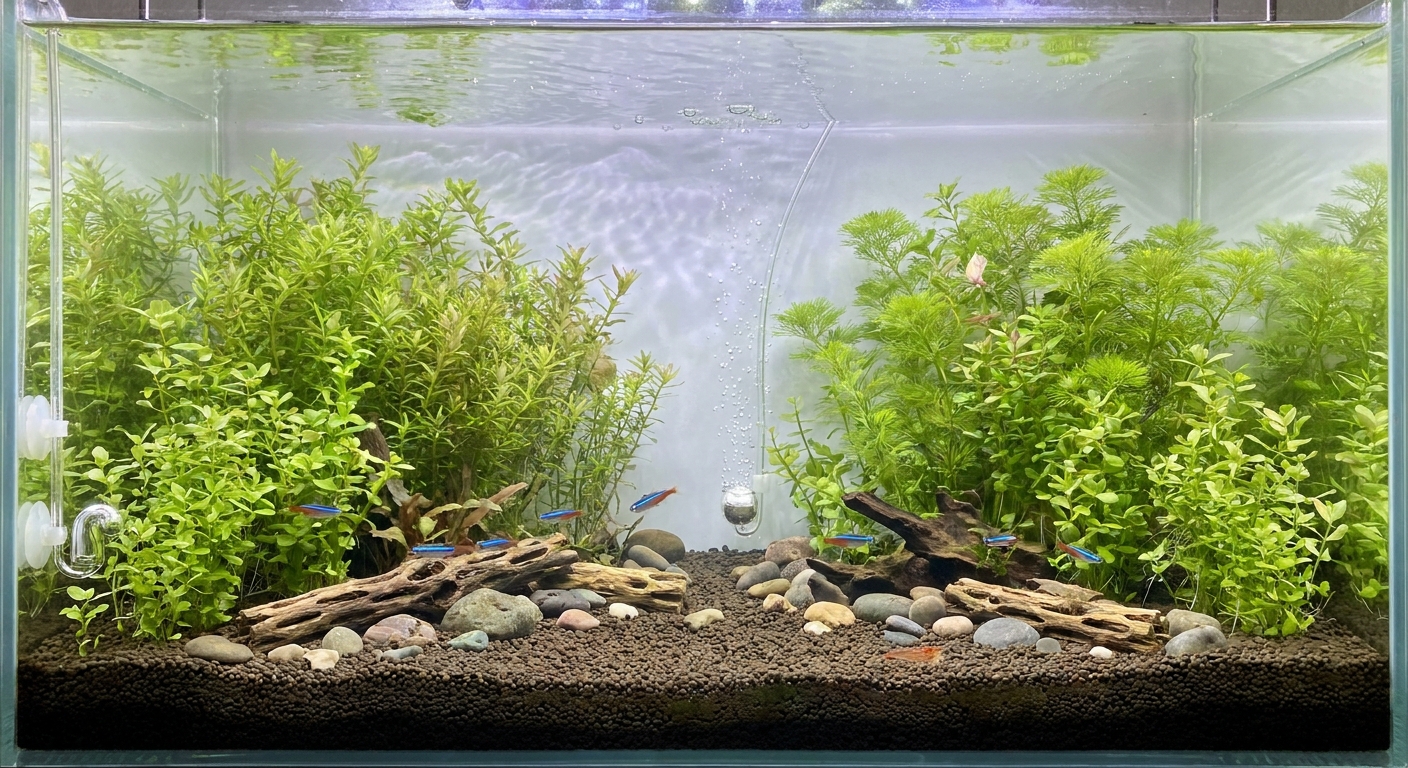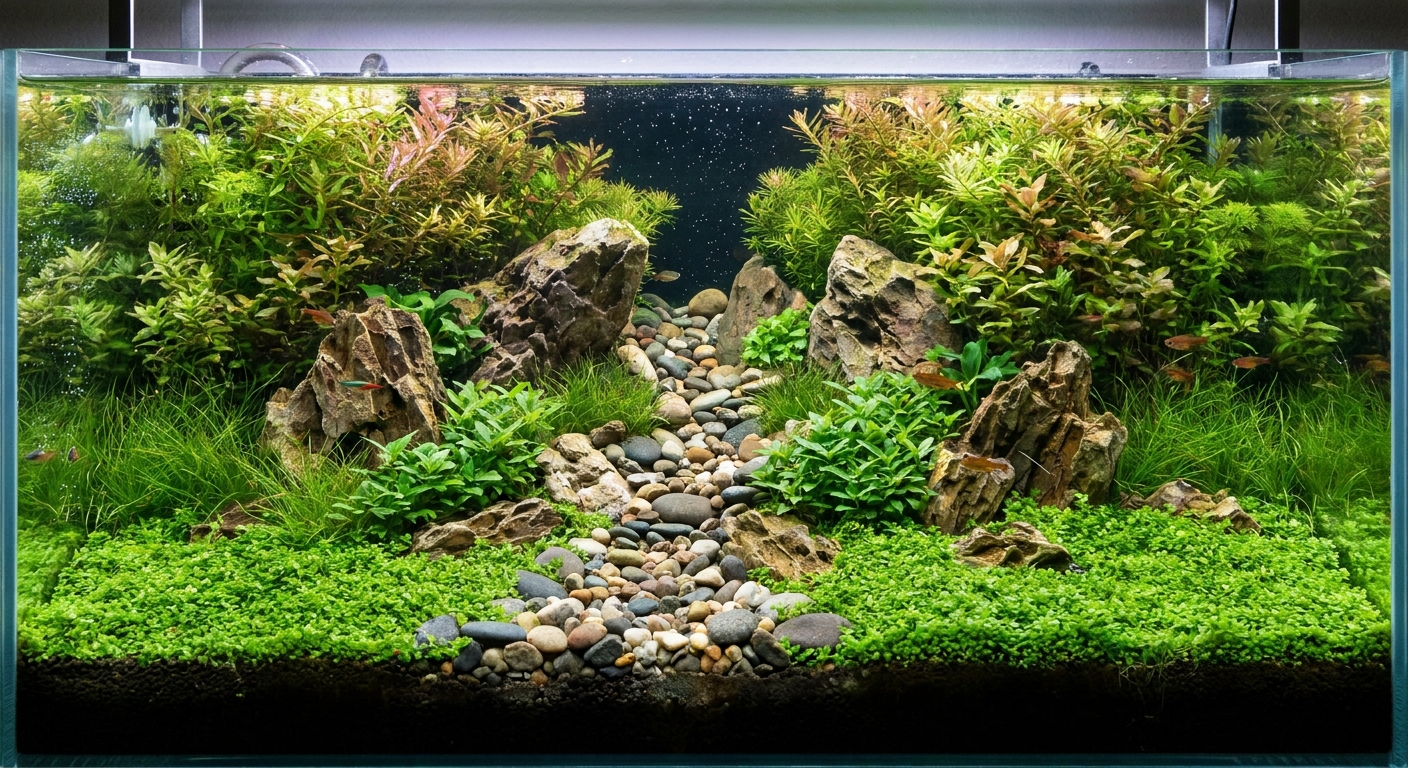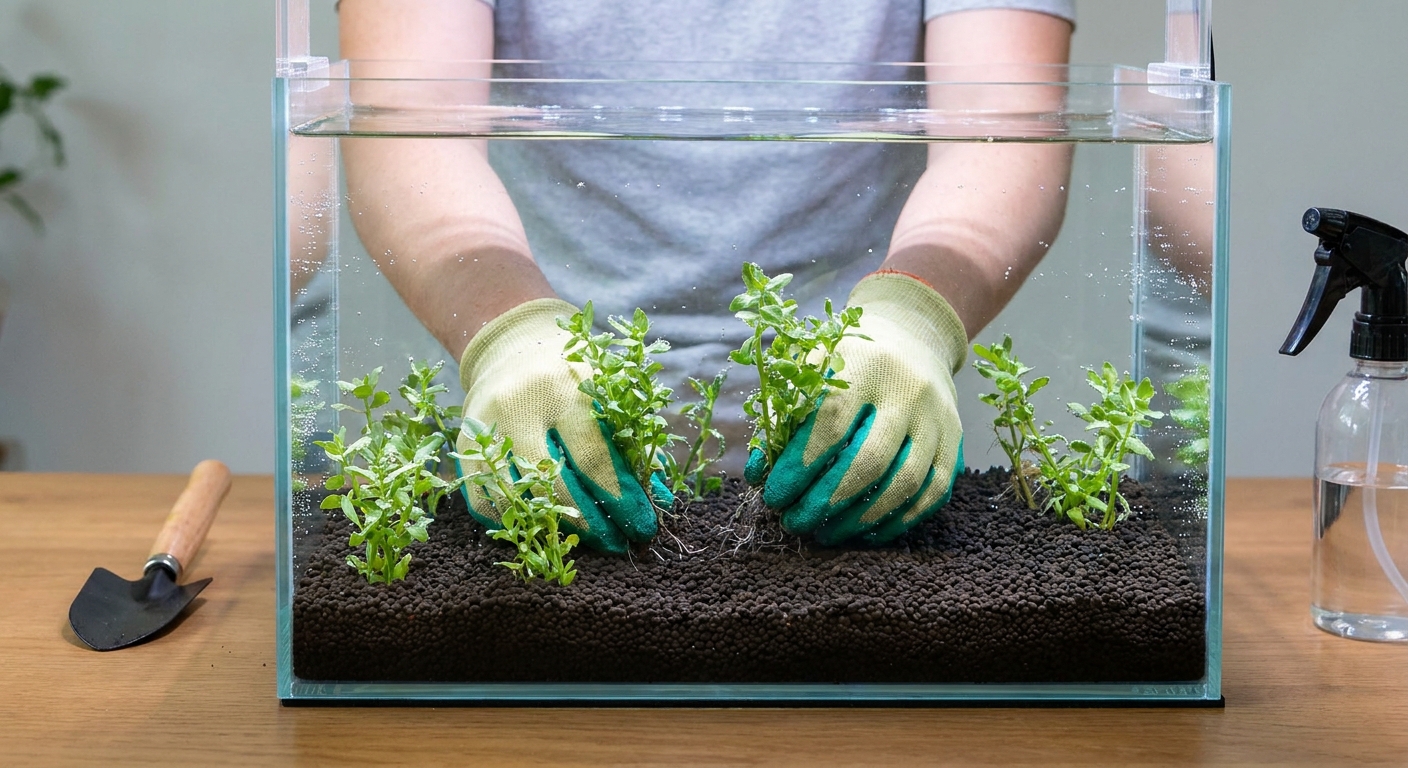
Let’s grow a beautiful underwater jungle together, one tiny leaf at a time! If your tank is running basic LEDs and no CO2, you can still build a lush background that adds height, softens hard lines, and politely “eats” heaters, intakes, and cords from view. The trick is choosing plants that stay calm under lower light and keep growing even when conditions are simple.
What low light means
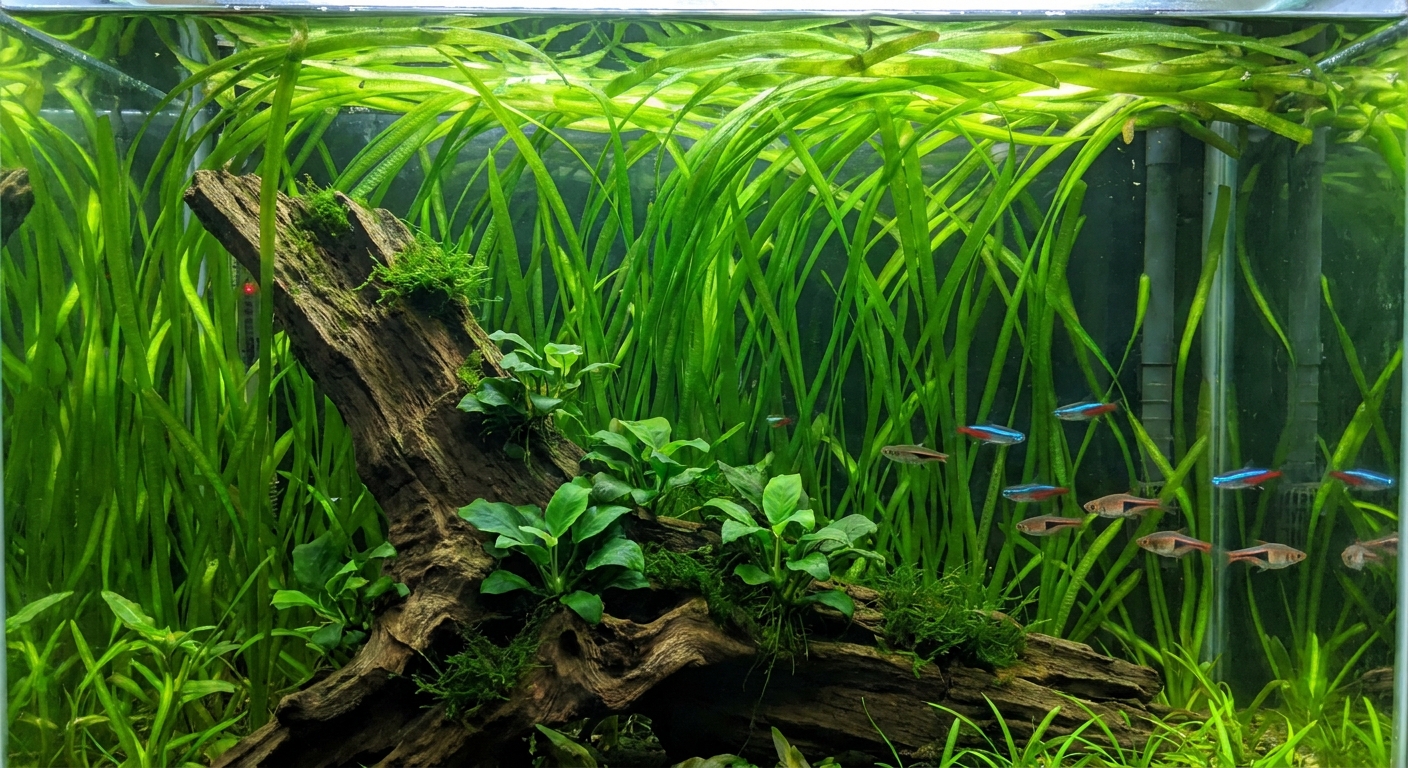
Background plants often live in the hardest spot for light. They are farthest from the fixture, shaded by floaters or hardscape, and sometimes blocked by your own foreground plants. “Low light” in practice means slow to moderate growth, fewer pearling fireworks, and plants that do not demand intense lighting to stay healthy.
If you want one beginner-friendly anchor: in many low-tech tanks, 6 to 8 hours of light is a comfortable starting range. Plants should grow, but they should not look like they are racing the clock. If algae grows faster than your plants, the light is usually too much for the nutrient and CO2 you have available.
Two helpful goals for a low-tech background:
- Choose plants that can feed from the substrate. In lower light, often root feeders feel steadier than light-hungry stems, although many easy stems still do great with fish load and consistent nutrients.
- Plan for surface reach. Tall plants that can hit the top can use brighter light near the surface, even if the lower portion is shaded.
If you are building a simple planted setup, this pairs nicely with the approach in Low-Tech Planted Tank Design Without CO2.
Best low-light background plants
These picks are chosen for low-tech friendliness, height potential, and their ability to make equipment disappear behind living leaves. I grouped them by how most people decide: fastest cover first, then low maintenance staples, then statement plants.
Water Wisteria (Hygrophila difformis)
Why it shines: Fast, feathery volume that can fill the background quickly, even in simpler tanks. Great for that “soft jungle” look.
- Placement: Background groups, especially behind hardscape.
- Growth habit: Stem plant that can be replanted from cuttings.
- Low-light tips: In lower light it may get leggier. Plant more stems close together to keep it fuller.
- Equipment hiding: Great in clusters, but plan trimming access.
Hygrophila corymbosa (Temple Plant and varieties)
Why it shines: A sturdy, upright stem plant with broader leaves than wisteria. It can provide strong vertical lines without demanding high light.
- Placement: Background rows or behind focal hardscape.
- Growth habit: Upright stems, easily trimmed and replanted.
- Low-light tips: Give it a little space and keep nutrients consistent to prevent pale new growth.
- Equipment hiding: Strong. A few thick groups can mask intakes quickly.
Jungle Vallisneria (Vallisneria americana)
Why it shines: Classic “green curtain” background. Tough, tall, and excellent for hiding intakes and heaters.
- Placement: Back corners or a full back wall in deeper tanks.
- Growth habit: Sends runners that fill space steadily.
- Low-light tips: Keep the crown above the substrate line so it does not rot. Give it time to settle.
- Size note: This one can overwhelm smaller tanks. In a 10 to 20 gallon, it may turn into a full-time roommate.
- Equipment hiding: Excellent. Long blades break up straight lines and cords.
Straight Vallisneria (often sold as Vallisneria spiralis)
Why it shines: Similar benefits to jungle val, often narrower and easier to control in smaller tanks.
- Placement: Background midline or corners.
- Growth habit: Runner plant that thickens into a grassy wall.
- Name note: Vallisneria labels can be messy in the hobby. Many stores use “V. spiralis” as a catch-all for straight, narrow vallisneria. The care is similar across the common straight types.
- Low-light tips: Stable nutrients help it stay green. Sudden changes can cause leaf die-back, then regrowth.
Cryptocoryne balansae (and other tall Crypts)
Why it shines: Tall, textured leaves with that gentle ripple. Crypts are famous for tolerating lower light once settled.
- Placement: Background and back corners, especially in nature-style layouts.
- Growth habit: Rosette that slowly enlarges, sometimes spreads with runners.
- Low-light tips: Expect an adjustment period. If leaves melt, do not panic. Focus on stability and new growth. More on that here: Understanding Cryptocoryne Melt.
- Equipment hiding: Great for disguising equipment with leaf texture, not just height.
Java Fern (Microsorum pteropus) grown tall on hardscape
Why it shines: Not a true “rooted background plant”, but it becomes a tall background mass when attached high on wood or rock. It tolerates low light extremely well.
- Placement: Attach to driftwood or rocks in the back third of the tank.
- Growth habit: Slow, steady, and forgiving.
- Low-light tips: Do not bury the rhizome. Gentle flow helps keep leaves clean.
- Equipment hiding: Excellent when mounted in front of intakes so the intake is hidden but still accessible.
If you enjoy designing with rhizome plants, you might like Epiphyte Design Strategies on Hardscape.
Bacopa caroliniana
Why it shines: Slow to moderate growth, thick stems, and a calm personality under lower light. Great when you want “tall” without weekly replanting.
- Placement: Background midline or side groups.
- Growth habit: Upright stems, easy to top and replant.
- Low-light tips: Lower light means longer internodes. Plant denser to keep it looking intentional.
- Equipment hiding: Good in groups. It reads more “clean garden” than “wild curtain.”
Amazon Sword (Echinodorus grisebachii and similar swords)
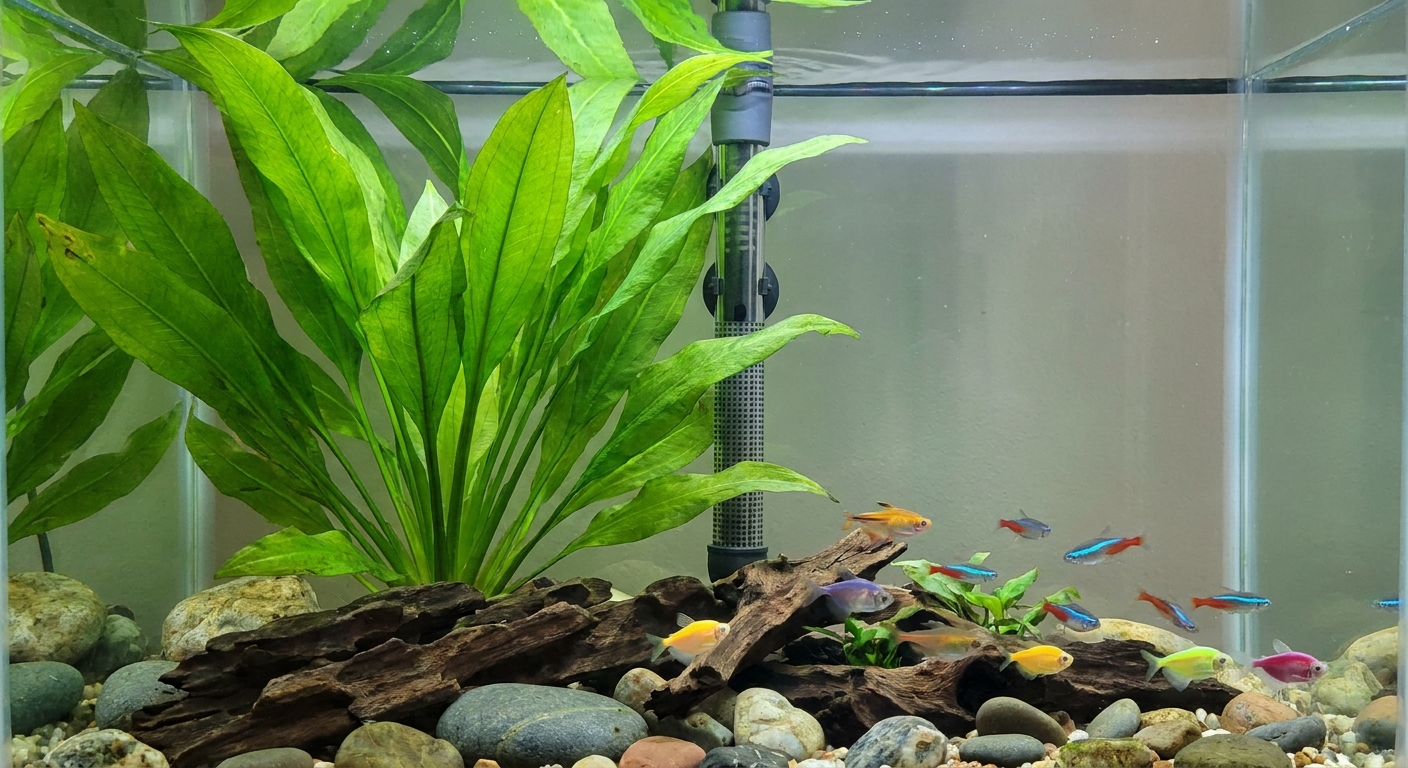
Why it shines: Big, bold leaves and strong root feeding. A sword plant can act like a living “backdrop boulder” in plant form. Many stores sell several Echinodorus species or hybrids as “Amazon sword”, and care is broadly similar across the common types.
- Placement: Best as a background centerpiece or off-center anchor in medium to large tanks.
- Growth habit: Rosette that expands outward and upward.
- Low-light tips: Root tabs are your best friend. In low light, growth is slower, but steady when fed.
- Size note: In small tanks, a happy sword can crowd out your layout. Consider a smaller sword variety or choose crypts and vallisneria instead.
- Equipment hiding: Very good for covering a heater or intake behind a single strong clump.
Quick pick guide
- Want the fastest equipment cover: Jungle Vallisneria, Water Wisteria, Temple Plant.
- Want the lowest maintenance background mass: Straight Vallisneria types, Java fern, tall Crypts.
- Want one big statement plant: Amazon sword.
- Want a softer jungle texture: Crypt balansae, Water Wisteria.
Plant for height
Use the back wall rule
Keep the tallest plants in the back third of the tank. It sounds obvious, but it prevents shading the midground and stops your layout from flattening into one green slab. If you want more depth cues, the ideas in Creating Depth in Planted Aquariums are a perfect companion.
Plant in groups
Background plants look best as a mass. For stem plants, group 5 to 15 stems per patch depending on tank size. For Vallisneria runners, start with a small row and let it knit itself together.
Leave an access lane
Hiding equipment does not mean sealing it away. Keep a narrow gap behind the plant mass so you can lift out an intake, adjust a heater, or siphon debris. The plant wall can sit in front like a curtain, not a brick wall.
Low-tech care tips
Feed the roots
Amazon swords, vallisneria, and many Crypts are hungry root feeders. If you are using inert gravel or sand, plan on root tabs or a nutrient-rich base layer so they do not stall. In low light, they still need nutrition even if they grow slowly.
Trim for shape
In low-tech tanks, trimming is more about keeping the layout clean than forcing dense growth. For stems, top and replant the healthiest tips. For Vallisneria, remove older outer leaves at the base rather than cutting blades in half. Cut tips can turn brown and look messy.
Control runners gently
Vallisneria is friendly right up until it is not. If runners pop up where you do not want them, pull the baby plantlets and replant them where you do, or remove the runner entirely. A little runner control keeps the jungle looking intentional.
Keep circulation consistent
Background corners can become dead zones where mulm settles and algae starts. You do not need a river current, but a steady, gentle circulation helps. I like aiming the filter output so there is a soft sway in the tallest leaves, then leaving it alone.
Expect an adjustment phase
New plants often transition from emersed to submerged growth. That can look like melting, holes, or transparent leaves before new submerged growth appears. If you want a deeper look at that transition behavior, see Transitioning Emersed Aquarium Plants.
Common issues
Problem: Tall stems get leggy
- Fix: Plant more densely, move them closer to the light, or choose a rosette plant like a sword or tall Crypt for that area.
- Bonus: Reduce shading from floaters if the background is struggling.
Problem: Vallisneria melts back after planting
- Fix: Check that the crown is not buried, avoid big parameter swings, and wait for new leaves. Vallisneria often rebounds once roots establish. If your water is extremely soft, growth can be slower, so lean on stability and patience.
Problem: Amazon sword stays small
- Fix: Add root tabs and ensure the plant is not shaded all day. Even low-tech tanks need a reasonable photoperiod.
Problem: Algae collects in the back wall jungle
- Fix: Increase gentle flow, remove old leaves, and add fast growers early. This guide can help if your tank is new: Fast Growing Stem Plants That Beat Algae in New Tanks.
Simple background plan
If you want an easy, dependable recipe, try this layout idea:
- Back corners: Straight Vallisneria for height and equipment cover, or jungle val in larger tanks.
- Back center: One Amazon sword as a bold anchor, or Crypt balansae for a softer look.
- Behind hardscape gaps: A small group of Water Wisteria or Temple Plant to fill empty vertical space.
- On wood or rock near the back: Java fern to add mid-height layers without planting into the substrate.
That mix gives you different leaf shapes, different growth speeds, and a background that looks intentional even with modest lighting.
One last reminder
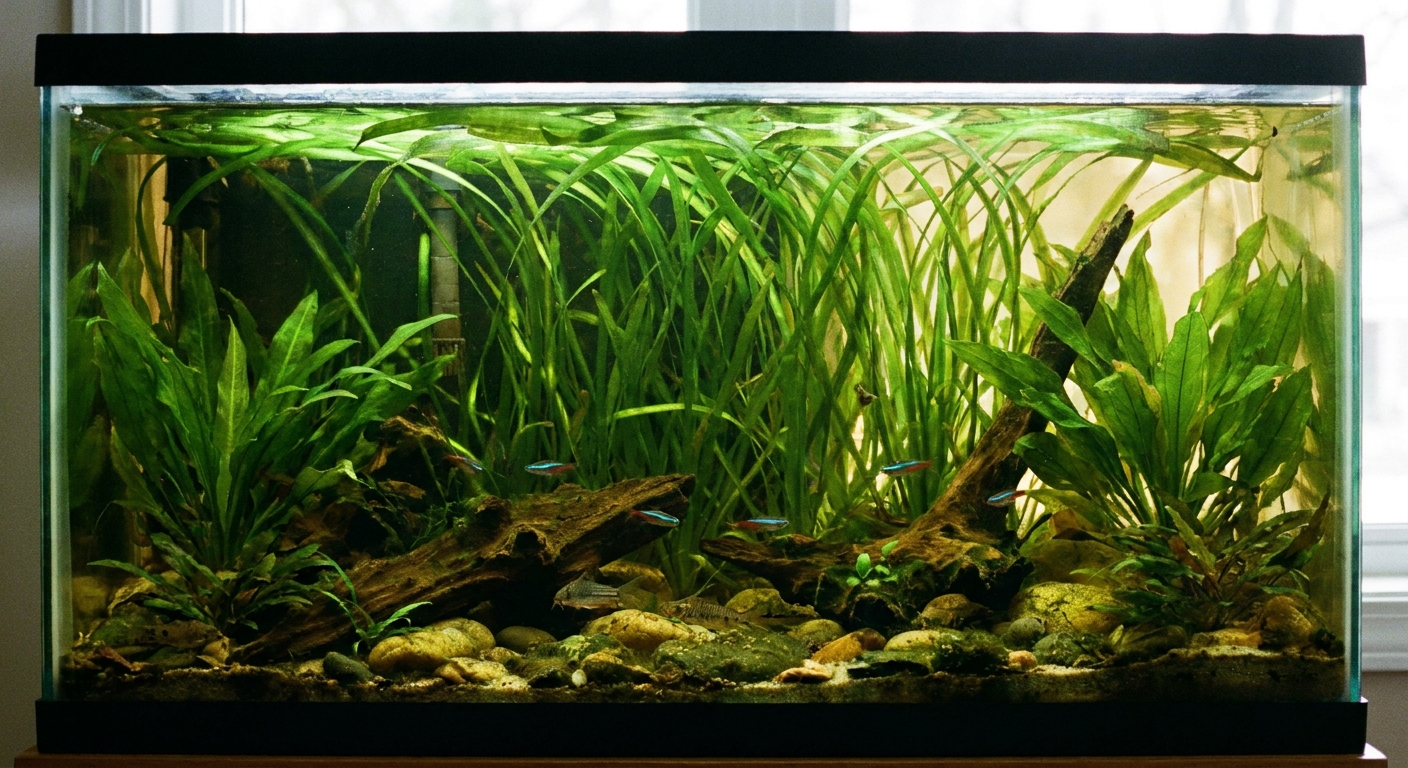
In low light, the biggest secret is patience. Pick plants that match your setup, give them steady water and steady nutrients, and let them build that tall green wall one leaf at a time. Your equipment stays hidden, your fish get a calmer backdrop, and your tank starts to feel like a true underwater jungle.
For more plant-focused guides, you can browse the Aquatic Plants section anytime.