Let’s grow a beautiful underwater jungle together, one tiny leaf at a time! If you love the clean, floating look of a rimless planted tank, a heater can feel like the one awkward gadget that refuses to disappear. The good news is you have two solid paths: inline heaters (hidden in the filtration loop) and submersible heaters (hidden with smart placement and hardscape). This guide compares both with two goals in mind: steady temperature and maximum aquascape beauty.
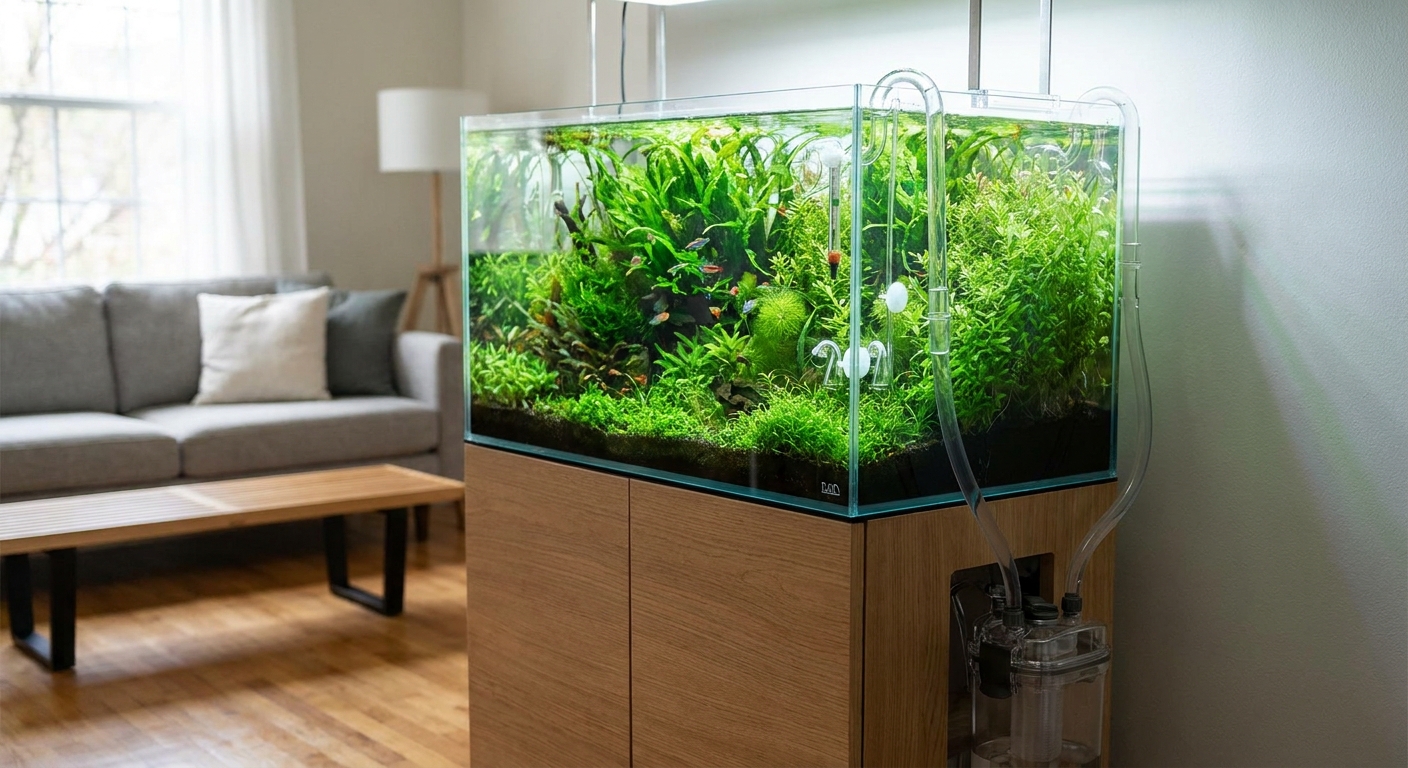
The quick verdict
- Choose an inline heater if your top priority is a spotless rimless display with minimal in-tank equipment, and you already run a canister filter or an external pump loop.
- Choose a submersible heater if you want the simplest setup, the lowest cost, and the easiest maintenance, and you do not mind hiding it behind plants or hardscape.
- For temperature stability, both can do an excellent job when sized correctly, placed well, and paired with good circulation.
What temperature stability means
Plants are usually forgiving within a comfortable range, but stability still matters because your livestock and beneficial bacteria feel swings first. In rimless and open-top tanks, stability can be harder because evaporation and an exposed water surface shed heat faster, especially at night.
Stability comes from three things:
- Heater capacity matched to the tank and to your room’s coldest nights.
- Even heat distribution through consistent flow and circulation.
- Accurate control so the heater does not overshoot and bounce up and down.
In rimless aquascapes, the aesthetic goal adds one more constraint: you want those conditions without a black glass tube shouting “equipment” from the back corner.
Sizing in 30 seconds
Inline or submersible, the sizing logic is basically the same. A simple rule of thumb is 2 to 5 watts per gallon (about 0.5 to 1.3 watts per liter), then adjust based on your situation:
- Warmer rooms or covered tanks: closer to the low end often works.
- Cool rooms, big temperature drops at night, or open-top rimless tanks: lean toward the higher end.
- Very large tanks: two smaller heaters can add redundancy and spread heat more evenly.
As a gentle beginner anchor, many tropical community setups land in the 24 to 26 C range (about 75 to 79 F), but your livestock should lead the decision. Whatever number you choose, aim for consistency.
One more quiet upgrade that helps a lot: use a separate thermometer to verify temperature. Built-in heater dials are convenient, but they are not always perfectly calibrated.
Inline heaters
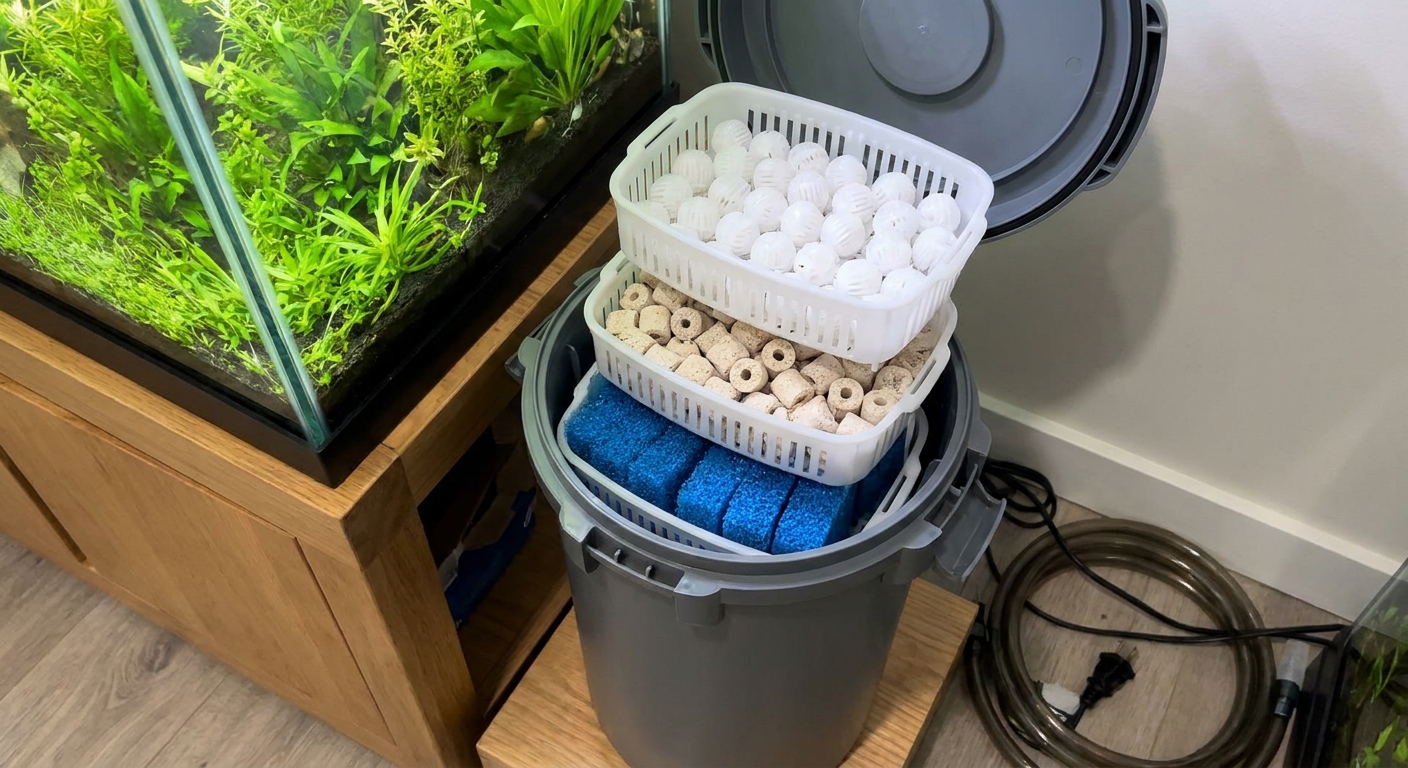
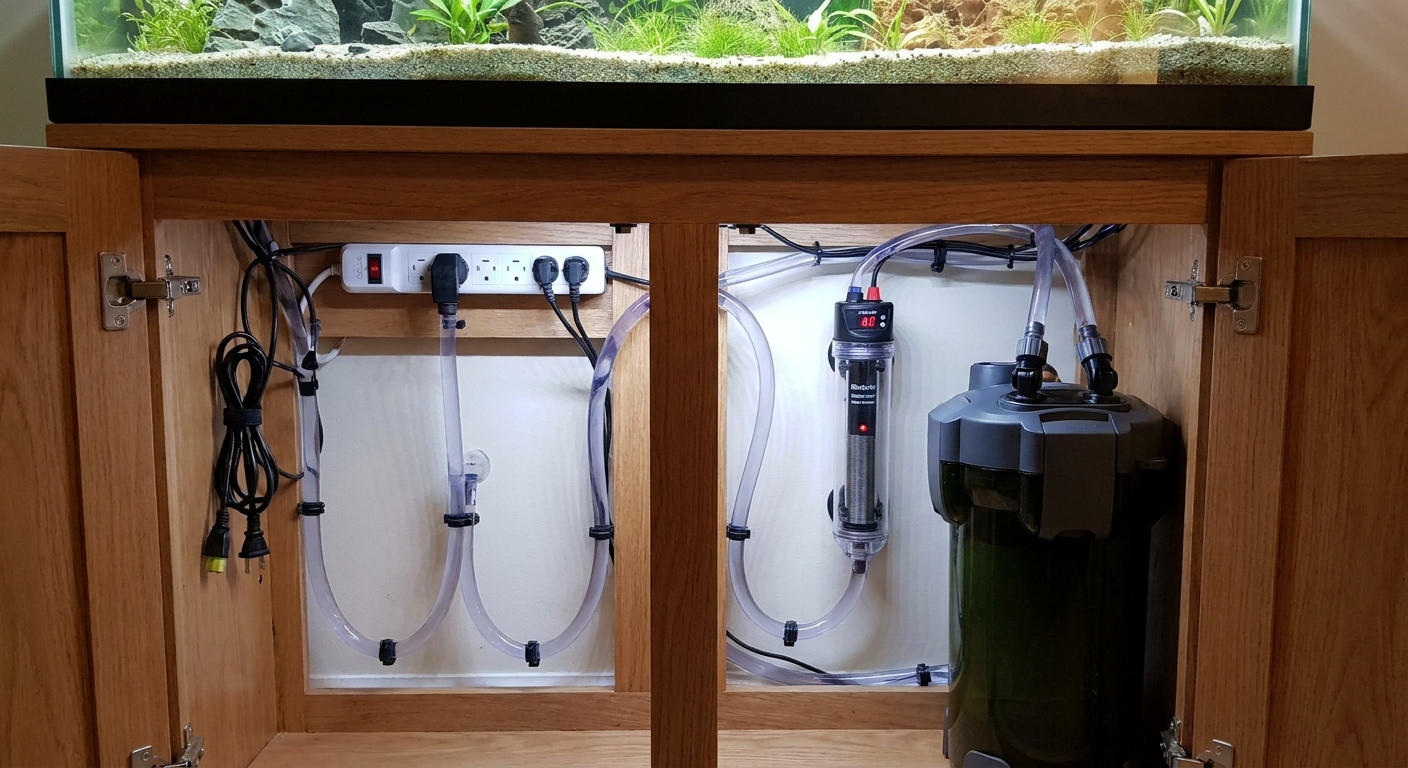
An inline heater sits outside the tank, typically in the tubing of a canister filter or external pump system. Water flows through the heater body, warms, then returns to the aquarium.
Why inline looks so good
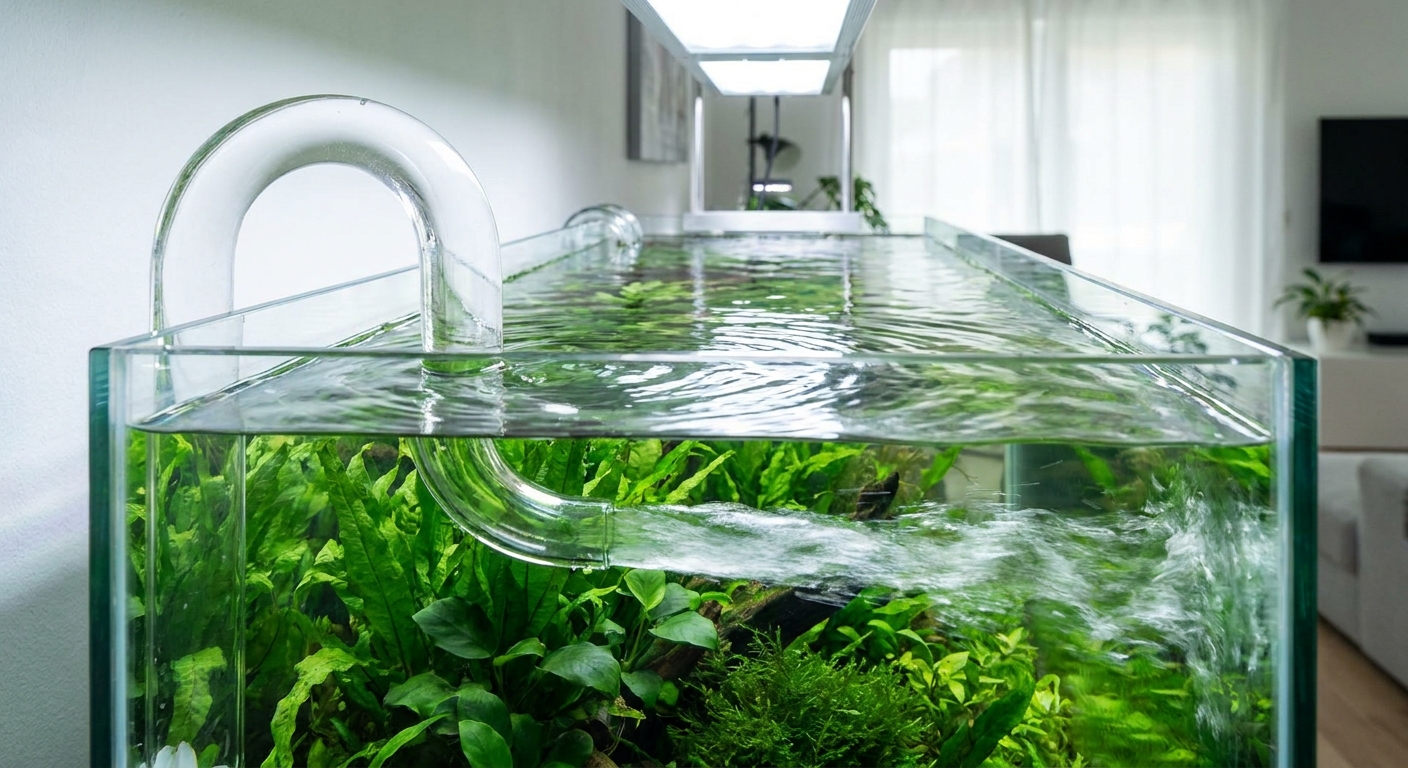
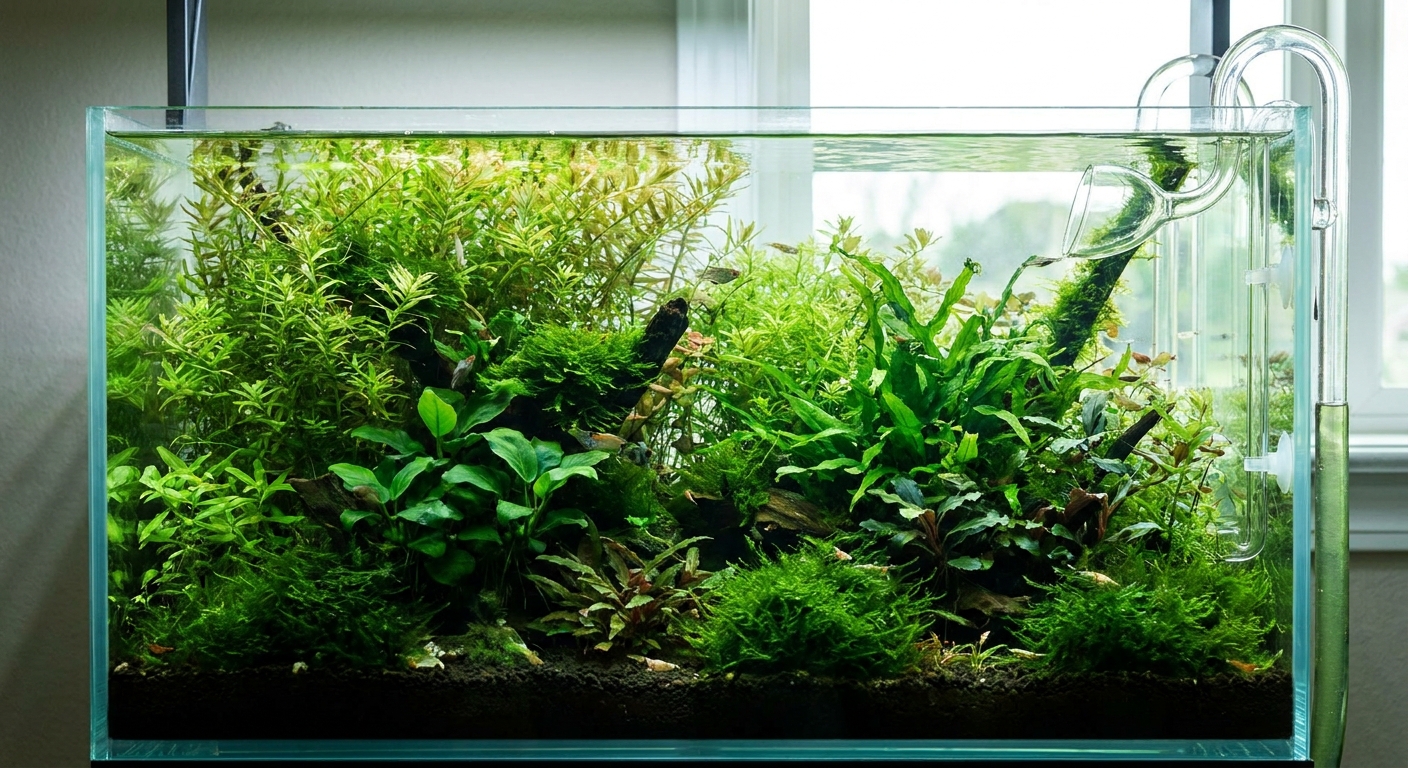
- Nothing visible inside the display other than your intake and outflow, and those can be glass lily pipes.
- Cleaner sightlines for layout depth, which helps your scape feel larger and more natural.
Stability strengths and limits
- Can be very consistent because warmed water is carried straight into the return flow and distributed across the tank.
- Still depends on control and turnover: thermostat quality, total circulation, and steady filter flow all affect real-world stability.
- Flow-dependent: if flow drops from clogged media or a pinched hose, heat distribution can become less even.
Best use cases
- Rimless display tanks where you want a “nature photo” look.
- Layouts with minimal tall background planting where hiding a submersible heater would be tricky.
- High-flow setups already using a canister filter and clean glassware.
Inline watch-outs
- Compatibility: you need the right hose diameter and a safe installation orientation per the manufacturer’s instructions.
- Never run it dry: inline heaters must stay water-filled when operating. Plan your maintenance routine so the heater is powered off before you stop flow.
- Maintenance planning: when you service your filter, you will be handling the heater loop too. Build in slack and consider quick shutoff points (for example, inline valves or unions) so you can disconnect without draining everything.
- Extra leak points: any added device in a hose run adds connections. Good clamps, careful routing, and regular inspections matter.
If you’re also tuning flow for plant health and CO2 distribution, you’ll enjoy pairing an inline heater with thoughtful circulation planning. Verdant Aqua’s guide to flow hardware is a helpful companion: Water circulation with lily pipes and surface skimmers.
Submersible heaters
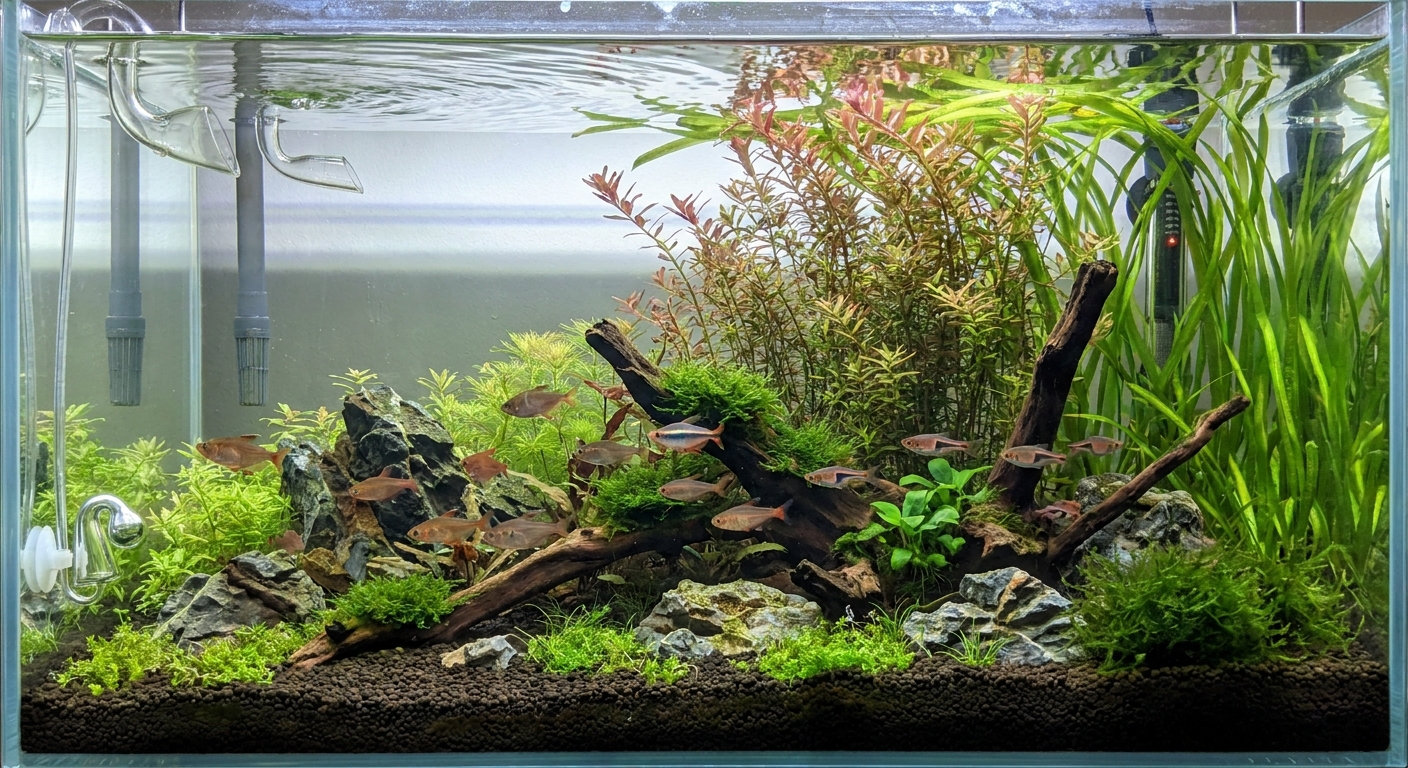
A submersible heater sits inside the aquarium. In planted tanks, the winning move is not just picking a heater, but choosing a hiding strategy that still lets warm water circulate.
Stability comes from placement
- Most consistent when placed near strong flow, so warmed water spreads quickly through the tank.
- Most problematic when tucked into a low-flow pocket, where you can get localized warm spots and slower response to room temperature changes.
Good hiding spots that still move heat
- Near the filter outflow: place the heater vertically in the back corner near the return so warmed water is immediately pushed across the tank.
- Low on the back glass: horizontal placement near the bottom can work well if there is steady circulation along the back wall.
- In a back equipment alley: a narrow strip behind hardscape that is left open enough for flow and easy access.
How to hide it neatly
- Use plant screens: a dense background group can mask the heater. Avoid packing plants so tightly that water cannot move.
- Build around hardscape: position wood or stone to block direct sightlines from the front, while leaving a hand-width gap for removal.
- Match vertical lines: align the heater with other vertical elements like tall stems or a corner branch so it blends instead of contrasting.
Design-wise, hiding equipment is really about controlling sightlines and layering. If you want that “I can’t see the back wall” feeling, this pairs beautifully with: Creating depth in planted aquariums.
Inline vs. submersible
| Category | Inline heater | Submersible heater |
|---|---|---|
| Aesthetics in rimless tanks | Excellent, nothing in the display | Good if hidden well, but still inside the tank |
| Heat distribution | Often very even via return flow, assuming steady turnover | Excellent near flow, weaker in low-circulation areas |
| Setup | Moderate, requires plumbing into a loop | Easy, place and plug in |
| Maintenance | Outside-tank access, but tied to hose management | Very easy to remove, clean, replace |
| Risk points | More hose connections, never-run-dry matters | Less plumbing risk, but placement and cord routing matter |
| Best match | High-aesthetic, canister-filtered rimless scapes | Any tank, especially budget builds and smaller setups |
Keep the scape clean
1) Let equipment follow the layout
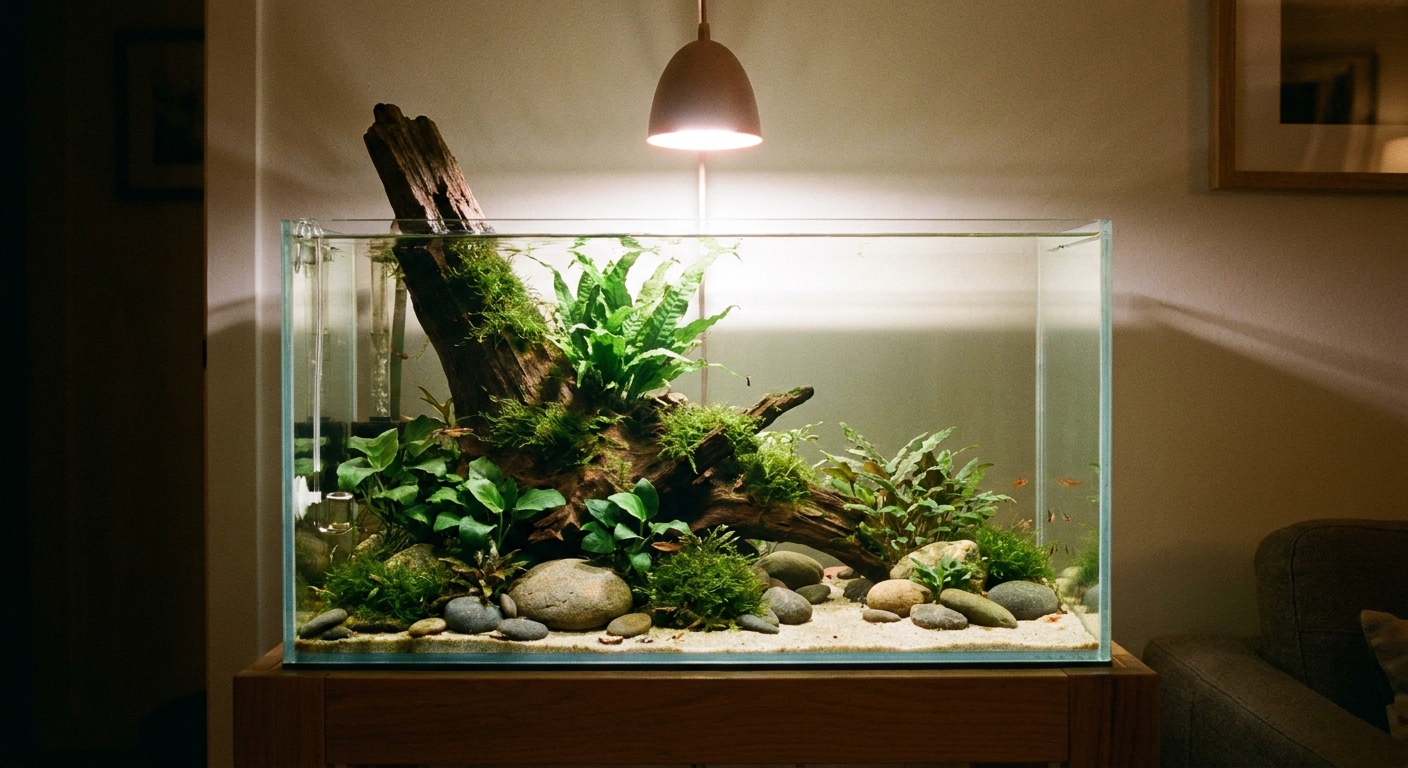
If your focal point sits on the right third of the tank, the last thing you want is a heater drawing the eye on the same side. Place visible equipment opposite the focal point or fully behind hardscape. If you enjoy composition tweaks, this is a fun read: Golden ratio focal points in aquascaping.
2) Hide the heater, not the circulation
In planted tanks, circulation is the invisible hand that spreads heat, CO2, and nutrients. A perfectly hidden heater sitting in stagnant water can create uneven areas and slower temperature recovery after cool nights.
3) Leave a service gap
Aquascapes look best when maintenance is easy. Leave just enough room to lift out a submersible heater without uprooting plants, or to disconnect an inline heater without wrestling hoses. Future-you will thank you with tiny happy bubbles.
Placement tips
Inline placement
- Support hose runs so fittings are not stressed or twisted.
- Keep routing tidy and away from places you bump during maintenance.
- Pair with consistent return flow: if you use lily pipes, adjust outflow so it moves water across the top and down the opposite side.
Submersible placement
- Put it in moving water, ideally near the outflow or a reliable circulation path.
- Keep it accessible: hiding should not require tearing apart your scape.
- Avoid sealing it behind dense moss walls: moss is wonderful, but tight mats can reduce flow around the heater. If you love moss work, this trimming guide helps keep it fluffy and breathable: Aquarium moss pruning: Java, Christmas, and Weeping.
Common mistakes
- Putting the heater on the front viewing plane: even a slim heater becomes the main character if it sits in open foreground space.
- Messy cords: tidy cable routing behind the tank matters as much as the heater itself.
- Overcrowding one corner: heater, intake, outflow, CO2 diffuser, and thermometer all stacked together will always look busy. Spread functions out or move what you can out of the tank.
FAQ
Are inline heaters safer than submersible heaters?
Both can be safe when installed correctly. Inline heaters add plumbing connections you should inspect regularly, and they should never run dry. Submersible heaters rely on smart placement, intact seals, and good cord management. For either type, use drip loops and follow the manufacturer’s safety guidance.
Will an inline heater warm the tank evenly?
It often can, because warmed water returns through the outflow. The main requirement is steady flow and reasonable turnover. If your filter clogs and flow drops, distribution can become less uniform, so maintenance routines matter.
Can I hide a submersible heater behind hardscape?
Yes, but leave a clear gap for water movement and removal. If the heater is wedged into a stagnant pocket, you risk localized warm spots and a frustrating maintenance experience.
Do planted tanks need warmer temperatures?
Most common aquarium plants do well in typical tropical community temperatures. Aim for what your livestock prefers first, then keep it stable. For many community setups, 24 to 26 C (75 to 79 F) is a common landing zone.
Choosing the right heater
If your dream is a clean, gallery-style rimless tank where the plants and hardscape are the only stars, an inline heater is the most invisible solution. If you want simple, flexible, and budget-friendly, a submersible heater works beautifully with smart placement and a plant screen.
Whichever path you pick, keep one shrimp-sized rule in mind: hide the heater, never hide the flow. That is how you get steady warmth and a scape that feels like real nature.