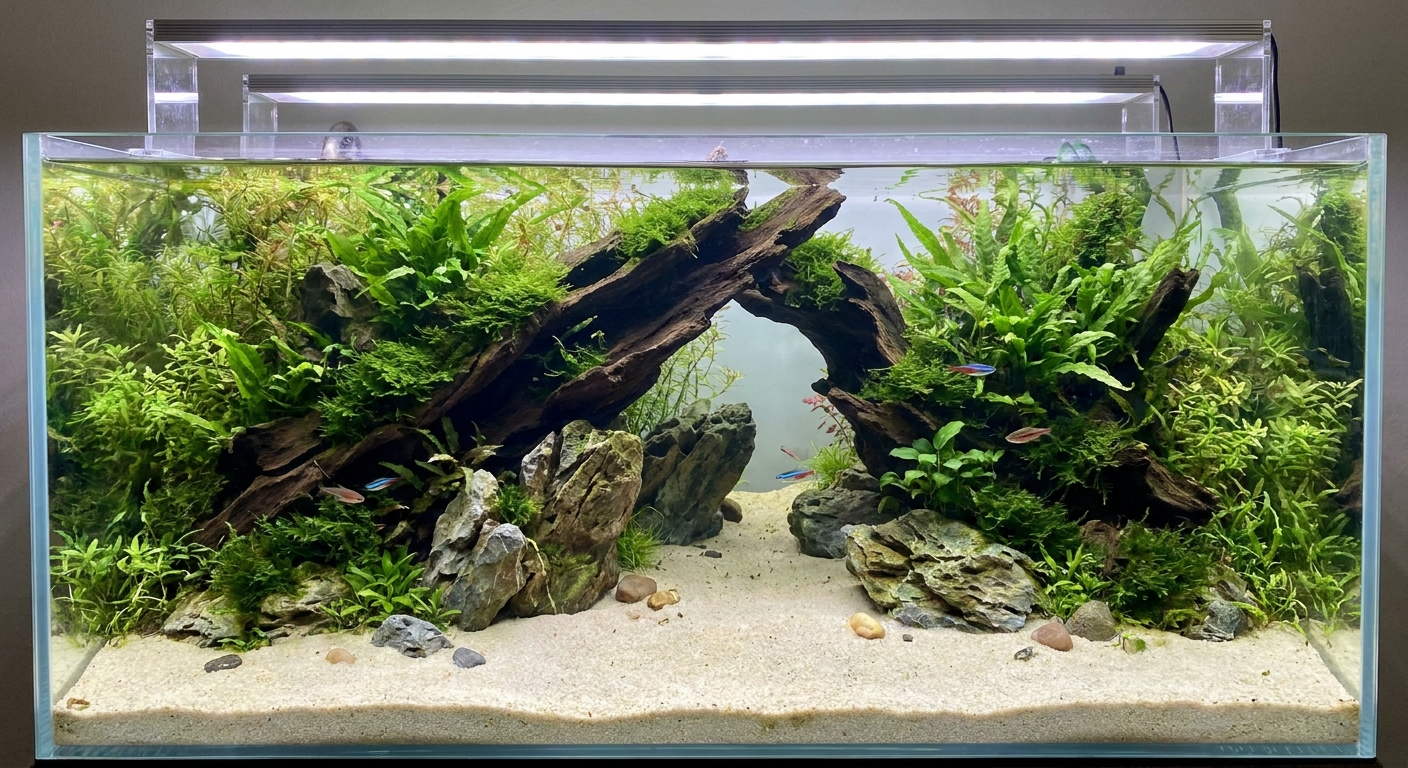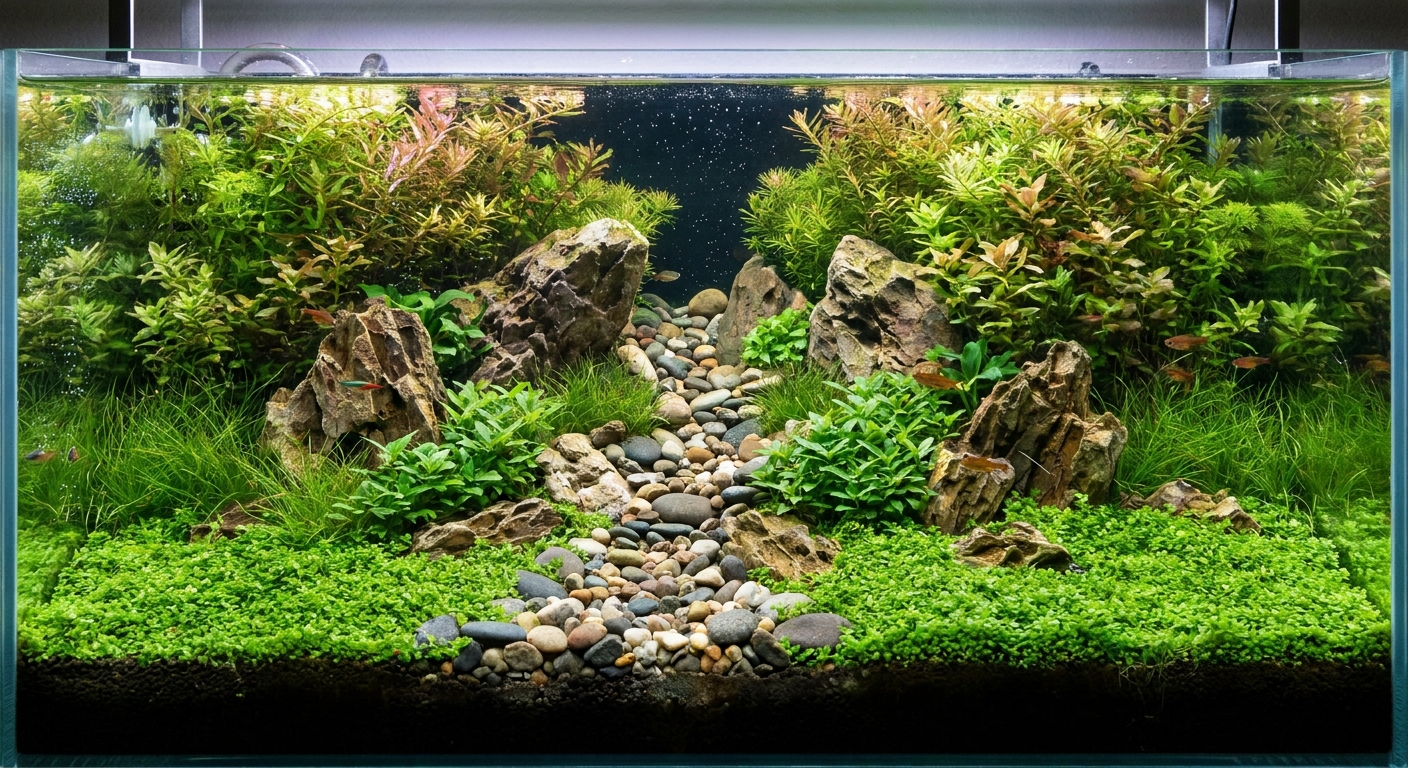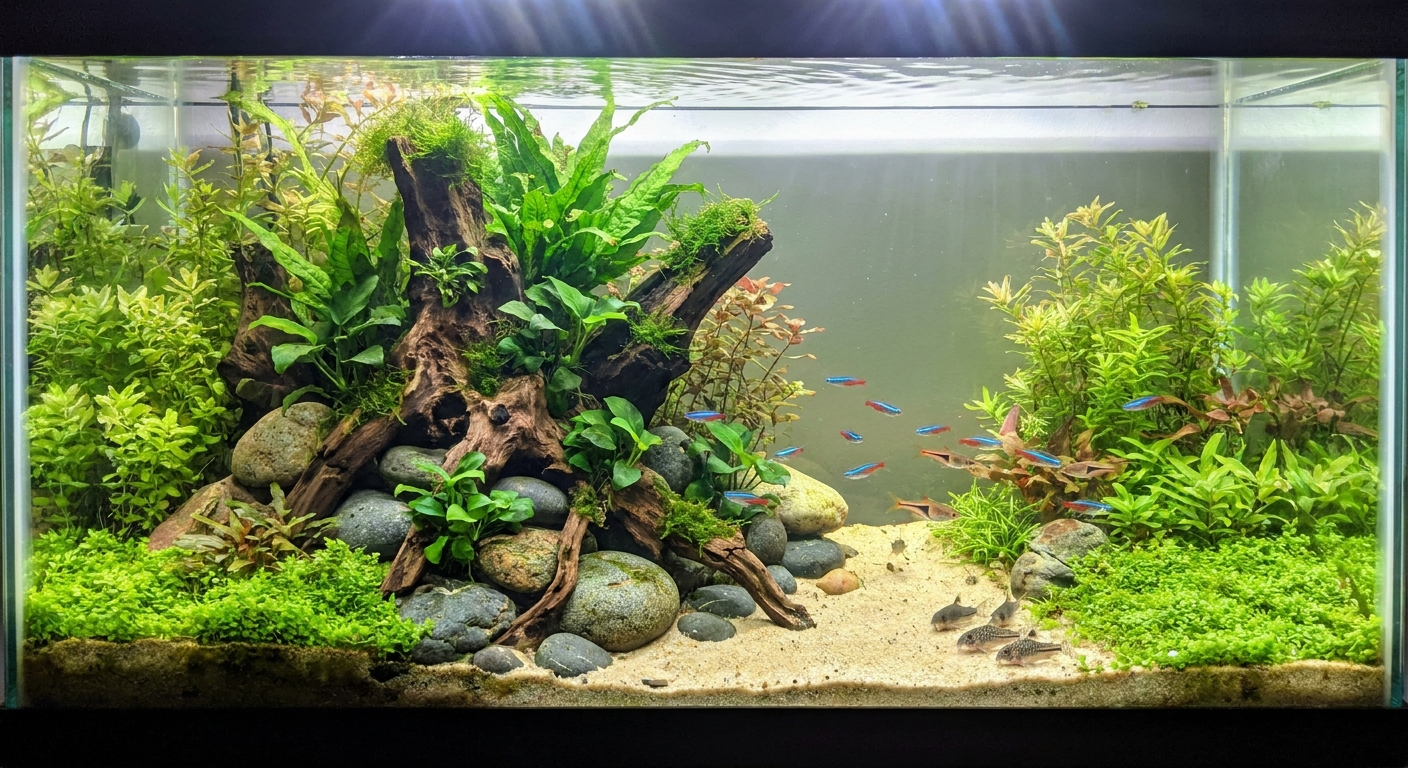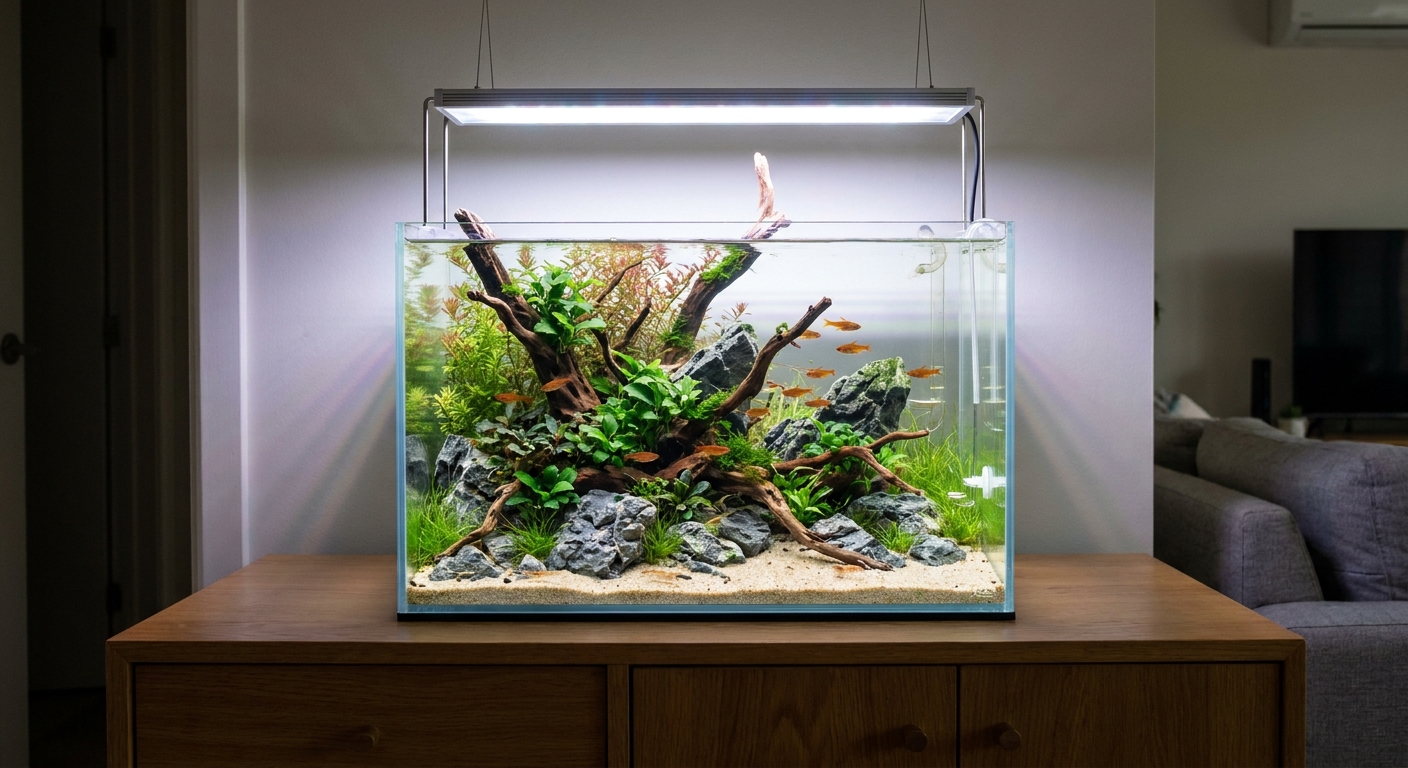
Let’s grow a beautiful underwater jungle together, one tiny leaf at a time! Iwagumi is the calm, minimalist side of aquascaping, where stones do the storytelling and plants quietly fill in the whispers. If you’ve ever wanted a tank that feels like a mountain meadow viewed from above, this is your path.
At its simplest, expect a small stone composition plus one main carpeting plant, with lots of clean open space.
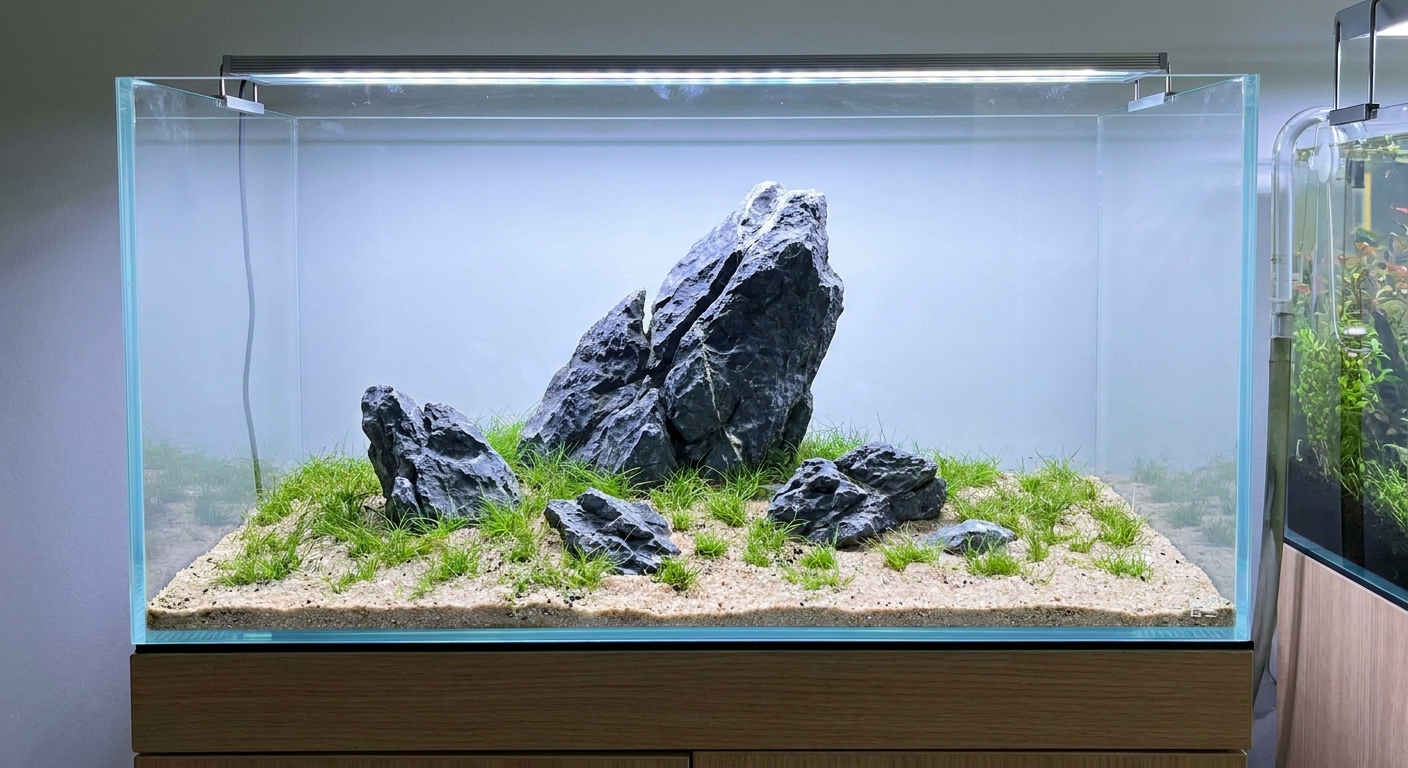
What makes an Iwagumi an Iwagumi?
Iwagumi is a Japanese stone-layout style built around a few strong design habits. It looks simple, but that simplicity is what makes it tricky and so satisfying.
- Stones are the main subject. Plants support the scene instead of competing with it.
- Odd numbers often feel natural. Three, five, or seven stones are common because they avoid symmetry that looks arranged.
- One main stone leads. The largest stone sets the direction, mood, and energy of the layout.
- Negative space matters. Open sand or open carpet areas give the stones room to breathe.
If you want a broader tour of layout styles before committing, swim through Aquascaping Design.
Before you start: a simple plan
The easiest way to succeed with Iwagumi is to choose a setup that supports carpeting plants and steady growth from day one. A struggling carpet can quickly turn an Iwagumi into an algae garden.
Keep it reliable
- Tank size: 10 to 20 gallons is a comfortable range to learn in. Smaller tanks can work, but they swing faster.
- Substrate: nutrient-rich aquasoil for strong carpet roots, optionally capped with sand only where you want a path or open space.
- Light: medium to high intensity (carpets tend to demand it).
- CO2: strongly recommended for most carpets and for keeping growth tight and low.
- Filtration: steady flow across the carpet to prevent debris from settling.
For the equipment side, visit Equipment & Setup. For problem-solving later, keep Maintenance & Troubleshooting nearby.
Step 1: Choose matching stones
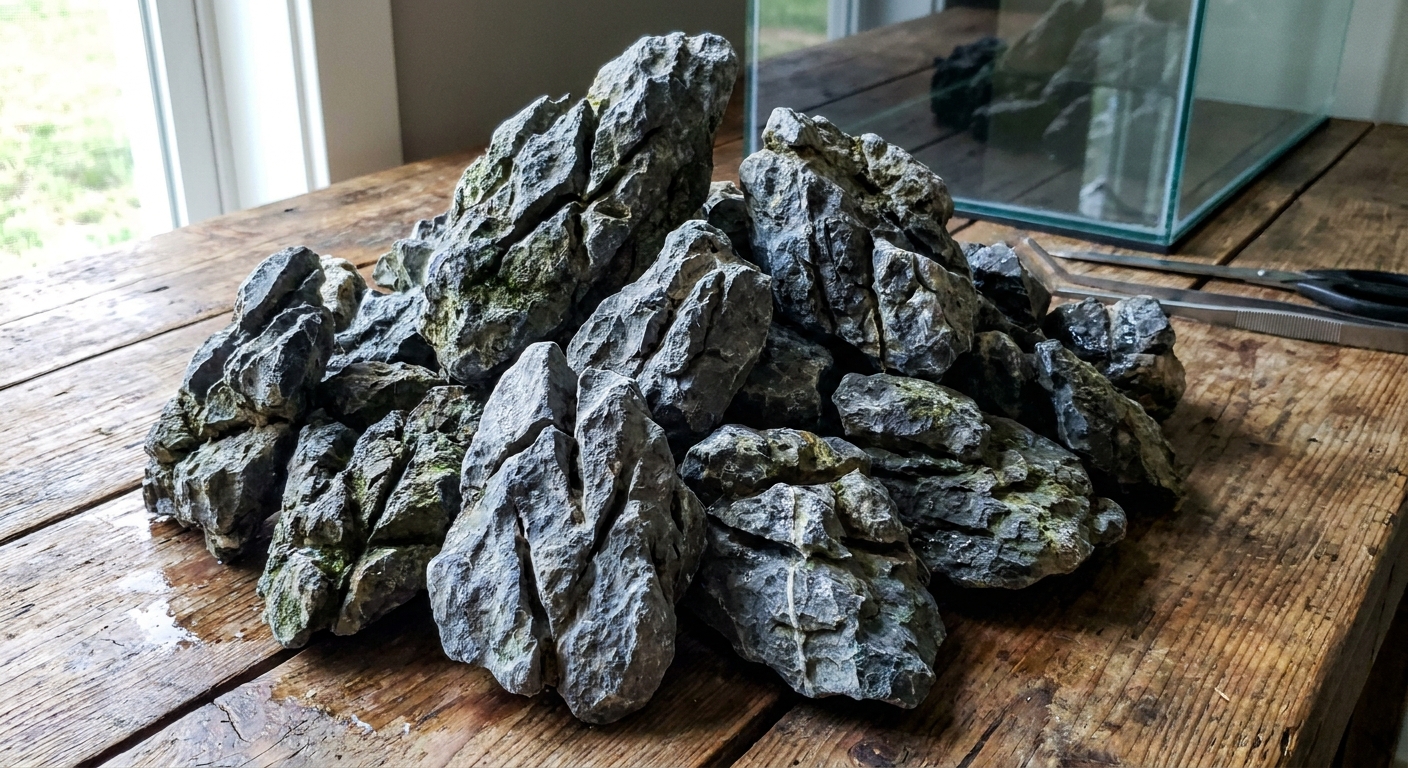
Iwagumi stones should feel like they came from the same mountainside. Mixing very different colors or textures can look busy and breaks the illusion.
What to look for
- Same type, same vibe: similar grain, color, and weathering.
- Strong texture: ridges, cracks, and faces that catch light make the layout feel alive.
- Varied sizes: one large main stone and smaller supporting stones that echo its shape.
- Stable bases: avoid stones that wobble or only balance on a point.
Rinse and scrub stones with plain water and a brush. Avoid soaps or cleaners.
Water chemistry note: some popular stones used in Iwagumi (Seiryu stone is the famous one) can raise KH, GH, and pH over time. If you keep soft-water fish or shrimp, test your hardness and pH after the stones are in, and plan livestock accordingly.
How many stones?
For beginners, these are the sweet spots:
- 3 stones: clean and bold, but less forgiving if placement is off.
- 5 stones: a friendly balance of simplicity and flexibility.
- 7 stones: can be stunning, but easy to clutter in smaller tanks.
Step 2: Learn stone roles
Traditional Iwagumi uses named roles for stones. You do not need to memorize Japanese terms to succeed, but the roles help you place with intention. (Small note: hobby usage varies a little between sources, so focus on the job each stone is doing in your layout.)
- Oyaishi (main stone): the largest stone, the leader.
- Fukuishi (secondary stone): supports the leader and strengthens direction.
- Soeishi (attendant stones): smaller stones that echo the main formation and add rhythm and detail.
- Suteishi (sacrificial stone): tiny, less prominent stones, often partially hidden, that make the layout feel less intentional and more natural.
Your goal is a family of stones that share a direction and look like one formation, not separate decorations.
Step 3: Build a substrate slope
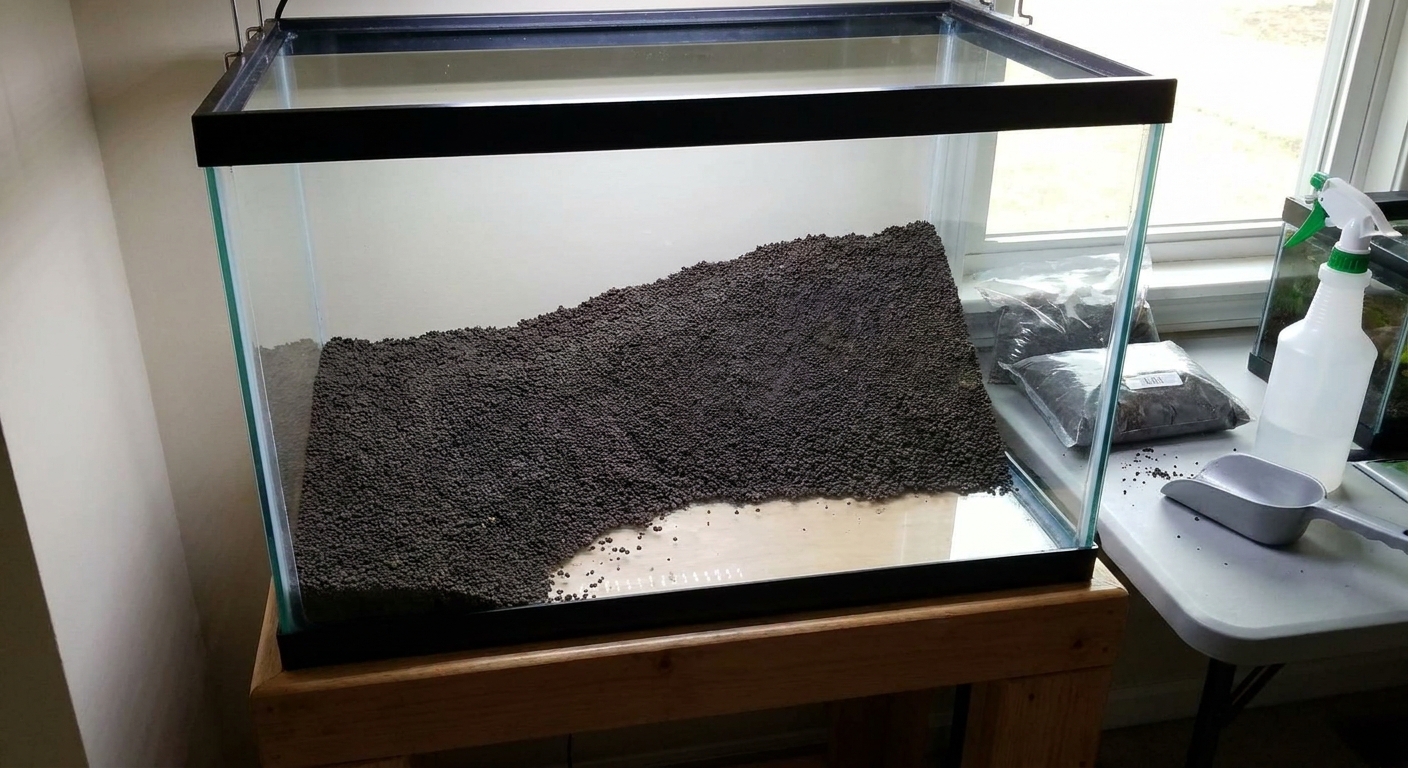
Depth is the secret sauce in a minimalist scape. A slope makes your tank feel larger and gives stones a sense of elevation.
Easy slope method
- Add more substrate in the back and less in the front.
- Lightly pack it down so planting does not collapse the shape, but not so hard that tweezers cannot get plantlets in.
- Use small lava rock or mesh bags of inert media under aquasoil if you need a taller hill without using a mountain of soil.
Keep the front glass line low and clean. That open foreground is one of the most Iwagumi feelings you can create.
Step 4: Place the main stone first
This is the moment where the whole aquascape chooses its posture. Take your time. Turn the stone slowly and look for its face, the most interesting side with the strongest lines.
Placement habits that help
- Avoid the center. Center placement often looks static. Move the main stone slightly left or right of center.
- Choose a direction. Tilt the main stone so its lines and grain flow toward one side.
- Sink it in. Bury the base so the stone looks anchored, not perched.
- Lean, do not topple. A slight tilt adds energy. An unstable angle adds stress.
A helpful mental check: the stone should look like it has been there for a long time and the river of time carved the scene around it.
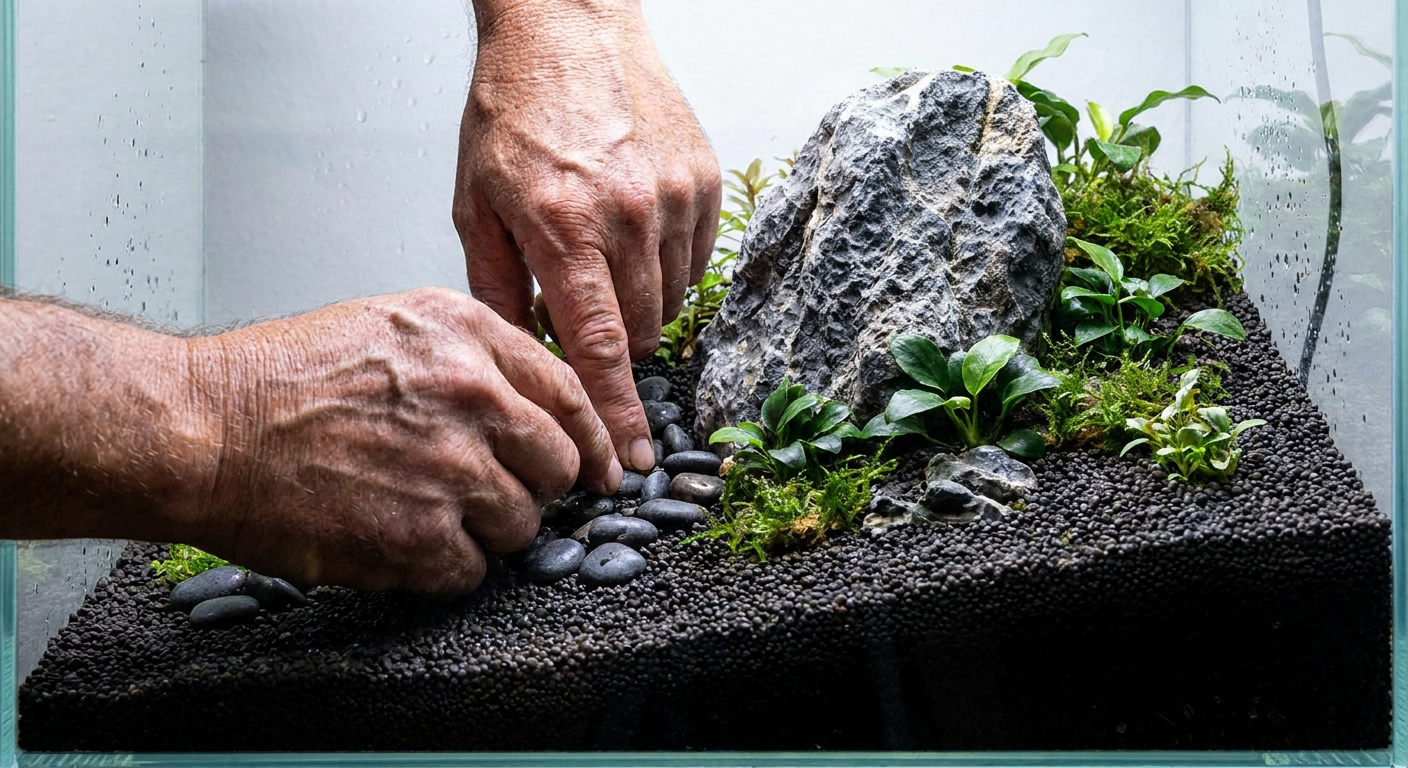
Step 5: Add supporting stones
After the main stone, everything else should reinforce its story.
How to place secondary and accent stones
- Match the direction: tilt the secondary stone in a similar flow as the main stone.
- Vary distance and height: avoid evenly spaced stones like fence posts.
- Group with purpose: stones should feel connected, like a ridge line or broken outcrop.
- Hide at least one small stone: a partially buried accent stone adds realism.
If it starts to look messy, remove a stone. Iwagumi often improves when you subtract.
Quick natural-check list
- Do the stones share the same visual grain and texture?
- Do most stones lean the same general direction?
- Is there open space for your carpet to be the quiet background?
- Is your main stone clearly the leader at first glance?
Step 6: Choose a carpet plant
In Iwagumi, the carpet is your field. You want a plant that stays low, fills in evenly, and can handle trims without getting grumpy.
More plant deep-dives live in Aquatic Plants.
Good starter carpets
- Dwarf hairgrass (Eleocharis sp.): classic grassy meadow look. Likes good light and benefits from CO2.
- Monte Carlo (Micranthemum tweediei): soft, rounded leaves and fast spreading with CO2. Can work in some lower-tech setups with patience, but it is happier with added CO2.
- Dwarf sagittaria (Sagittaria subulata): often easier than true micro-carpets, but it can grow taller and behave more like a short midground, especially once it is thriving.
Save for later
- HC Cuba (Hemianthus callitrichoides): stunning tiny leaves, but demanding. It rewards stability and strong CO2.
Plant choice also depends on livestock. Some fish love to dig, and some snails bulldoze fresh plugs. If your residents are enthusiastic landscapers, a tougher carpet makes life calmer.
Step 7: Plant in tiny portions
A lush carpet comes from many small plantlets, not a few big clumps. Big clumps trap debris, melt underneath, and take longer to spread evenly.
Carpet planting steps
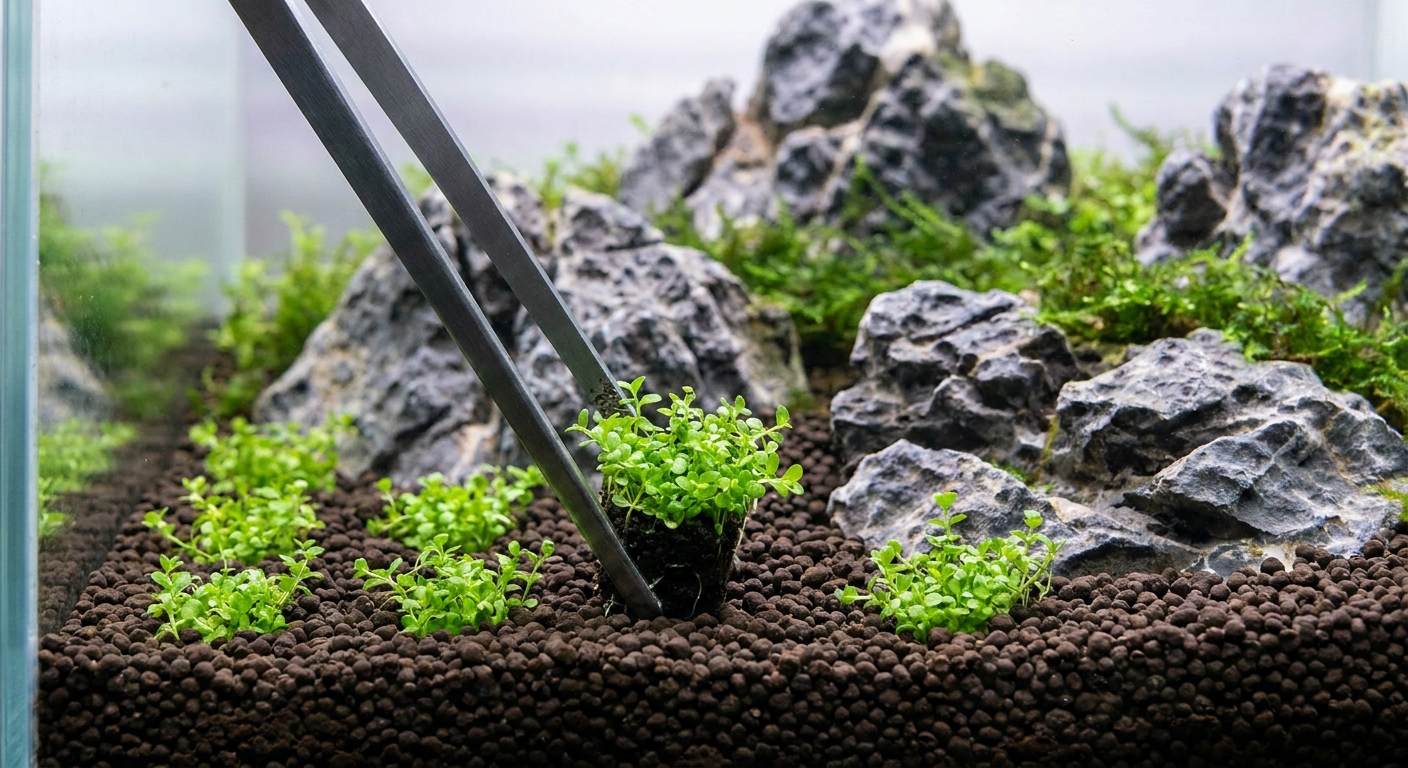
- Split the plant into small plugs or sprigs.
- Use tweezers and insert each plug into the substrate at an angle.
- Plant close enough that it can fill in without months of bare soil showing.
- Keep the front edge tidy so the scape looks crisp even while it grows in.
If you are using tissue culture cups, rinse off the gel gently before planting.
Step 8: Fill without disruption
Newly placed stones and freshly planted carpets are surprisingly easy to disturb. Fill slowly.
- Place a plate, plastic bag, or bowl on the substrate and pour water onto it.
- Fill in stages and adjust any plants that float up.
- Start filtration right away to clear initial cloudiness, and protect the intake with a sponge or prefilter so fresh plugs do not get sucked up.
If you run CO2, begin with a gentle rate and increase slowly over several days. Stability is the goal.
Step 9: Light and CO2 basics
Iwagumi tanks often use higher light to keep carpets tight and compact. Higher light also increases demand for CO2 and nutrients. When demand is not met, algae takes the open spaces first.
A safe starting point
- Photoperiod: 6 hours per day for the first 2 weeks, then increase to 7 to 8 hours if algae stays under control.
- CO2 timing: commonly 1 to 2 hours before lights on, and off about 1 hour before lights off, then adjust based on your CO2 indicator method (drop checker or pH tracking) and livestock behavior.
- Surface movement: enough to prevent film and keep oxygen healthy, but not so much that CO2 is driven off.
Shrimp and fish safety note: CO2 can stress livestock if pushed too hard. Watch behavior closely and favor gradual adjustments. If anything seems off, reduce CO2 and increase surface agitation.
Step 10: Fertilization
Carpet plants get hungry once they start spreading. Even if your aquasoil has nutrients, the water column often needs support as the tank matures.
- Root feeding: aquasoil provides a strong base for carpeting roots.
- Water column feeding: an all-in-one fertilizer or a macro and micro routine keeps growth steady.
- Consistency beats intensity: uneven dosing can lead to algae swings and patchy carpet growth.
Soil cycling note: many active aquasoils release extra ammonia early on. That is normal, but it means your early water changes matter.
First month timeline
Iwagumi success is mostly good rhythm. Here is a simple starter schedule you can follow and adjust.
Week 1
- Keep light at 6 hours.
- Do frequent water changes, often every day or every other day if your aquasoil leaches heavily.
- Remove floating bits and replant anything that lifts.
Week 2
- Continue water changes, usually 2 to 3 times this week.
- Watch for the first signs of carpet rooting and creeping.
- Begin fertilizers carefully if your routine calls for it.
Weeks 3 to 4
- Increase light to 7 to 8 hours only if algae is under control.
- Trim early to encourage lateral spreading.
- Set a steady weekly water change habit.
Livestock timing: wait to add fish or shrimp until the tank is cycled and tests show ammonia at 0 and nitrite at 0 consistently. New soils and new tanks can look calm while still being chemically spicy.
If algae appears, do not panic-scramble. Make one change at a time and give it several days to show results. You will find more help in Maintenance & Troubleshooting.
If algae shows up
Even a well-planned Iwagumi can get a little fuzzy while it settles in. Start with the basics before you start swapping products or tearing things down.
- Shorten the photoperiod by 1 to 2 hours for a week.
- Check CO2 consistency (steady bubble rate, diffuser cleanliness, good circulation to the carpet).
- Increase water changes and manual cleanup so organics do not pile up in the open foreground.
- Clean the filter intake and prefilter so flow across the carpet stays strong.
Once the carpet is rooted and spreading, it gets much better at defending its own territory.
Trimming a carpet cleanly
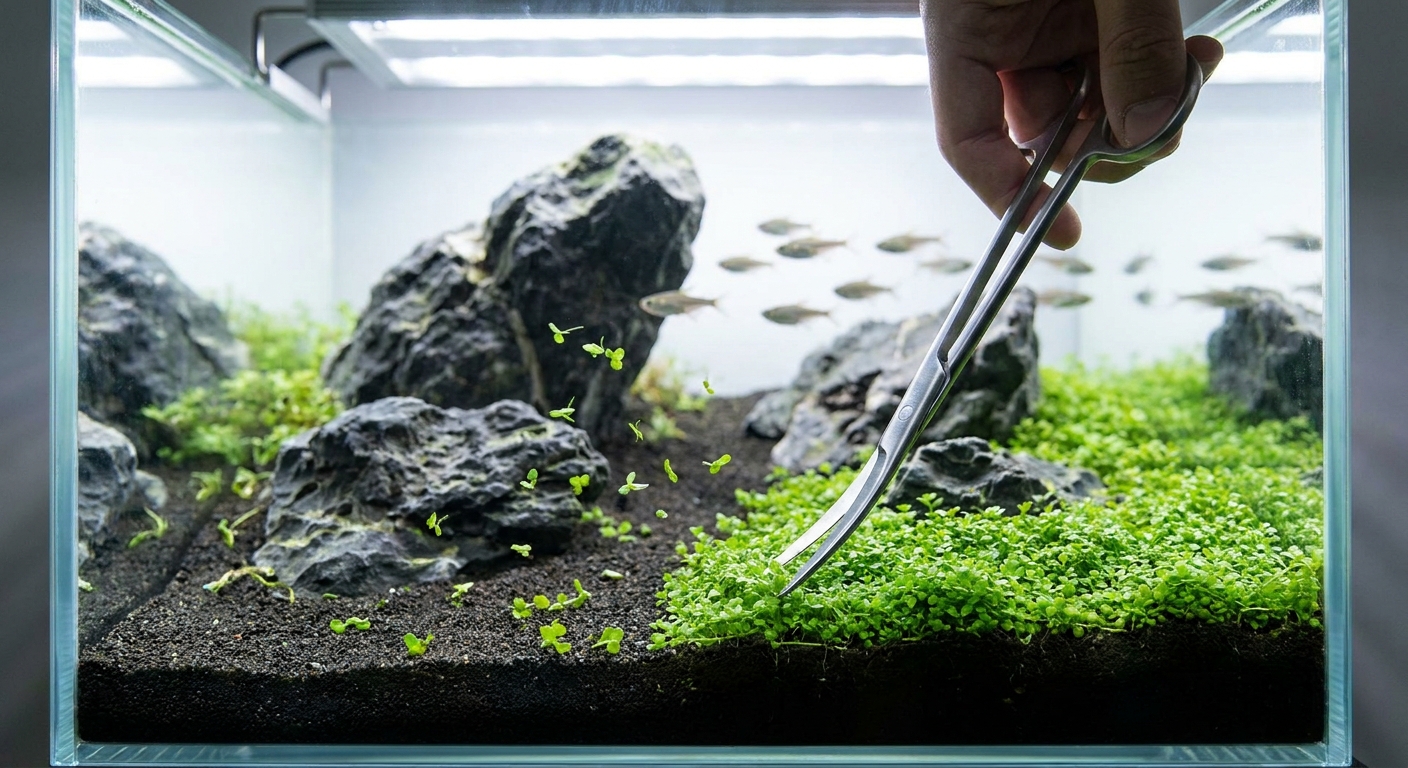
Trimming is what turns plants growing into a polished meadow. Carpets get thick, and thick carpets trap debris if they are never trimmed.
- Trim lightly and often once it starts to mound.
- Remove clippings with a net or siphon right away.
- Do a water change after big trims to export floating fragments and organics.
- Replant healthy tops if you need to fill bald patches.
Common beginner mistakes
Using stones that do not match
Fix: stick to one stone type and a consistent color palette. Texture can vary a bit, but the family resemblance should be obvious.
Placing stones like ornaments
Fix: sink bases into the substrate and make stones touch or visually relate. Think formation, not collection.
Going too bright too fast
Fix: start with a shorter photoperiod and increase slowly. High light without steady CO2 is algae’s favorite invitation.
Planting big clumps
Fix: split into many small plugs. It fills in faster and looks smoother.
Ignoring flow
Fix: aim gentle circulation across the foreground so debris does not settle into the carpet.
Quick Iwagumi checklist
- Odd number of stones is common, with one clear main stone
- Substrate slope for depth
- Main stone off-center, tilted with intention
- Supporting stones share direction and belong together
- Simple plant palette, usually one carpeting species
- Conservative lighting at the start, steady CO2 if used
- Frequent early water changes, then steady maintenance
- Cycle before livestock: ammonia 0, nitrite 0
When your carpet starts to pearl and tiny bubbles rise like sparkling soda, give yourself a proud little antennae wave. That is your Iwagumi coming to life.
If you’d like to learn more layout styles after this one, swim back through Aquascaping Design. And if you want to know who is cheering for your hardscape from the mossy sidelines, that’s me over at Sprout.